Artwork
New Year's Day in a Village at Stone Lake
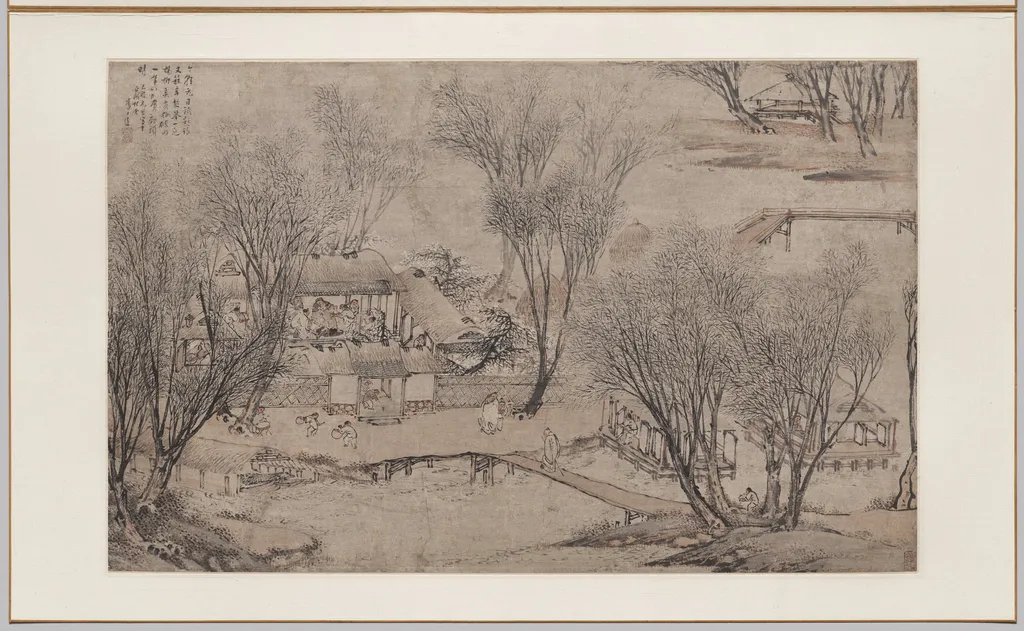
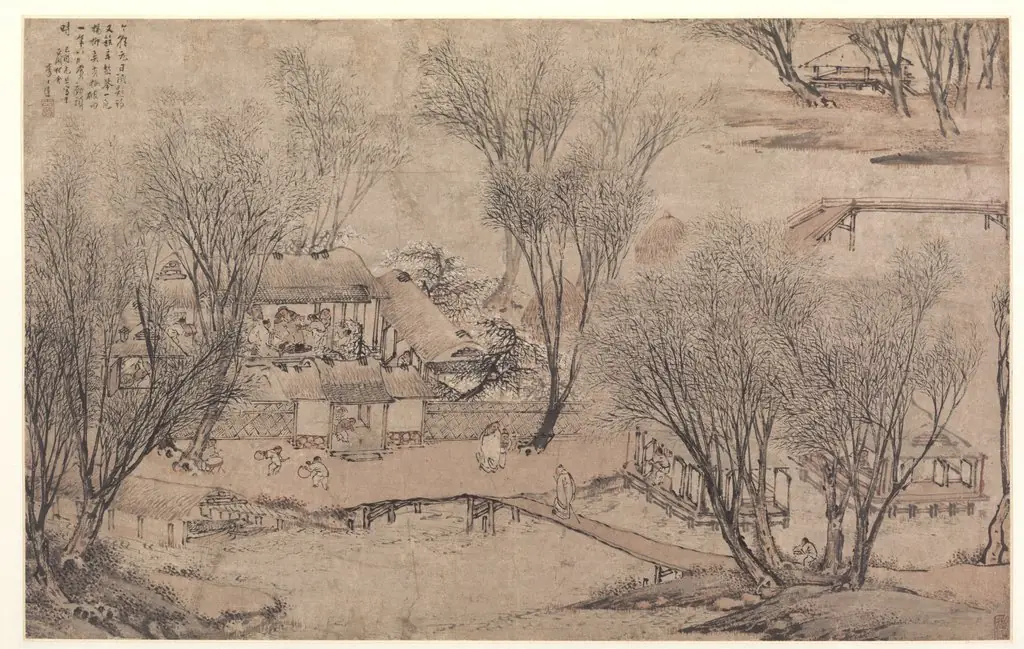
New Year's Day in a Village at Stone Lake is an unspecified painting by the Baroque artist Li Shida. It dates from 1609 and is held in the collection of the Cleveland Museum of Art. The work depicts a bustling New Year’s morning in a water‑front village of the Jiangnan area.
About this work
The artist packed every corner with small moments—writing couplets, bowing, carrying gifts—so you feel the day’s energy.
You see a busy village street on New Year’s morning. People visit neighbors, kids light firecrackers, servants beat gongs, and hosts pour warm wine inside. White cherry blossoms dot the scene.
This painting shows how families celebrated the holiday in Ming China. The artist packed every corner with small moments—writing couplets, bowing, carrying gifts—so you feel the day’s energy. It’s like a snapshot of daily life, not a grand myth.
To see more scenes like this, look up china, ming dynasty (1368–1644).
Overview
The work depicts a bustling New Year’s morning in a water‑front village of the Jiangnan area. Visitors gather at a residence, children ignite firecrackers, and servants sound a gong at the gate while hosts serve warm wine and prepare festive couplets. Delicate white cherry blossoms signal the arrival of spring, framing the lively street scene.
Subject & Meaning
The painting records customary celebrations of the lunar New Year in Ming‑era China, emphasizing communal goodwill and ritual. Figures are shown paying respects to elders, exchanging gifts, and performing symbolic acts such as writing couplets for the doorway, illustrating the cultural importance of family, hospitality, and seasonal renewal.
Technique & Style
Executed in the refined brushwork typical of late‑Ming genre painting, the artist balances detailed narrative vignettes with a harmonious composition. Fine lines delineate individual actions, while washes of ink and subtle colour suggest the misty atmosphere of a lakeside settlement, creating depth without sacrificing the clarity of each activity.
History & Provenance
Attributed to Li Shida, a native of Suzhou, the piece likely reflects his personal familiarity with the region’s waterways and customs. The painting has been catalogued among Ming dynasty works and has passed through several private collections before entering its present institutional holding, where it serves as a reference for regional festive practices.
Context
Set in the Jiangnan cultural heartland, the scene mirrors the socioeconomic fabric of a prosperous water village where trade, agriculture, and family networks intersected. The inclusion of cherry blossoms, a motif associated with renewal, aligns the work with broader Chinese artistic conventions that link seasonal change to human celebration.
Artist & collection

 Landscapes and Figures: Landscape
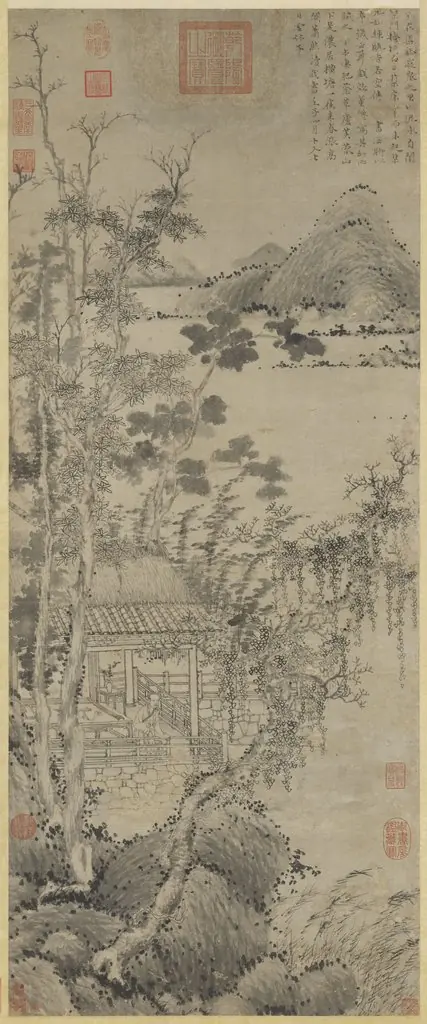 Qing Bi Pavilion
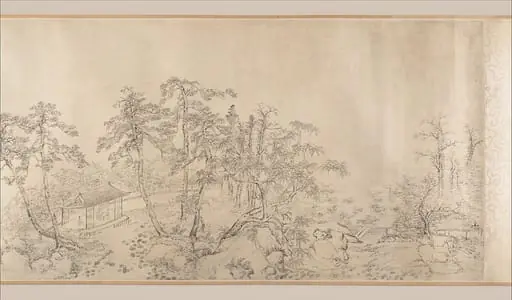 清 高簡 説詩圖 卷|Discourse on Poetry
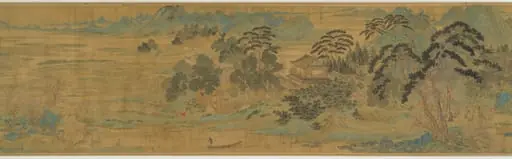 The Peach Blossom Spring 桃花源圖
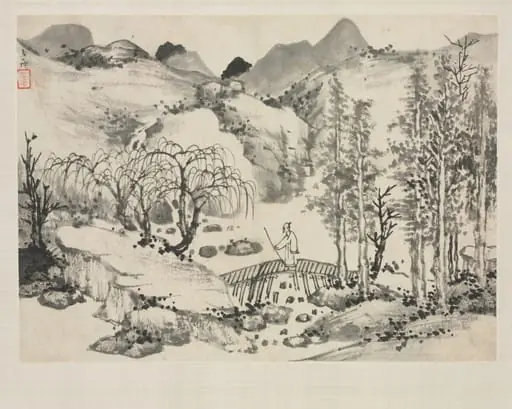 Landscape Album in Various Styles: Landscape with Artist on a Bridge
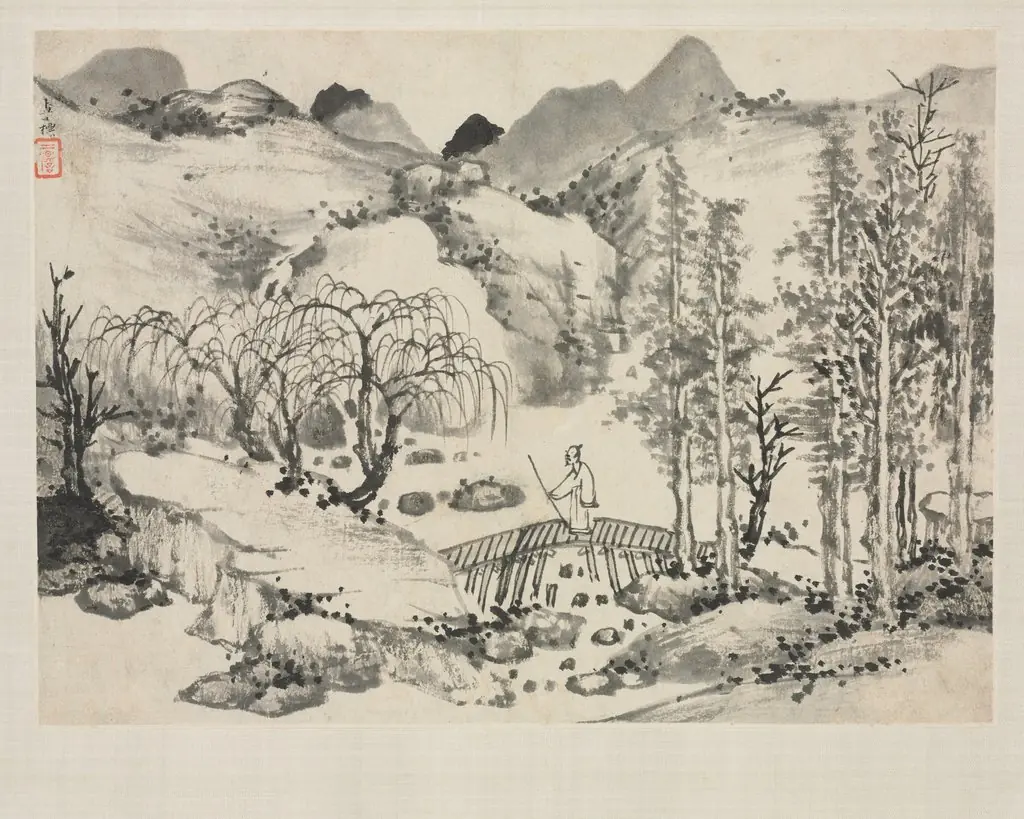 Landscape Album in Various Styles: Landscape with Artist on a Bridge
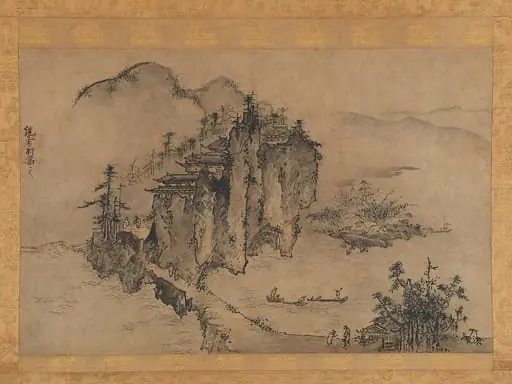 雪村周継筆 山水図|Landscape with Rocky Precipice
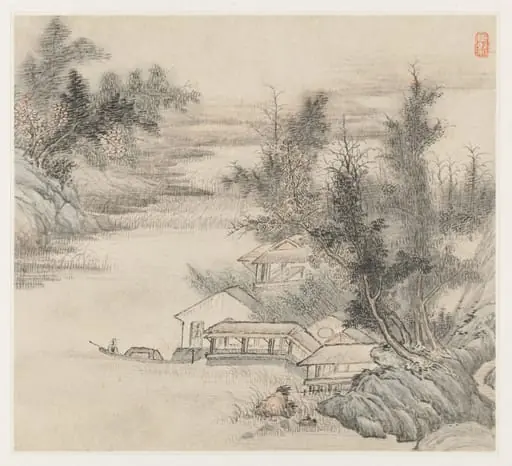 Album of Landscapes: Leaf 2
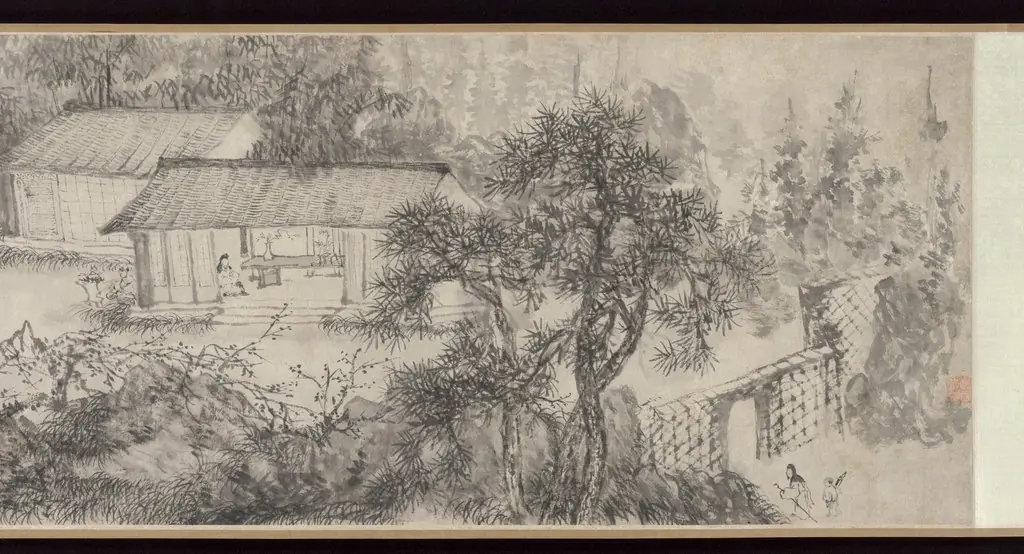 The Studio of Prolonged Soughing
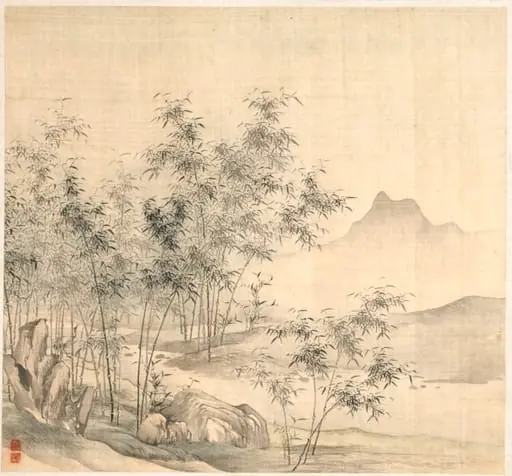 A Solitary Crane in the Bamboo Grove
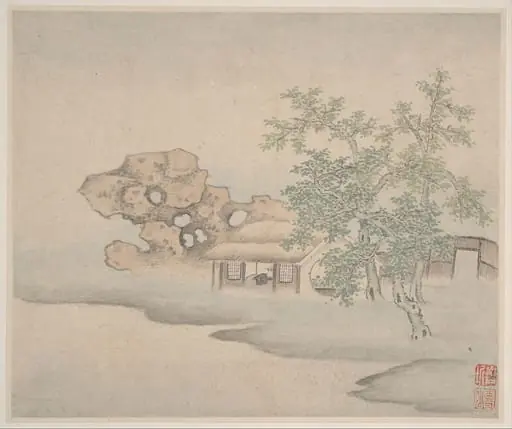 清 樊圻 山水圖 冊 紙本|Landscapes