Artwork
The Peach Blossom Spring 桃花源圖
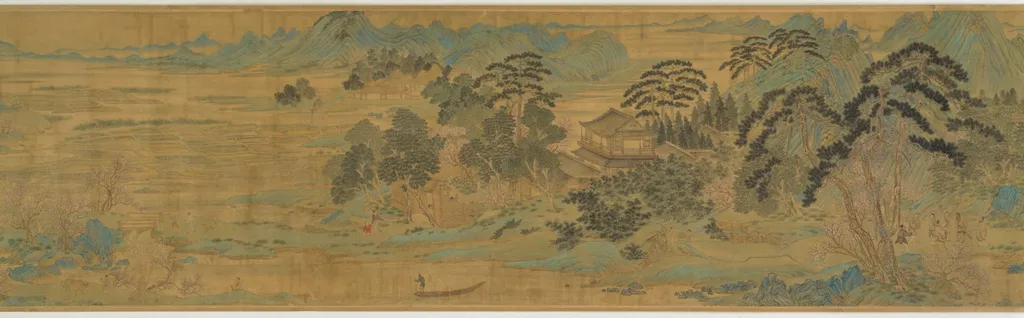
The Peach Blossom Spring 桃花源圖 is an ink painting by the Baroque artist Qiu Ying. It is held in the collection of the Art Institute of Chicago. This handscroll, painted in ink and color on silk, visually interprets Tao Qian’s fourth-century fable of a hidden utopia.
About this work
Overview
This handscroll, painted in ink and color on silk, visually interprets Tao Qian’s fourth-century fable of a hidden utopia.
This handscroll, painted in ink and color on silk, visually interprets Tao Qian’s fourth-century fable of a hidden utopia. Unrolled from right to left, it traces a fisherman’s journey through mist-shrouded peaks to a secluded valley, where a community lives untouched by external conflict. The work reflects the enduring appeal of this literary ideal, rendered with meticulous detail and a restrained palette that evokes serenity rather than spectacle.
Subject & Meaning
The scene depicts a society that fled wartime chaos centuries earlier and now dwells in timeless peace, unaware of dynastic changes beyond their valley. Blossoming peach trees, traditionally symbols of longevity and transcendence, obscure the cave entrance, marking the boundary between the mortal world and an eternal refuge. The fisherman, depicted in a small red boat, serves as a witness rather than an intruder, emphasizing the valley’s fragile, unseen existence.
Technique & Style
The painting employs fine, controlled brushwork to render individual leaves, rocks, and figures with quiet precision. While reminiscent of Qiu Ying’s signature decorative approach, the palette—dominated by soft azurite blues and malachite greens—is subdued, avoiding the brilliance typical of his workshop. This restraint, along with the delicate handling of form, suggests execution by a skilled follower rather than the master himself.
History & Provenance
Created during the Ming dynasty, the scroll aligns with a tradition of illustrating classical literary themes in scroll format. Though attributed to Qiu Ying’s circle, its authorship remains unconfirmed due to stylistic nuances that diverge from his known works. Its survival on silk, a fragile medium, indicates careful preservation, likely within scholarly or aristocratic collections over centuries.
Context
The fable of the Peach Blossom Spring emerged during a period of political fragmentation, offering a literary escape from instability. Artists of the Ming era revived such themes as cultural memory and moral idealism. The blue-and-green landscape style, rooted in Tang dynasty precedents, was revived by Wu School painters to evoke harmony and retreat, resonating with literati values of withdrawal from public life.
Legacy
This scroll contributes to a broader visual tradition of utopian landscapes in Chinese art, influencing later depictions of hidden realms in both painting and literature. Its quiet execution contrasts with more dramatic interpretations, underscoring a preference for understated beauty and introspective solitude. It remains a reference point for studies on how literary ideals were translated into visual form during the Ming period.
Artist & collection


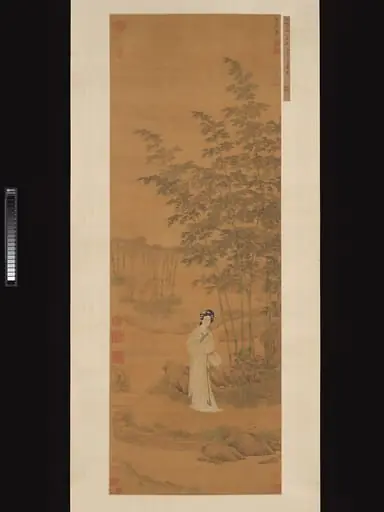 明 傳仇英 文玉圖 軸圖 軸|Lady in a Bamboo Grove
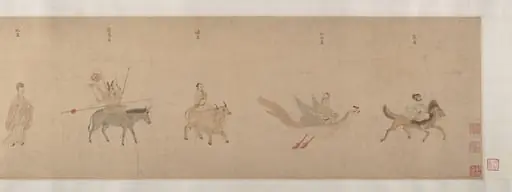 明 傳仇英 五星二十八宿神形圖 卷|Divinities of the Planets and Constellations
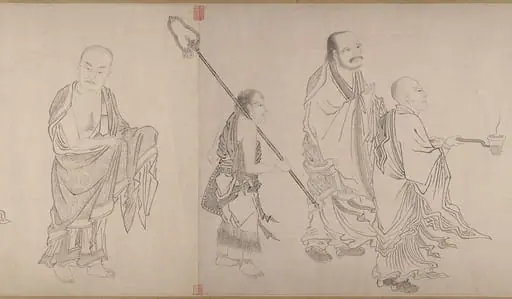 明 傳仇英 十六羅漢圖 卷|The Sixteen Luohans
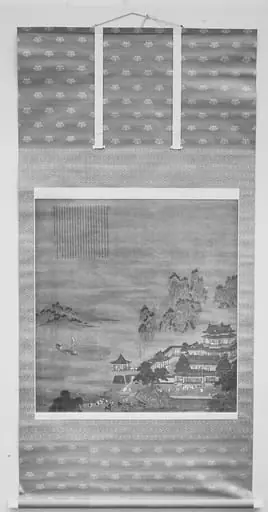 明 佚名 傳仇英 唐宫圖 軸|A Tang Palace
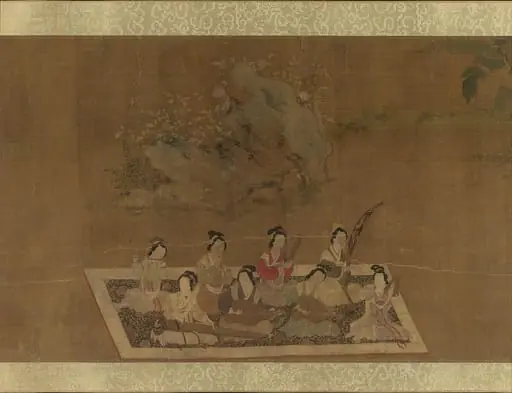 明 佚名 蘇蕙璇璣圖 卷|Lady Su Hui and Her Verse Puzzle
 Zhao Mengfu Writing the Heart (Hridaya) Sutra in Exchange for Tea
 Garden for Solitary Enjoyment
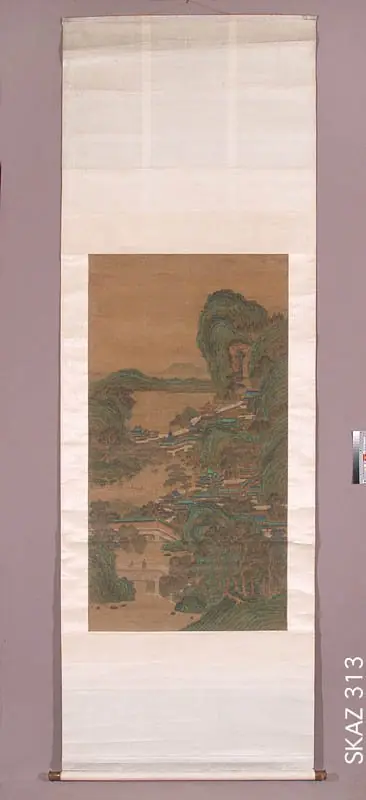 Pałac nad brzegiem jeziora - pejzaż
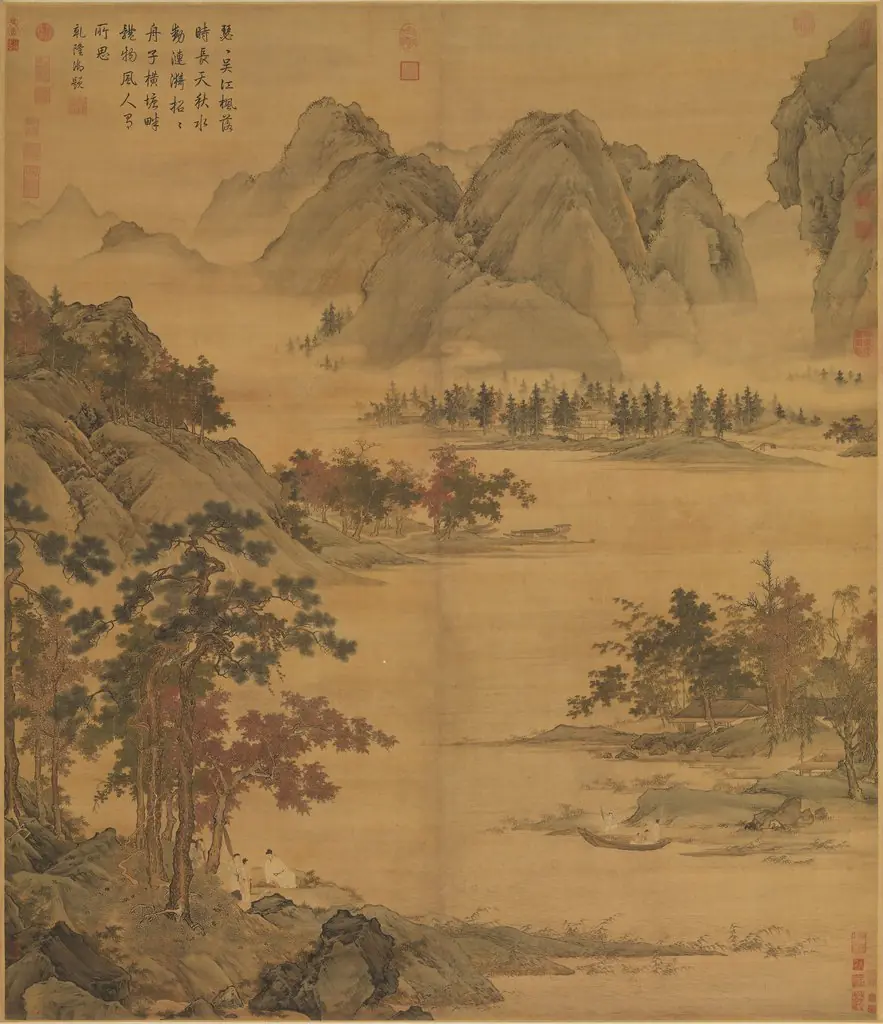 Waiting for the Ferry on an Autumn River
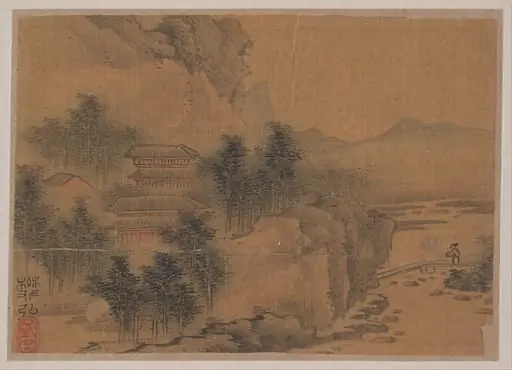 Untitled
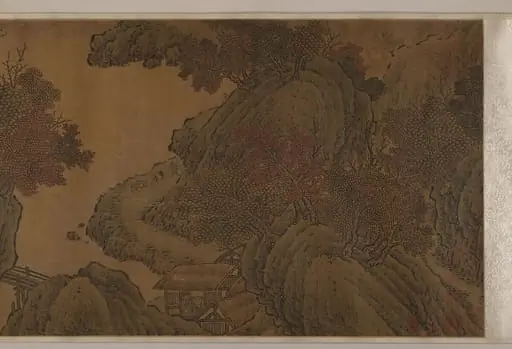 清 佚名 舊傳范寬 煙嵐秋曉圖 卷|Autumn Landscape
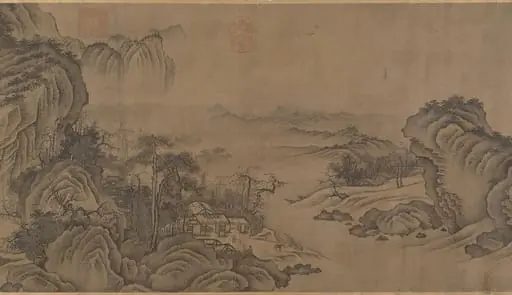 元/明 佚名 舊傳 燕文貴 秋山蕭寺圖 軸|Buddhist Temples amid Autumn Mountains
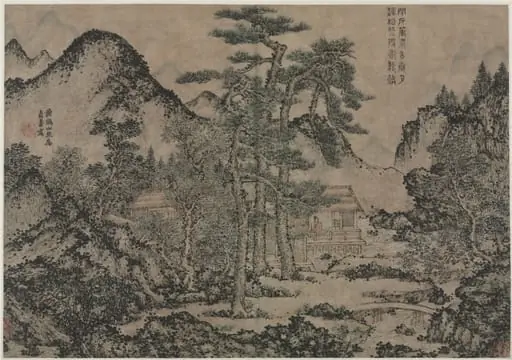 Writing Books under the Pine Trees
 明/清 佚名 舊傳郭煕 關山行旅圖 卷|Traveling amid Mountains
 Untitled
 明 佚名 舊傳燕文貴 溪山行旅圖 卷|Landscape
 明仇英秋江待渡 軸
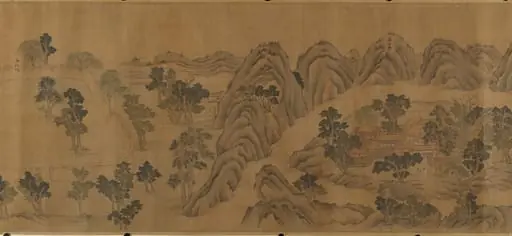 明 佚名 郭忠恕 僞款 輞川圖 卷|Wangchuan Villa
 Landscape
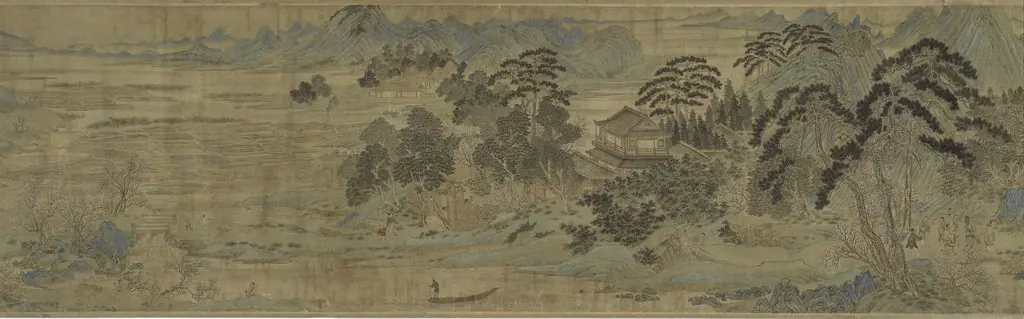 The Peach Blossom Spring