Artwork
Qing Bi Pavilion
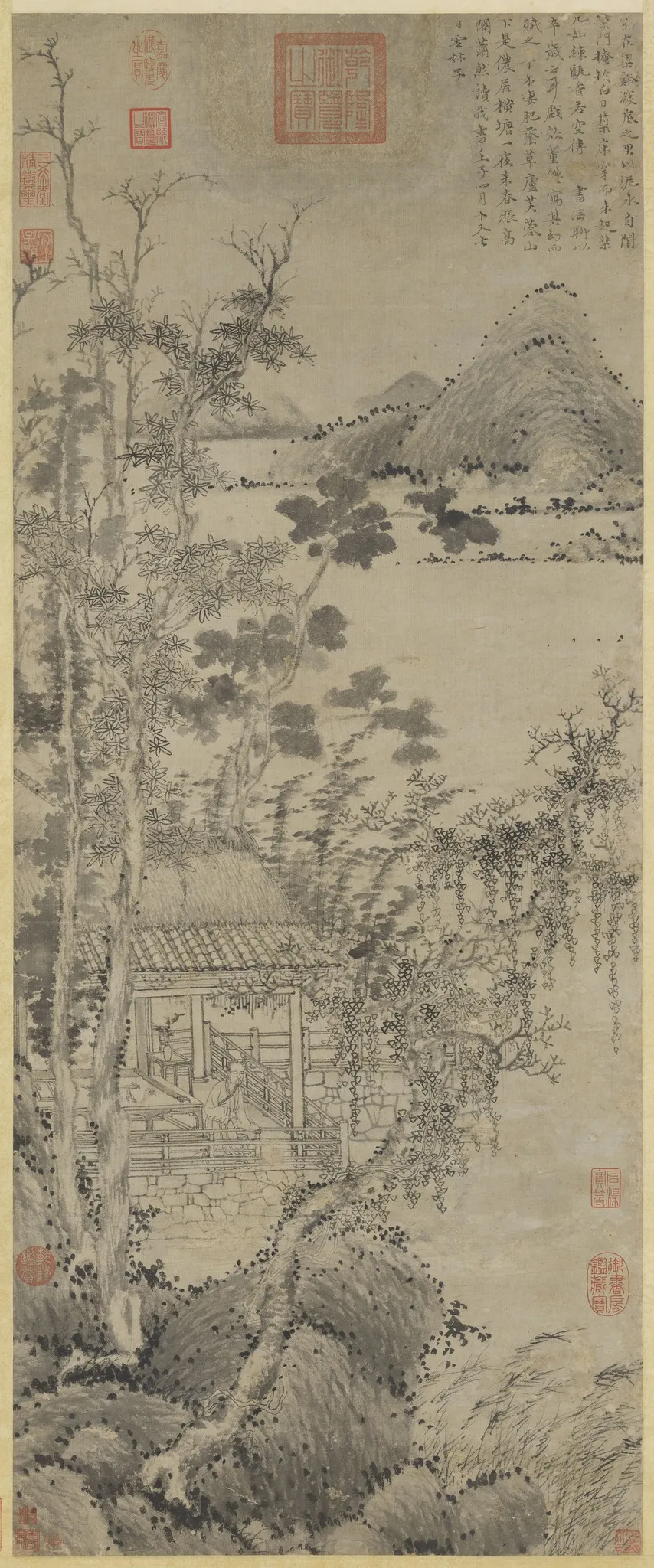
Qing Bi Pavilion is an unspecified painting by Ni Zan. It dates from 1372 and is held in the collection of the National Palace Museum.
About this work
Overview
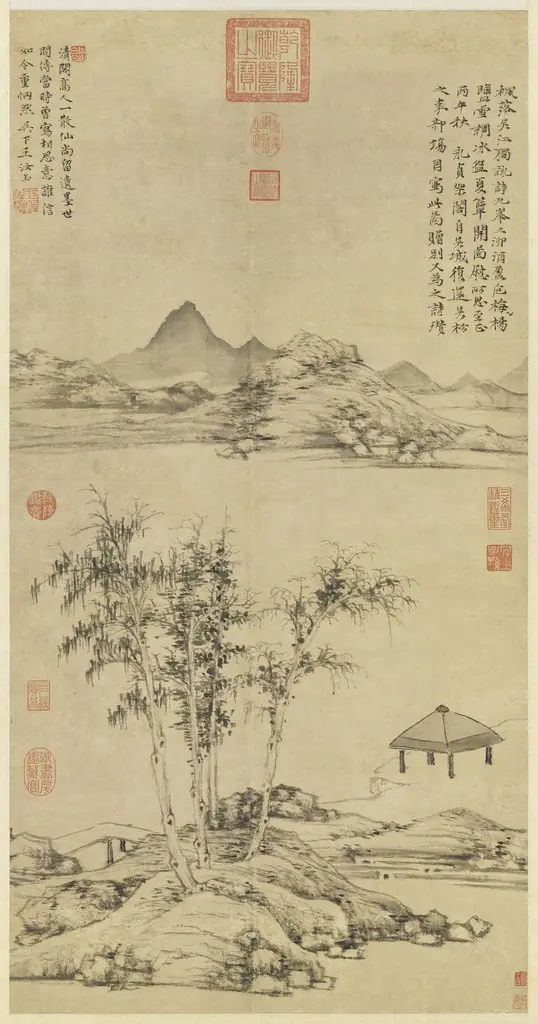
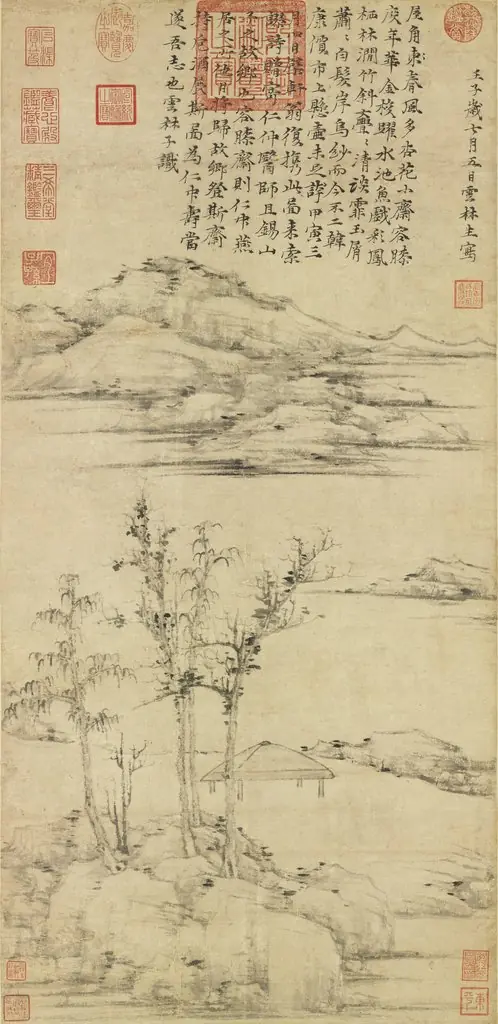
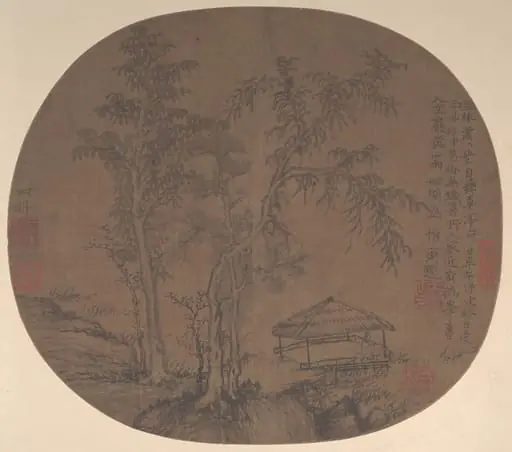
Created in 1372 by Ni Zan, a leading figure among the Four Masters of the Yuan dynasty, this ink painting presents a tranquil scene centered on a modest pavilion. Rendered in a restrained palette of greys, the composition balances water, trees, and architecture to evoke a sense of quiet solitude.
Subject & Meaning
The work portrays a small, rustic pavilion set against a backdrop of trees and a reflective body of water. The sparse arrangement and muted tones suggest an appreciation for natural harmony and contemplative retreat, reflecting the artist’s inclination toward simplicity and introspection.
Technique & Style
Ni Zan employs minimal brushwork, using delicate strokes to suggest foliage and subtle gradations of ink to model the landscape. The limited palette and restrained texture exemplify his characteristic approach to literati painting, where suggestion outweighs detailed representation.
History & Provenance
Executed during the transition from Yuan to early Ming rule, the painting reflects the period’s shifting artistic climate. While specific ownership records are scarce, the piece remains a representative example of Ni Zan’s oeuvre and the broader Yuan‑Ming literati tradition.
Context
As part of the Four Masters’ legacy, Ni Zan’s work embodies the scholarly aesthetic that favored personal expression over courtly grandeur. The painting’s emphasis on solitude aligns with contemporary Daoist and Confucian ideals of retreat from worldly affairs.
Legacy
The composition continues to be cited in studies of Yuan‑Ming ink painting for its elegant economy of line and tone. It serves as a reference point for later artists seeking to capture the essence of a landscape through minimal means.
Artist & collection

Artist
Ni Zan (simplified Chinese: 倪瓒; traditional Chinese: 倪瓚; Wade–Giles: Ni2 Tsan4; 1301–1374) was a Chinese painter during the Yuan and early Ming periods.

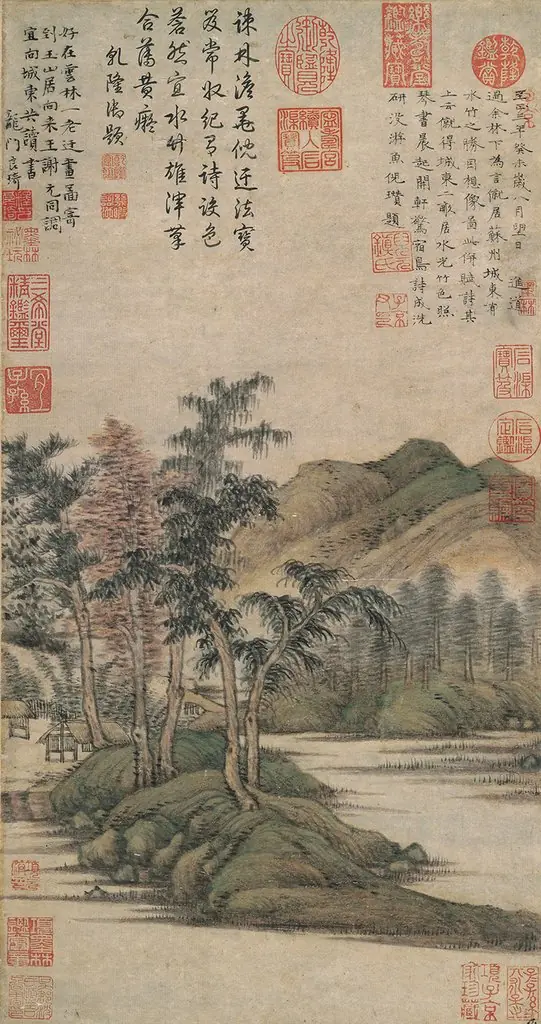
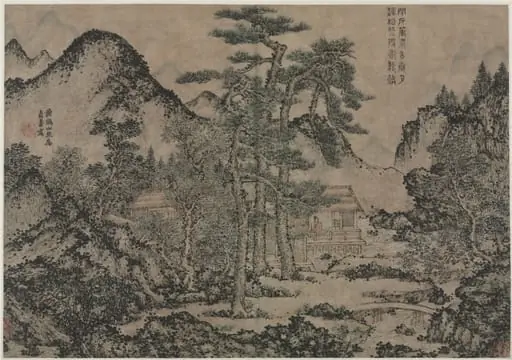 Writing Books under the Pine Trees
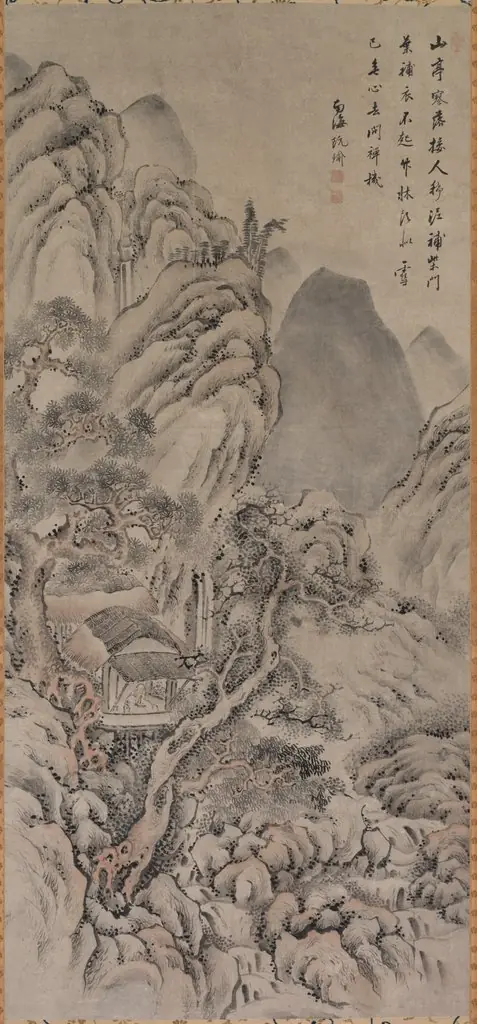 Landscape
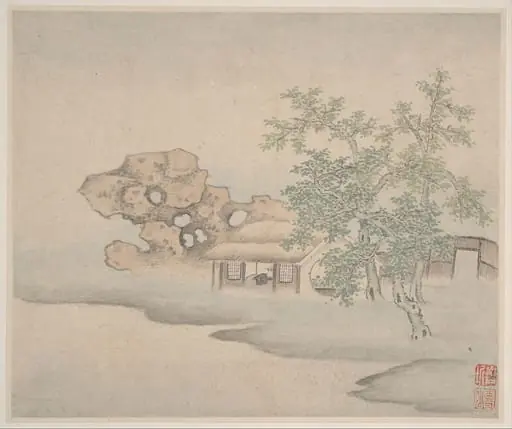 清 樊圻 山水圖 冊 紙本|Landscapes
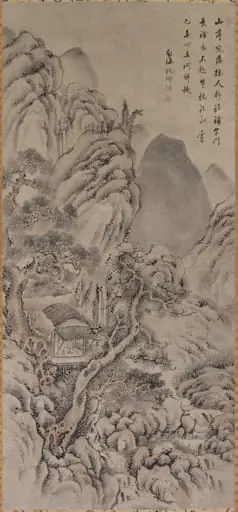 Landscape
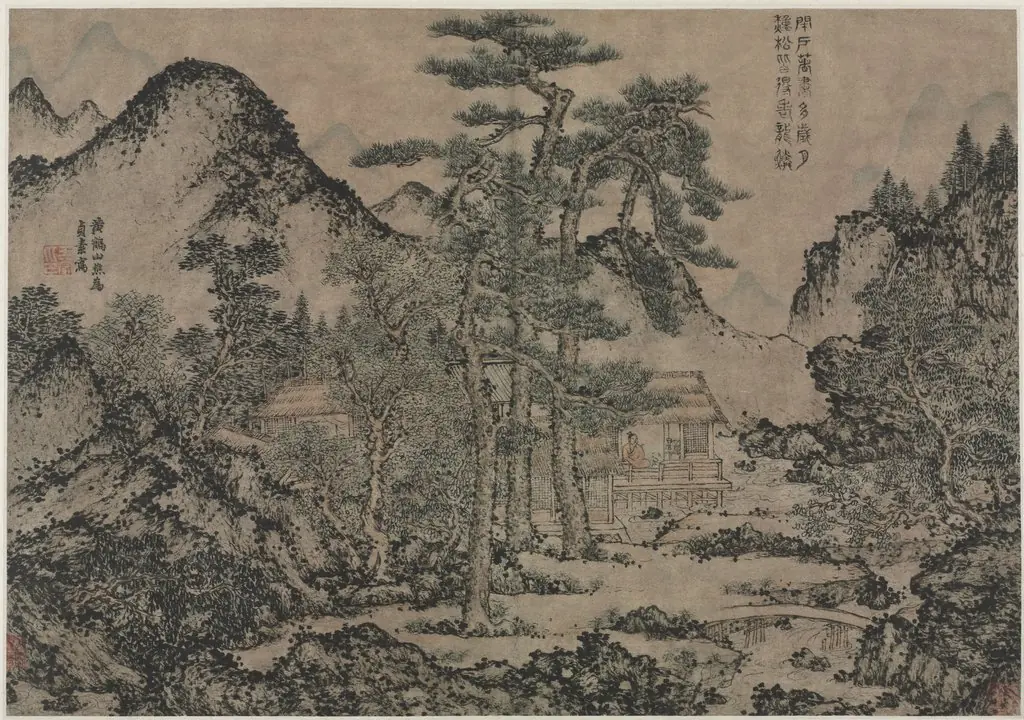 Writing Books under the Pine Trees
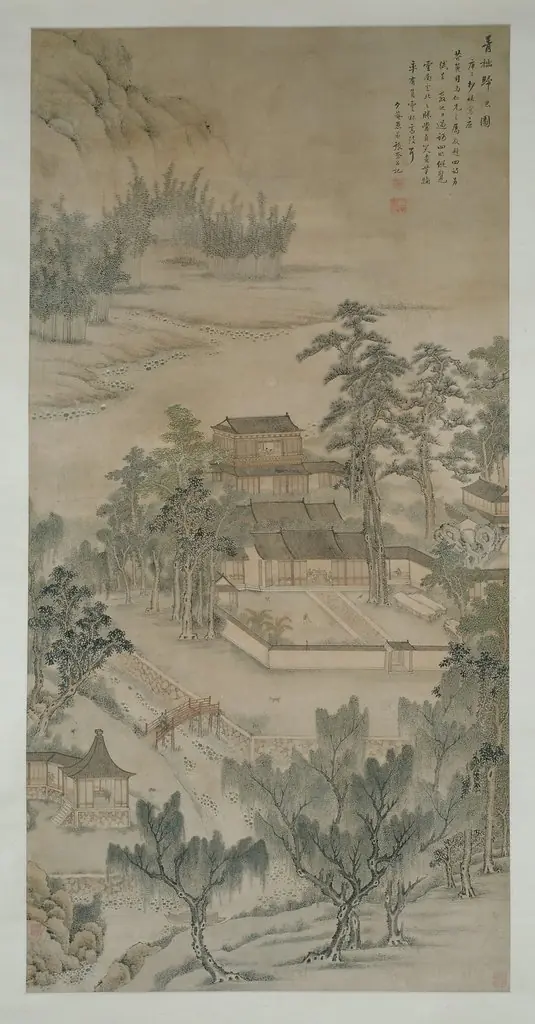 Mansion by the River
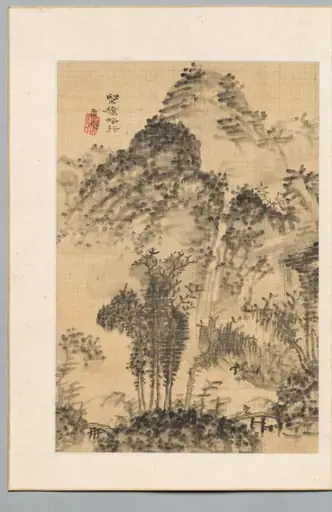 Wild Bridge, Poet's Walk
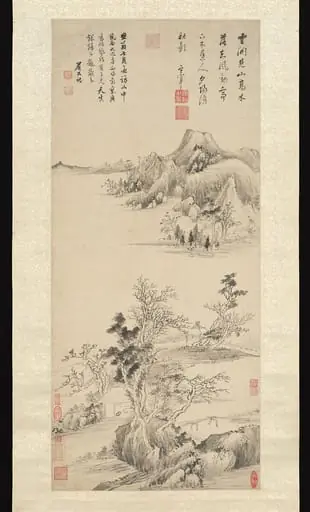 明 董其昌 秋山圖 軸|Autumn Mountains
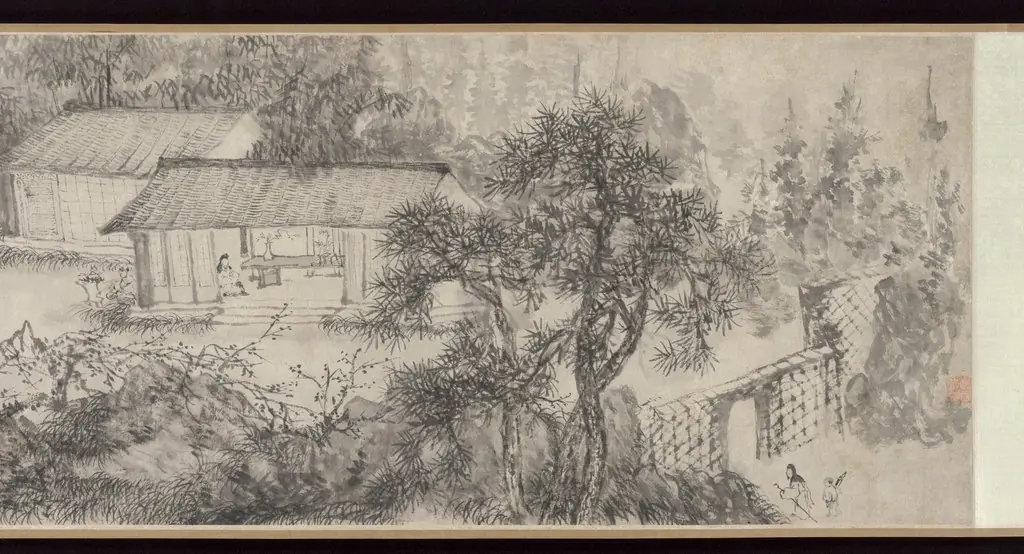 The Studio of Prolonged Soughing
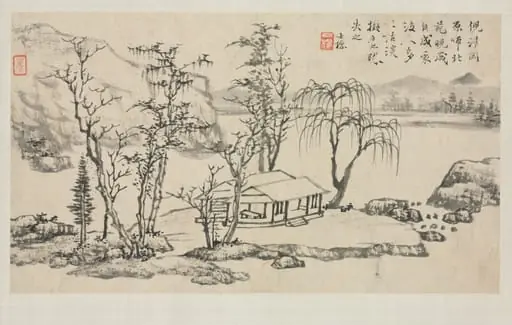 Landscape Album in Various Styles: Landscape after Ni Zan
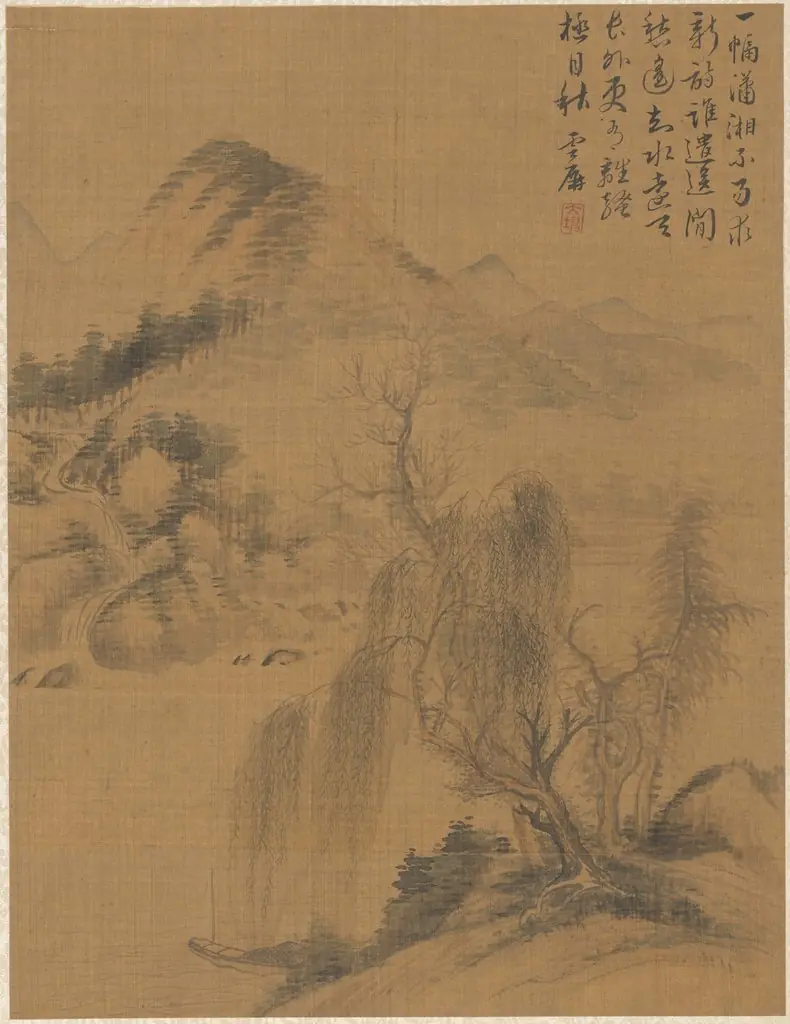 Landscape
 元 王蒙 蕭林寂亭圖 團扇|Sparse trees and pavilion