Artwork
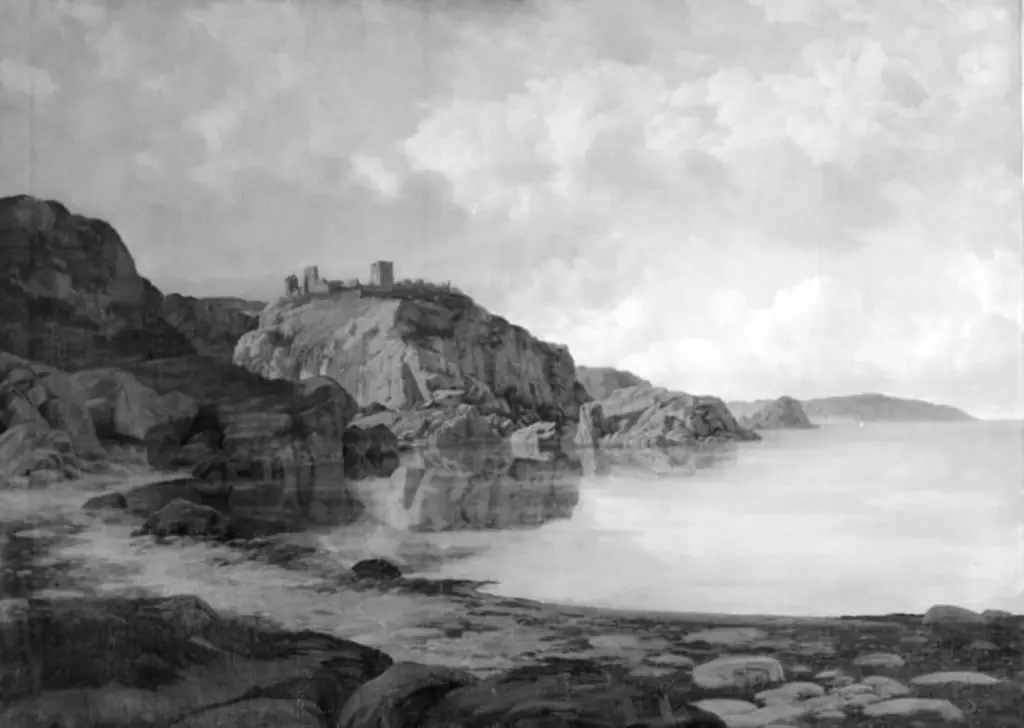
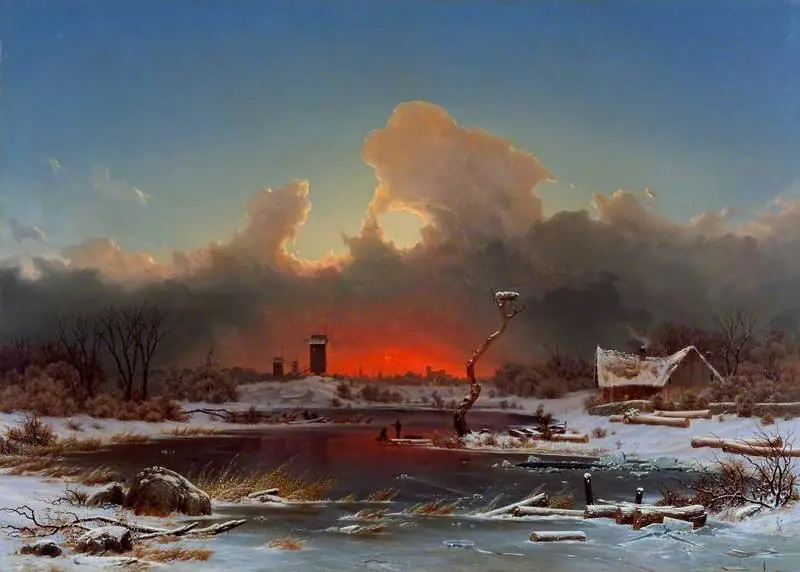
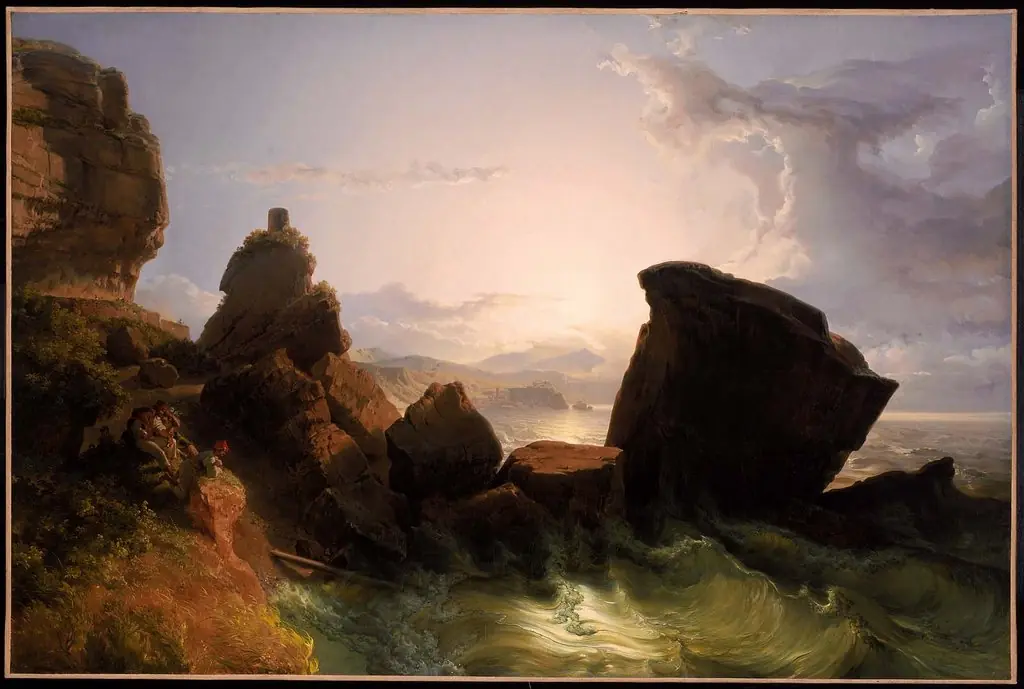
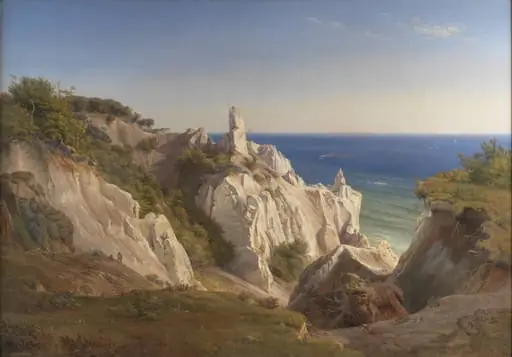
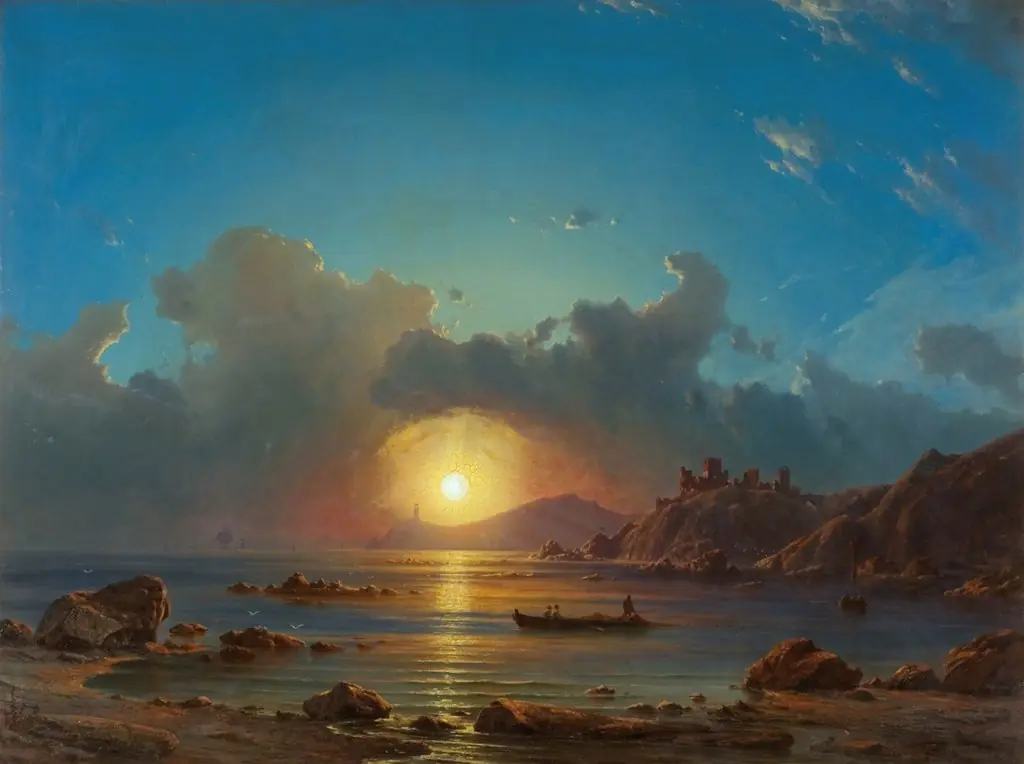
Sunset on a bay, with castle ruins
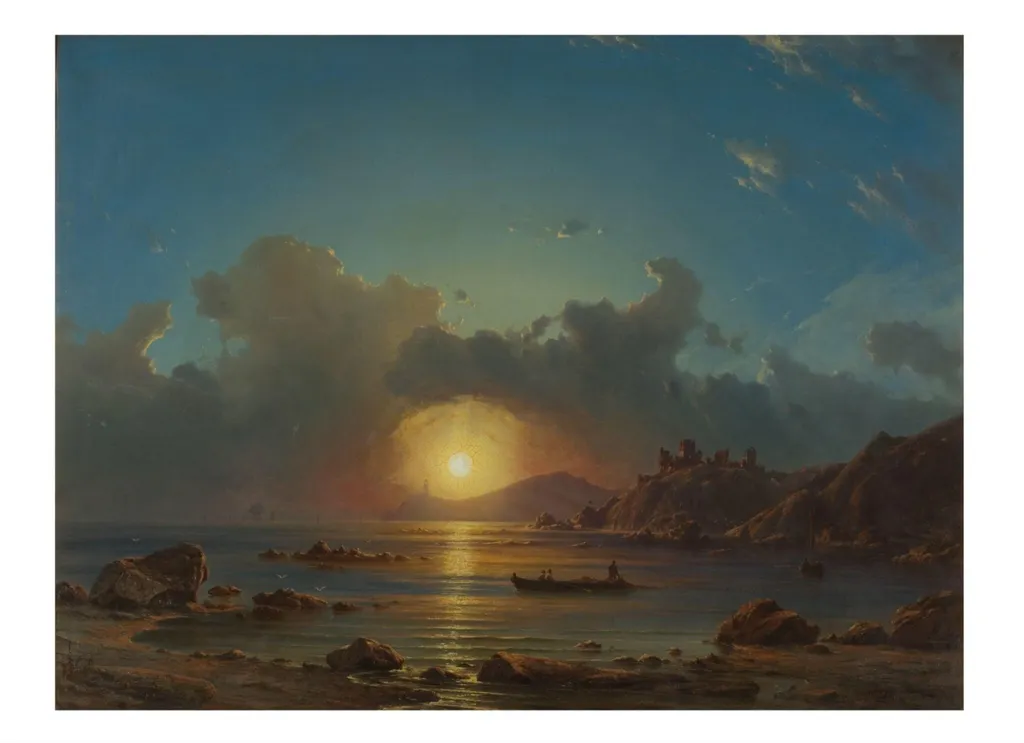
Sunset on a bay, with castle ruins is an oil painting by the Romanticist artist Georg Emil Libert. It dates from 1848 and is held in the collection of the Victoria and Albert Museum.
About this work
Overview
Painted in 1848, this oil landscape by Georg Emil Libert captures a quiet bay at sunset, framed by the distant remains of a castle.
Painted in 1848, this oil landscape by Georg Emil Libert captures a quiet bay at sunset, framed by the distant remains of a castle. Created shortly after Libert’s time in Munich, the work reflects the influence of Northern European Romanticism, emphasizing mood and natural harmony over narrative. Its polished surface and balanced composition align with the period’s preference for refined, atmospheric scenery.
Subject & Meaning
The scene centers on a solitary boat drifting on calm water, with crumbling castle walls rising behind it. The ruins suggest the passage of time and human transience, while the fading light evokes contemplation. Rather than dramatizing history, Libert invites quiet reflection, aligning with Romantic ideals that valued nature as a vessel for emotional and philosophical resonance.
Technique & Style
Libert employs a controlled palette of soft hues and precise brushwork to achieve clarity and luminosity. Light is rendered with subtle gradations, enhancing the sense of depth and stillness. The painting’s finish reflects the influence of academic training and the Munich school’s emphasis on technical precision, while avoiding overt theatricality in favor of serene realism.
History & Provenance
Libert, a Danish artist, traveled to Munich in 1846–47, where he encountered a circle of painters inspired by Caspar David Friedrich. This painting was made soon after his return to Denmark, likely shaped by those experiences. It was exhibited in Vienna in 1873, indicating its recognition within broader Central European art circles during the latter half of the century.
Context
In mid-19th century Northern Europe, landscape painting gained prominence as a vehicle for emotional and spiritual expression. Artists moved away from historical or mythological themes to focus on nature’s quiet power. Libert’s work fits this trend, resonating with collectors who valued tranquil, meticulously rendered scenes that evoked introspection and national identity.
Legacy
Though not widely known today, Libert’s work exemplifies a significant strand of Romantic landscape painting that prioritized atmosphere and technical discipline. His adherence to harmonious composition and light effects influenced later Scandinavian artists seeking to define a regional aesthetic rooted in nature’s subtleties rather than grandeur.
Own this work as a print
Artist & collection
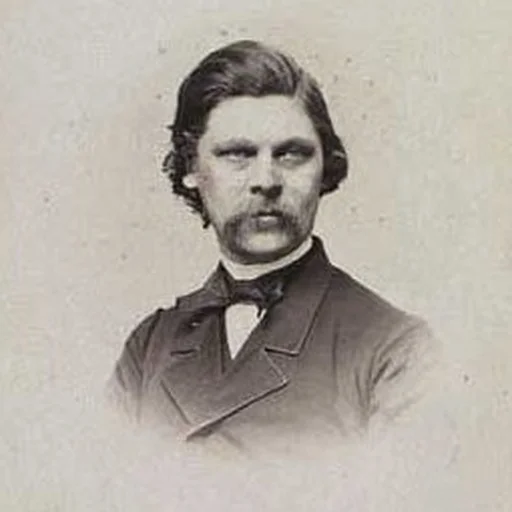
Artist
Georg Emil Libert (2 August 1820 – 19 May 1908) was a Danish landscape painter. His specialties included scenes featuring Danish, German, and Norwegian landscapes.