Artwork
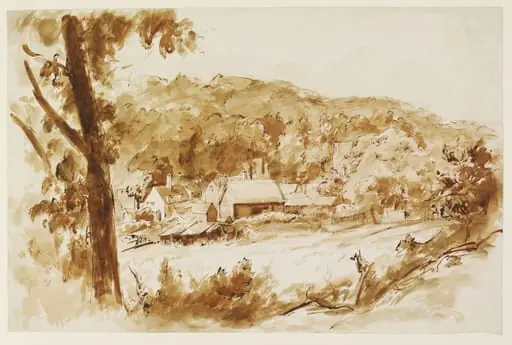
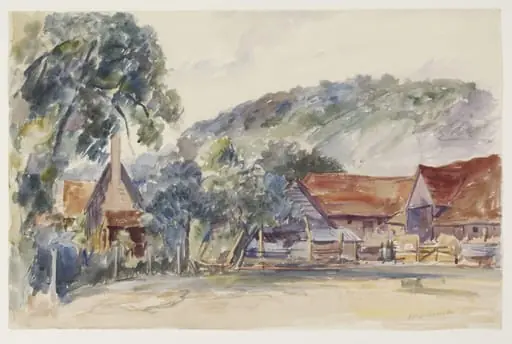
Glebe Farm, Fingest
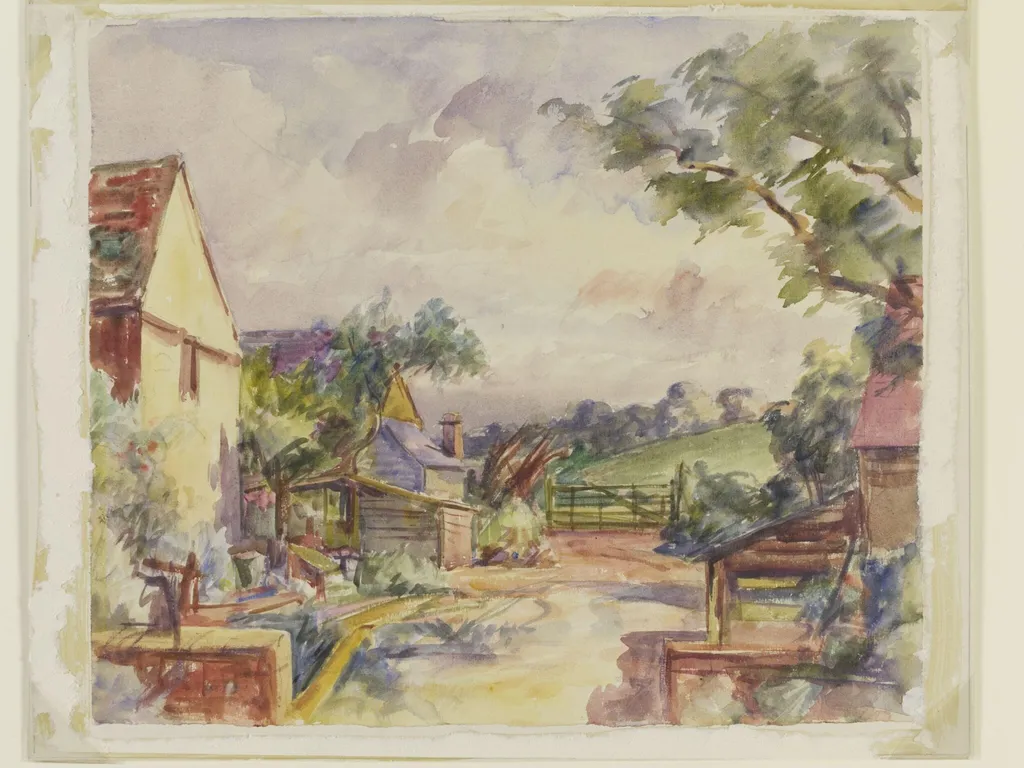
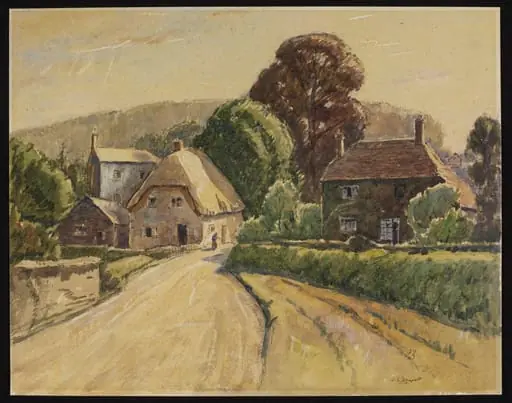
Glebe Farm, Fingest is a watercolor work on paper by Seabrooke. It dates from 1940 and is held in the collection of the Victoria and Albert Museum.
About this work
Overview
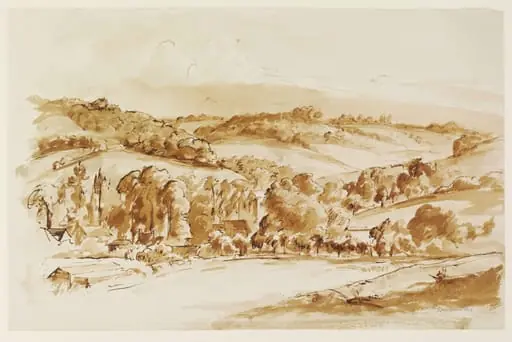
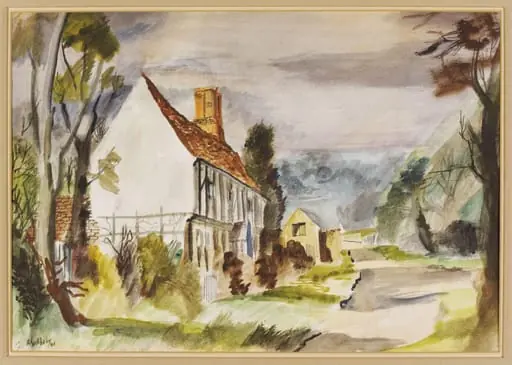
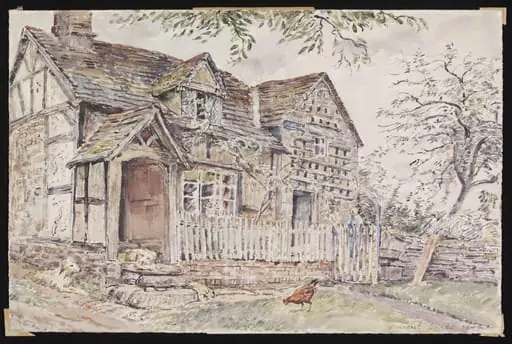
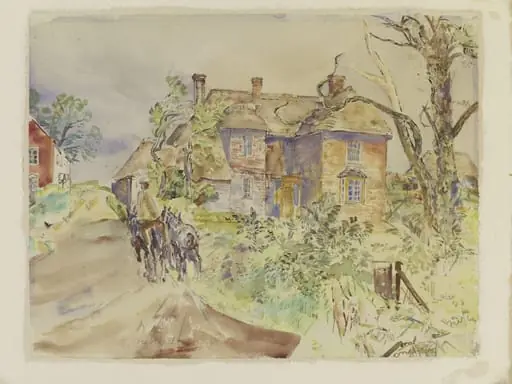
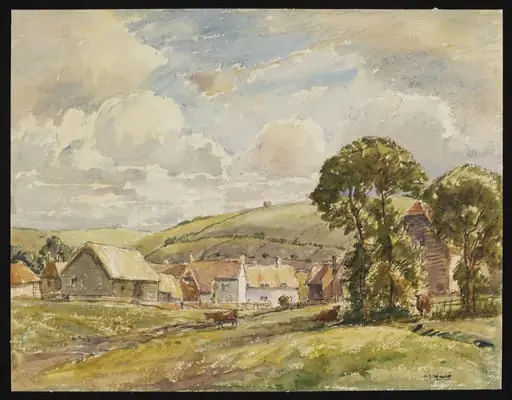
Glebe Farm, Fingest is a 1940 watercolour by the British artist Seabrooke. Executed as part of the Recording Britain project, the work records a quiet rural scene in the Buckinghamshire village of Fingest, showing a modest farm building, a surrounding fence, and a gently rolling landscape under a cloudy sky.
Subject & Meaning
The composition captures a moment of pastoral calm, emphasizing the ordinary architecture of the farm and the natural contours of the countryside. By focusing on everyday rural life, the painting reflects a broader wartime concern for preserving the visual character of places that might be altered or lost through conflict and modernization.
Technique & Style
Seabrooke employs a restrained palette of muted greens, browns, and greys, applying soft washes and delicate brushwork to convey atmospheric light and depth. The subtle gradations of tone and the careful rendering of foliage and stone give the scene a sense of stillness while maintaining a realistic, topographical fidelity.
History & Provenance
Commissioned by the Pilgrim Trust and overseen by Sir Kenneth Clark, the Recording Britain scheme enlisted 97 artists to produce more than 1,500 works documenting the British landscape during World War II. Glebe Farm, Fingest was created under this program, serving both as a visual record of a threatened environment and as financial support for artists working under wartime constraints.
Artist & collection
Artist
This watercolor artist recorded the rolling hills and stone cottages of the Chilterns in the 1940s.