Artwork
Bayswater, Clearing the Ground between Queen's Road and Porchester Terrace
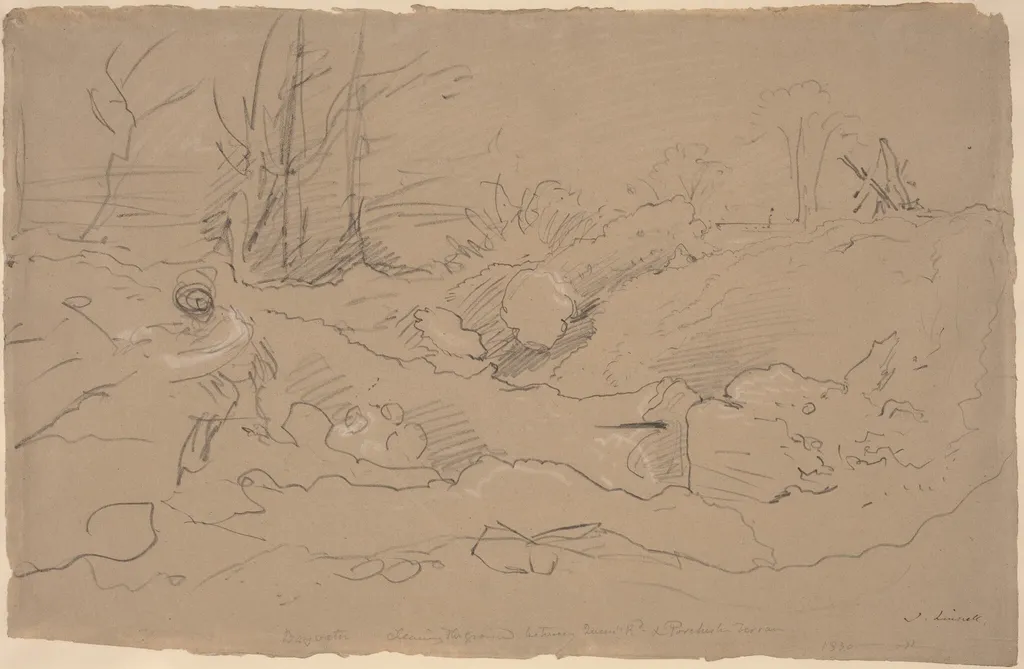
Bayswater, Clearing the Ground between Queen's Road and Porchester Terrace is a chalk drawing by the Romanticist artist John Linnell. It dates from 1830 and is held in the collection of the National Gallery of Art.
About this work
This painting is called Bayswater, Clearing the Ground between Queen's Road and Porchester Terrace.
It was made by John Linnell in 1830.
The artist used black chalk and white on brown paper to create it.
The painting is part of the Romanticism movement, which focused on emotion and nature.
To learn more about this style, look into the movement: Romanticism.
Overview
Unlike idealized landscapes, the work records a mundane, active site with observational precision, reflecting a shift toward documenting everyday change.
Created in 1830 by John Linnell, this drawing depicts a construction site in Bayswater, London, where land was being prepared for development. Executed in black chalk with white highlights on brown wove paper, it captures a moment of urban transformation. Unlike idealized landscapes, the work records a mundane, active site with observational precision, reflecting a shift toward documenting everyday change.
Subject & Meaning
The scene shows laborers clearing earth between Queen's Road and Porchester Terrace, a quiet but significant act of urban expansion. Rather than romanticizing nature, Linnell presents the raw mechanics of city growth. The absence of grandeur or sentiment suggests a documentary intent, framing human labor and land alteration as subjects worthy of artistic attention during a period of rapid metropolitan development.
Technique & Style
Linnell employed black chalk for strong, fluid contours and added white chalk highlights to suggest light falling on disturbed soil and tools. The brown paper provided a mid-tone ground, enhancing the contrast and texture of the scene. The handling is direct and unembellished, favoring tonal modulation over detail, aligning with a realist approach within the broader context of early 19th-century British drawing practices.
History & Provenance
The drawing was made during a period when Linnell was actively sketching London’s outskirts, often in collaboration with or in response to urban planning efforts. It remained in private hands for much of the 19th century before entering a public collection. Its survival as a single sheet suggests it was valued as a study rather than a finished exhibition piece.
Context
In the 1830s, London was expanding rapidly beyond its historic core, with new roads and housing developments reshaping suburban areas like Bayswater. Linnell’s drawing reflects a growing interest among artists in recording these changes, not as picturesque scenery but as evidence of social and economic transformation, aligning with emerging documentary tendencies in British art.
Legacy
This work stands as an early example of urban topographical drawing that prioritizes observation over idealization. It influenced later artists interested in the aesthetics of construction and labor, contributing to a tradition of British drawings that treat mundane urban processes as legitimate subjects for artistic inquiry.
Artist & collection


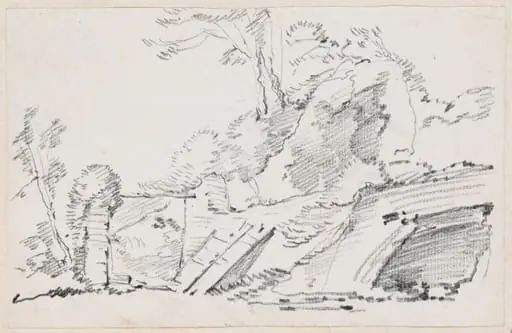 An Ancient Wall with a Ruined Gate
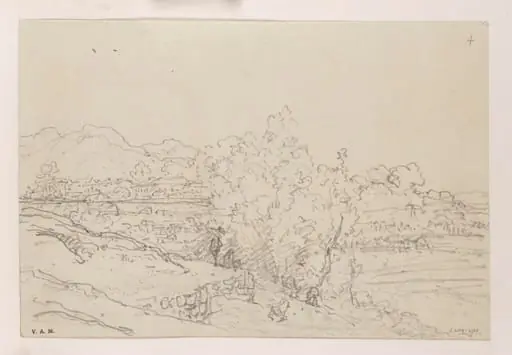 Fields and trees, with the city of Macau in the distance
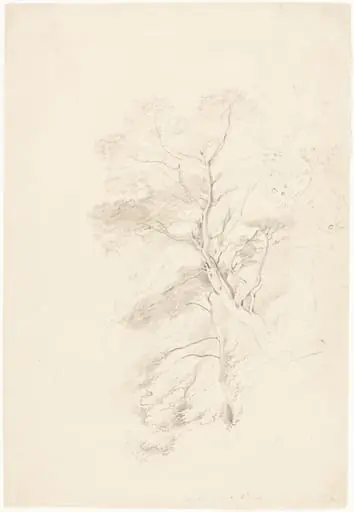
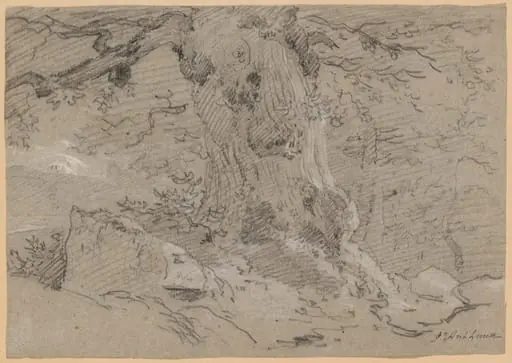 Study of Old Tree Trunk
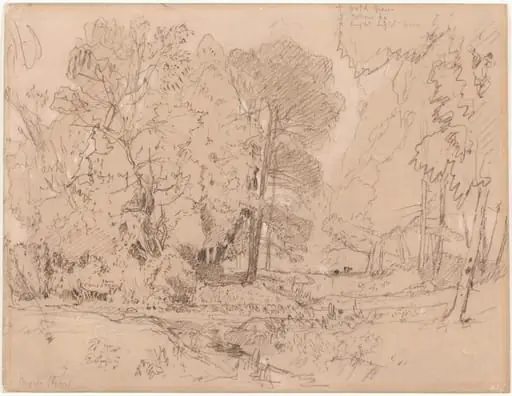 Wooded Landscape
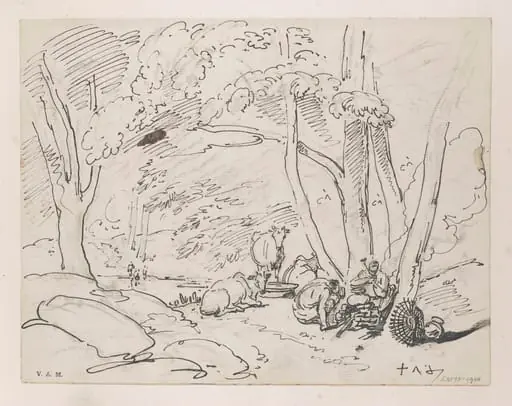 A wooded landscape with Indian figures and cattle
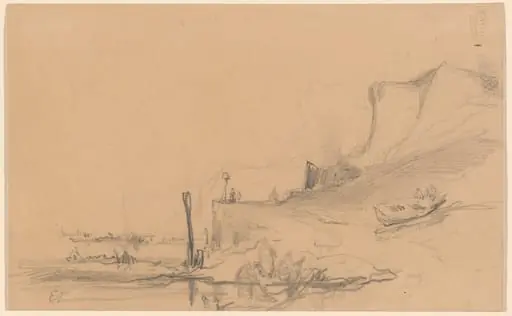 A Coast Road with Cliffs in the North of France
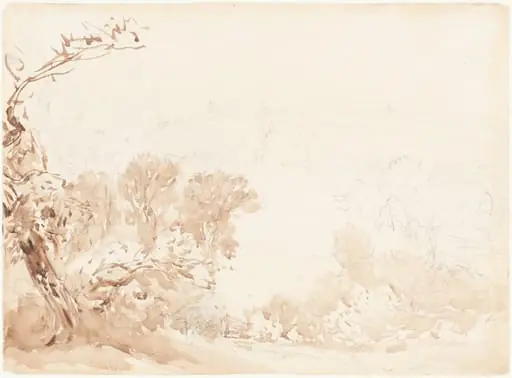 Hillside and Trees
![End of the March [recto], by Winslow Homer](https://artifactworldgallery.com/img/winslow-homer--end-of-the-march-recto--32c10403cc86dd04-w320.webp) End of the March [recto]
End of the March [recto]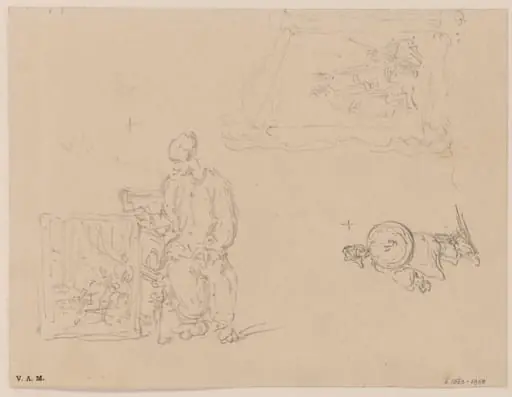 A figure seated beside a portrait, and other sketches
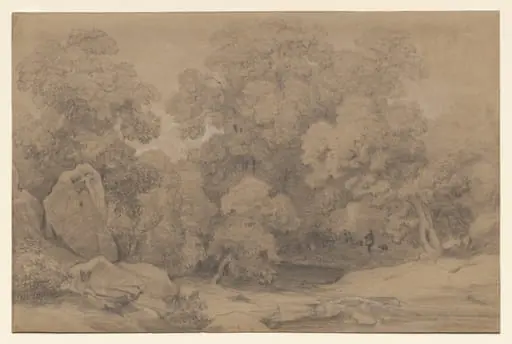 Landscape
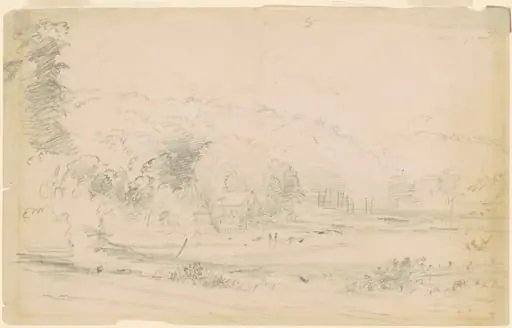 Long Island, New York
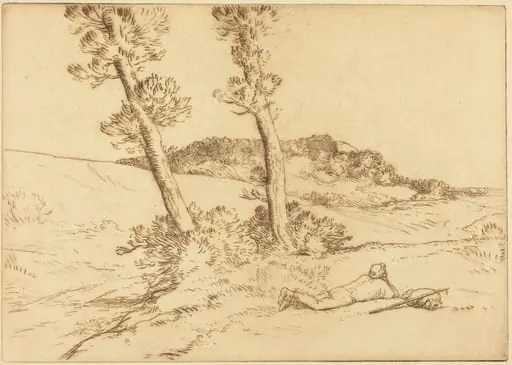 Traveler Reclining on the Grass (Le voyageur etendu sur le gazon)