Artwork
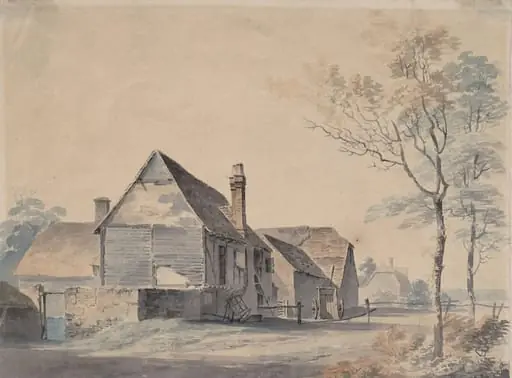
A barn.
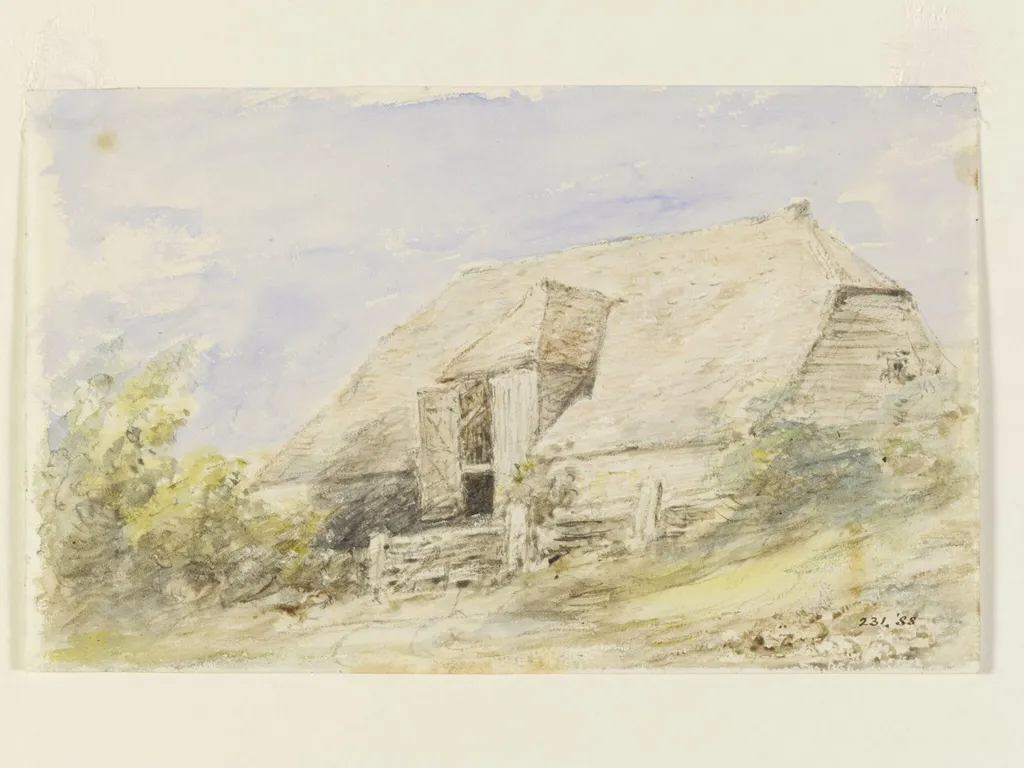
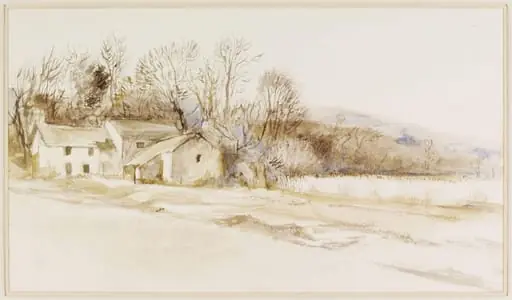
A barn. is a watercolor work on paper by the Romanticist artist John Constable. It dates from 1834 and is held in the collection of the Victoria and Albert Museum.
About this work
Overview
John Constable produced this watercolour sketch of a barn in 1834, during a period of quiet, personal observation rather than public exhibition. Unlike his larger, exhibited works, this piece captures a moment of informal study—unpolished, immediate, and intimate. It reflects his ongoing engagement with rural architecture and landscape, even as his public presence diminished in his later years.
Subject & Meaning
The scene evokes contemplation rather than celebration, aligning with Constable’s enduring focus on the ordinary rhythms of the English countryside.
The barn, weathered and modest, stands alone on a gentle slope, its simplicity emphasizing the quiet dignity of agricultural life. There is no human presence, no narrative drama—only structure and environment. The fading details of the door and window suggest neglect, reinforcing a sense of time’s passage. The scene evokes contemplation rather than celebration, aligning with Constable’s enduring focus on the ordinary rhythms of the English countryside.
Technique & Style
Loose, rapid brushwork defines the composition, with watercolour applied thinly to allow the paper’s texture to show through. The sky blends soft blues into pale washes, while the foliage is suggested with muted greens, neither detailed nor defined. The barn’s form is indicated rather than rendered, its edges softened by overlapping washes. This approach prioritizes atmosphere over precision, creating a sense of transient light and air.
History & Provenance
Created in 1834, the sketch predates Constable’s sole 1835 submission to the Royal Academy, *The Valley Farm*. That same year, he traveled to Arundel to visit family and delivered lectures in Worcester, where earlier works had been shown. This watercolour likely belonged to his private collection, not intended for public display, and may have served as a visual reminder or compositional reference during his later years.
Context
In the mid-1830s, Constable increasingly turned inward, focusing on personal studies as his public acclaim waned. While Romanticism emphasized emotion and the sublime, his work remained grounded in observed reality—quiet, unidealized, and rooted in the English landscape. This sketch reflects a shift from grand exhibitions to intimate, reflective practice, aligning with his lifelong commitment to truth in depiction.
Legacy
Though never exhibited, this sketch exemplifies Constable’s enduring practice of sketching as a means of understanding light, form, and place. Its unpretentious character influenced later artists who valued direct observation over polished finish. It stands as a quiet testament to his belief that the ordinary landscape, rendered with honesty, held its own artistic weight.
Artist & collection
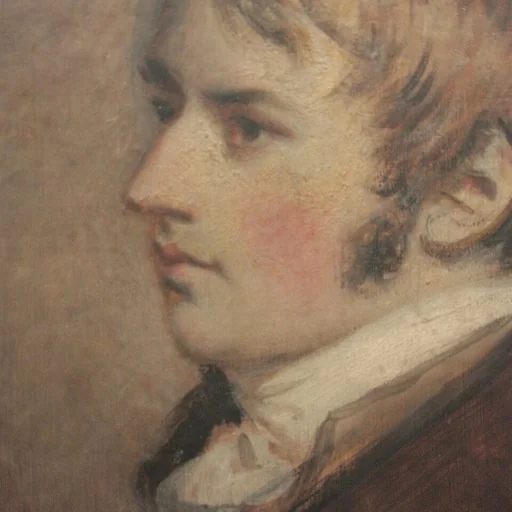
Artist
John Constable (; 11 June 1776 – 31 March 1837) was an English landscape painter in the Romantic tradition.

 Old Mill, Clynne Valley, Gower, Glamorganshire
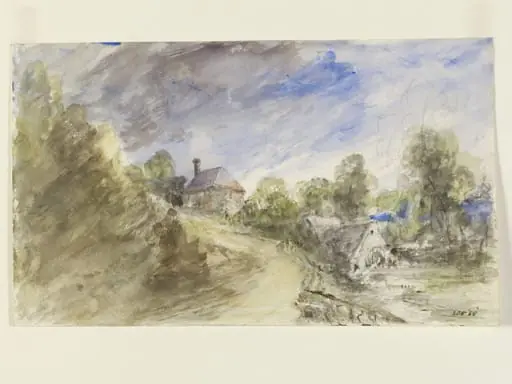 A cottage and water-mill at Bignor
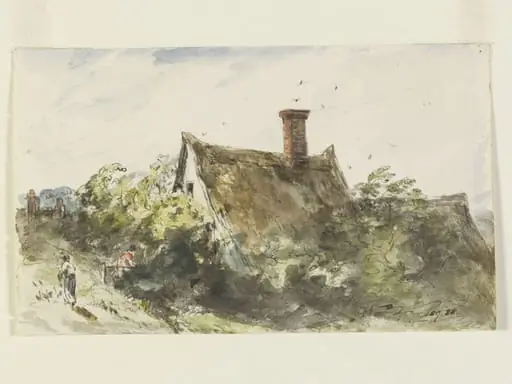 A thatched cottage and two figures
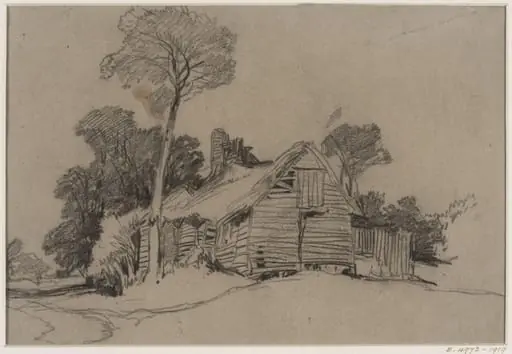 The Ness, Shaldon, Devon
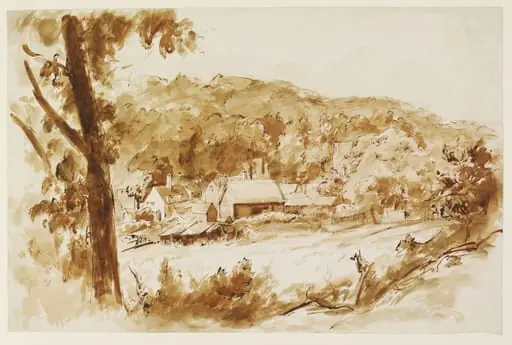 Turville Village
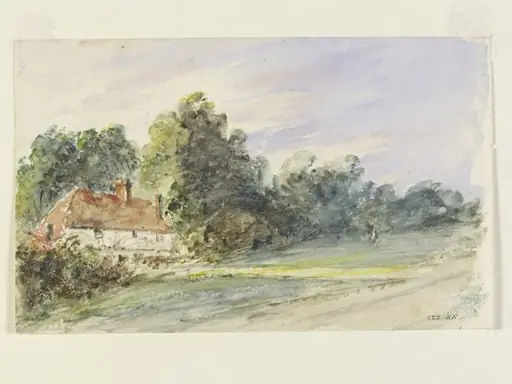 A cottage with a red-tiled roof, by a wood
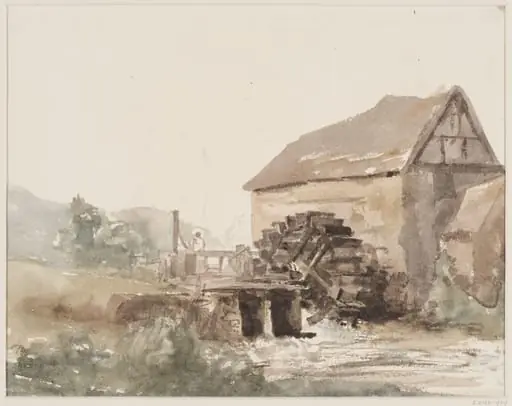 View of a water-mill near Ridware
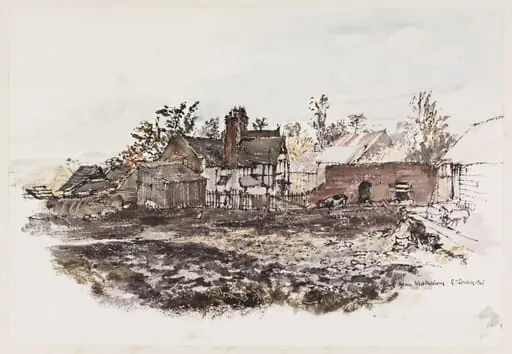 Park Farm, West Malvern
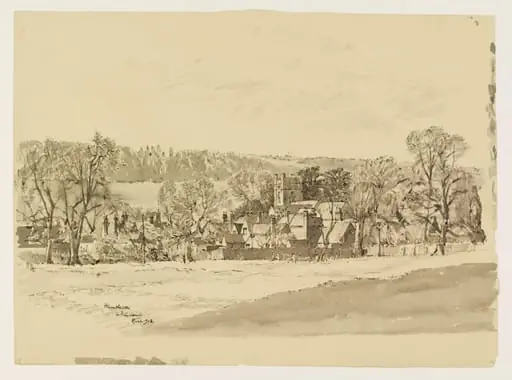 Hambledon
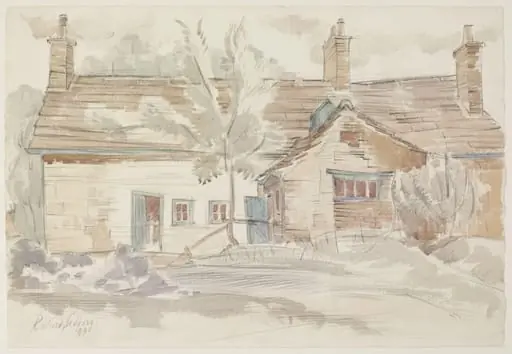 Cottages at Norton, No.4
 Home, Sweet Home
 Landscape with Barn