Artwork
View of a water-mill near Ridware
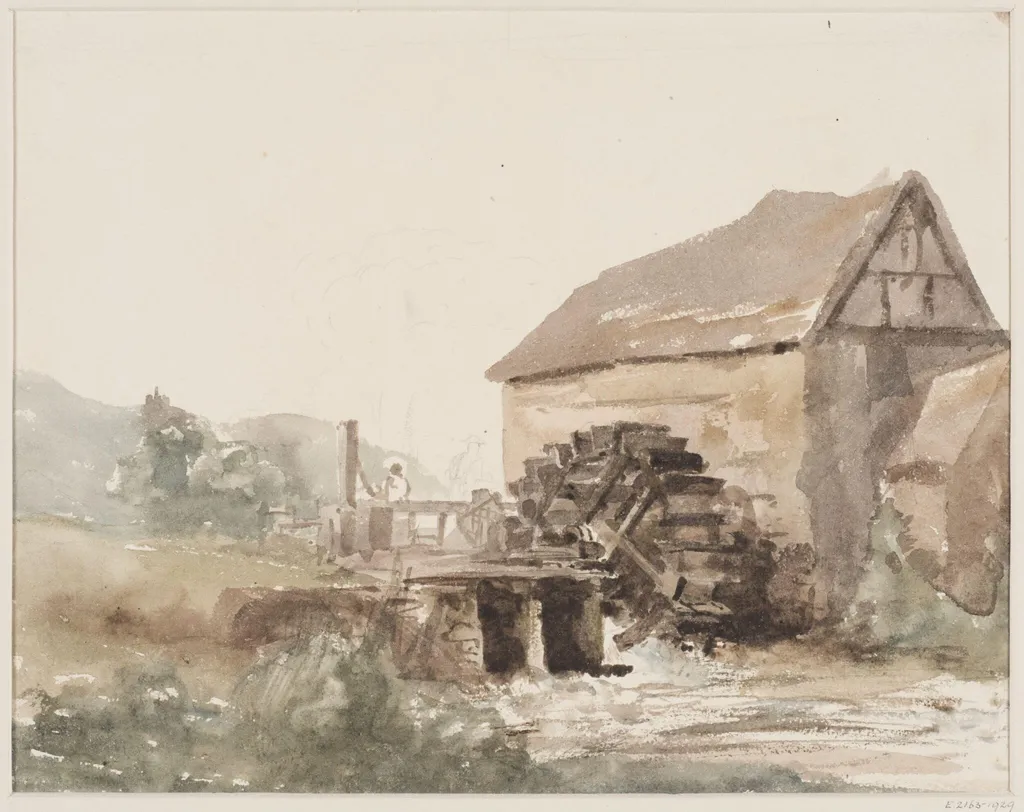
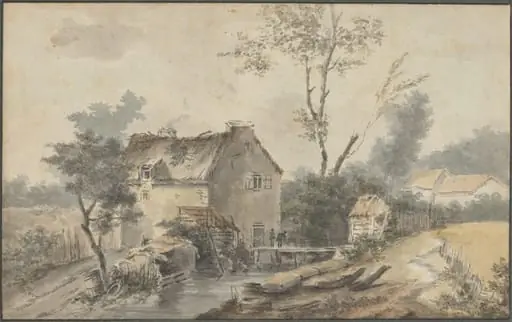
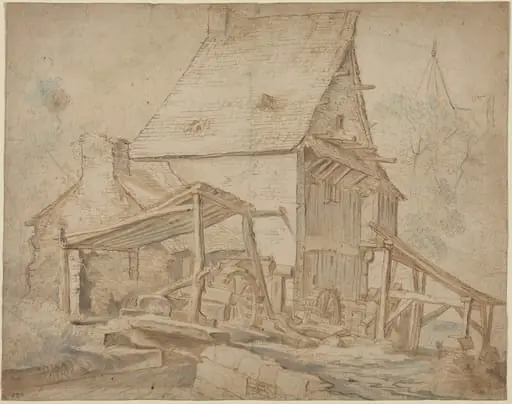
View of a water-mill near Ridware is a drawing by the Romanticist artist Henry Harris Lines. It dates from 1818 and is held in the collection of the Victoria and Albert Museum. A pencil drawing captures a modest water mill beside a flowing river, rendered with swift, unrefined strokes.
About this work
Overview
A pencil drawing captures a modest water mill beside a flowing river, rendered with swift, unrefined strokes. The composition emphasizes the mill’s integration with its natural setting, including a nearby dwelling and rolling hills that fade into a soft sky. The artist’s loose technique suggests a spontaneous observation, prioritizing atmosphere over detail.
Subject & Meaning
The scene centers on a working water mill, its wheel partially submerged and turning with the river’s current. A solitary figure is visible inside, engaged in labor. The inclusion of human activity within the landscape underscores the quiet harmony between manual work and the natural environment, reflecting a contemplative view of rural life.
Technique & Style
The artist employed rapid, fluid pencil strokes to convey motion and light, avoiding precise outlines. The hazy background and minimal shading create a sense of depth without fine detail, aligning with a sketch-like immediacy. This approach prioritizes mood and transient effects over polished finish, characteristic of Romantic-era observational drawing.
History & Provenance
The drawing is held in the collection of the Victoria and Albert Museum, where it is cataloged as part of a broader group of 19th-century topographical sketches. Its origin is linked to an artist who traveled through rural England, documenting industrial and agricultural sites with a focus on their integration into the landscape.
Context
Created during the Romantic period, the work reflects a cultural interest in nature’s rhythms and the dignity of rural labor. Unlike grand landscapes, this sketch presents an unidealized, everyday scene — a quiet testament to the mechanical and human forces shaping the English countryside at the time.
Legacy
As a modest but evocative example of observational drawing, it contributes to the understanding of how artists recorded daily life before photography. Its informal style influenced later generations of sketchers who valued spontaneity and emotional resonance over formal composition.
Artist & collection
Artist
Henry Lines made quiet, fine drawings of English places in the 1800s. His pencil lines trace churches half-hidden by trees, old mills beside streams, and manor gates on rolling hills. Tap into Stowe: a church in the…

 Mill with Bridge and Figures
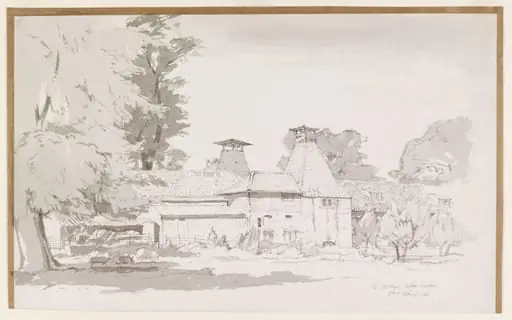 The Maltings, Saffron Walden
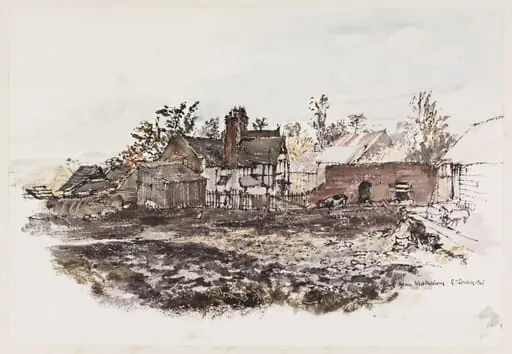 Park Farm, West Malvern
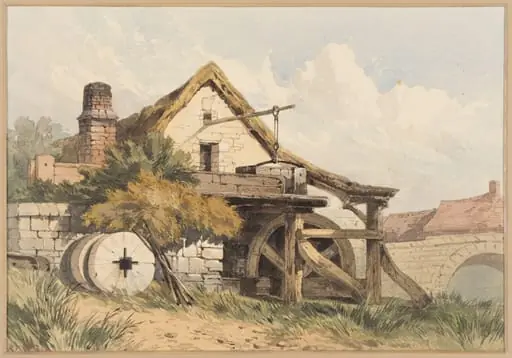 Untitled
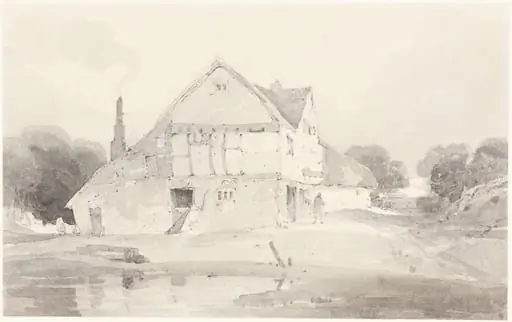 A Cottage at Dorking in Surrey
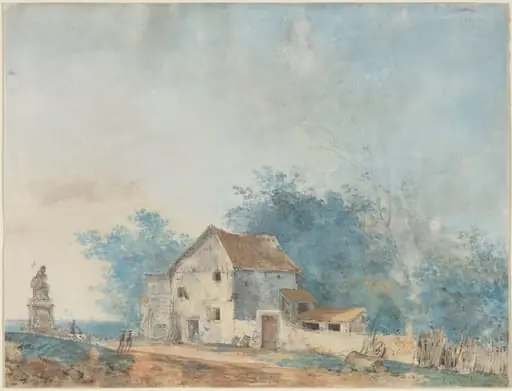 Landscape
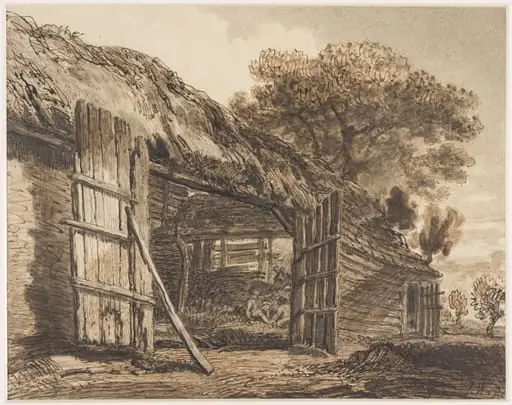 A Study from Nature.
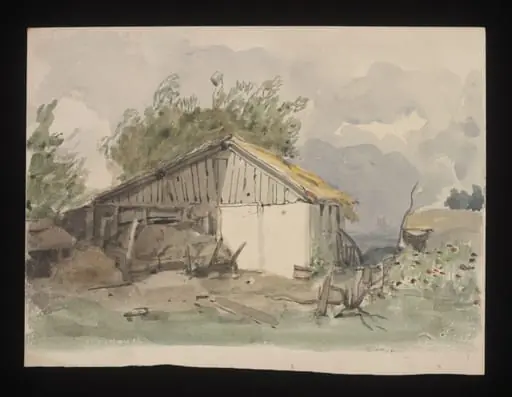 Watercolour drawing by the Grieve family, probably by Thomas Grieve, showing a hut at Margate
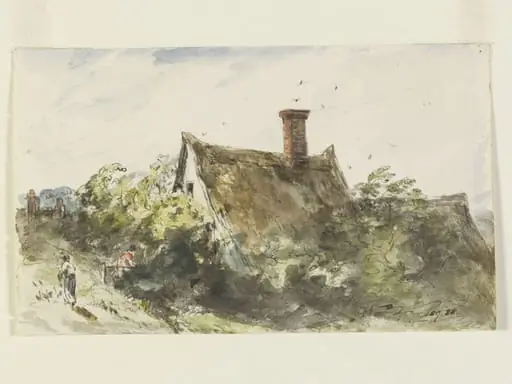 A thatched cottage and two figures
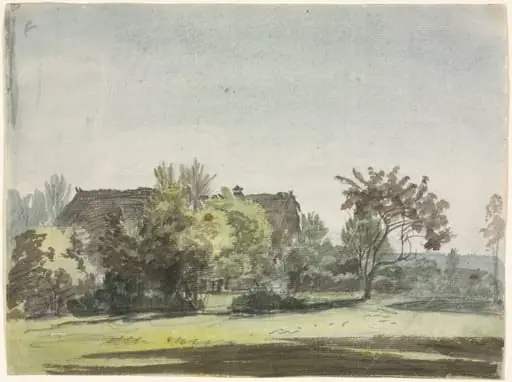 Farmhouse behind Trees
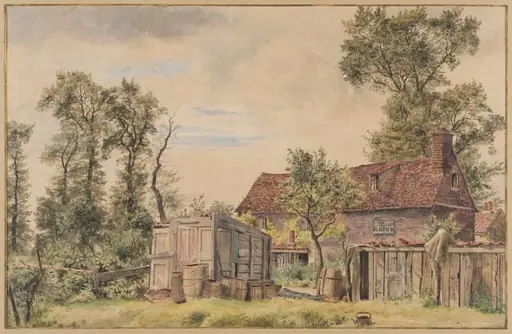 Study from Nature, South K
 An Old Water Mill