Artwork
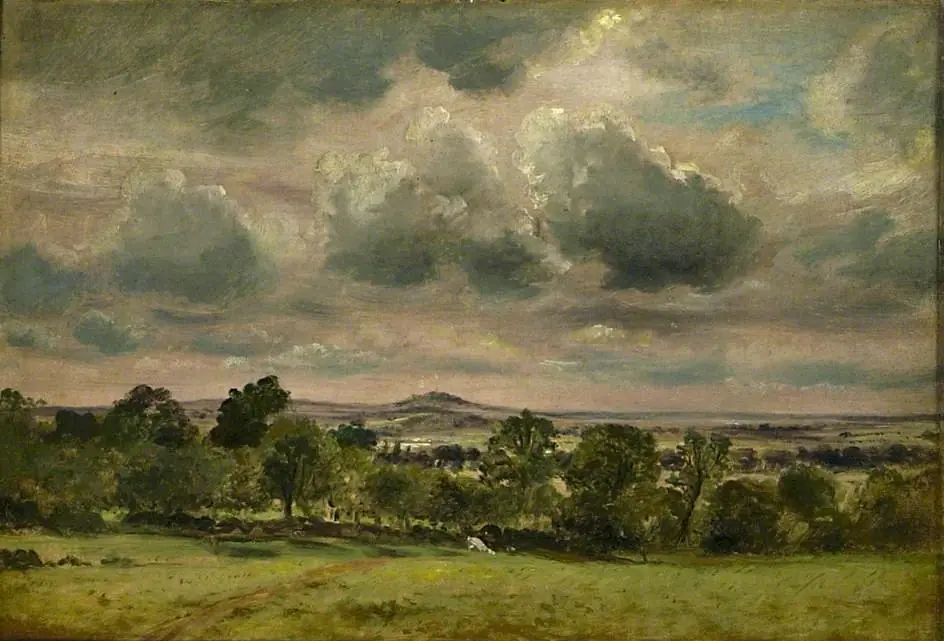
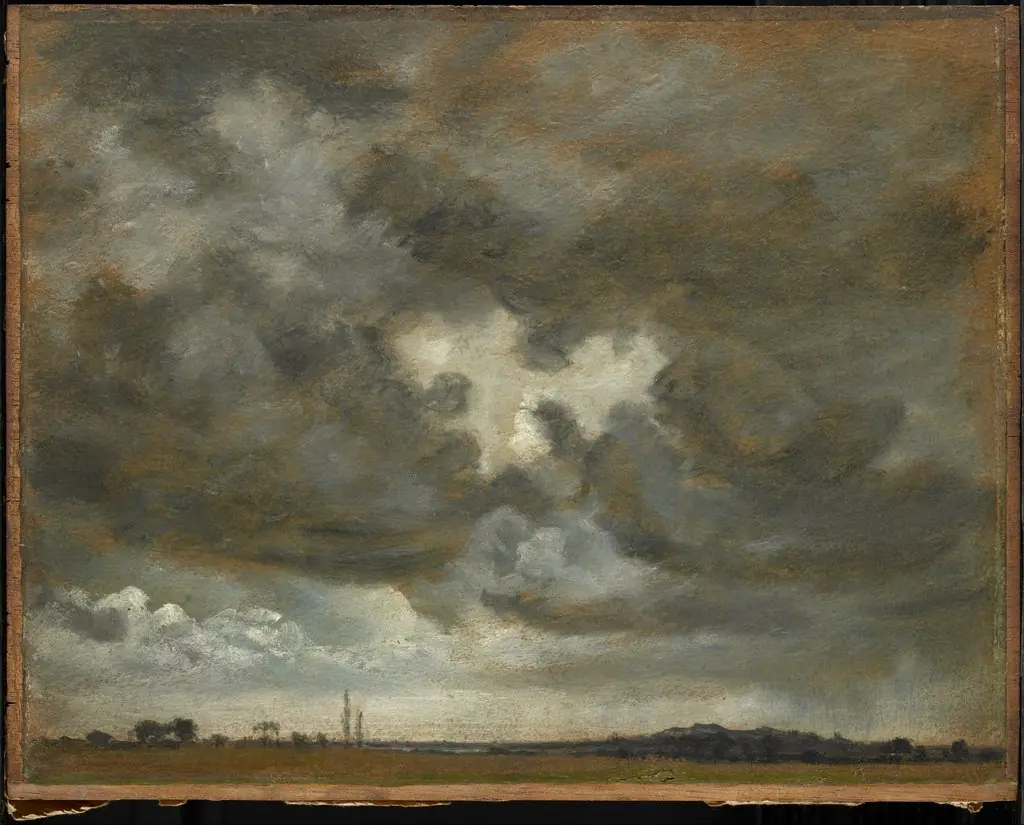
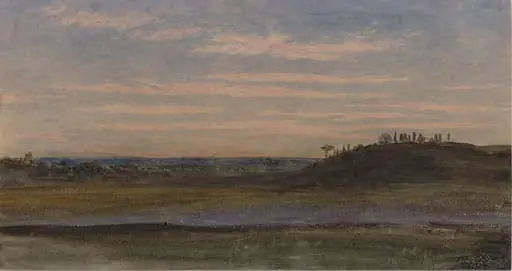
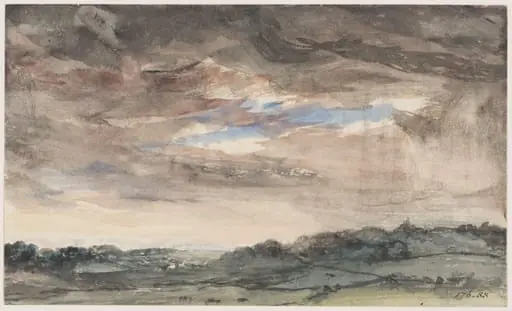
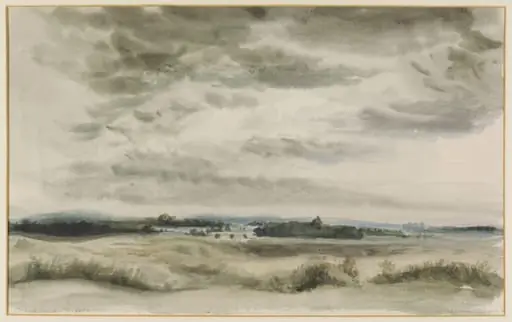
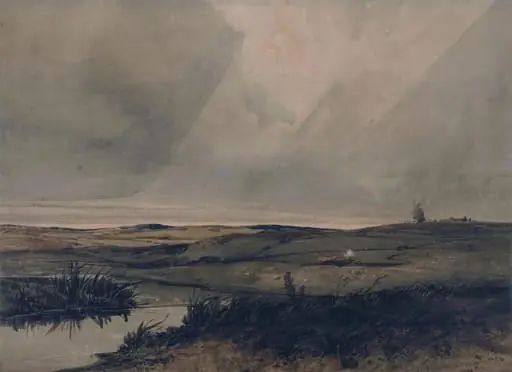
Landscape with scudding clouds
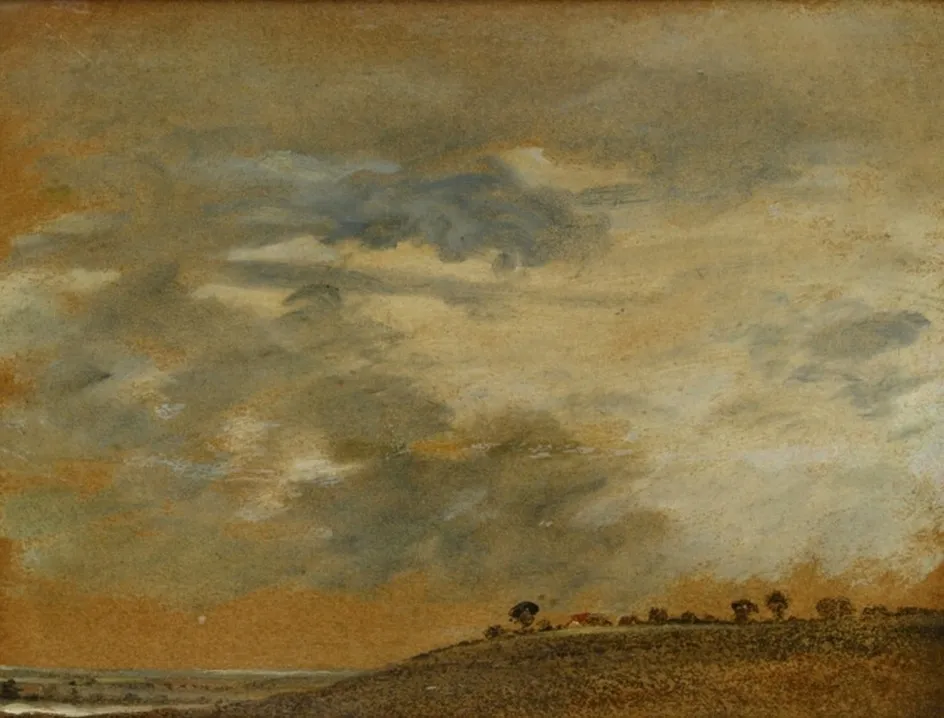
Landscape with scudding clouds is an unspecified painting by Lionel Bicknell Constable. It dates from 1862 and is held in the collection of the Ashmolean Museum.
About this work
Overview
Executed in oil, the painting reflects a sensitivity to natural light and weather, typical of 19th-century British landscape traditions.
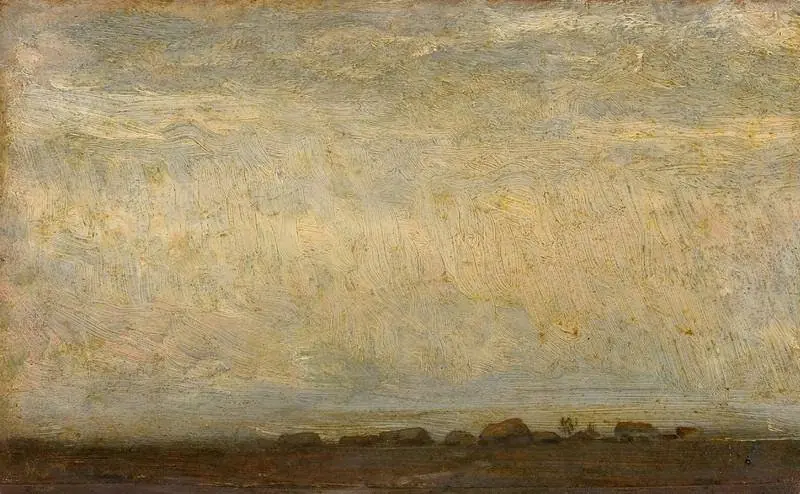
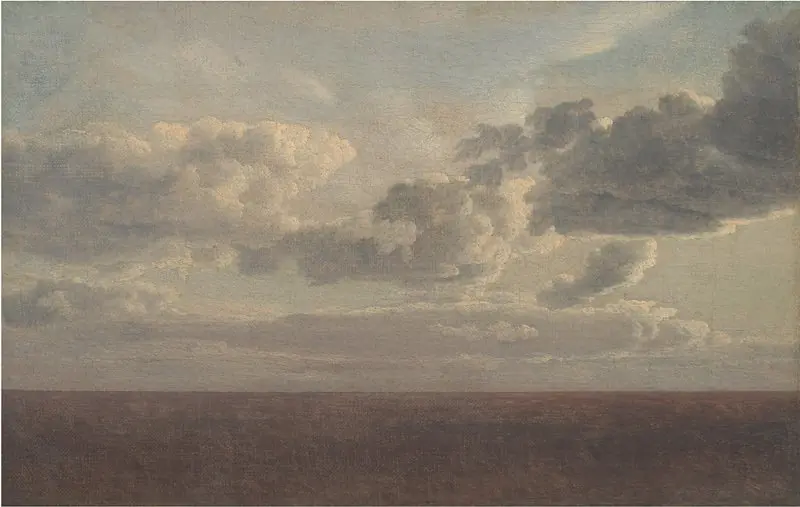
Painted in 1862 by Lionel Bicknell Constable, this work is a quiet yet dynamic study of sky and land. It captures a moment of atmospheric transition, with wind-driven clouds moving rapidly across a broad horizon. The composition emphasizes vertical space, drawing attention upward from a modest foreground to an expansive heavens. Executed in oil, the painting reflects a sensitivity to natural light and weather, typical of 19th-century British landscape traditions.
Subject & Meaning
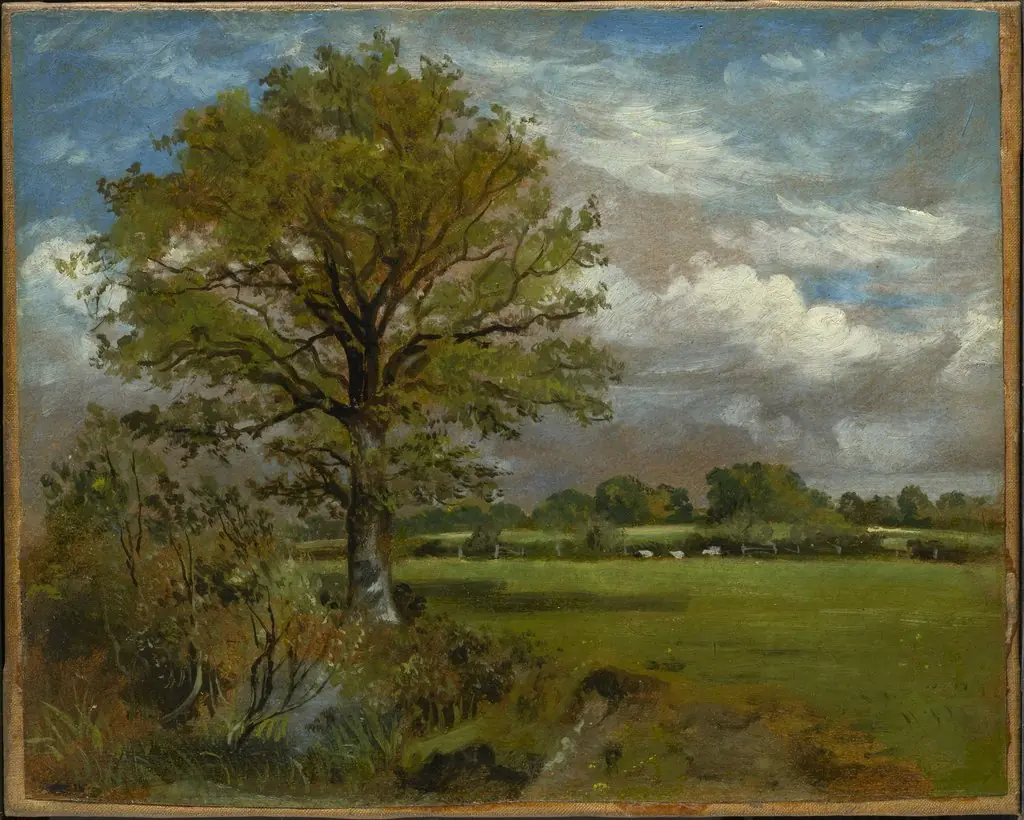
The scene presents an unremarkable rural stretch—low hills, scattered trees, and a distant structure—yet its focus lies in the sky. The scudding clouds dominate, suggesting transient weather and the passage of time. There is no human activity visible, reinforcing a sense of nature’s autonomy. The painting conveys neither narrative nor symbolism, but rather an observation of elemental forces at work, valuing perception over idealization.
Technique & Style
Constable employed loose, fluid brushwork to suggest motion in the clouds and subtle shifts in light. Layers of thin glazes create depth, while muted earth tones in the land contrast with the cool grays and pale blues of the sky. The paint is applied with immediacy, avoiding polish or detail, which enhances the sense of a fleeting moment. The technique prioritizes atmosphere over precision, aligning with a growing interest in direct observation during the period.
History & Provenance
The painting entered the Ashmolean Museum’s collection in the 20th century, following its acquisition from a private source. Its history prior to that is not well documented, though it likely remained in private hands after its completion in 1862. Unlike Constable’s more famous works, this piece was never exhibited publicly during his lifetime, suggesting it was a personal study rather than a commissioned piece.
Context
Created during a period when British artists increasingly turned to nature for its own sake, this work reflects the influence of Romanticism and early plein air practices. While Constable’s more renowned relatives focused on dramatic skies, his approach here is quieter, closer to the observational habits of the emerging naturalist movement. It aligns with contemporaneous efforts to record weather and light with scientific accuracy and emotional restraint.
Legacy
Though not widely known outside academic circles, the painting contributes to understanding the breadth of Constable’s output beyond his major exhibitions. It exemplifies how lesser-known artists engaged with the same natural themes as their more celebrated peers. Today, it serves as a quiet testament to the value of everyday atmospheric observation in 19th-century British art.
Artist & collection
Artist
Lionel Bicknell Constable (1828–1887) was an artist, born in Hampton.