Artwork
Infantry in Arms
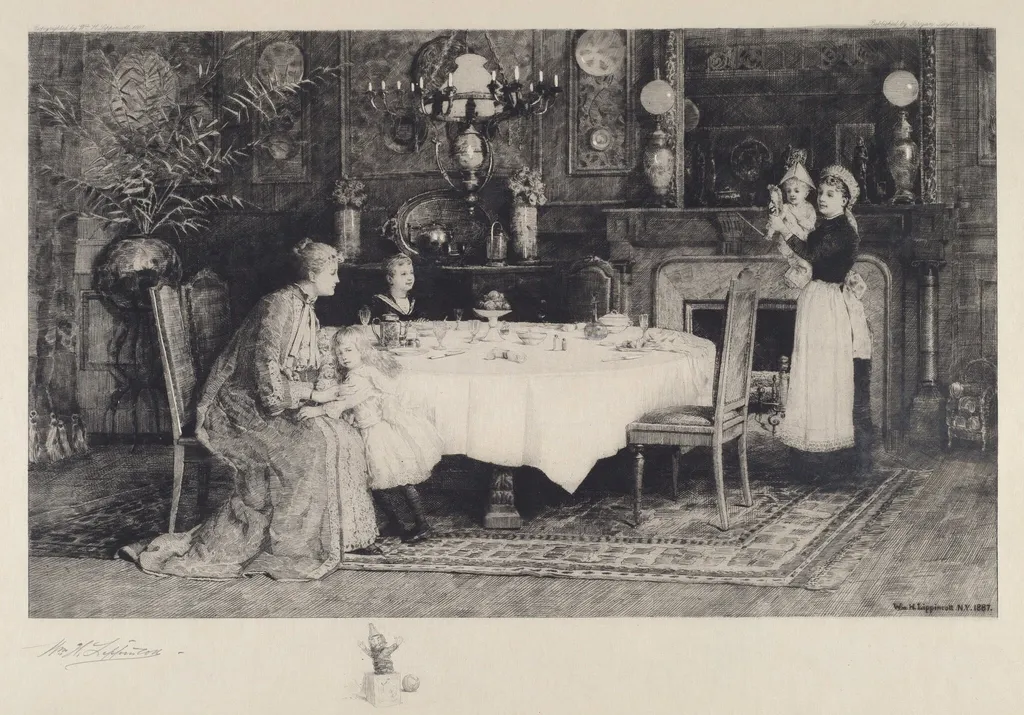
Infantry in Arms is an ink print by the Impressionist artist William H. Lippincott. It dates from 1887 and is held in the collection of the National Gallery of Art.
About this work
Overview
Infantry in Arms, an etching and drypoint by William H. Lippincott (1887), presents a serene domestic scene. Contrary to its title, the work depicts a woman and four children engaged in a quiet, everyday moment around a table.
Subject & Meaning
The scene focuses on familial intimacy, with the woman and children interacting around a set table. Despite the misleading title suggesting a military theme, the etching conveys warmth and domesticity, emphasizing the connection between the figures and their surroundings.
Technique & Style
Executed in etching and drypoint, the piece showcases Lippincott's attention to detail and ability to achieve realistic depth. The interplay of lines and textures captures the intricacies of the domestic setting, from the table's objects to the fireplace's mantle.
History & Provenance
Created in 1887, the etching's origins and early ownership history are not detailed in available information. The title's incongruity with the subject matter remains unexplained in provided sources.
Context
Emerging in the late 19th century, 'Infantry in Arms' reflects the era's interest in everyday life and domestic scenes in art. It aligns with a broader shift towards depicting mundane, intimate moments.
Legacy
The etching's impact or influence on subsequent artists or movements is not prominently documented in the provided sources, suggesting it may not be widely recognized as a pivotal work in Lippincott's oeuvre or the broader art historical canon.
Artist & collection


 The Broad Curtain
 The Table
 Essay on Stone with Brush and Scraper: Woman Reading at the Fireside
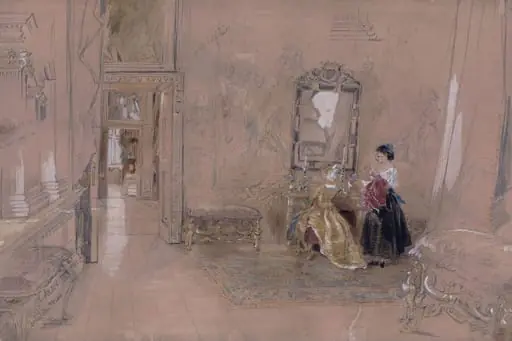 The Venetian Ambassador's Room at Knole, Kent
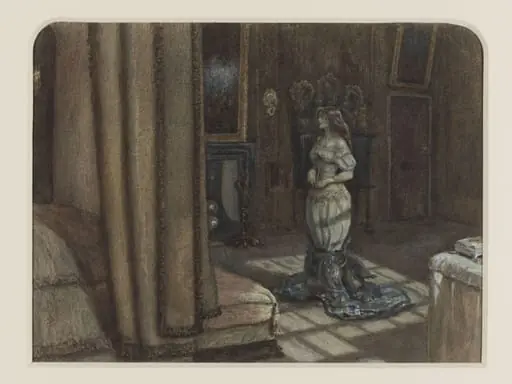 The Eve of St. Agnes
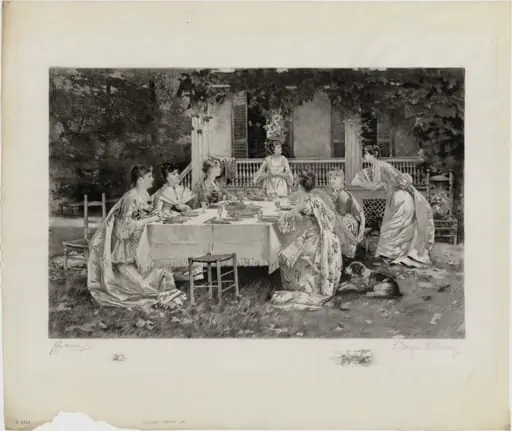 Five O'Clock Tea
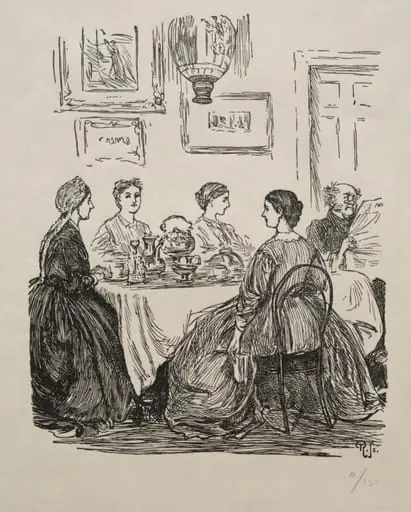 The Annual Question - Where Shall We Go?
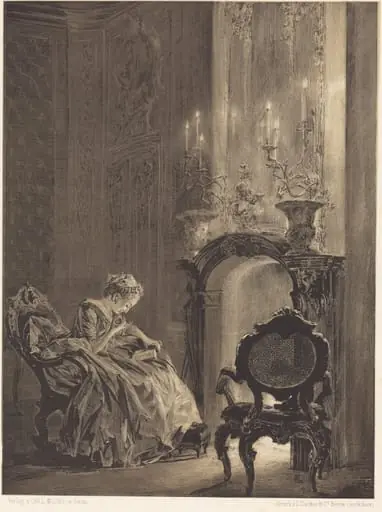 Woman before a Fire
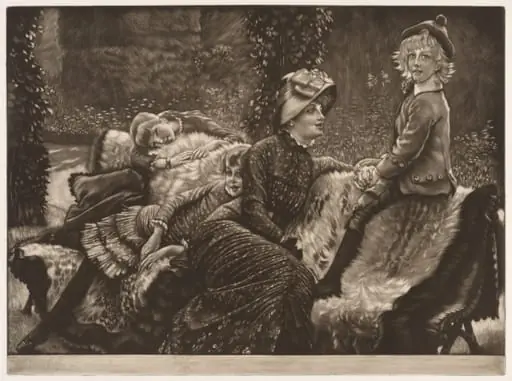 The Garden Bench
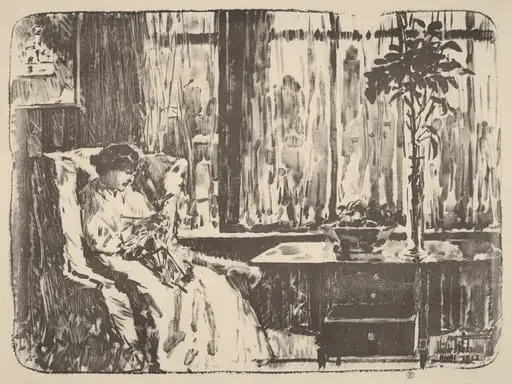 The Broad Curtain
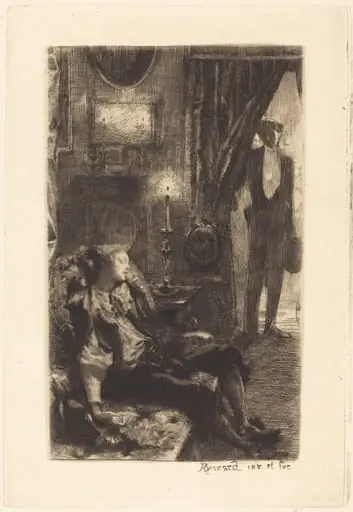 Iza Sleeping (Le Sommeil d'Iza)
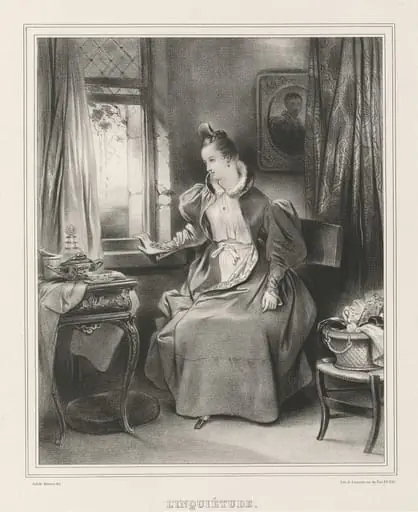 L'Inquietude