Artwork
Die Himmelfahrt Mariae
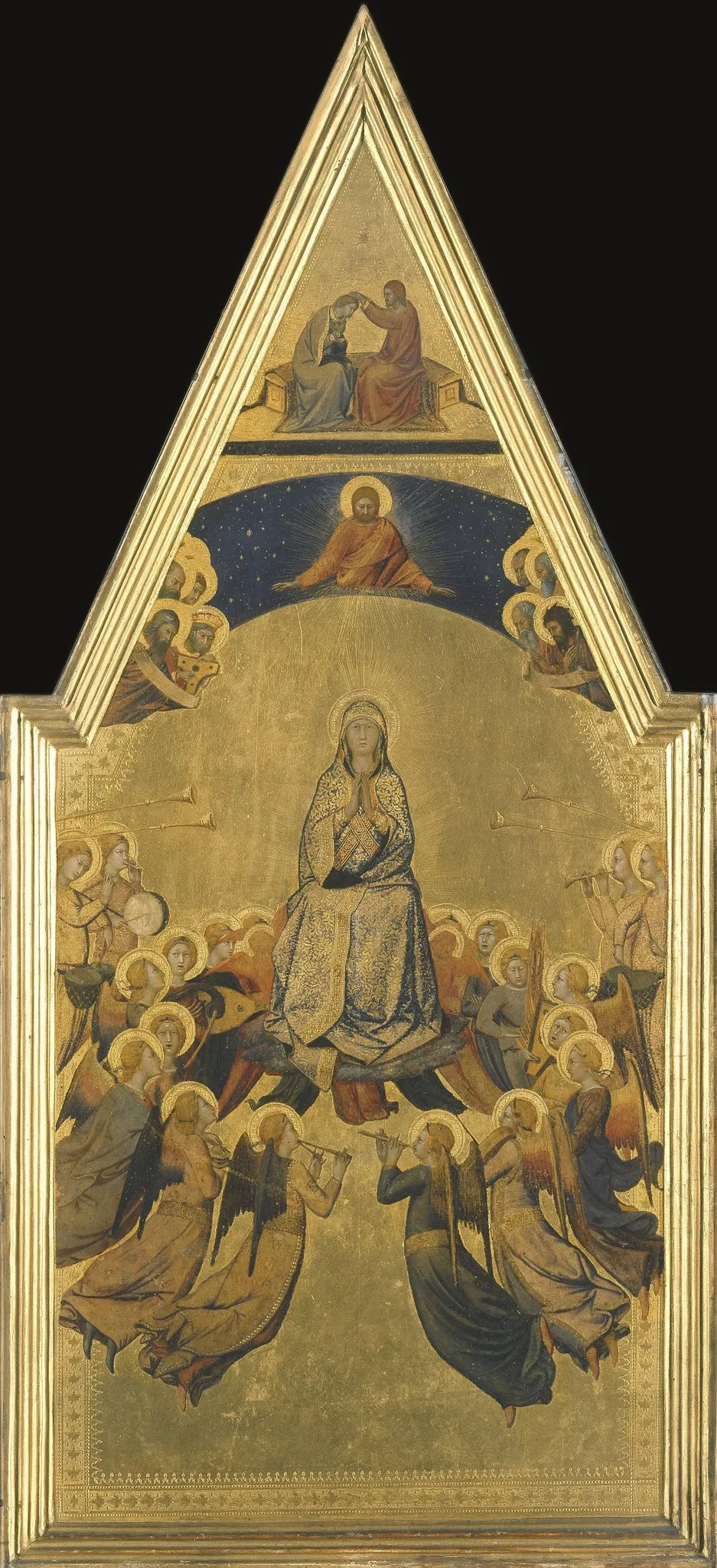
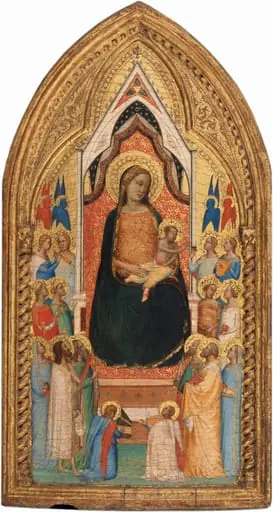
Die Himmelfahrt Mariae is an unspecified painting by the Byzantine icon painting artist Lippo Memmi. It dates from 1340 and is held in the collection of the Bavarian State Painting Collections.
About this work
Overview
Created in 1340 by the Sienese painter Lippo Memmi, *Die Himmelfahrt Mariae* is a tempera work on panel that follows the Byzantine iconographic tradition. The composition is organized in a pyramidal arrangement, centering on a crowned Virgin Mary standing on a cloud, surrounded by angels, saints and smaller narrative scenes, all set against a luminous gold ground.
Subject & Meaning
The central figure is the Virgin Mary, depicted in a blue robe with a golden halo, her hands raised in a gesture of assumption. Around her, angels and saints hold books, instruments and other symbols of devotion, reinforcing the painting’s function as a visual aid for contemplation of the Assumption and the heavenly realm.
Technique & Style
Memmi employs the flat, saturated colors and precise outlines characteristic of early 14th‑century Sienese painting. The gold background creates a radiant, otherworldly light that envelops the figures, while the lack of modeling emphasizes the symbolic rather than naturalistic representation of the sacred scene.
History & Provenance
Lippo Memmi worked on projects for Orvieto Cathedral before joining his brother‑in‑law Simone Martini at the papal court in Avignon. The painting reflects Martini’s influence and the collaborative atmosphere of the Sienese school, though its later ownership and exhibition history remain sparsely documented.
Context
The work belongs to a period when devotional images were produced for private and ecclesiastical use, often serving as focal points for liturgical rites. Its adherence to Byzantine conventions and the emerging Gothic sensibility illustrates the transitional artistic climate of Siena in the mid‑fourteenth century.
Artist & collection

Artist
Lippo Memmi (c. 1291 – 1356) was an Italian painter from Siena. He was the foremost follower of Simone Martini, who was his brother-in-law. Together with Martini, in 1333 he painted what is regarded as one of the…

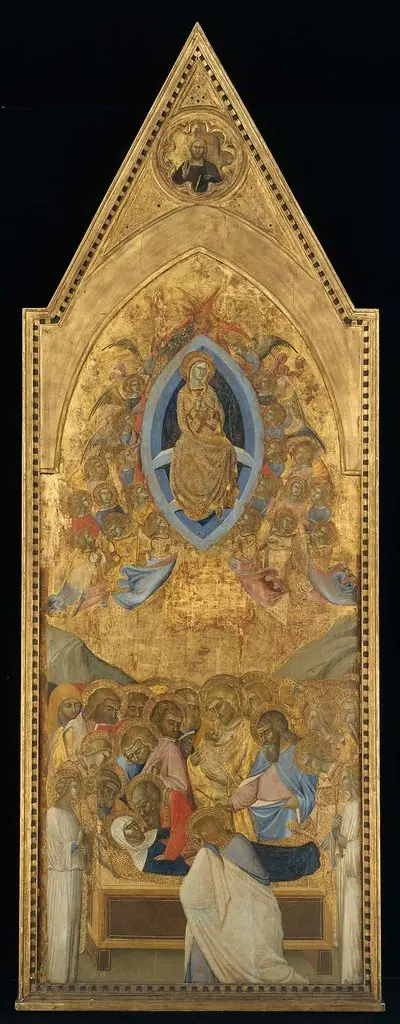 The Dormition and Assumption of the Virgin (center panel)
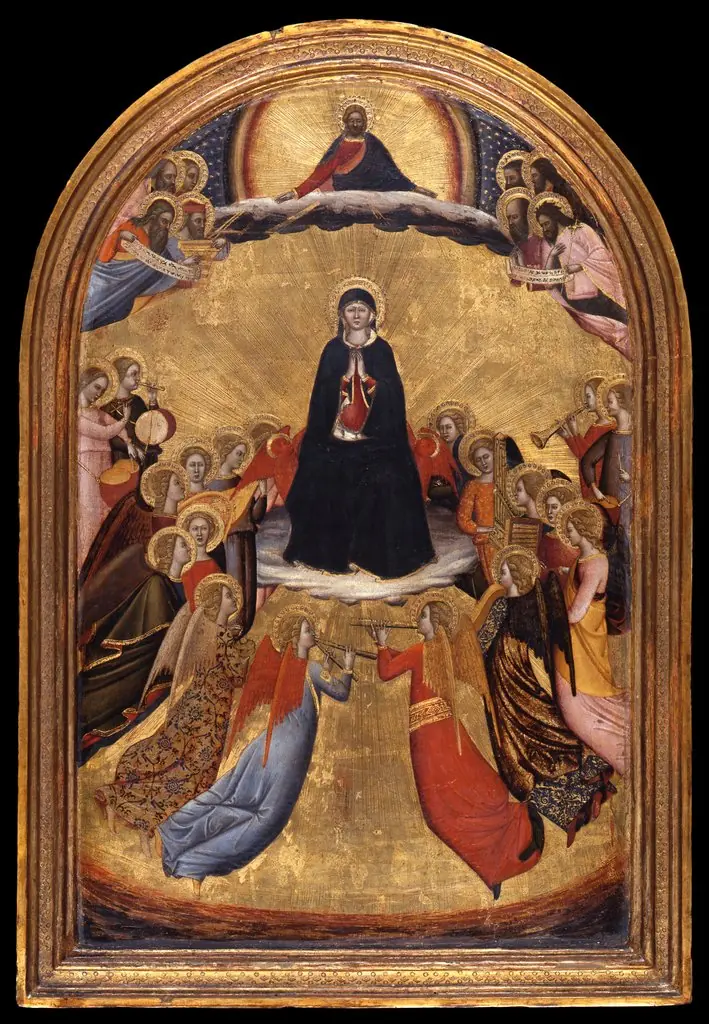 The ascension of Mary
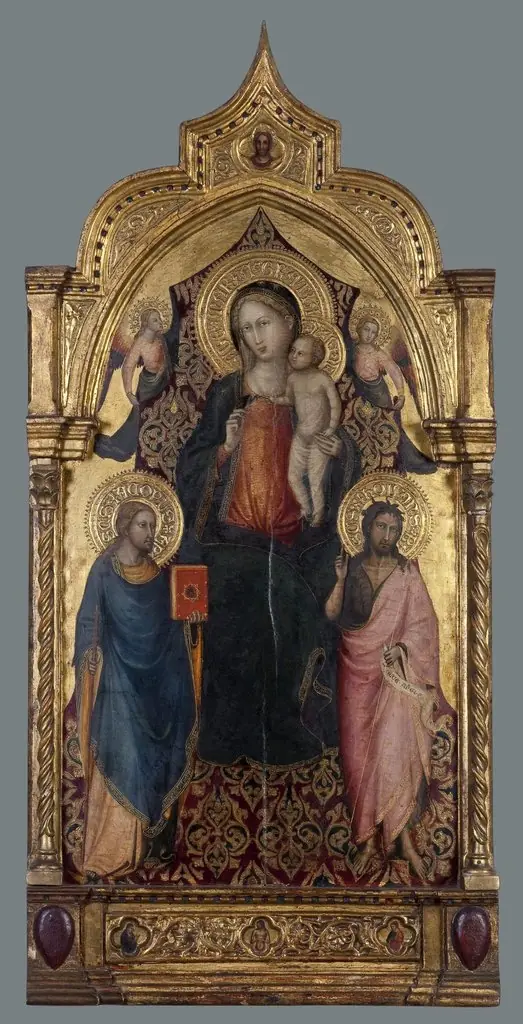 Madonna and Child, with St Jacob the Younger, St John The Baptist and Angels
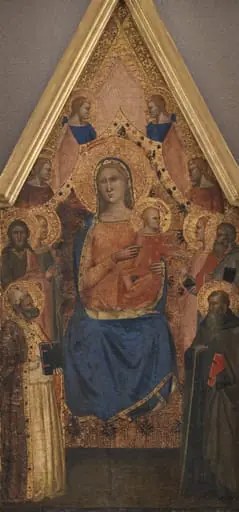 The Virgin and Child with Saints and Angels
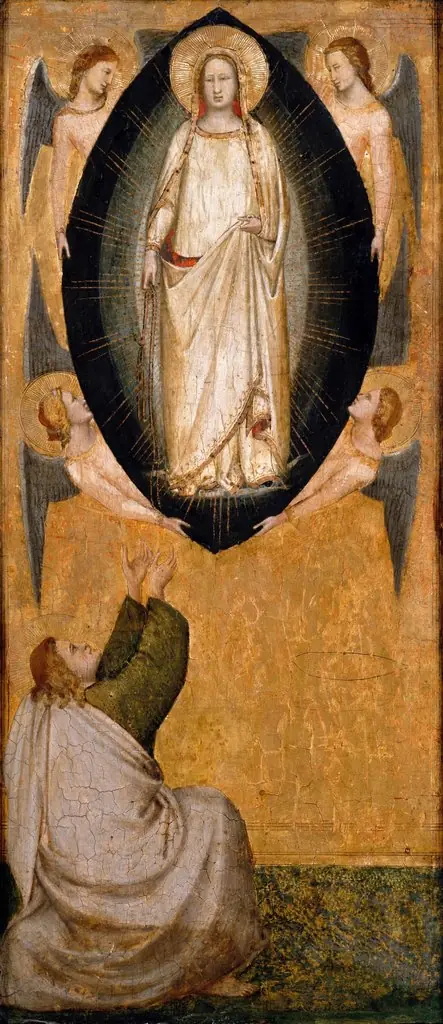 Descent of Mary's Girdle to the Apostle Thomas
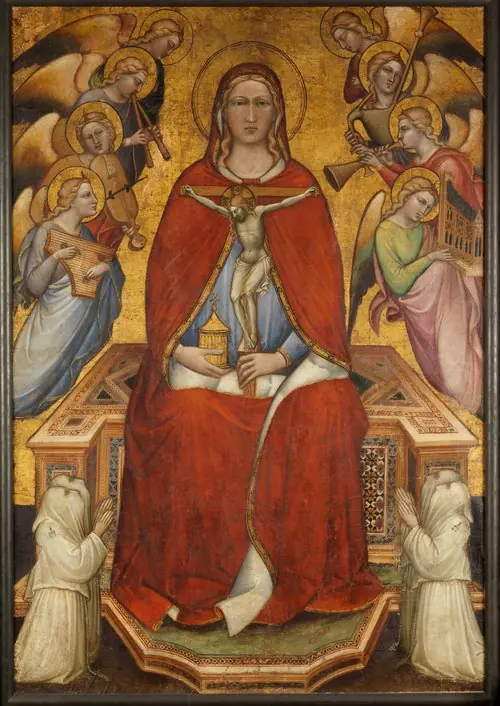 Processional Banner
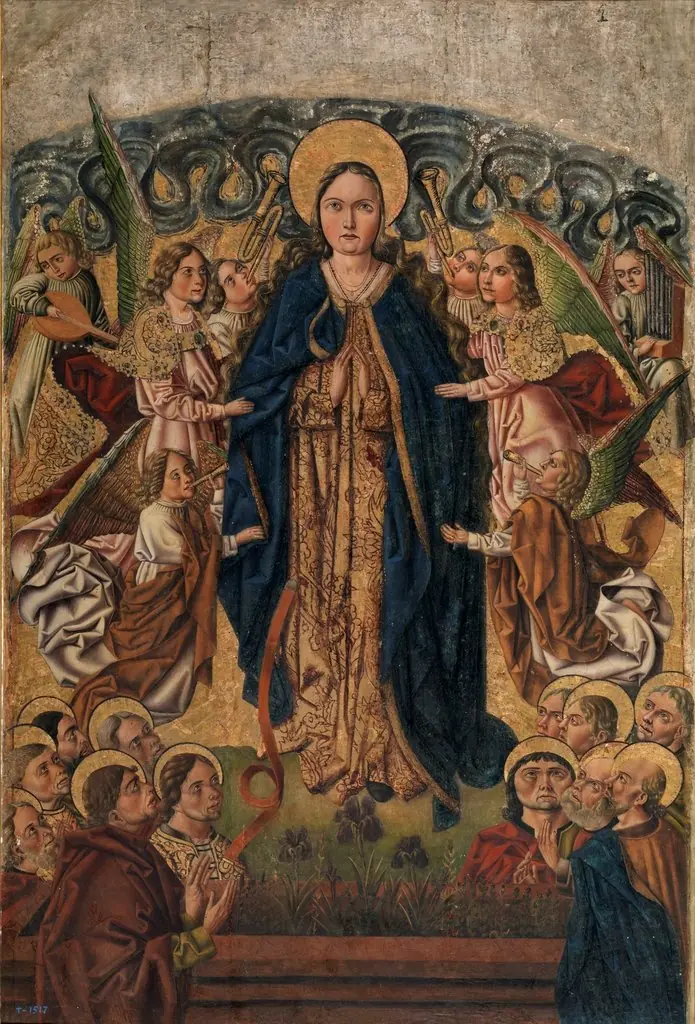 The Assumption of the Virgin
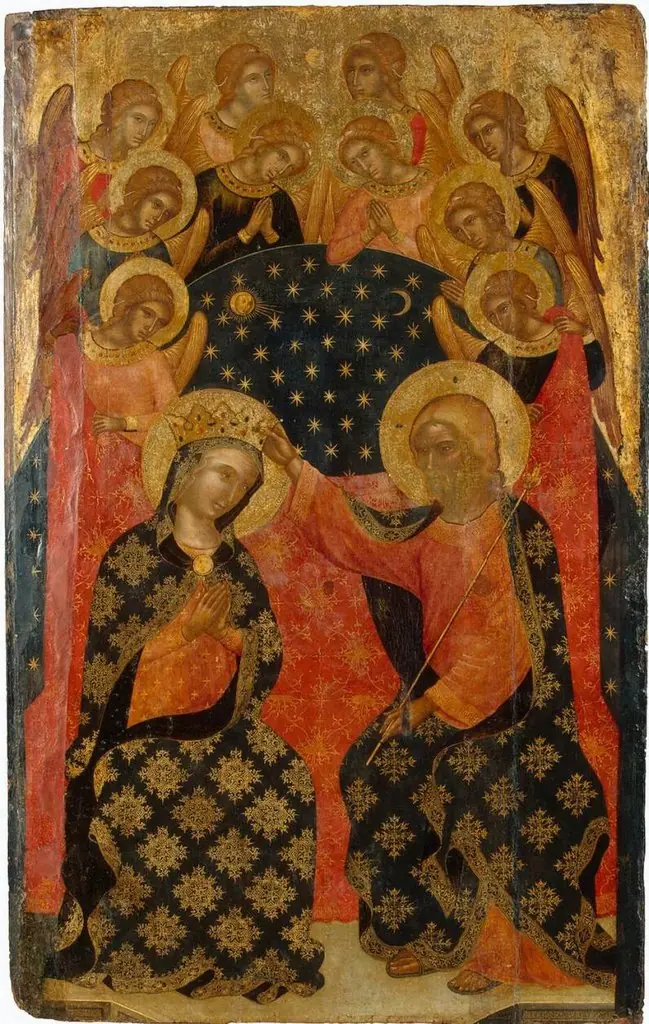 The Coronation of the Virgin
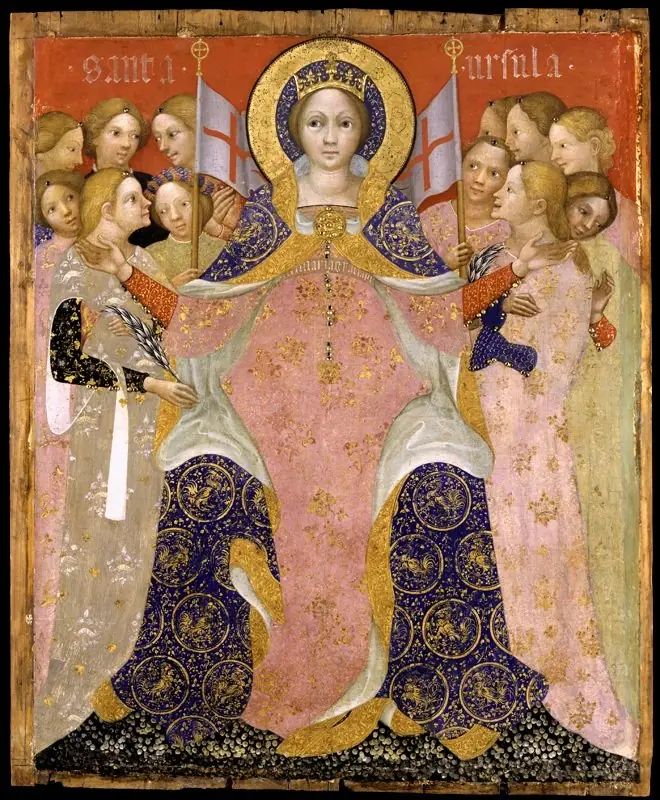 St Ursula
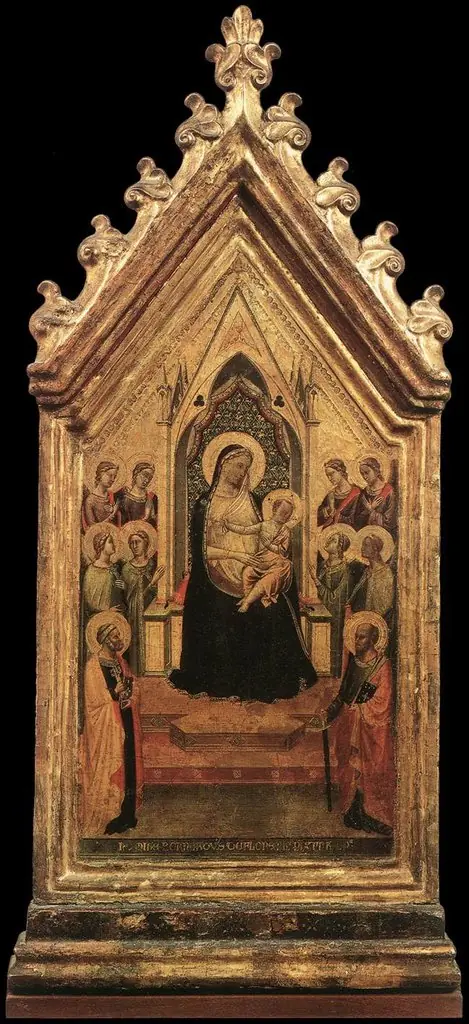 Madonna and Child Enthroned with Angels and Saints
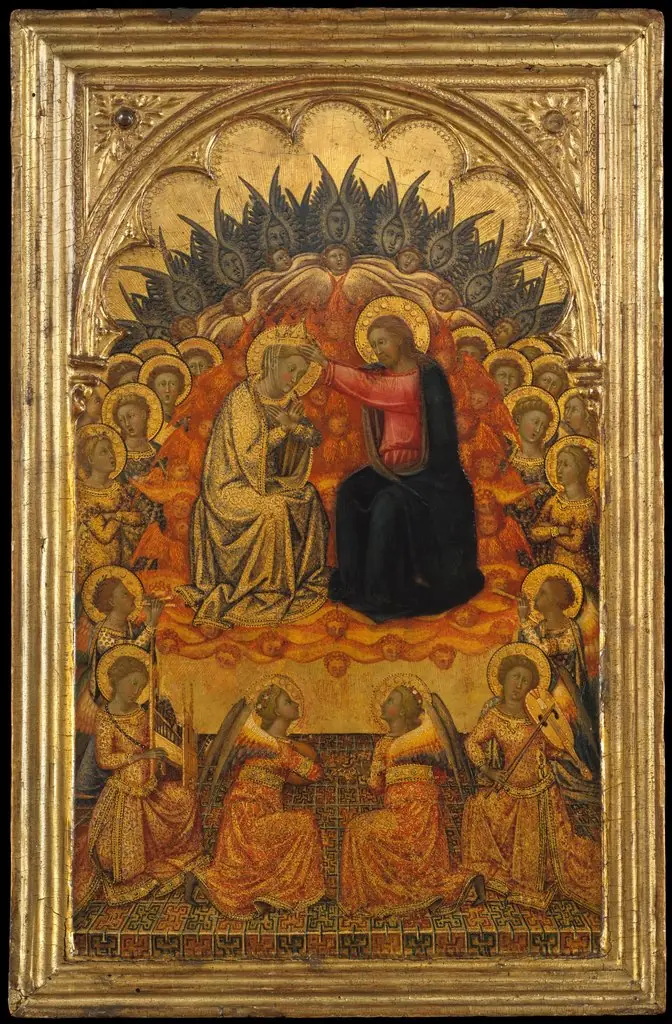 Engaged cassetta frame on a polyptych panel
 Madonna and Child with Saints and Angels