Artwork
The Coronation of the Virgin
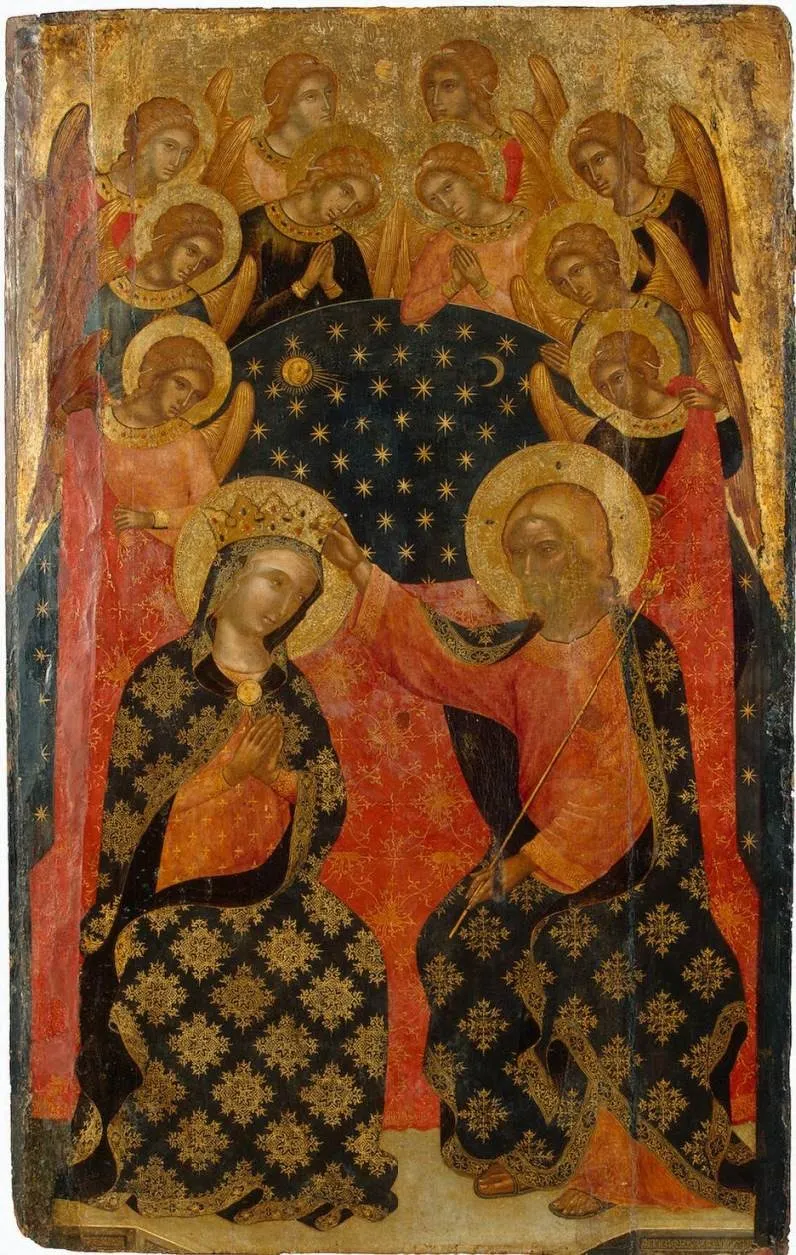
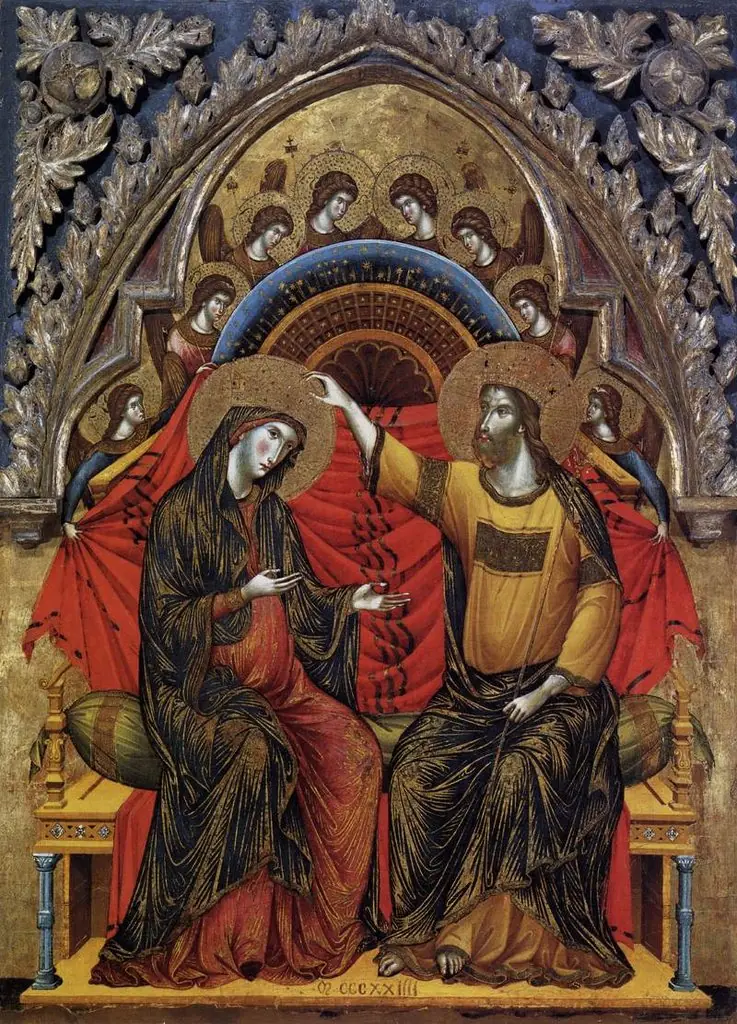
The Coronation of the Virgin is a tempera painting by the Byzantine icon painting artist Catarino Veneziano. It dates from 1360 and is held in the collection of the Hermitage Museum.
About this work
Overview
The Coronation of the Virgin is a tempera painting by Catarino Veneziano, dated to 1360, currently housed at the State Hermitage Museum.
Subject & Meaning
The painting depicts the Coronation of the Virgin Mary by an angel, symbolizing her divine honor. The Virgin, in a dark, gold-embroidered robe with clasped hands, embodies devotion and humility, while the angel in red, with a halo, crowns her. The scene conveys reverence and adoration.
Technique & Style
Executed in tempera, the work features a textured, detailed composition. A dark blue, star-studded sky with a crescent moon sets the backdrop for the serene, symbolic interaction between the two central figures.
History & Provenance
Created in 1360 by Catarino Veneziano, the painting's history prior to its current location at the State Hermitage Museum is not detailed here.
Context
Reflecting religious themes prevalent in 14th-century art, the painting's use of symbolism (e.g., the crown, halo, and celestial background) aligns with contemporary devotional practices and artistic conventions.
Legacy
While specific influences or notable impacts of 'The Coronation of the Virgin' on later art are not highlighted in available information, it remains a representative example of 14th-century religious tempera painting.
Artist & collection

 Coronation of Mary
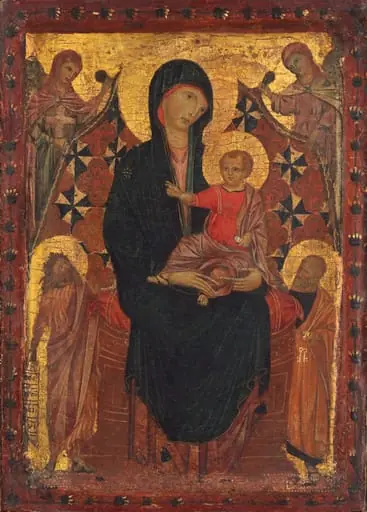 Madonna and Child with Saint John the Baptist, Saint Peter, and Two Angels
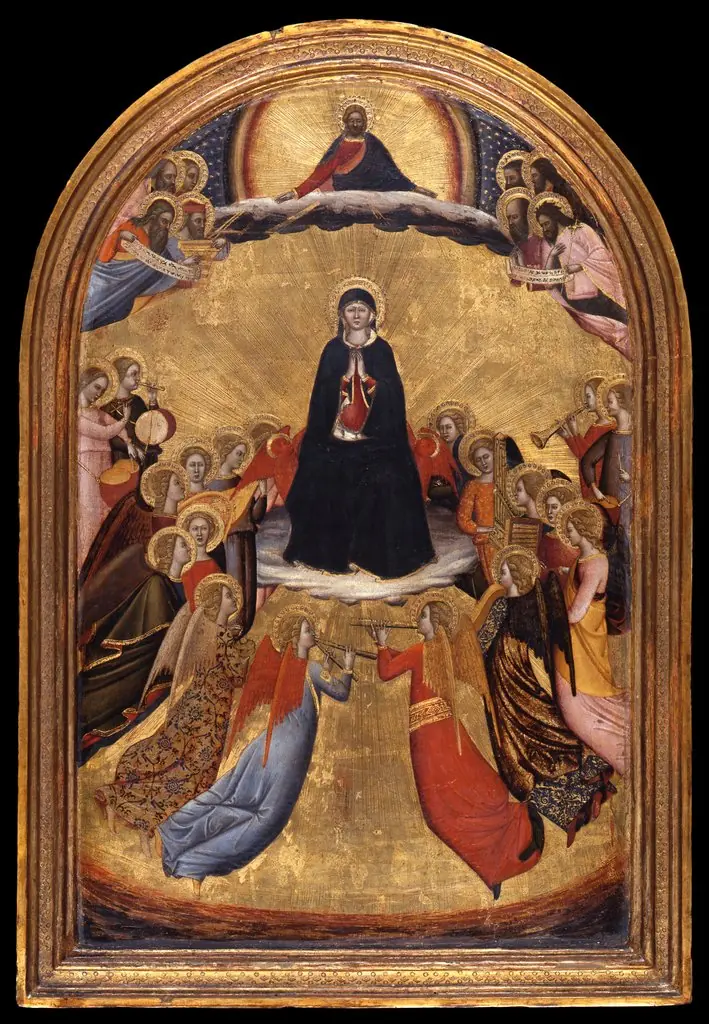 The ascension of Mary
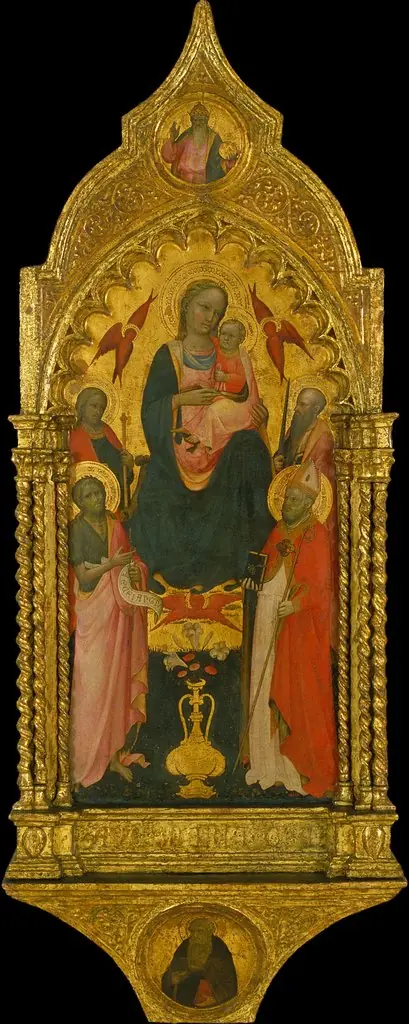 Virgin and Saints
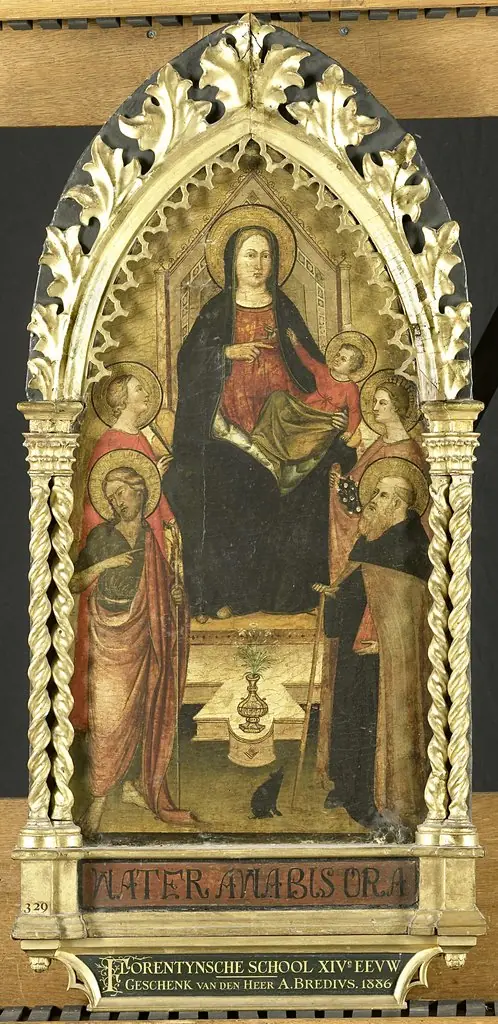 Virgin and Child Enthroned with Four Saints, Saints John the Baptist, Antony Abbot, Elizabeth of Hungary, a female saint
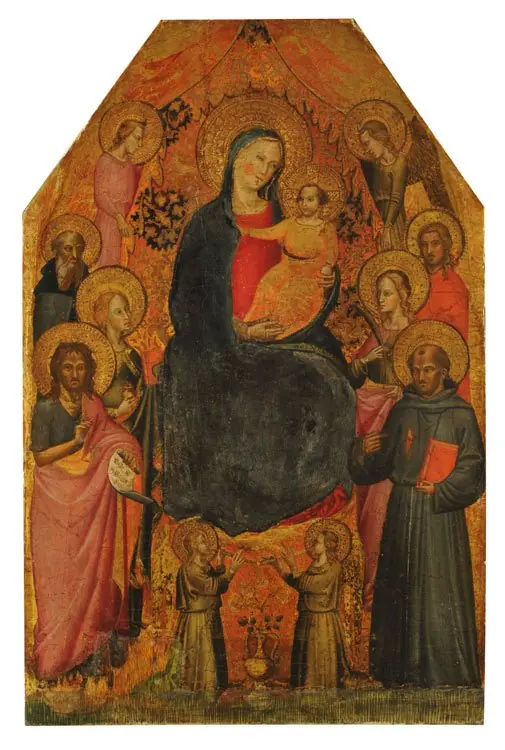 Virgen y Niño rodeados de santos y ángeles
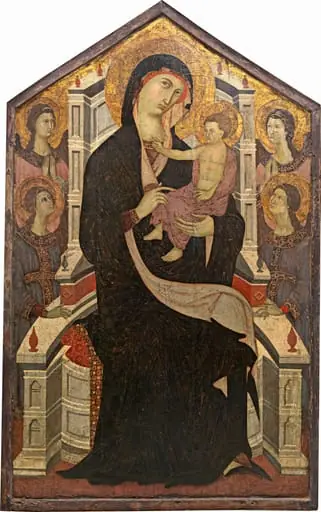 Maestà (Madonna and Child with Four Angels)
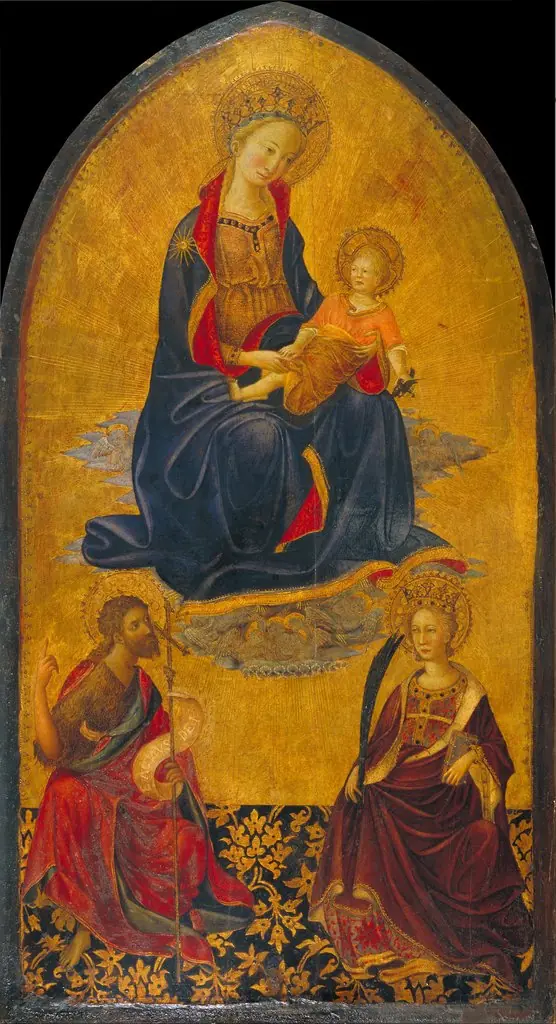 Adoration of the Virgin and Child by Saint John the Baptist and Saint Catherine