Artwork
Two Nude Men
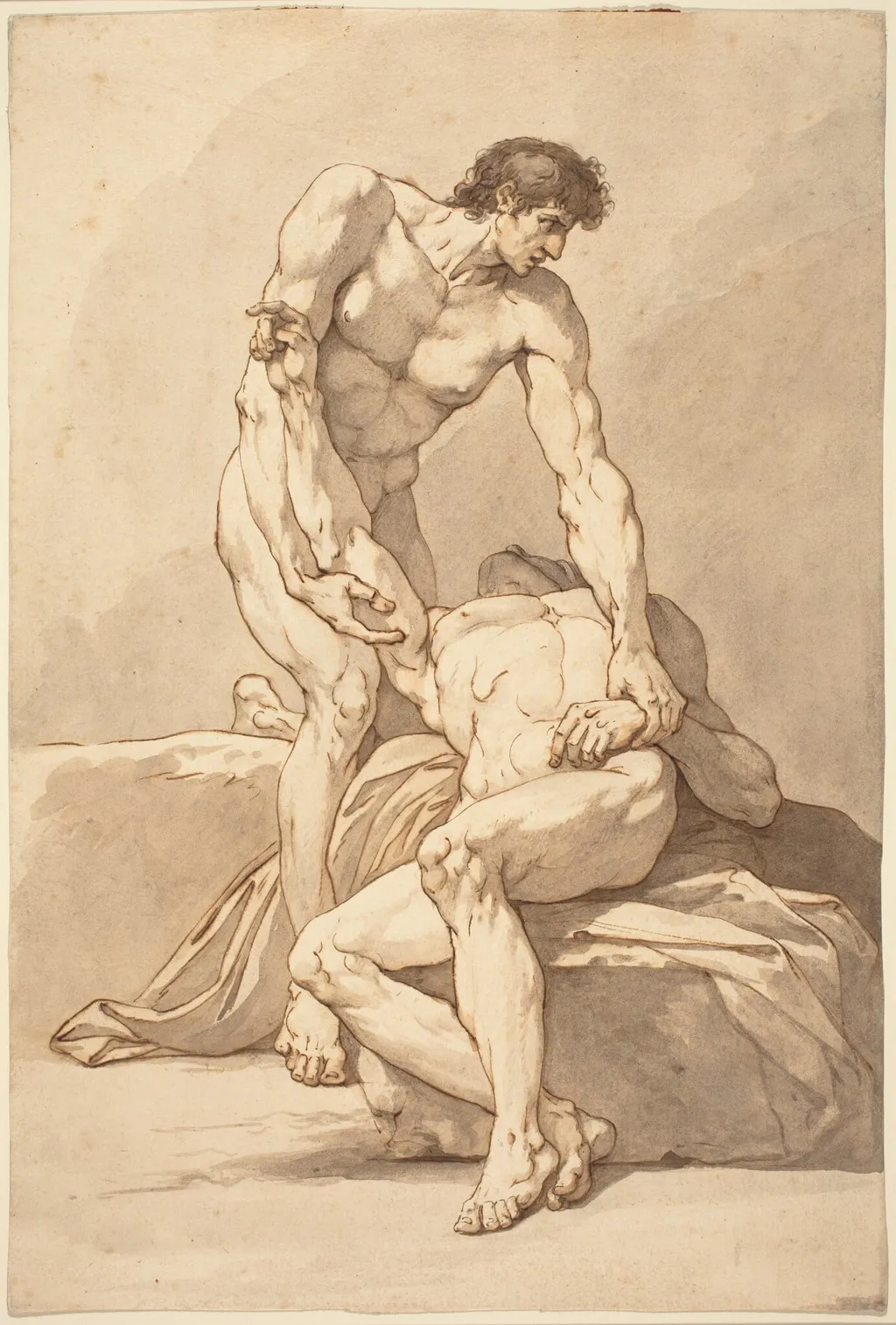
Two Nude Men is an ink drawing by the Romanticist artist Johann Heinrich Lips. It dates from 1784 and is held in the collection of the National Gallery of Art.
About this work
Overview
Johann Heinrich Lips’s drawing Two Nude Men, executed around 1784, presents a pair of unclothed male figures set against a craggy terrain. Rendered on laid paper with pen, brown ink, and a brown‑gray wash over graphite, the work measures the artist’s interest in the human form within a natural setting, emphasizing bodily presence rather than narrative detail.
Subject & Meaning
The composition juxtaposes a standing figure, his torso arched and one arm lifted, with a seated or kneeling companion whose head rests on a stone. The contrast between the upright, dynamic posture and the more contemplative, grounded pose suggests a study of physical tension and repose, inviting viewers to consider the interplay of strength and vulnerability in the nude.
Technique & Style
Lips employs swift, assured pen strokes that outline the musculature with a loose, sketch‑like quality. Layered brown ink and a subtle wash create soft shadows, while cross‑hatching builds tonal depth without rendering the bodies rigid. The warm tone of the aged laid paper enhances the atmospheric effect, allowing the figures to emerge from the rocky background with a sense of movement.
History & Provenance
Created in the late eighteenth century, Two Nude Men reflects Lips’s engagement with academic drawing practices prevalent in his Viennese training. The work has remained within private collections before entering a museum holding, where it is catalogued as a representative example of his preparatory studies of the human figure, illustrating the artist’s draftsmanship during his early career.
Artist & collection


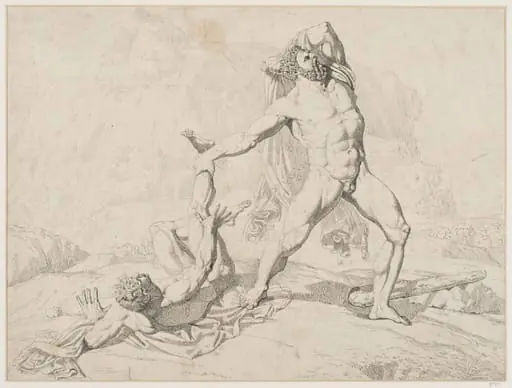 Hercules, in his death throes, hurling Lichas into the sea
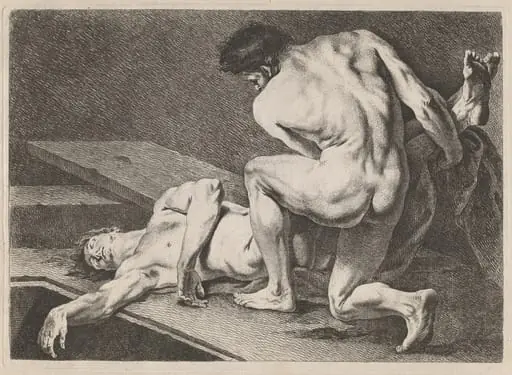 An Entombment
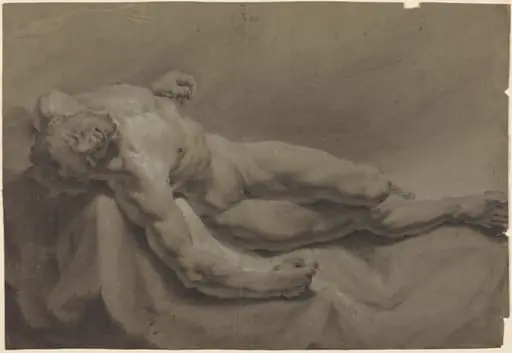 A Reclining Male Nude
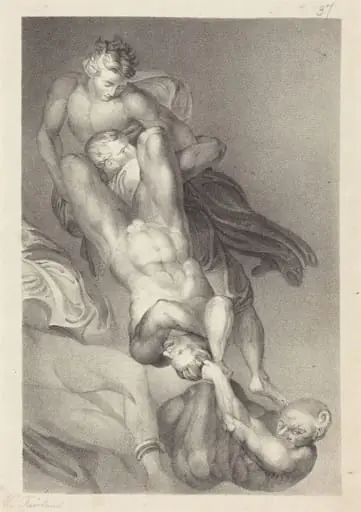 Part of the Last Judgment from Michael Angelo
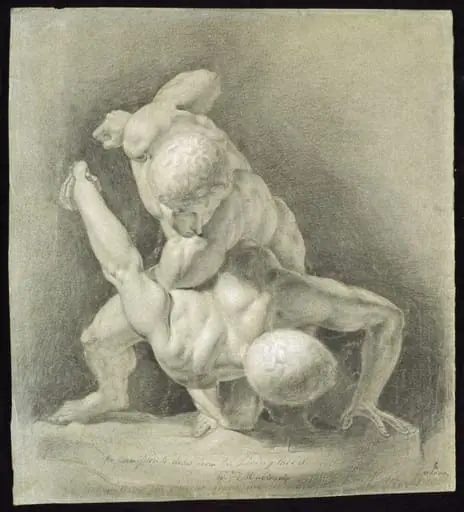 Academic study of the Wrestlers
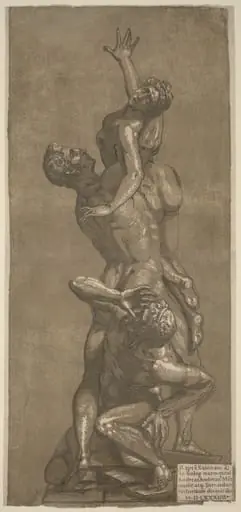 The Rape of a Sabine
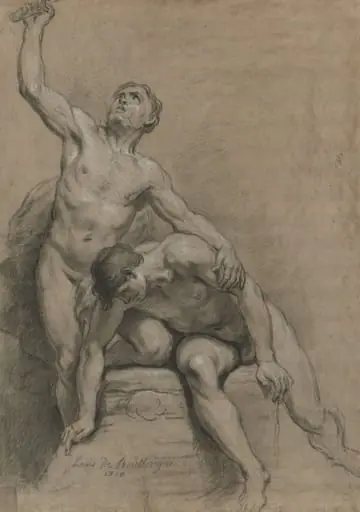 Two Male Nudes
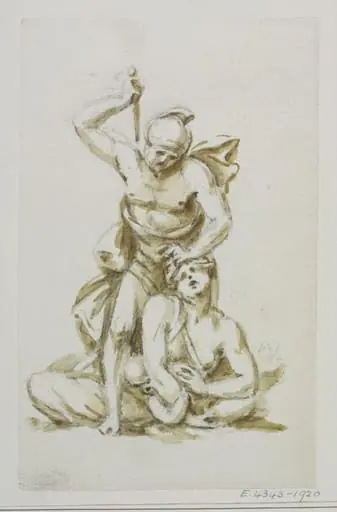 Unidentified design, sculpture
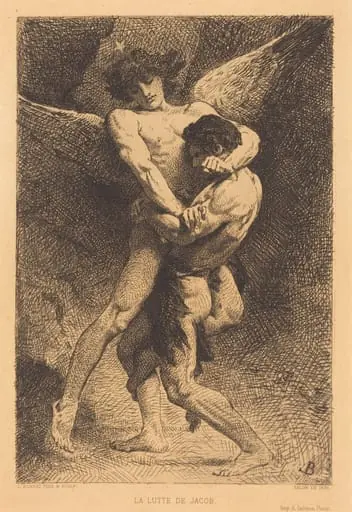 La Lutte de Jacob (Jacob Wrestling with the Angel)
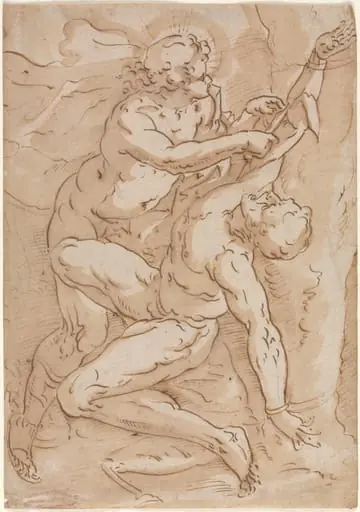 Apollo Flaying Marsyas (recto)