Artwork
Graveyard of the Ravenswoods, from "Lucia di Lammermoor"
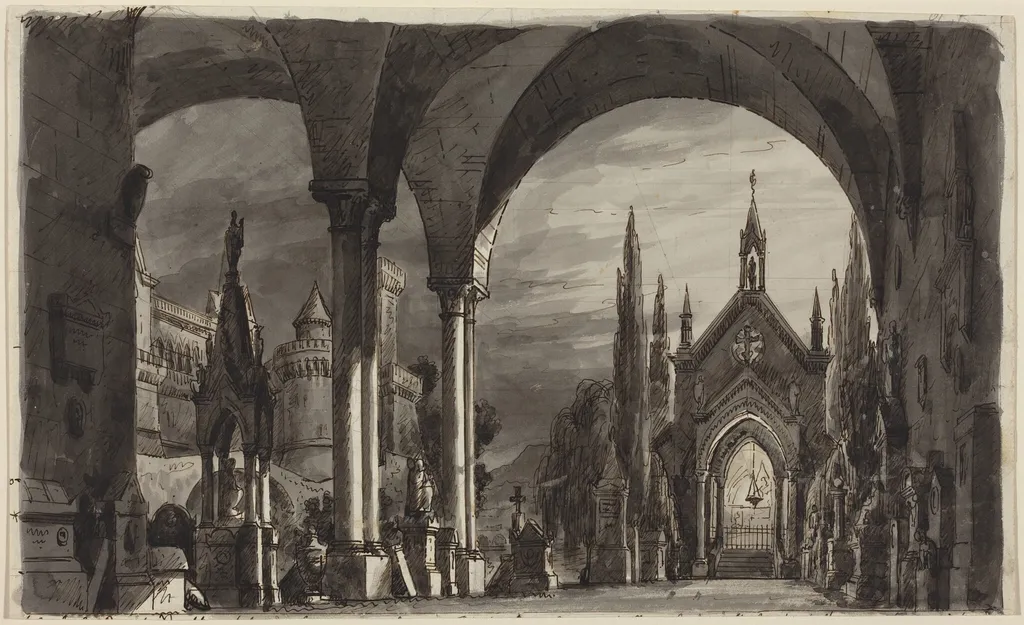
Graveyard of the Ravenswoods, from "Lucia di Lammermoor" is an ink drawing by the Impressionist artist Romolo Liverani. It dates from 1868 and is held in the collection of the National Gallery of Art.
About this work
Overview
Romolo Liverani’s 1868 drawing titled “Graveyard of the Ravenswoods, from ‘Lucia di Lammermoor’” is executed in pen and brown ink with a gray wash applied over a graphite underdrawing on wove paper. The sheet was pricked for transfer, indicating it served as a preparatory design rather than a finished artwork.
Subject & Meaning
The composition depicts a twilight churchyard, its pathway flanked by tall tombstones and framed by arched doorways. Beyond the graves, structures with steeply pitched roofs and darkened windows loom, while a few trees cluster near the chapel, creating a somber atmosphere appropriate to the tragic opera from which the scene is drawn.
Technique & Style
Liverani employs swift, gestural lines to outline architectural elements, while cross‑hatching and subtle gray washes model the fading light. The contrast between the brown ink and the muted wash emphasizes depth, and the rough handling of the medium suggests a rapid, exploratory approach typical of stage‑design sketches.
History & Provenance
Created in 1868 as part of the visual planning for a production of Gaetano Donizetti’s opera “Lucia di Lammermoor,” the drawing was likely used by set designers to convey mood and spatial arrangement. Its provenance remains linked to theatrical archives, though its current location is not publicly recorded.
Context
During the mid‑nineteenth century, Italian artists such as Liverani frequently supplied detailed scenic studies for opera houses, bridging fine art and theatrical production. The graveyard motif reflects Romantic fascination with death and the supernatural, themes central to the opera’s narrative.
Artist & collection


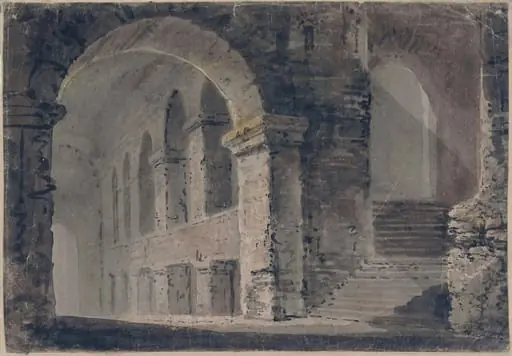 Interior with staircase
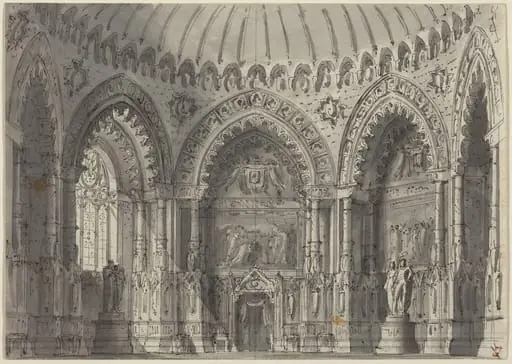 Rotunda in Gothic Style
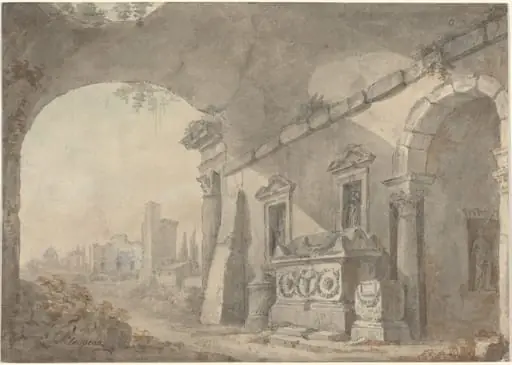 Roman Ruins with a Sepulchre
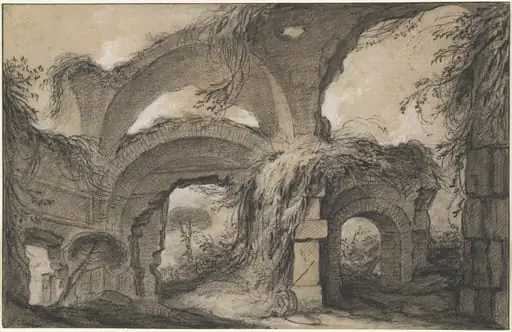 Arches of the Larger Baths at Hadrian's Villa
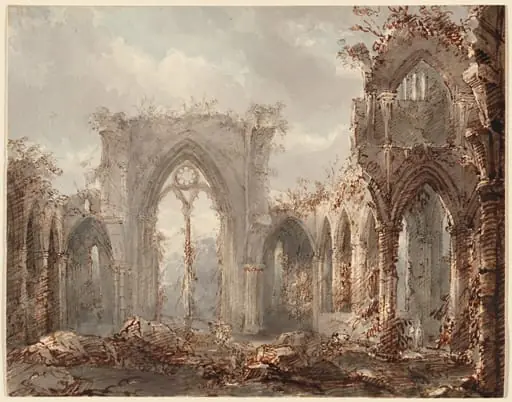 Netley Abbey, Hampshire
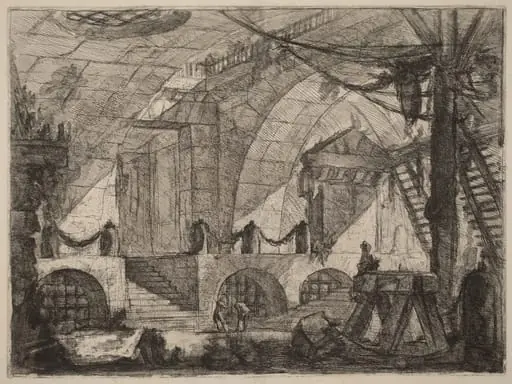 The Sawhorse
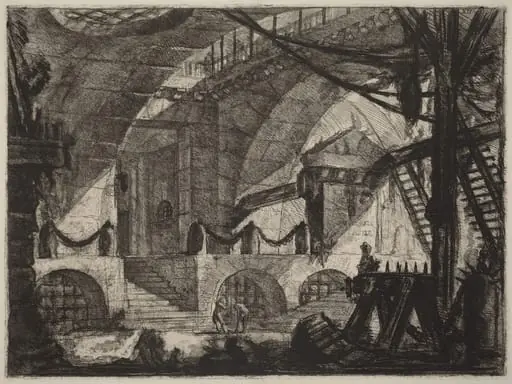 The Sawhorse
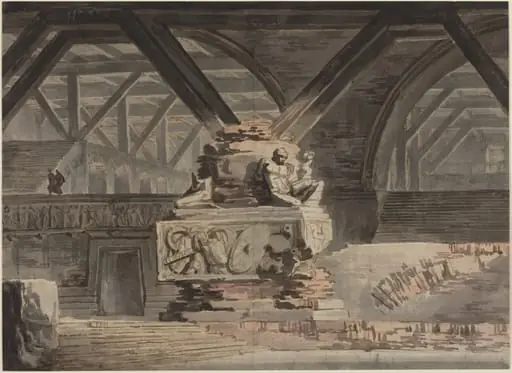 Stage Design: A Sepulchral Vault
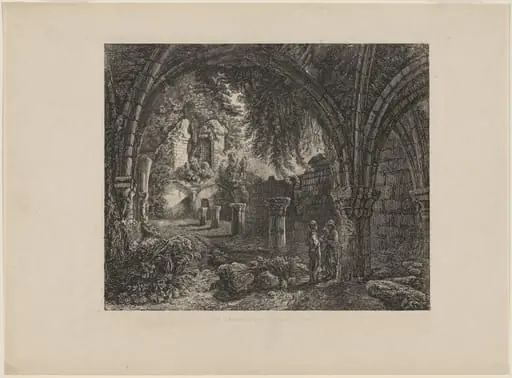 The Chapterhouse, Fountains Abbey
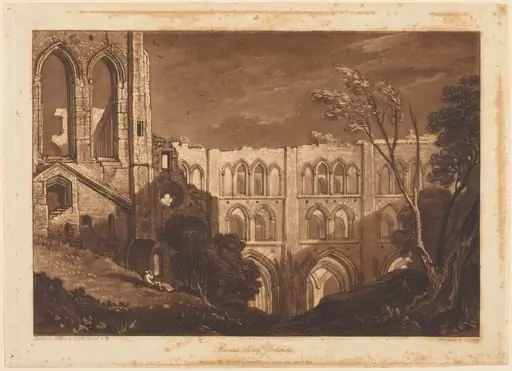 Rivaux Abbey
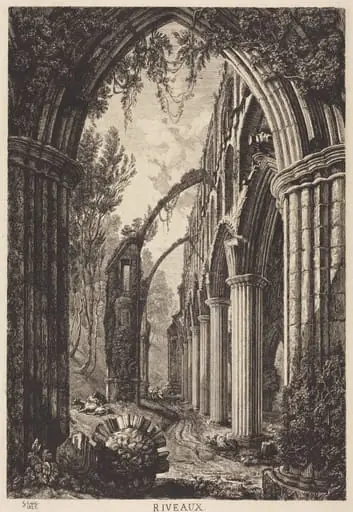 Riveaux
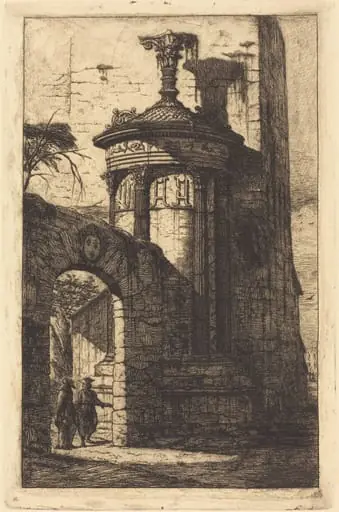 Entrée du Couvent des Capucins français à Athenes (Entrance to the French Capuchin Convent at Athens)