Artwork
Stage Design: A Sepulchral Vault
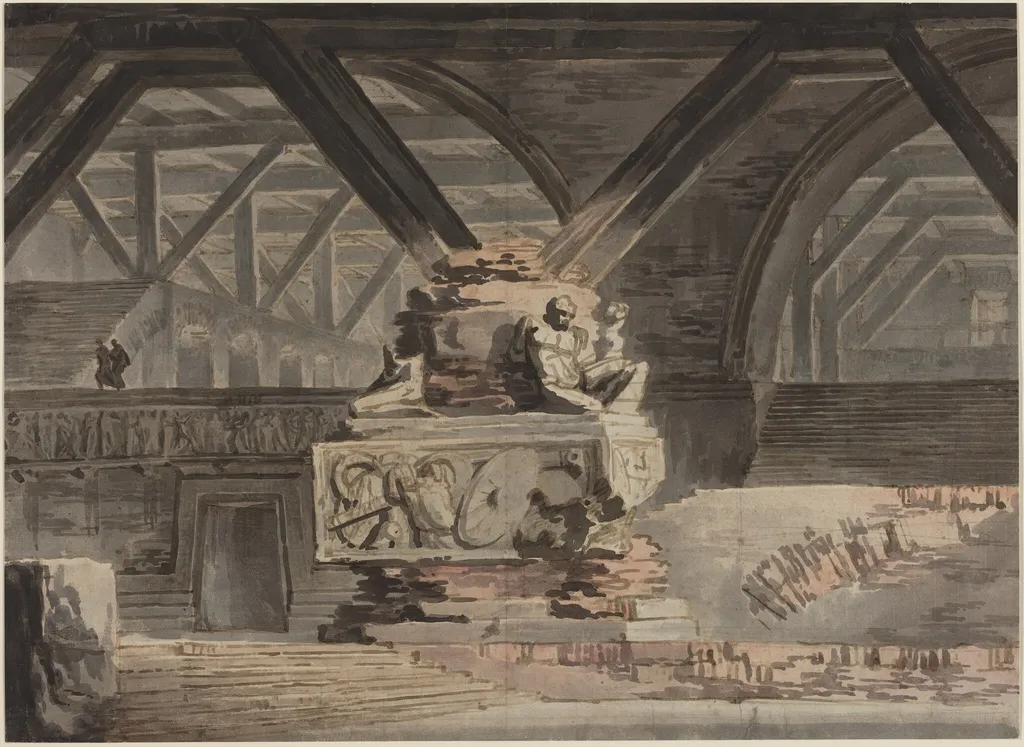
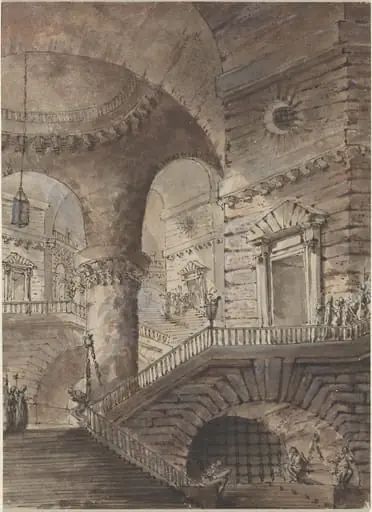
Stage Design: A Sepulchral Vault is an ink drawing by the Romanticist artist Karl Friedrich Schinkel. It dates from 1820 and is held in the collection of the National Gallery of Art.
About this work
This painting is called Stage Design: A Sepulchral Vault.
It was created by Karl Friedrich Schinkel around 1820.
The artist used pen, brown ink, and watercolor to create this work, which is part of the Romanticism movement and is held at the National Gallery of Art, Washington.
You can learn more about this style by looking into the movement: Romanticism.
Overview
Stage Design: A Sepulchral Vault is a drawing created by Karl Friedrich Schinkel around 1820. Executed in pen, brown ink, gray washes, and watercolor on laid paper, it represents a theatrical set design for an underground vaulted space.
Subject & Meaning
The drawing depicts a dramatic, vaulted sepulchral space, reflecting Schinkel's expertise in architectural and stage design. The subject aligns with the Romanticism movement, emphasizing emotive and atmospheric settings.
Technique & Style
Schinkel's use of pen, brown ink, and gray washes, supplemented by watercolor, characterizes the work's Neoclassical precision blended with Gothic Revival's dramatic flair, typical of his versatile style.
History & Provenance
Created circa 1820 by Karl Friedrich Schinkel, a prominent Prussian architect, painter, and designer, the work is now part of the National Gallery of Art, Washington's collection.
Context
This drawing exemplifies Schinkel's broad influence on 19th-century German art and design, alongside his notable architectural projects like the Bauakademie and Altes Museum in Berlin.
Legacy
As a leading figure in Romanticism and Neoclassical architecture, Schinkel's Stage Design: A Sepulchral Vault contributes to the understanding of his multifaceted career and the intersection of art, architecture, and theatre in his time.
Artist & collection
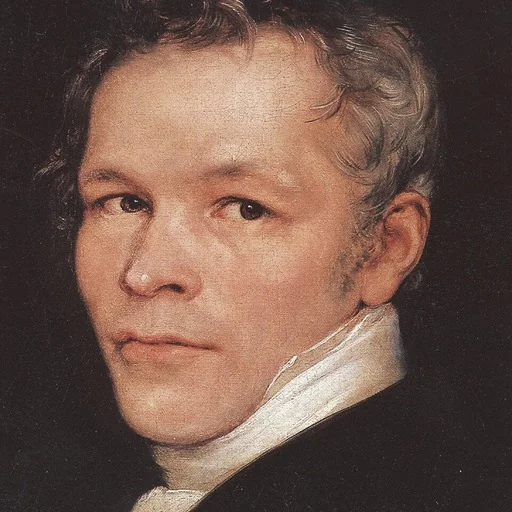
Artist
Karl Friedrich Schinkel (German pronunciation: ; 13 March 1781 – 9 October 1841) was a Prussian architect, city planner and painter who also designed furniture and stage sets.

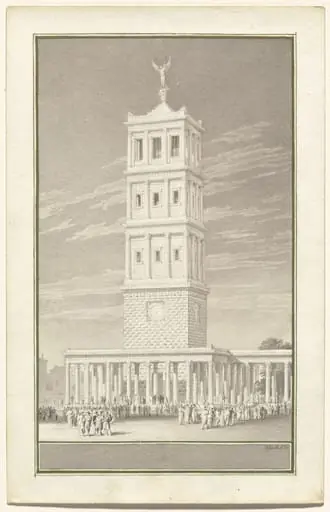 Campanile of a Cathedral for Berlin
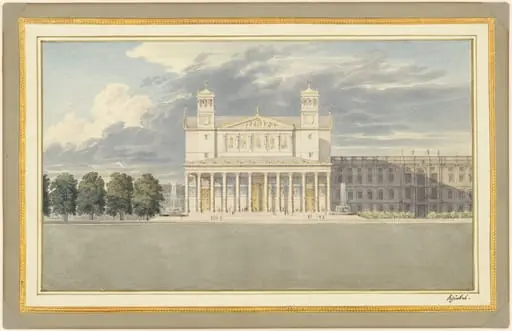 The Façade and Suroundings of a Cathedral for Berlin
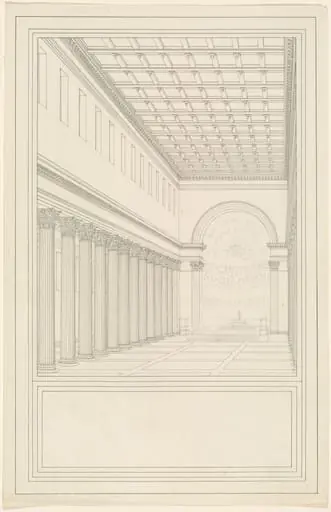 The Nave and Apse, without a Transept, of a Cathedral for Berlin
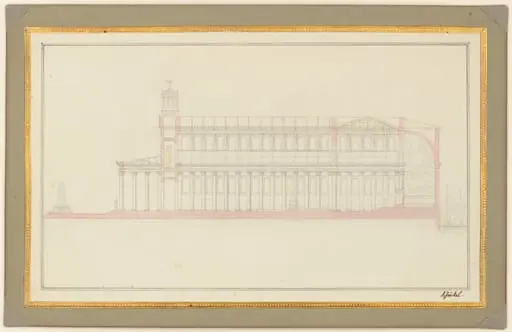 Longitudinal Section of a Cathedral for Berlin
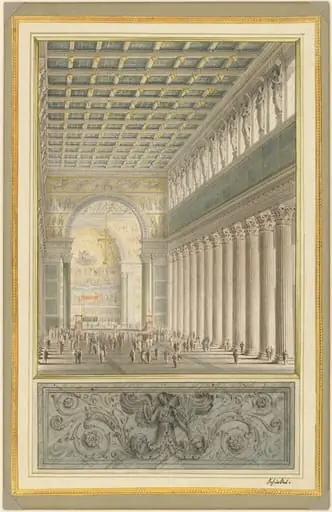 The Nave, Apse, and Crossing of a Cathedral for Berlin
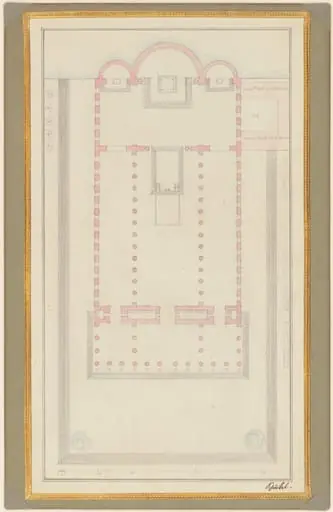 Ground Plan of a Cathedral for Berlin
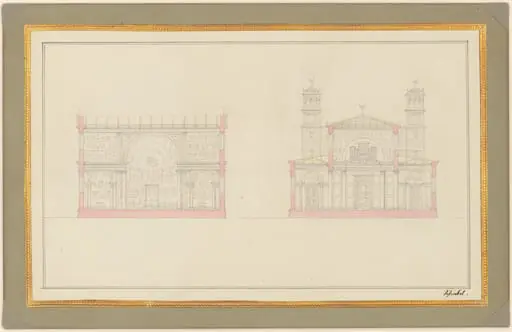 Section of the Crossing and the West End of a Cathedral for Berlin
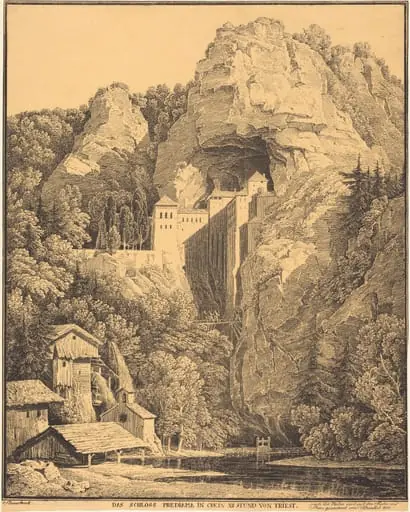 Das Schloss Prediama in Crein XII Stund: von Triest (Predjama Castle in Carniola, Twelve Hours from Trieste)