Artwork
Titchfield House near Fareham, Hampshire
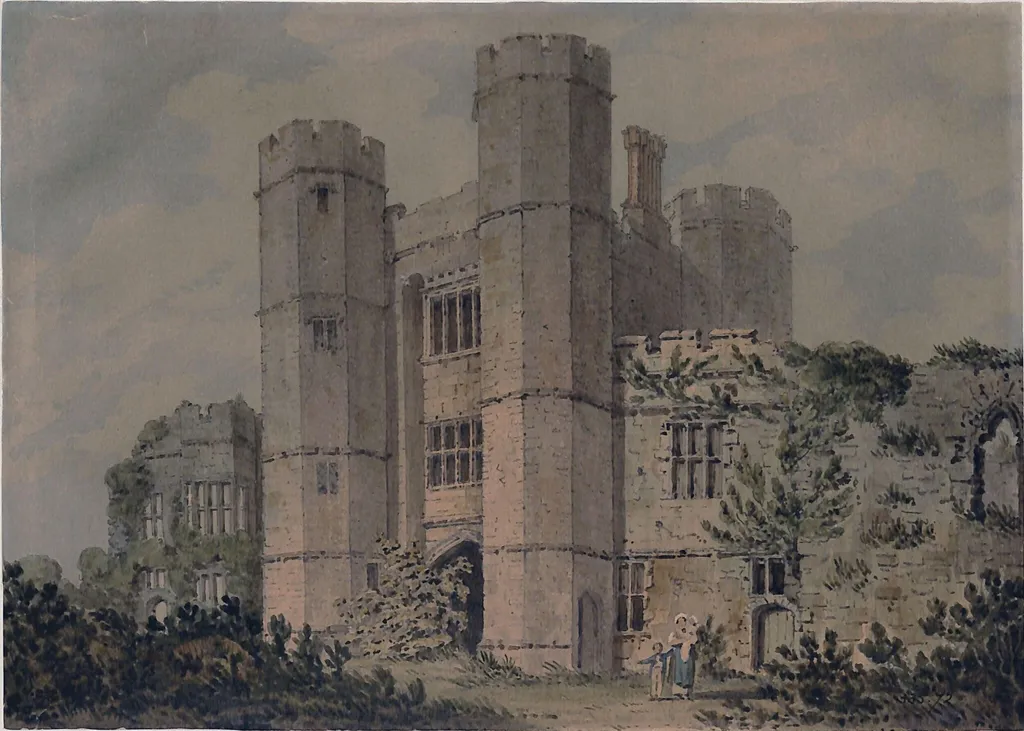
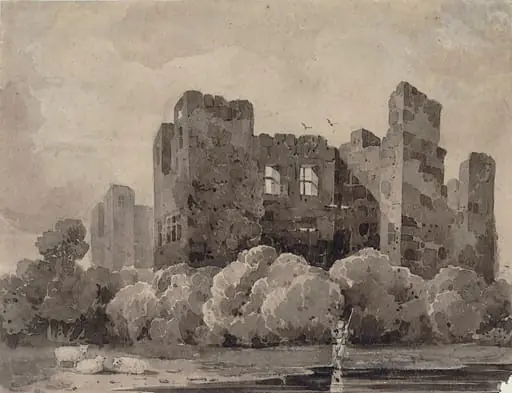
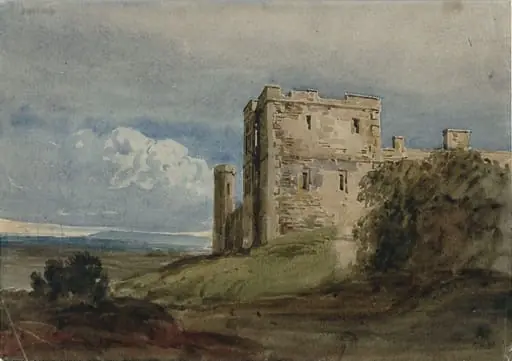
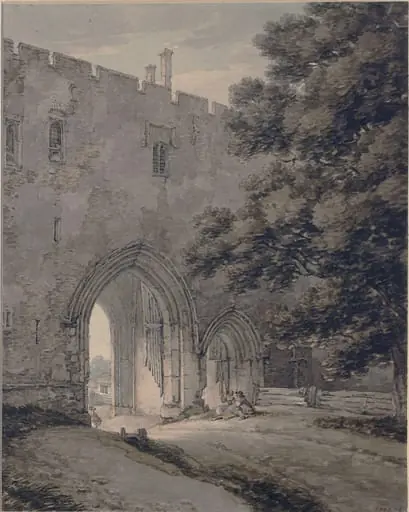
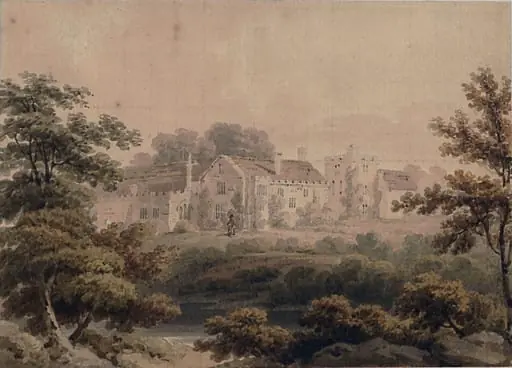
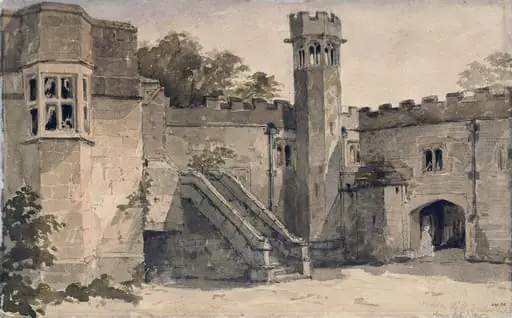
Titchfield House near Fareham, Hampshire is a watercolor work on paper by the Romanticist artist Edward Hawke Locker. It dates from 1803 and is held in the collection of the Victoria and Albert Museum. This watercolour depicts Titchfield House, a ruined structure near Fareham in Hampshire, rendered in delicate, translucent washes.
About this work
Overview
This watercolour depicts Titchfield House, a ruined structure near Fareham in Hampshire, rendered in delicate, translucent washes.
This watercolour depicts Titchfield House, a ruined structure near Fareham in Hampshire, rendered in delicate, translucent washes. The scene captures the building in a state of advanced decay, with ivy overtaking its stonework and windows gaping empty. A faint light suggests early morning or late afternoon, enhancing the quiet stillness of the scene. The work is dated on its reverse, anchoring it to a specific moment in the early 19th century.
Subject & Meaning
Titchfield House, once a monastic residence and later a noble estate, is shown not as a symbol of past glory but as a quiet testament to time’s passage. The two diminutive figures near the entrance emphasize the scale of abandonment, suggesting human presence as fleeting against enduring stone. The painting invites contemplation of loss and the slow reclamation of architecture by nature.
Technique & Style
The artist employed soft, layered watercolour washes to suggest weathered stone and the subtle play of light across crumbling surfaces. Delicate detailing in the ivy and broken masonry contrasts with the airy, pale sky, creating a sense of atmospheric depth. This restrained, tonal approach aligns with early 19th-century topographical watercolours, where accuracy and mood took precedence over dramatic effect.
History & Provenance
Titchfield House was dissolved in the 16th century and gradually fell into ruin. The watercolour likely dates from the 1810s–1830s, a period when antiquarian interest in such sites flourished. Though the artist’s identity is unrecorded, the work’s preservation suggests it was held in private collections, possibly by patrons drawn to the romantic appeal of decayed heritage.
Context
During the early 1800s, Britain saw a surge in interest in medieval and Tudor ruins, fueled by Romanticism and antiquarian scholarship. Artists frequently documented such sites as cultural relics, not merely for record but to evoke emotional resonance. Titchfield House, like many others, became a subject of quiet reverence, reflecting broader societal reflections on time, memory, and impermanence.
Legacy
This watercolour contributes to a broader visual archive of England’s architectural past, preserved in institutions like the Victoria and Albert Museum. Its modest scale and restrained technique reflect a genre that valued observation over spectacle. Though not widely known today, such works remain vital records of how 19th-century viewers perceived and responded to the ruins of their own history.
Artist & collection

Artist
Edward Hawke Locker was an English watercolourist and administrator of the Royal Naval Hospital, Greenwich.