Artwork
Courtyard of Haddon Hall, Derbyshire
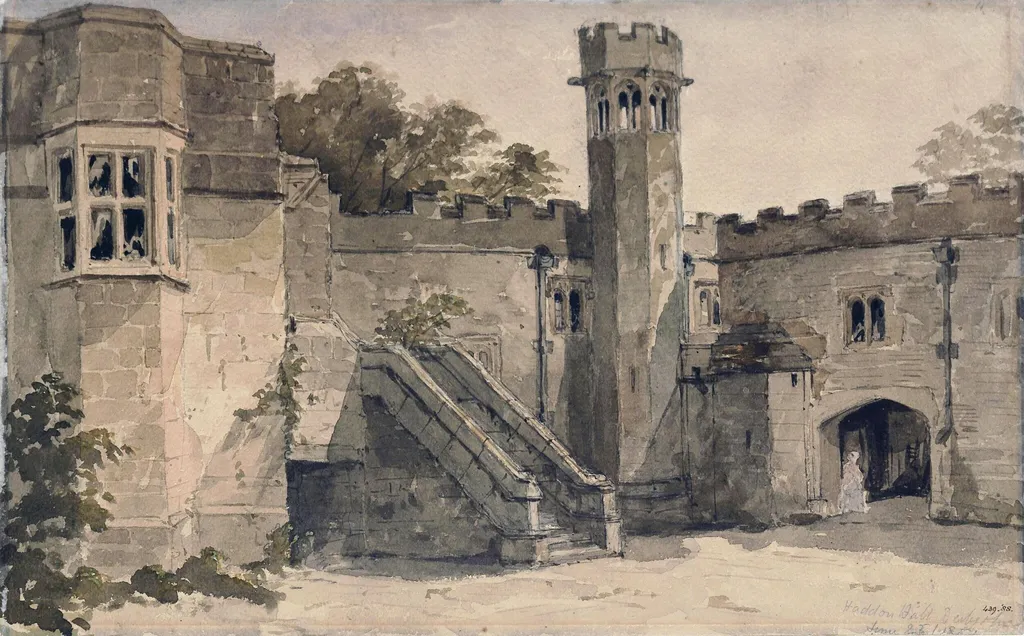
Courtyard of Haddon Hall, Derbyshire is a watercolor work on paper by the Romanticist artist Peter De Wint. It dates from 1805 and is held in the collection of the Victoria and Albert Museum.
About this work
Overview
Painted in 1805, this watercolour by Peter de Wint captures the courtyard of Haddon Hall in Derbyshire. Executed with precision and restraint, the work reflects the artist’s interest in architectural detail and natural light. The composition is grounded in observed reality, avoiding idealization while emphasizing the quiet dignity of the historic structure.
Subject & Meaning
The painting evokes a sense of timelessness, aligning with early 19th-century sensibilities that valued historical continuity over dramatic spectacle.
The scene centers on the courtyard’s weathered stone walls and towers, framed by dense trees that soften the edges of the man-made structure. A solitary figure near a doorway introduces human presence without narrative, suggesting contemplation rather than action. The painting evokes a sense of timelessness, aligning with early 19th-century sensibilities that valued historical continuity over dramatic spectacle.
Technique & Style
De Wint employed transparent watercolour washes to build subtle tonal gradations, enhancing the play of light across stone and foliage. Delicate linework defines the stonework’s texture, while the foliage is rendered with loose, suggestive brushstrokes. The balance between precision and spontaneity reflects a Romantic-era approach to landscape, where observation and mood coexist.
History & Provenance
The work entered the collection of the Victoria and Albert Museum as part of a broader acquisition of British watercolours from the early 1800s. It was likely created during de Wint’s travels through the English Midlands, where he documented historic buildings. Its survival in good condition attests to its early recognition within artistic circles.
Context
Painted during the rise of Romanticism, the piece aligns with a growing interest in England’s medieval heritage. Artists like de Wint turned to country houses and ruins not as relics to be restored, but as subjects worthy of quiet reverence. This work contributes to a visual record of architectural preservation before widespread restoration efforts of the Victorian era.
Legacy
De Wint’s watercolour remains a representative example of topographical art infused with atmospheric sensitivity. It influenced later generations of British watercolourists who sought to merge documentary accuracy with emotional resonance. The painting continues to be studied for its technical discipline and its role in shaping perceptions of England’s architectural past.
Artist & collection
Artist
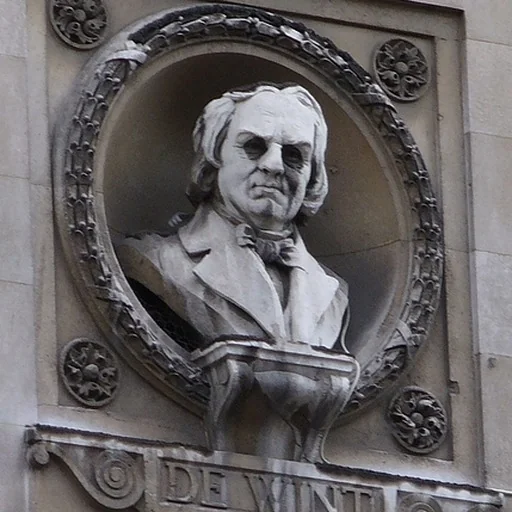
Peter De Wint was a prolific English painter, mostly in landscape painting in oils and watercolour. A number of his pictures are in Tate Britain, the Victoria and Albert Museum and The Collection, Lincoln. He died in London.

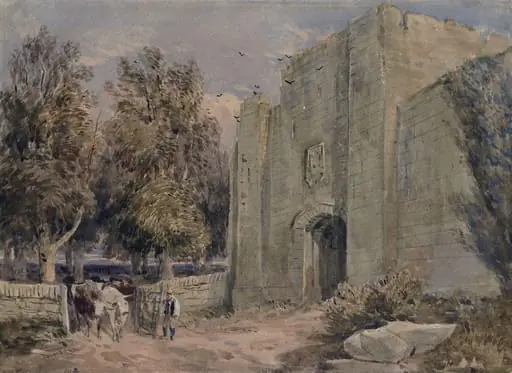 Gateway of Rhuddlan Castle, North Wales
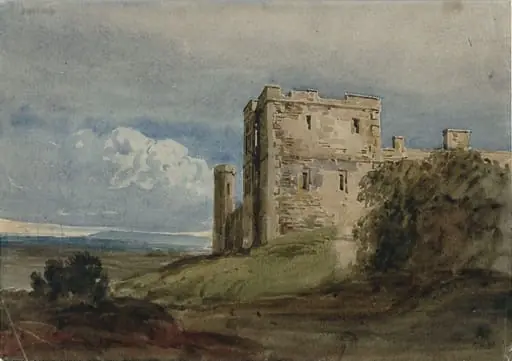 Landscape with Castle
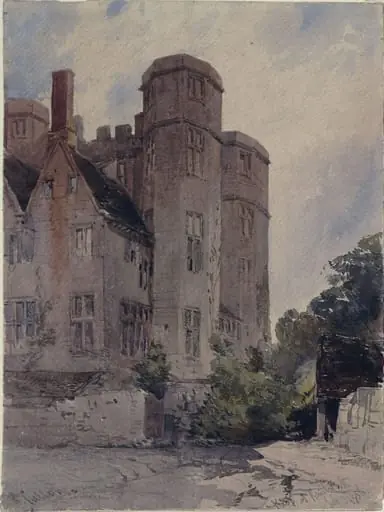 The Keep at Kenilworth
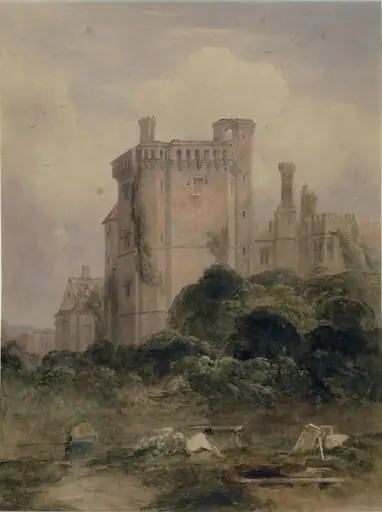 Thornbury Castle, Gloucestershire.
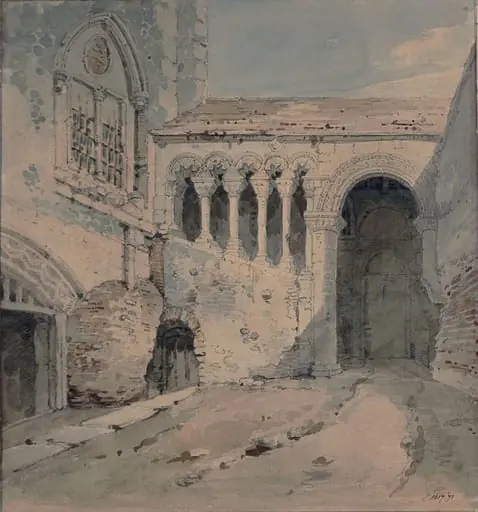 The Square at Canterbury
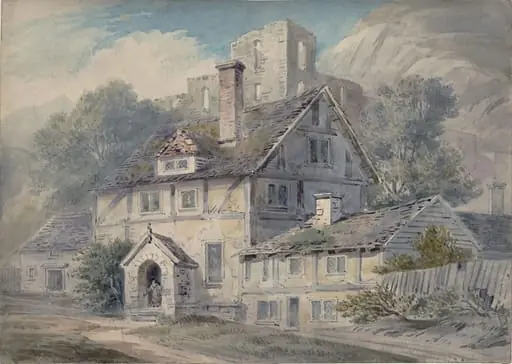 Landscape with a house and ruined castle
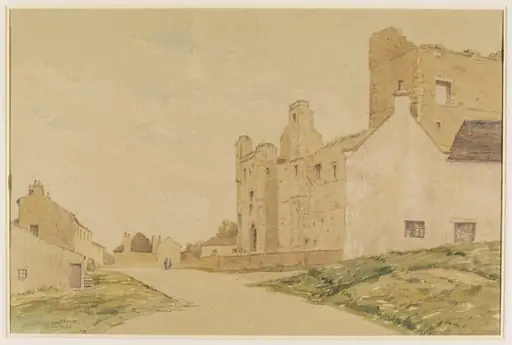 Middleham Castle
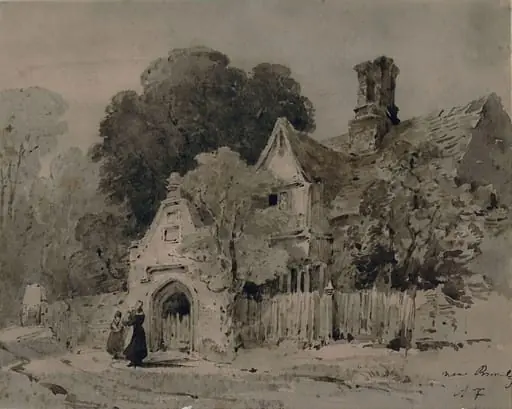 Near Bromley, Kent
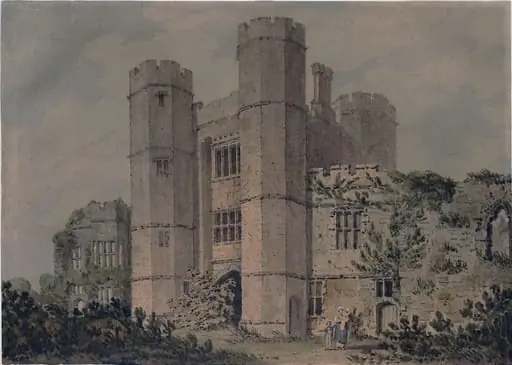 Titchfield House near Fareham, Hampshire
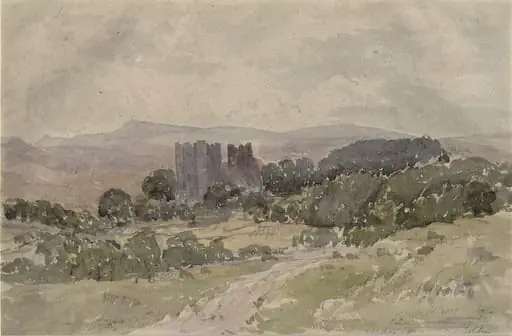 Bolton
 Monastery Gate, St. Albans
 Haddon Hall, Derbyshire