Artwork
Raby Castle
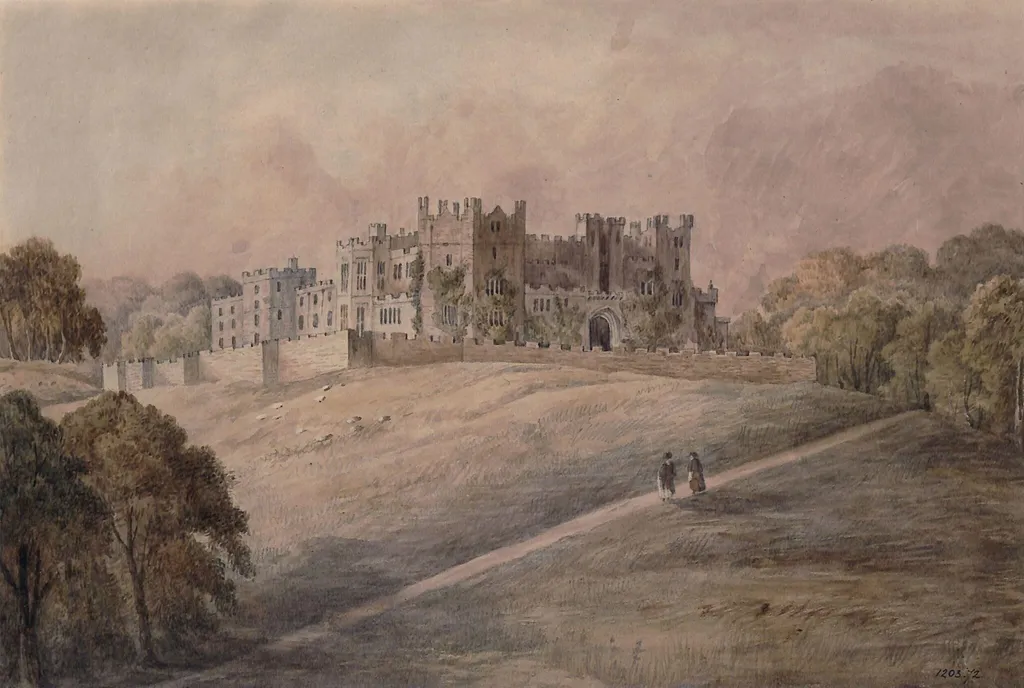
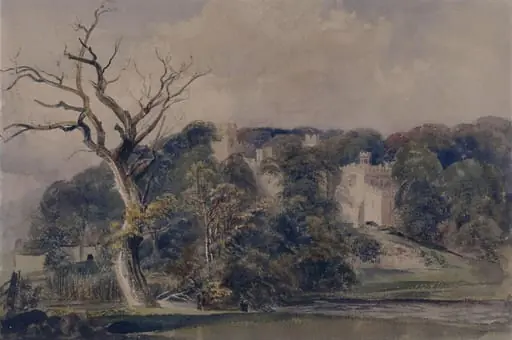
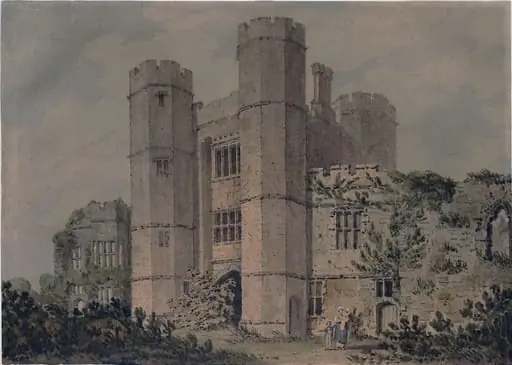
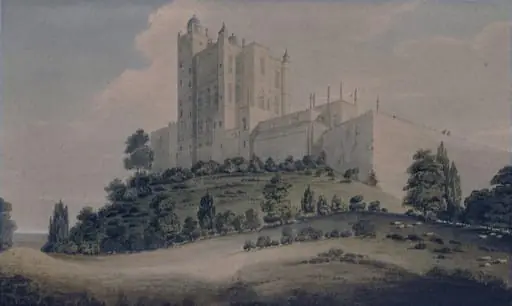
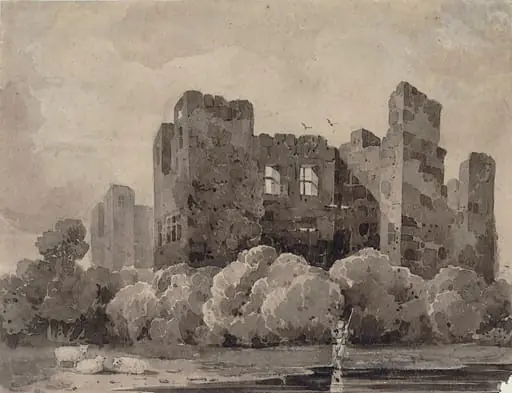
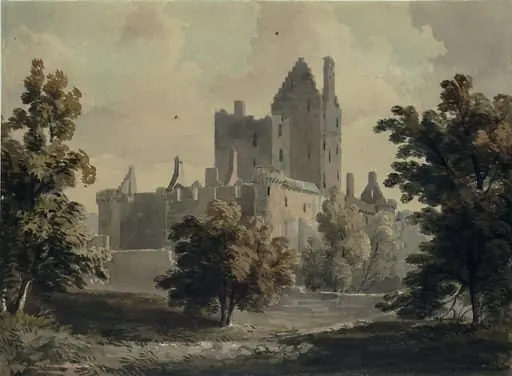
Raby Castle is a watercolor work on paper by William Lewis. It is held in the collection of the Victoria and Albert Museum.
About this work
Overview
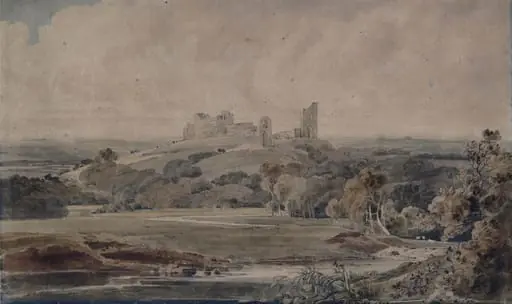
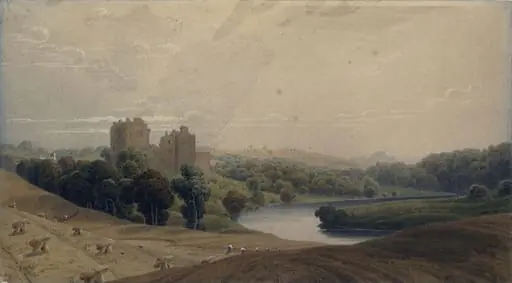
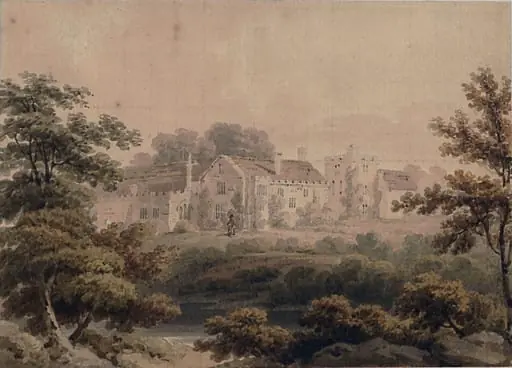
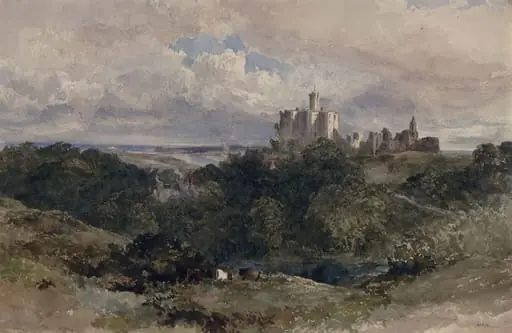
Raby Castle is a watercolour painting by William Lewis, created in the early 19th century. It depicts the medieval structure in North Yorkshire, rendered with quiet precision. The work is part of the Victoria and Albert Museum’s collection, where it is preserved as an example of topographical watercolour from a period when such subjects were gaining artistic recognition beyond mere documentation.
Subject & Meaning
The painting presents Raby Castle in isolation, devoid of human figures or activity. This absence shifts focus to the architecture and landscape, suggesting a contemplative tone. Rather than emphasizing grandeur or event, Lewis captures the castle as a quiet presence within its natural setting, reflecting a growing 19th-century interest in solitude and the sublime in landscape representation.
Technique & Style
Lewis employs transparent watercolour washes to build subtle tonal variations, avoiding bold outlines or intense pigments.
Lewis employs transparent watercolour washes to build subtle tonal variations, avoiding bold outlines or intense pigments. The palette is restrained, dominated by muted greys, greens, and earth tones, enhancing the scene’s stillness. While not using sfumato—a technique associated with oil painting—the work achieves soft transitions through layered glazes, characteristic of British watercolour traditions of the era.
History & Provenance
The painting entered the Victoria and Albert Museum’s collection in the late 19th century, likely through acquisition or donation tied to the museum’s early focus on decorative and applied arts. Its provenance before that is undocumented, but its detailed rendering suggests it may have been commissioned or created for private study, consistent with the practices of amateur topographical artists of the time.
Context
During the early 1800s, watercolour was increasingly used by amateur and professional artists to record architectural heritage. Raby Castle fits within this trend, aligning with the rise of antiquarian interest in medieval structures. Unlike contemporary scenes filled with activity, Lewis’s quiet composition reflects a shift toward introspective landscape representation, anticipating later Romantic sensibilities.
Legacy
The painting remains a modest but significant example of early 19th-century British watercolour practice. It contributes to the historical record of how castles were visually interpreted outside of grand narrative or military contexts. Its preservation in a major museum underscores its value as a document of both architectural form and evolving aesthetic priorities in landscape art.
Artist & collection

Artist
William Lewis painted tiny portraits—each one 3 inches wide on ivory—of people in 1830s America.