Artwork
Plajă la Beg - Meil
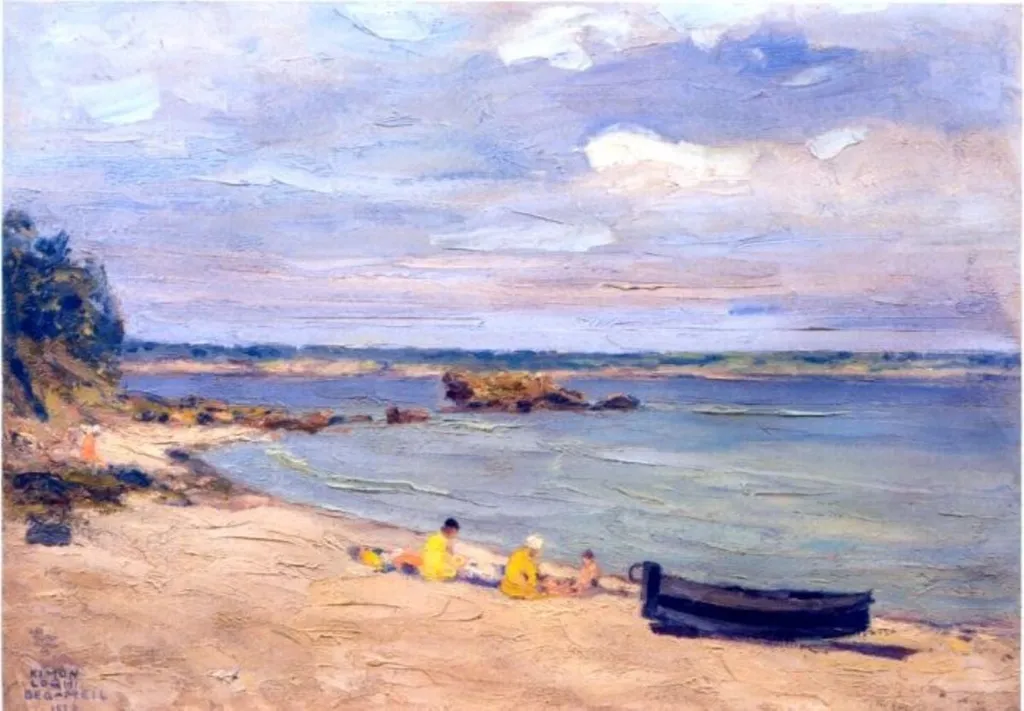
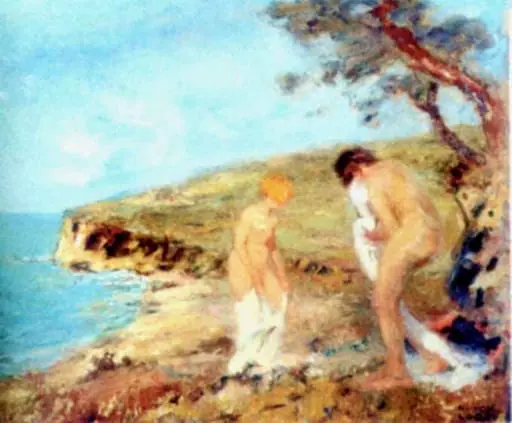
Plajă la Beg - Meil is an unspecified painting by Kimon Loghi. It dates from 1929 and is held in the collection of the National Museum of Art of Romania.
About this work
Overview
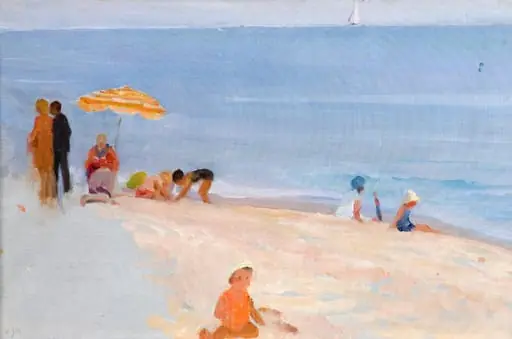
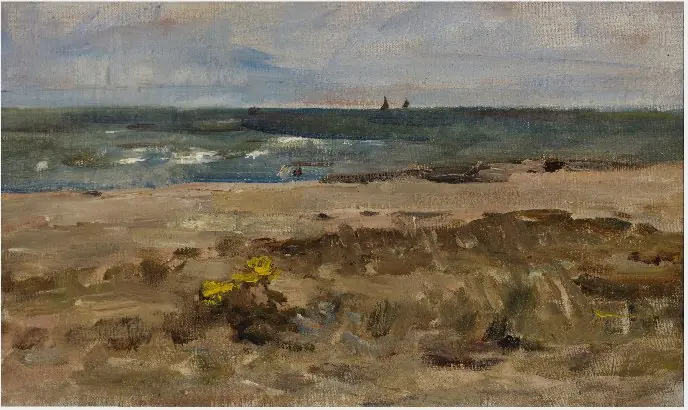
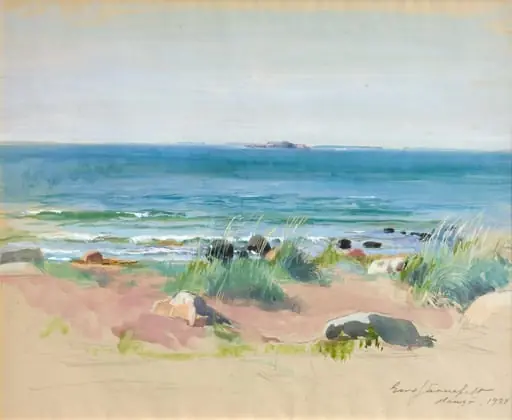
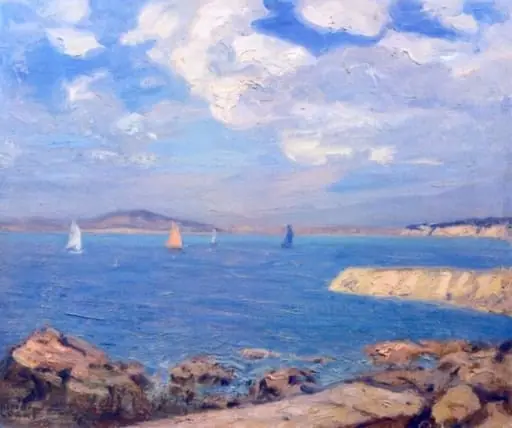
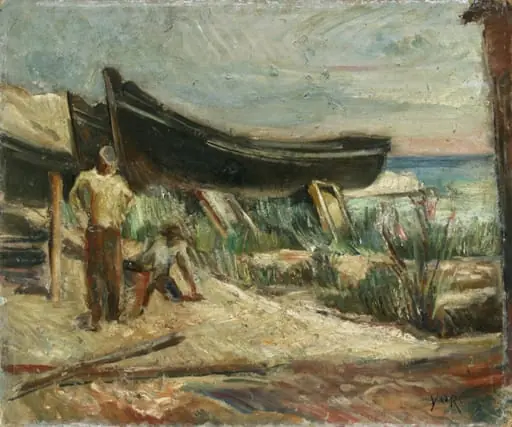
Plajă la Beg - Meil, painted in 1929 by Romanian artist Kimon Loghi, captures a quiet coastal moment. The composition centers on a still shoreline where a single boat rests above the tide line. Figures are arranged with deliberate spacing, suggesting solitude and contemplation rather than activity. The palette is restrained, favoring muted blues and soft whites, reinforcing the scene’s quietude.
Subject & Meaning
The painting portrays four individuals on a beach—three seated, one standing near the water—each isolated within the landscape. Their stillness and minimal interaction imply introspection or respite. The absence of narrative detail invites viewers to interpret the scene as a meditation on solitude, time, or the relationship between humans and nature, without overt symbolism.
Technique & Style
Loghi employs loose, visible brushwork to suggest texture in sand, water, and sky. Color is applied in thin, blended layers, avoiding sharp contrasts. The horizon line is low, emphasizing the expanse of sky and sea. Brushstrokes are deliberate but not expressive in a dramatic sense; they serve to convey atmosphere rather than emotional intensity, aligning with a quiet realist approach.
History & Provenance
Created during Loghi’s mature period, the work reflects his engagement with Romanian coastal life in the interwar years. It was likely painted during one of his stays near the Black Sea, where he frequently sought subject matter. The painting remains in private or institutional collections within Romania, with limited public exhibition history outside the country.
Context
Plajă la Beg - Meil aligns with a broader cultural interest in regional identity and tranquil, unidealized nature during a period of national consolidation.
In late 1920s Romania, landscape painting often balanced realism with lyrical tone, influenced by French Impressionism and local traditions. Loghi, trained in Bucharest and Paris, contributed to this movement by focusing on everyday natural settings. Plajă la Beg - Meil aligns with a broader cultural interest in regional identity and tranquil, unidealized nature during a period of national consolidation.
Legacy
Though not widely reproduced, the painting is recognized in Romanian art circles as a representative example of Loghi’s serene coastal studies. It contributes to the understanding of interwar Romanian painting beyond urban or historical themes, highlighting a quieter, more personal strand of modernism focused on observation and mood rather than grandeur.
Artist & collection
Artist
Kimon Loghi painted bright, sunlit scenes of people at leisure by the sea. In 1903 he showed “Balada” and later captured bathers in “Femei la scăldat,” set a beach near Concarneau in “Plajă la Beg - Meil,” and printed…