Artwork
Sleeping Cupid
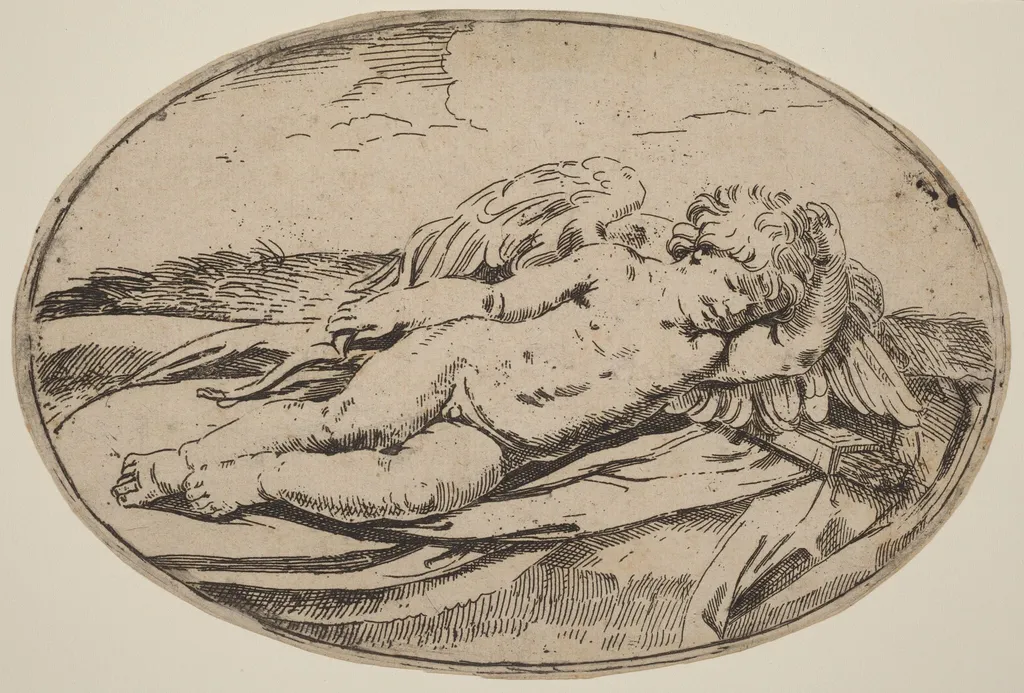
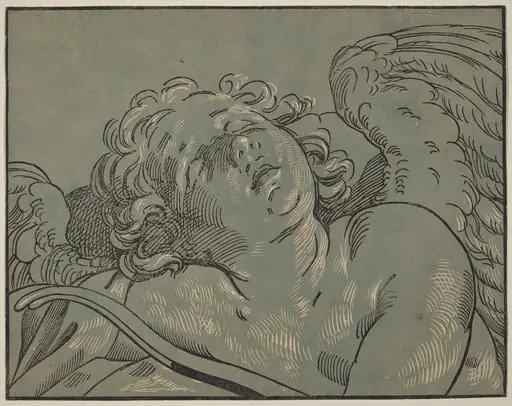
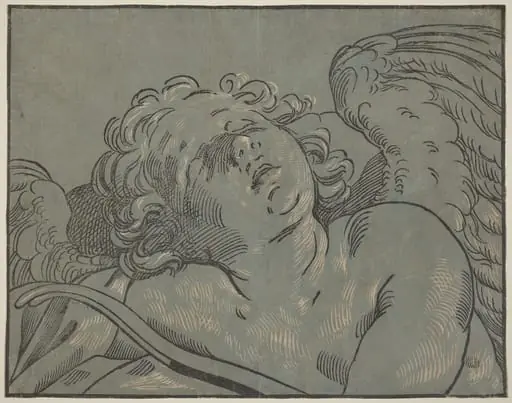
Sleeping Cupid is an ink print by the Baroque artist Lorenzo Loli. It dates from 1640 and is held in the collection of the National Gallery of Art.
About this work
Overview
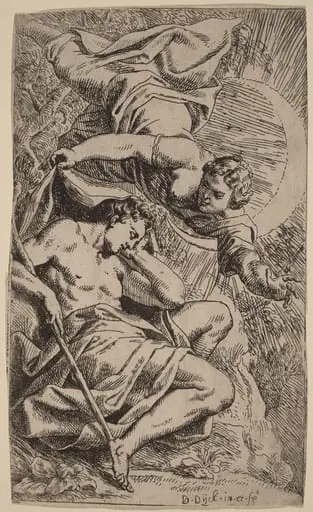
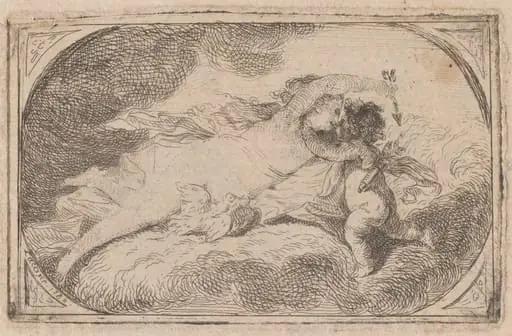
Lorenzo Loli’s etching Sleeping Cupid, executed around 1640, presents a nude infant figure in repose among a tangle of branches. Rendered on laid paper, the print captures the delicate contours of the child’s body with precise, dark lines, while the surrounding foliage is suggested with swift, sketch‑like strokes that hint at a sky or landscape beyond.
Subject & Meaning
The work draws on classical mythology, portraying Cupid in a moment of vulnerable sleep. By depicting the god of love as a defenseless child, Loli emphasizes themes of innocence and the latent power of affection, inviting viewers to contemplate the juxtaposition of divine potency and human fragility.
Technique & Style
Created through the etching process, the image relies on sharply incised lines that delineate the smooth skin folds of the figure and the textured bark of the branches. The contrast between meticulous detailing and rapid, gestural background marks the print’s energetic execution, characteristic of mid‑seventeenth‑century Italian printmaking.
History & Provenance
The print is dated to the early 1640s, a period when Loli was active in Florence. While specific ownership records are scarce, the work has appeared in several catalogues of Italian baroque prints, indicating its circulation among collectors of mythological imagery during the century following its creation.
Context
During the mid‑1600s, Italian artists frequently revisited classical subjects, integrating them into contemporary aesthetic trends. Loli’s choice of a sleeping Cupid aligns with the era’s fascination with allegorical representations of love, often employed in decorative arts and private collections to convey refined taste.
Artist & collection