Artwork
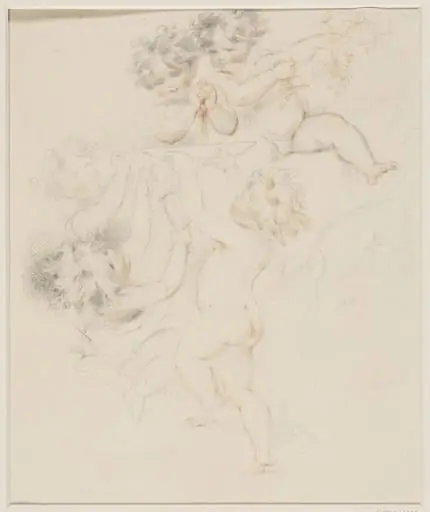
Allegory of Painting with Three Cherubs (99)
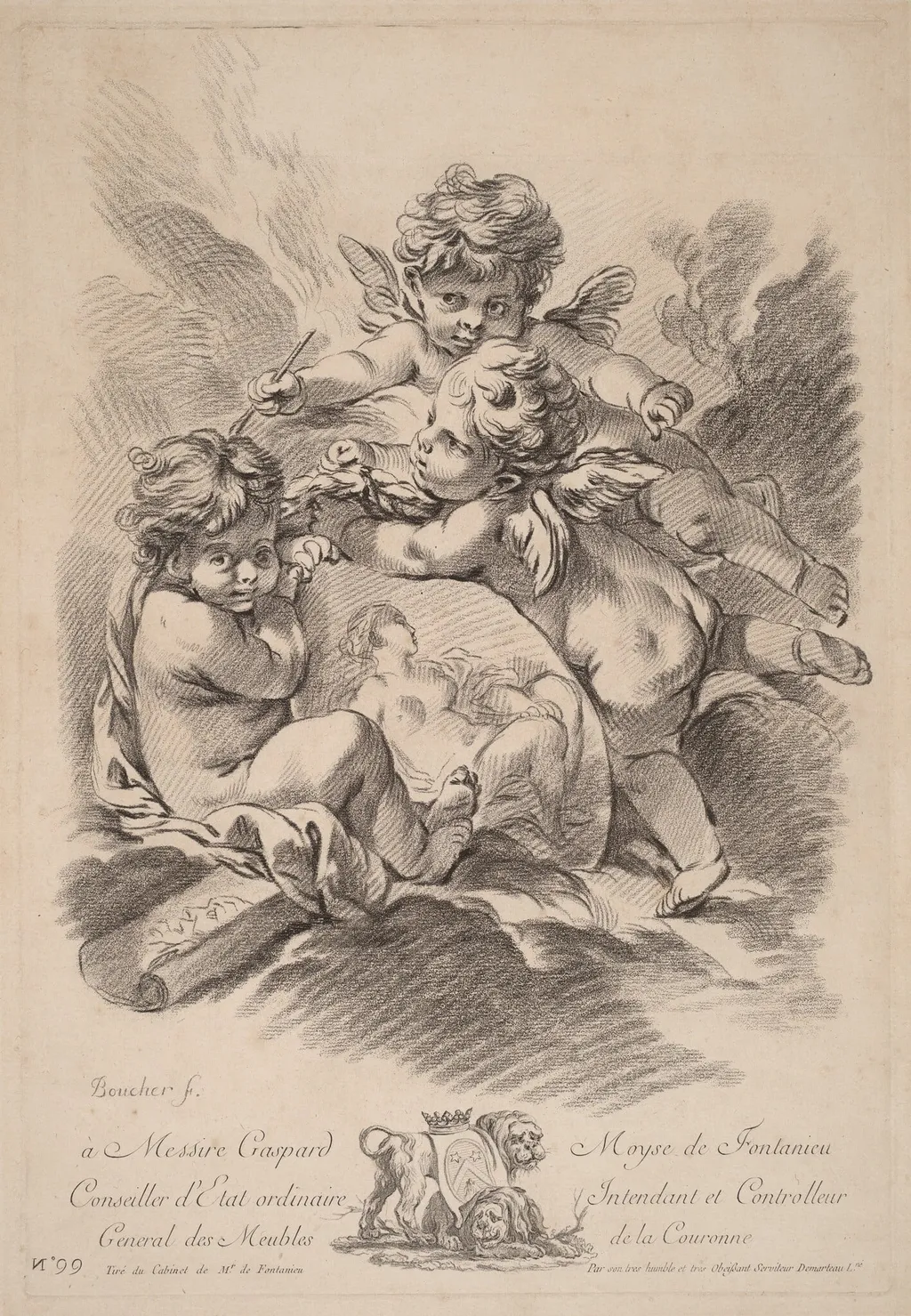
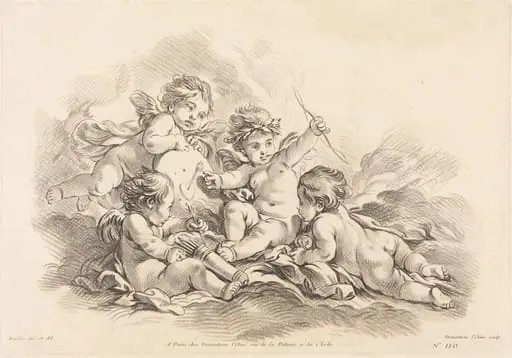
Allegory of Painting with Three Cherubs (99) is a chalk print by the Baroque artist Gilles Demarteau the Elder. It dates from 1749 and is held in the collection of the National Gallery of Art. Created in 1749, this black chalk manner print on laid paper presents an allegorical scene titled Allegory of Painting with Three Cherubs.
About this work
Overview
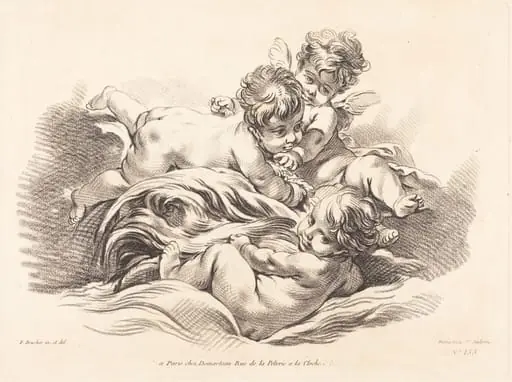
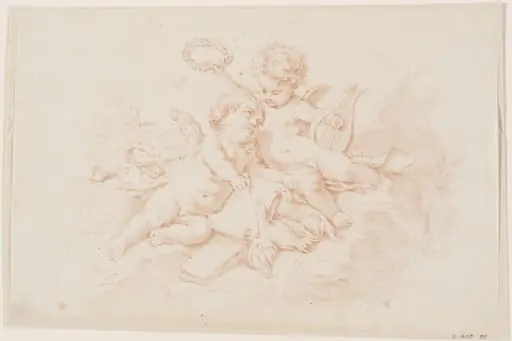
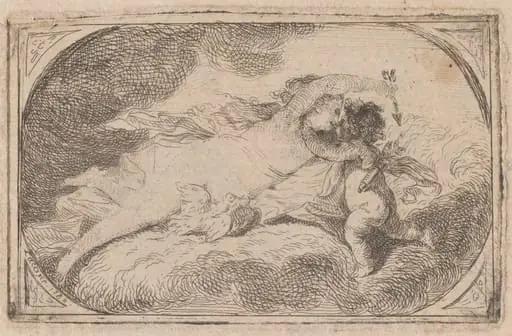
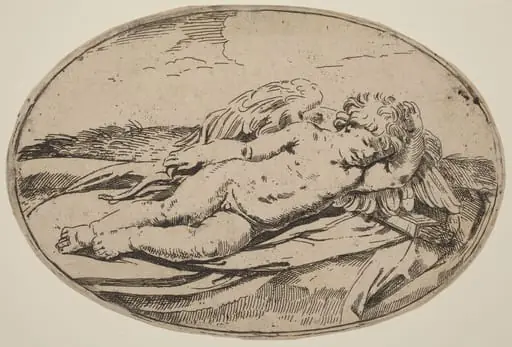
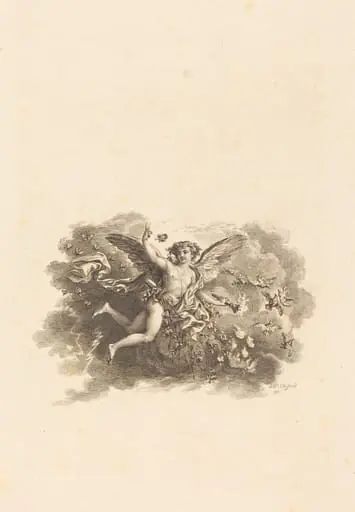
Created in 1749, this black chalk manner print on laid paper presents an allegorical scene titled Allegory of Painting with Three Cherubs. The composition features three plump cherubic figures set against a cloudy backdrop, each engaged in a different gesture that references the act of painting. The work bears the signature of the French printmaker Demarteau the Elder, indicating his authorship.
Subject & Meaning
The three cherubs function as personifications of artistic activity. One cherub holds a diminutive paintbrush, suggesting the act of creation; another rests against a rock, implying contemplation; the third hovers with wings, evoking inspiration. Their round, inquisitive faces and intertwined poses convey a playful yet thoughtful meditation on the nature of painting as both craft and divine gift.
Technique & Style
Executed in the chalk manner, the print employs fine, soft lines that mimic the texture of chalk drawing while retaining the permanence of a printed image. The use of black ink on laid paper creates subtle tonal variations, emphasizing the delicate forms of the cherubs and the atmospheric clouds. The style reflects the late Baroque interest in movement, chiaroscuro, and allegorical content.
History & Provenance
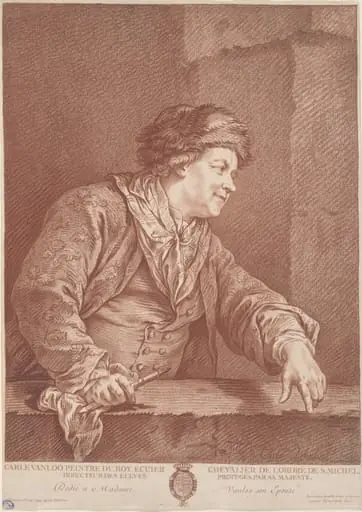
The lower margin of the print includes a small coat of arms, indicating that the image was likely presented as a gift to a high-ranking French official. This heraldic mark, together with Demarteau’s signature, helps trace the work’s original ownership and suggests its circulation among elite patronage networks in mid‑18th‑century France.
Artist & collection