Artwork
Three Goats
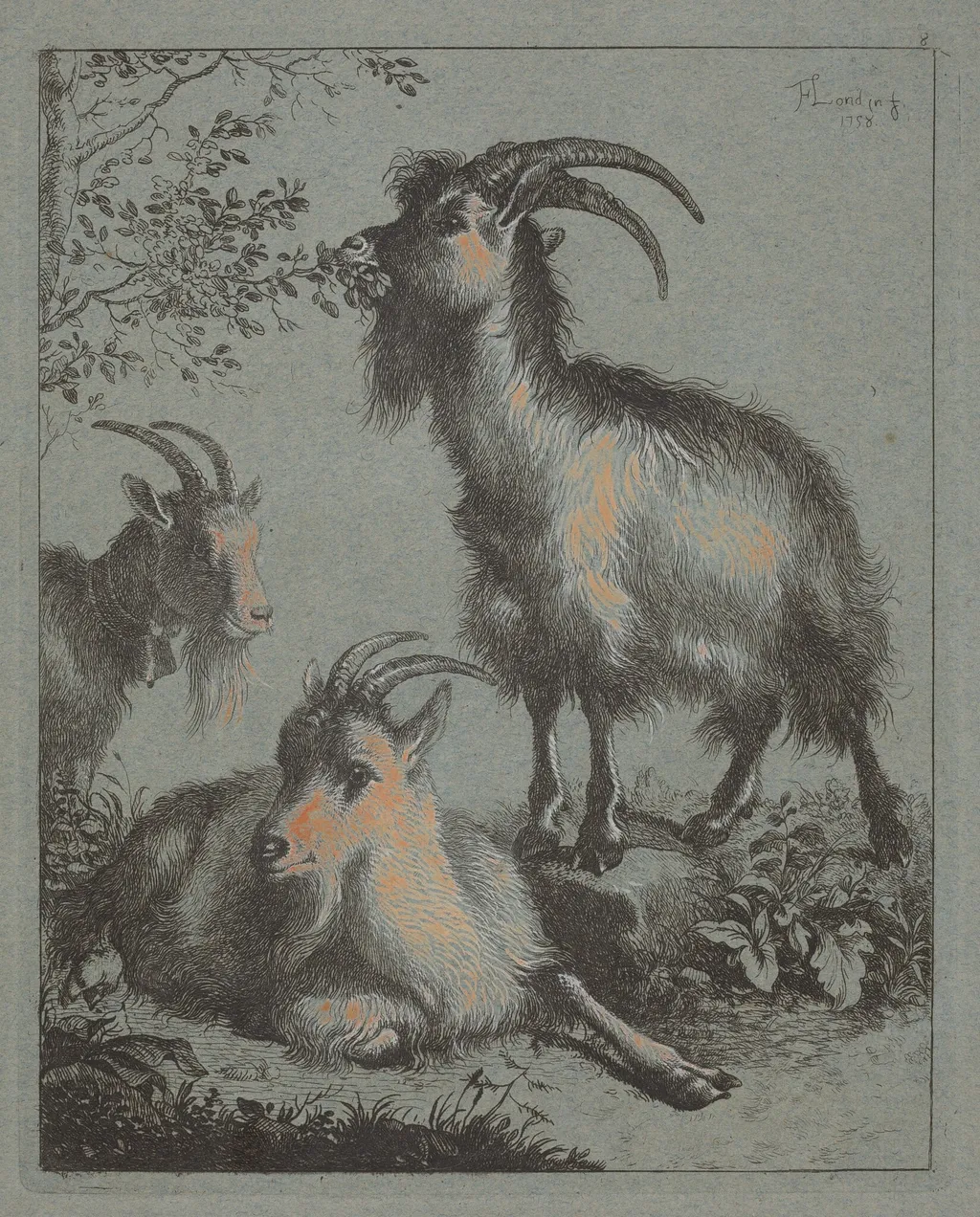
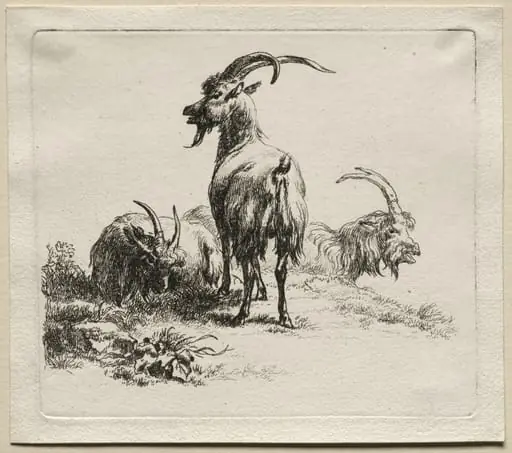
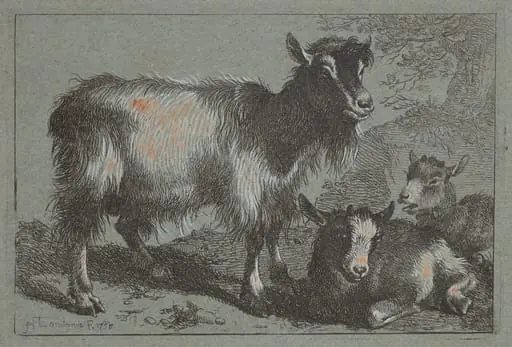
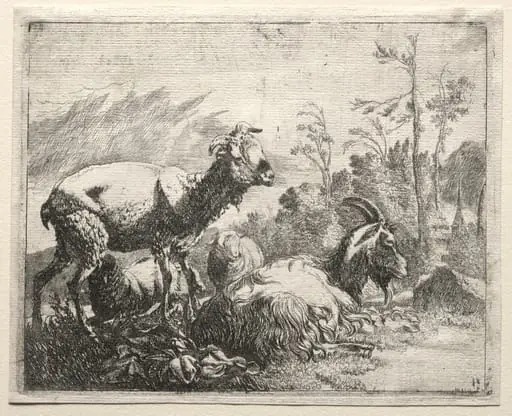
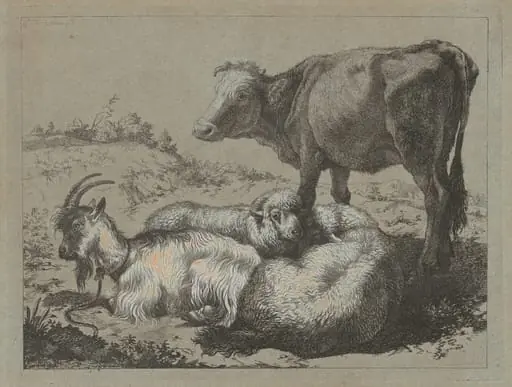
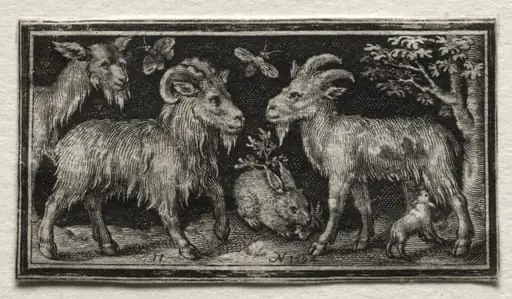
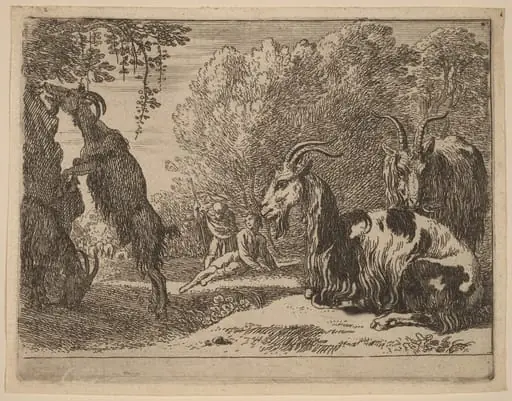
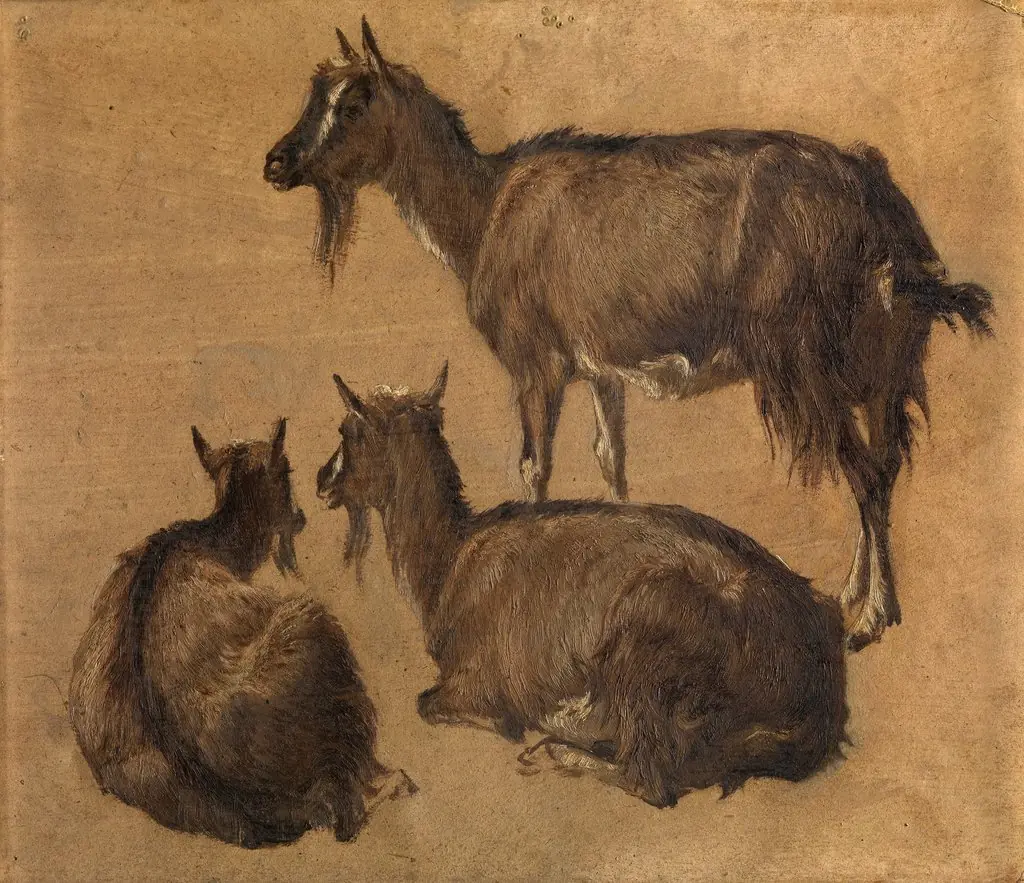
Three Goats is an ink print by the Romanticist artist Francesco Londonio. It dates from 1758 and is held in the collection of the National Gallery of Art.
About this work
Overview
The composition balances a sense of movement with the rustic charm typical of mid‑18th‑century Italian genre prints.
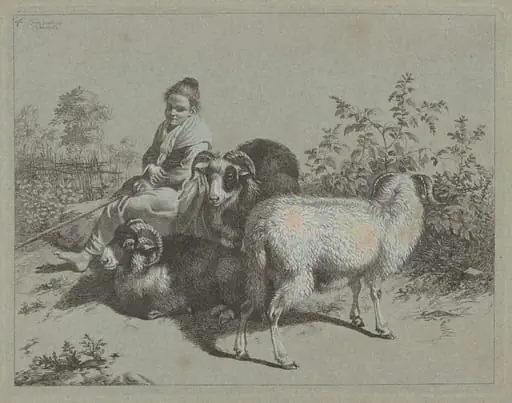
Created in 1758, *Three Goats* is an etching on blue laid paper that has been heightened with white. The work presents a compact grouping of three goats amidst a tangled, vegetated setting, rendered in a palette of deep black lines, soft peach tones, and the luminous white of the paper. The composition balances a sense of movement with the rustic charm typical of mid‑18th‑century Italian genre prints.
Subject & Meaning
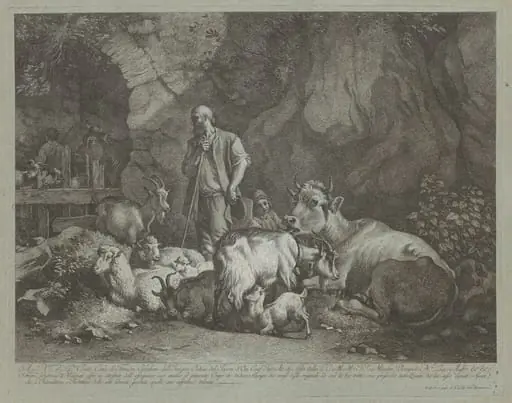
The print depicts three goats of varying size entangled among rocks and foliage. The dominant animal stands upright on its hind legs, while the other two are positioned on all fours, each bearing patches of light‑colored fur. The lively, slightly disorderly arrangement suggests a moment of pastoral activity, reflecting the artist’s interest in everyday rural life and the vitality of animal subjects.
Technique & Style
Londonio employed traditional etching methods, incising the design into a copper plate before printing onto blue laid paper. White highlights were added by hand to accentuate the goats’ forms, creating a subtle contrast against the dark lines. The use of peach‑toned washes adds depth, while the blue ground supplies a cool backdrop that intensifies the visual impact of the white and black elements.
History & Provenance
Francesco Londonio, an Italian painter, engraver, and set designer active in Milan, produced the work after training with Ferdinando Porta, Giovanni Battista Sassi, and the engraver Benigno Bossi. His career included study trips to Rome and Naples, and he catered to affluent Northern Italian patrons who favored genre scenes of peasants and animals. The print remains a representative example of his output during the late‑Baroque/Rococo period.
Context
During the mid‑18th century, Northern Italy saw a demand for small, affordable prints that depicted bucolic life. Londonio’s focus on rustic subjects aligned with contemporary tastes for genre imagery that combined decorative appeal with a glimpse of countryside labor. *Three Goats* thus fits within a broader market of decorative prints that decorated private homes and reflected the era’s fascination with pastoral idealism.
Artist & collection

Artist
Francesco Londonio (1723–1783) was an Italian painter, engraver, and scenographer, active mainly in his native Milan in a late-Baroque or Rococo style.