Artwork
Portrait of a Woman with a Pearl Necklace
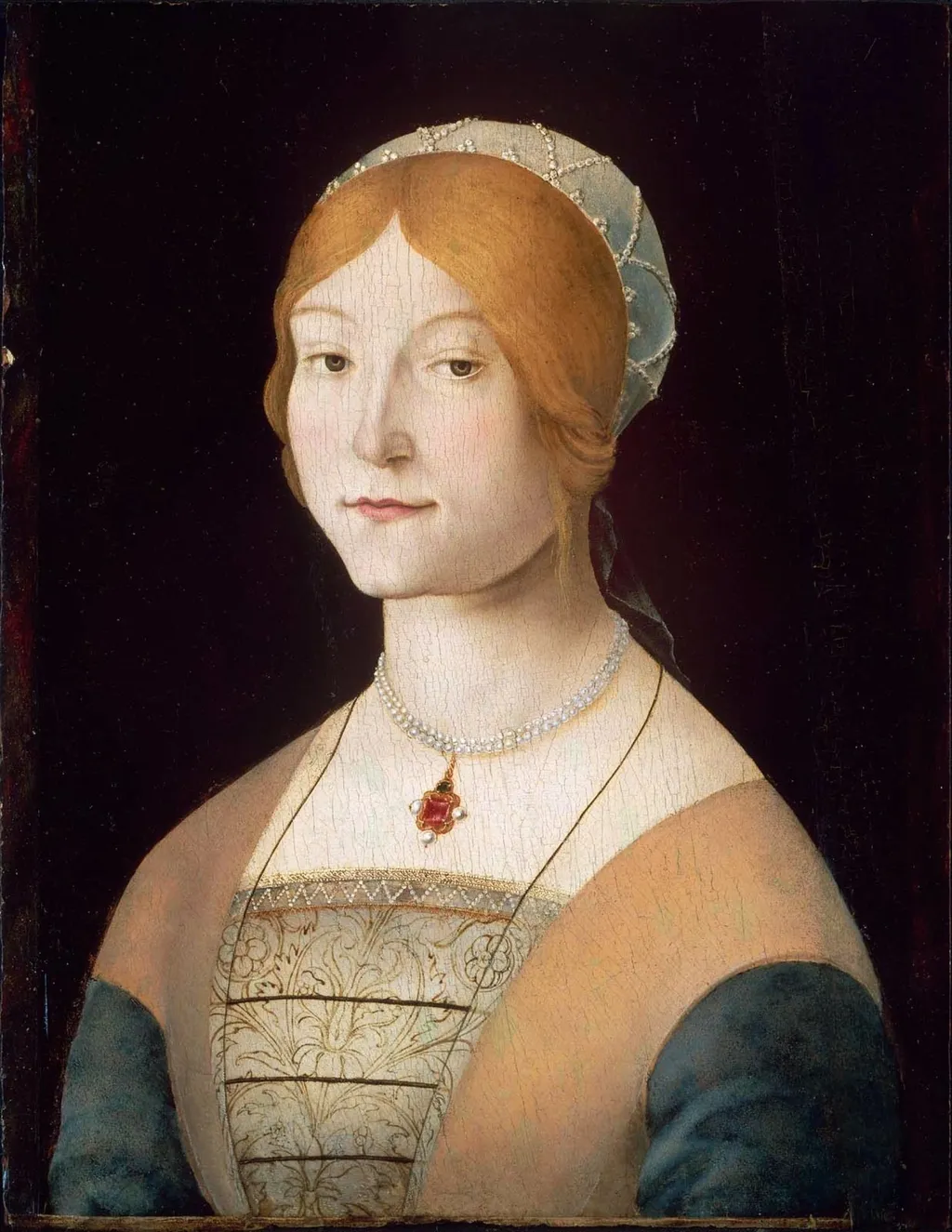
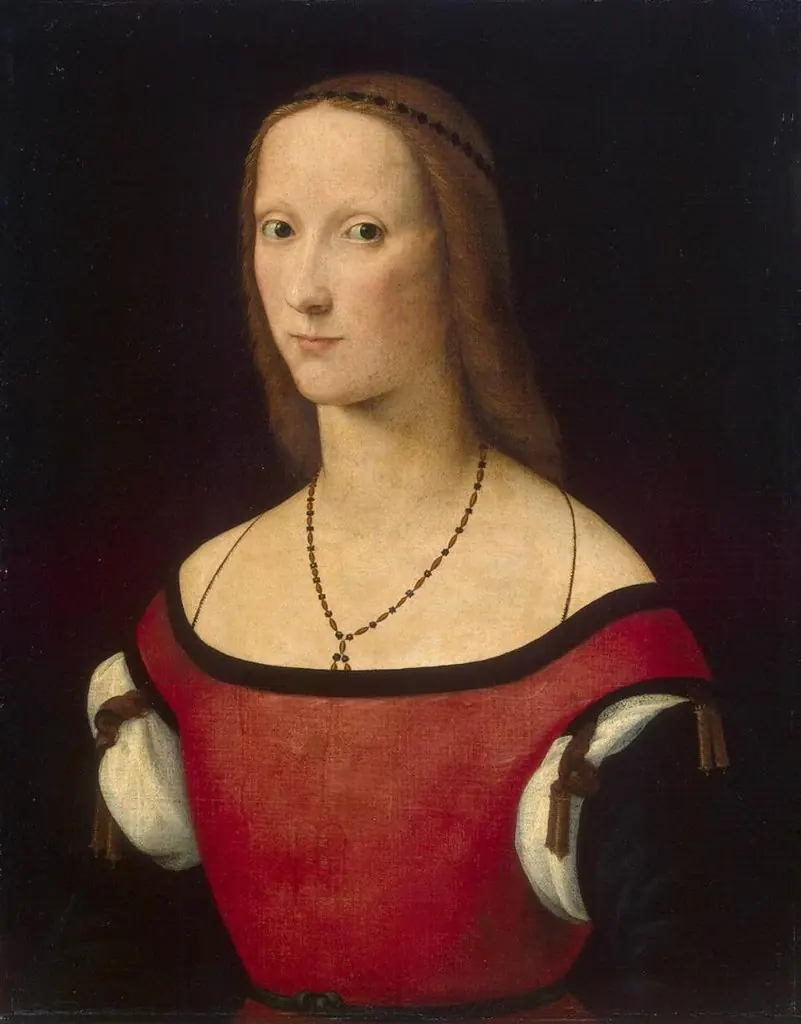
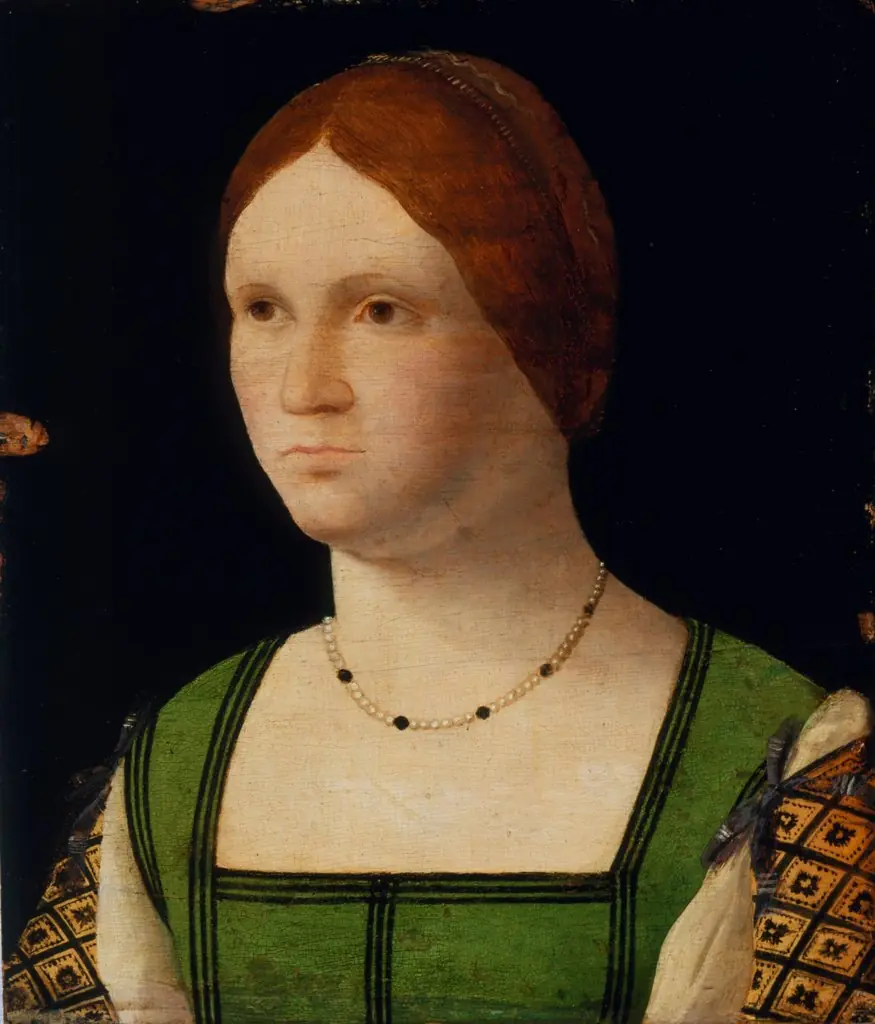
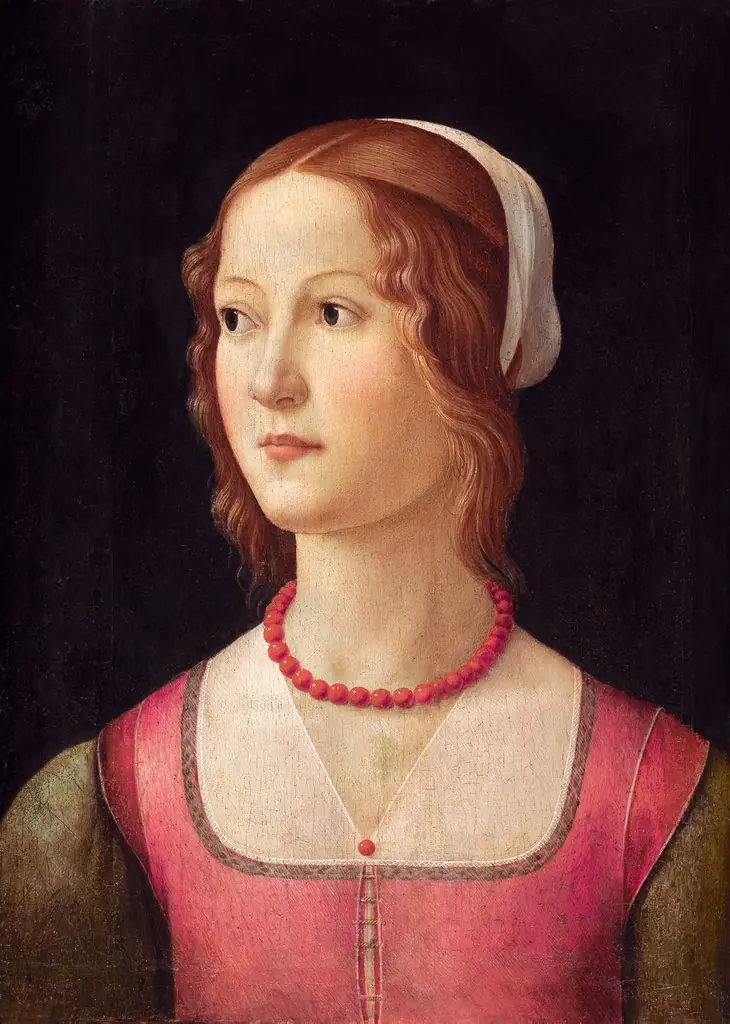
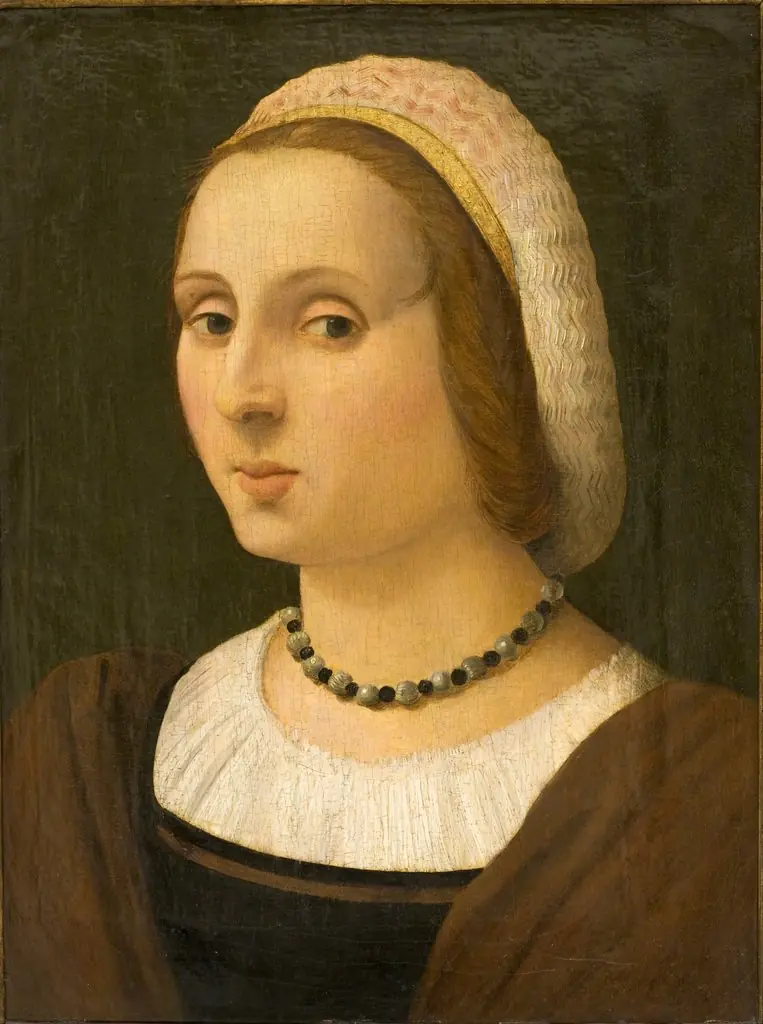
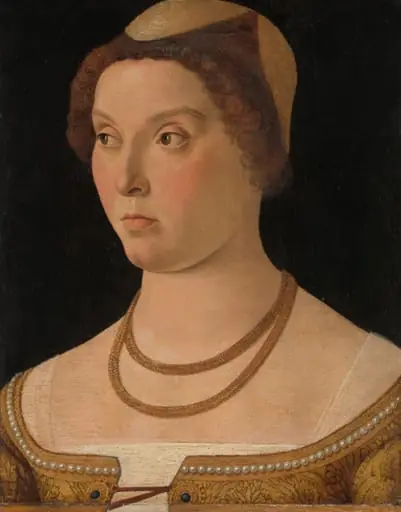
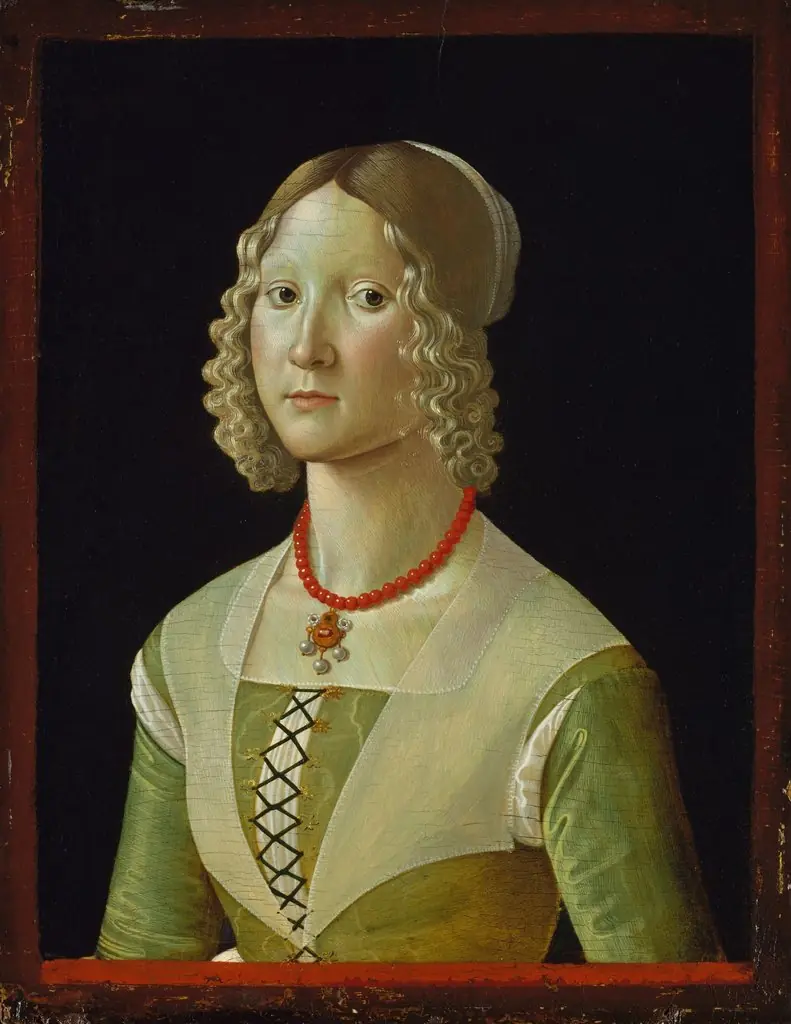
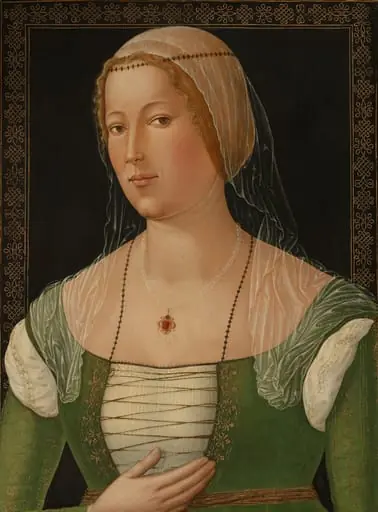
Portrait of a Woman with a Pearl Necklace is an oil painting by the Early Renaissance artist Lorenzo Costa. It dates from 1496 and is held in the collection of the Museum of Fine Arts Boston.
About this work
Overview
Painted in 1496 by Lorenzo Costa, this oil portrait depicts a noblewoman in quiet composure. Executed with refined precision, the work exemplifies early Renaissance portraiture in northern Italy. The painting resides in the Museum of Fine Arts, Boston, where it is recognized for its restrained elegance and meticulous rendering of textile and jewelry details.
Subject & Meaning
The pearl necklace and red pendant suggest wealth and possibly marital or familial significance, though no definitive identity has been established.
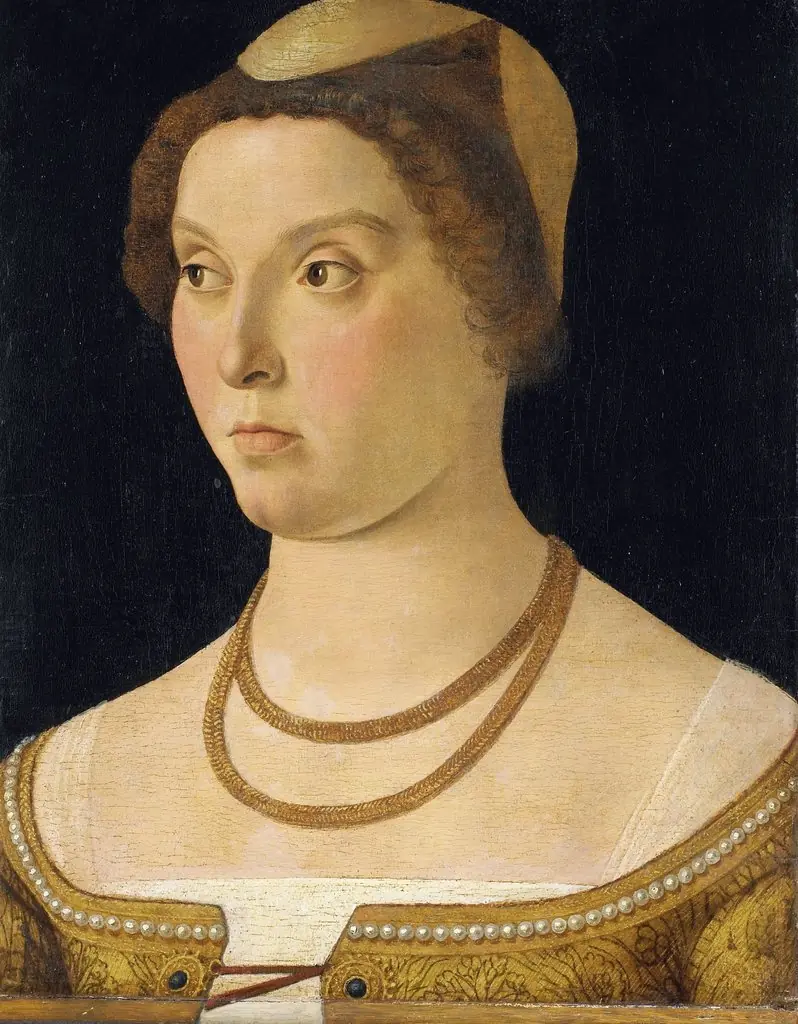
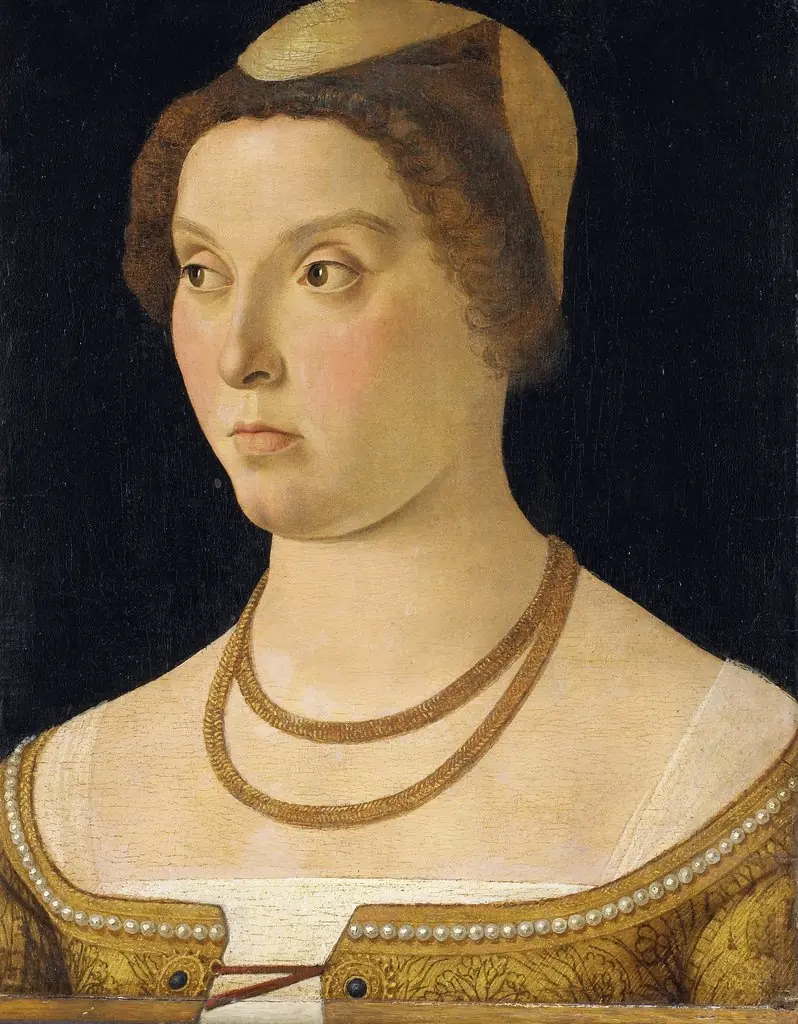
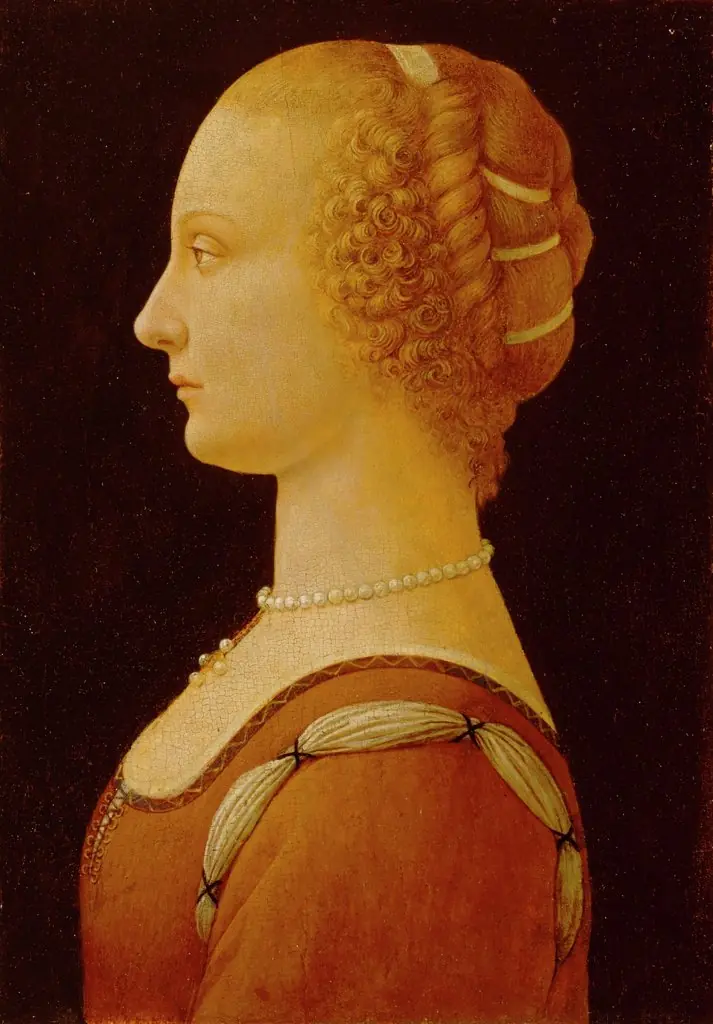
The sitter, likely a member of the aristocracy, gazes directly at the viewer with calm dignity. Her attire—blue gown, white bodice, and covered hair—signals modesty and status. The pearl necklace and red pendant suggest wealth and possibly marital or familial significance, though no definitive identity has been established. The portrait emphasizes presence over narrative, reflecting ideals of noble femininity in late 15th-century Italy.
Technique & Style
Costa employed fine brushwork to capture the sheen of pearls, the texture of embroidered gold thread, and the soft folds of fabric. The dark, unmodeled background isolates the figure, drawing focus to her features and adornments. Light falls evenly across the face and dress, avoiding dramatic contrasts, consistent with the quiet realism favored in courtly portraiture of the period.
History & Provenance
The painting entered the Museum of Fine Arts, Boston, in the early 20th century. Its earlier ownership remains undocumented, though its style aligns with works produced in the Ferrara court during Costa’s tenure there. No records of commission or original setting survive, leaving its initial context speculative, but its craftsmanship suggests patronage by a wealthy family.
Context
Created during the transition from Early to High Renaissance, the portrait reflects the influence of Ferrarese and Venetian traditions. Costa, trained under Mantegna, blended linear precision with subtle color harmonies. This work aligns with contemporary portraits that prioritized social identity over psychological depth, serving as a visual assertion of lineage and status among Italian elites.
Legacy
Though not widely reproduced, the portrait stands as a representative example of Costa’s skill in capturing aristocratic presence. It contributes to scholarly understanding of regional portraiture in late 15th-century Italy, illustrating how jewelry, fabric, and posture conveyed social meaning without overt symbolism. Its preservation allows continued study of material culture and artistic practice in Renaissance courts.
Own this work as a print
Artist & collection