Artwork
Madonna della Grazie
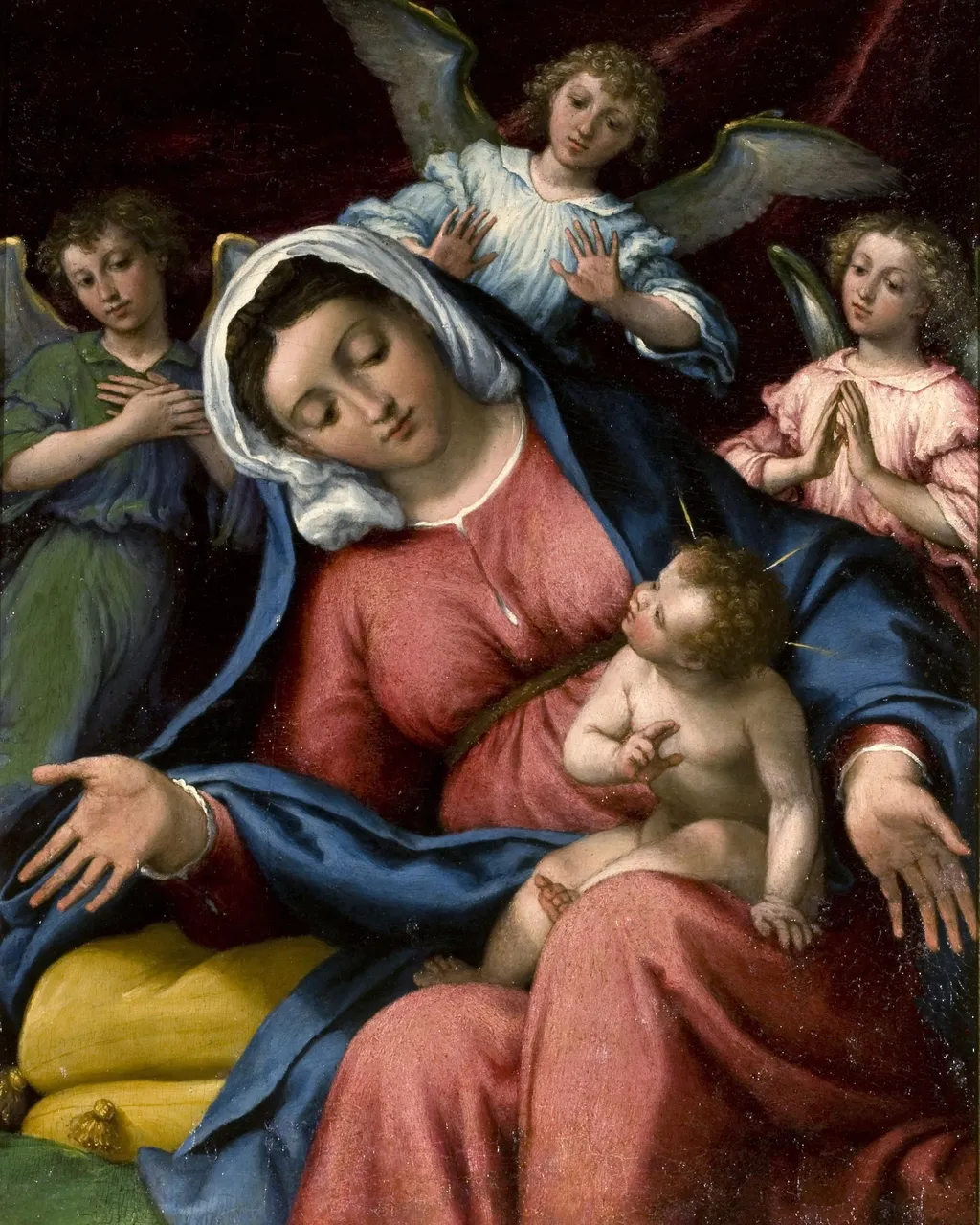
Madonna della Grazie is an oil painting by the Mannerist artist Lorenzo Lotto. It dates from 1525 and is held in the collection of the Hermitage Museum.
About this work
Overview
Lorenzo Lotto’s *Madonna della Grazie*, executed in oil in 1525, presents the Virgin Mary and the infant Jesus within a compact, devotional composition. The painting is part of the collection of the State Hermitage Museum and exemplifies Lotto’s transition from the balanced ideals of the High Renaissance toward the more expressive tendencies that would later define Mannerism.
Subject & Meaning
The central figures are the Madonna, clothed in a red gown beneath a blue mantle, and a naked Christ child crowned with a halo. A white veil covers Mary’s head, and four angels, hands joined in prayer, frame the scene. The tender contact of Mary’s right hand on the child’s chest underscores maternal intimacy, while her outstretched left hand suggests an offering of grace.
Technique & Style
Subtle elongation of the angels’ limbs hints at the emerging Mannerist aesthetic, while the overall composition retains a balanced, harmonious structure.
Lotto employs chiaroscuro to model the figures against a deep, dark background, creating a pronounced contrast that enhances the three‑dimensionality of the forms. The colors of the Madonna’s garments are rendered with luminous intensity, drawing the eye forward. Subtle elongation of the angels’ limbs hints at the emerging Mannerist aesthetic, while the overall composition retains a balanced, harmonious structure.
History & Provenance
Created in the early 1520s, the work was likely intended for a private devotional setting rather than a public altar. It entered the Russian imperial collection in the 18th century and has remained in the State Hermitage Museum since that time, where it is displayed among other works illustrating the shift from Renaissance to Mannerist art.
Context
Lotto worked across northern Italy during a period of artistic flux, absorbing influences from contemporaries such as Titian and Raphael while developing his own idiosyncratic style. *Madonna della Grazie* reflects this milieu, combining the serene devotional tone of earlier Renaissance sacra conversazione with the heightened emotional expression that would characterize later Mannerist works.
Own this work as a print
Artist & collection
Artist
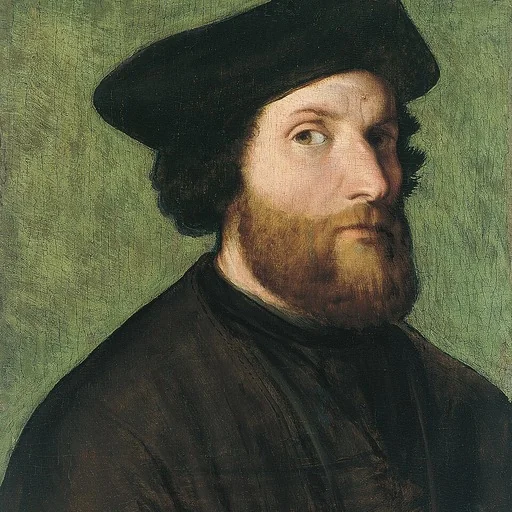
Lorenzo Lotto (c. 1480 – 1556/57) was an Italian Renaissance painter, draughtsman, and illustrator, traditionally placed in the Venetian school, though much of his career was spent in other north Italian cities. He…



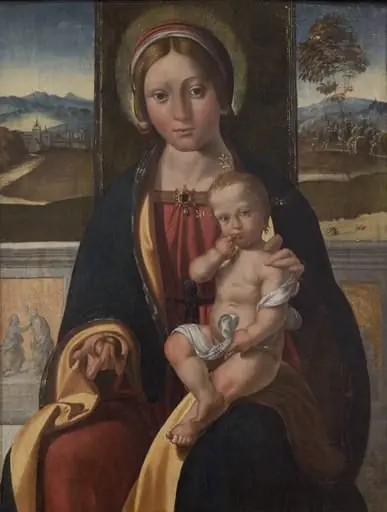 The Virgin and Child
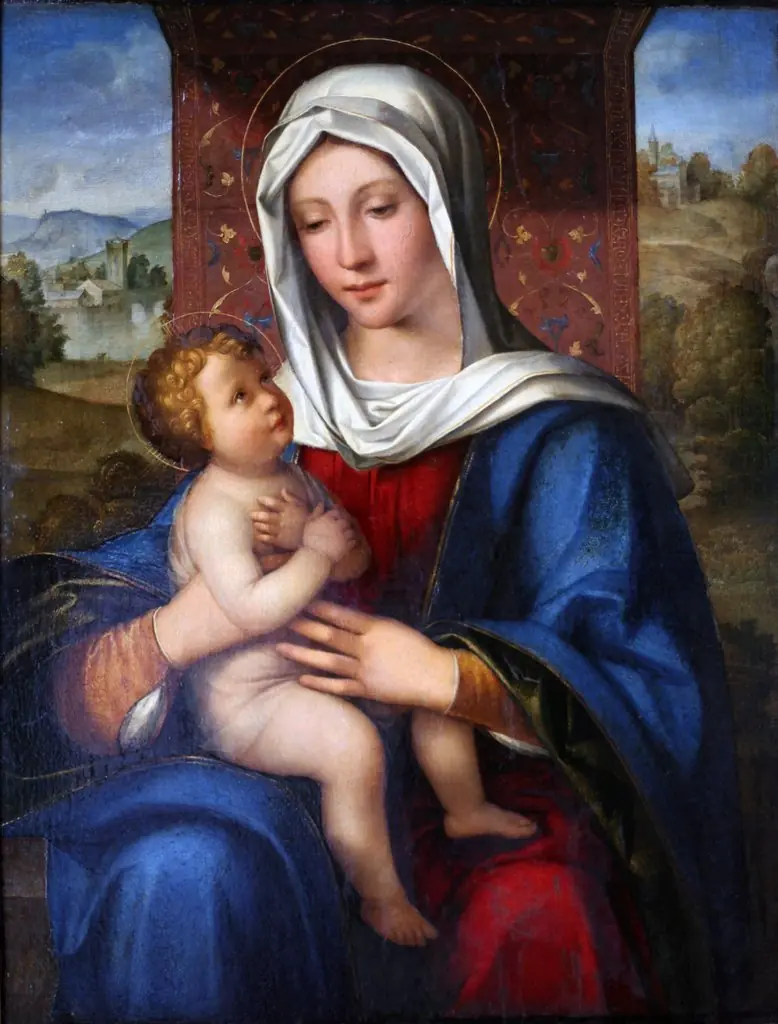 Virgin and Child
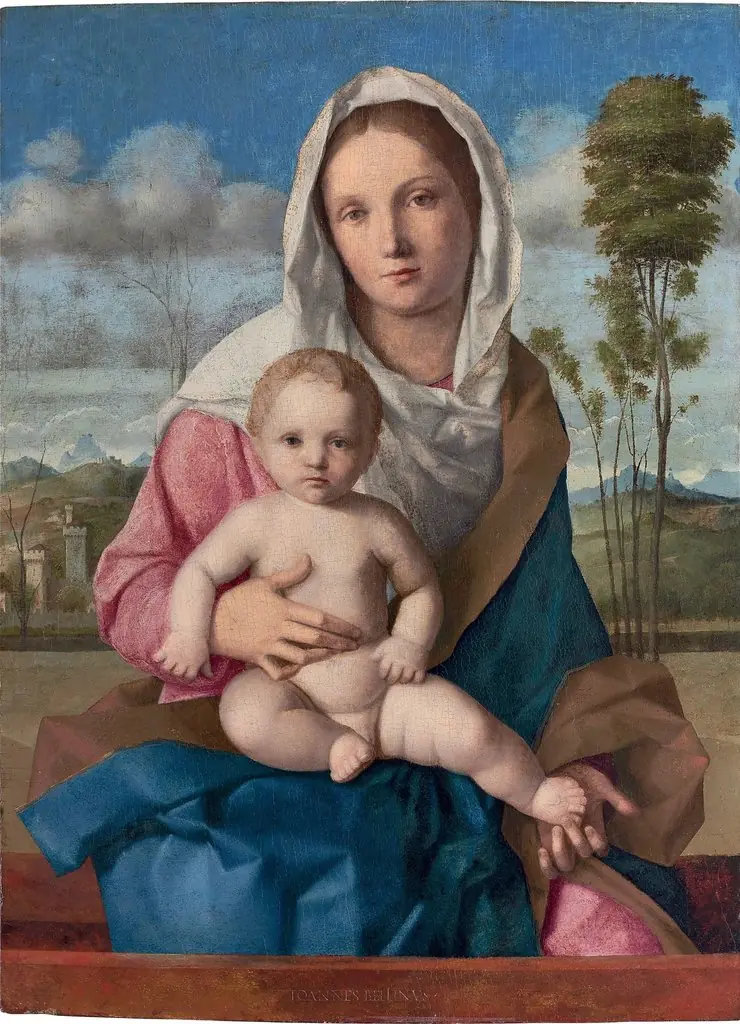 Madonna Dudley
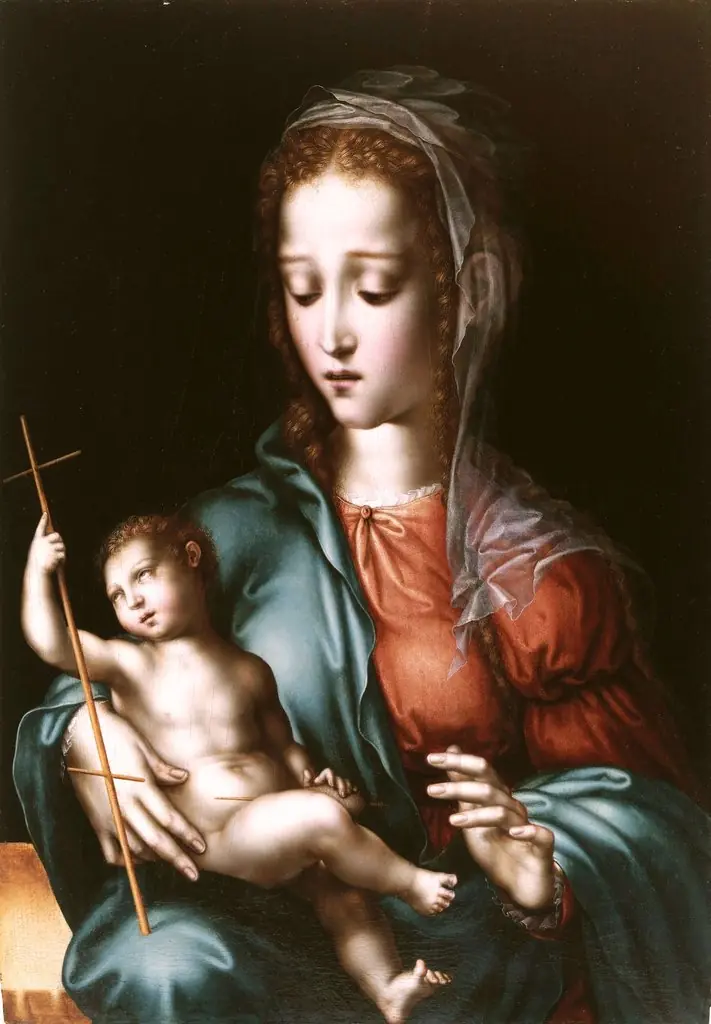 The Virgin and Child with a Spindle
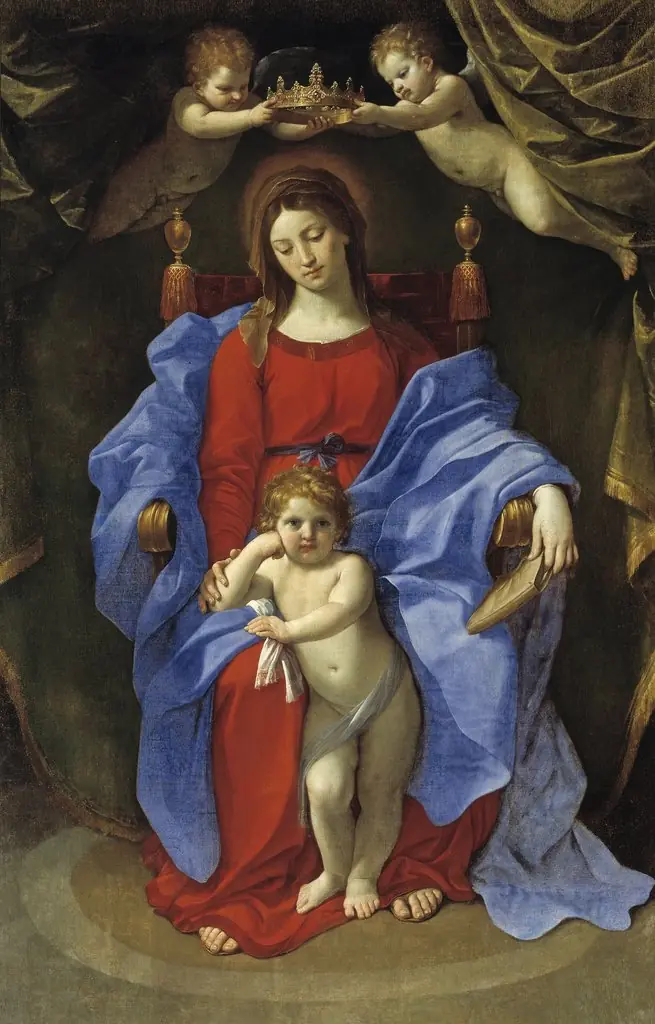 The Virgin of the Chair
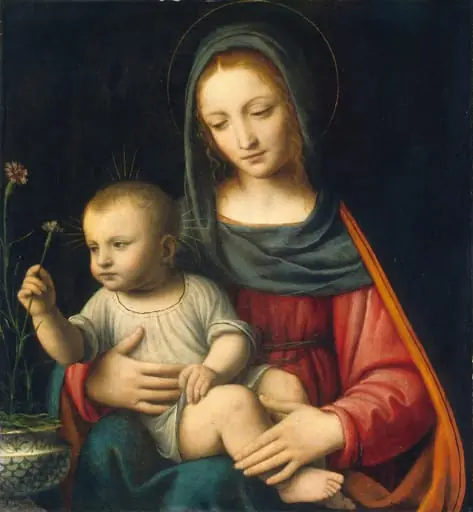 The Madonna of the Carnation
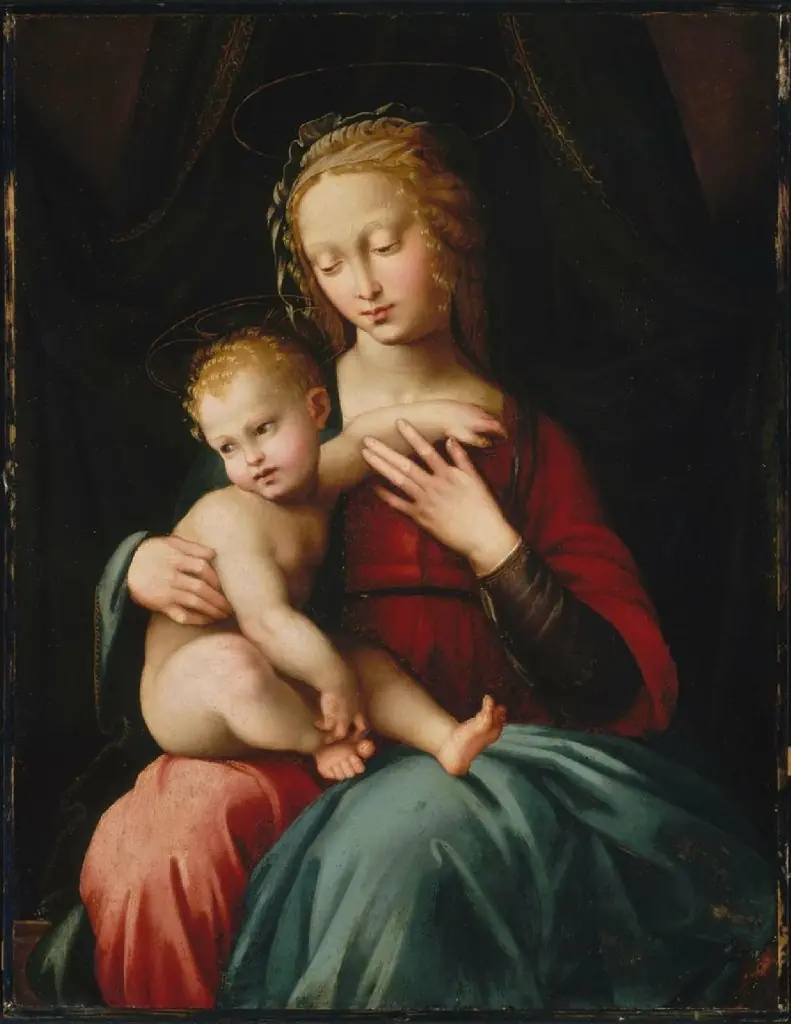 Virgin and Child
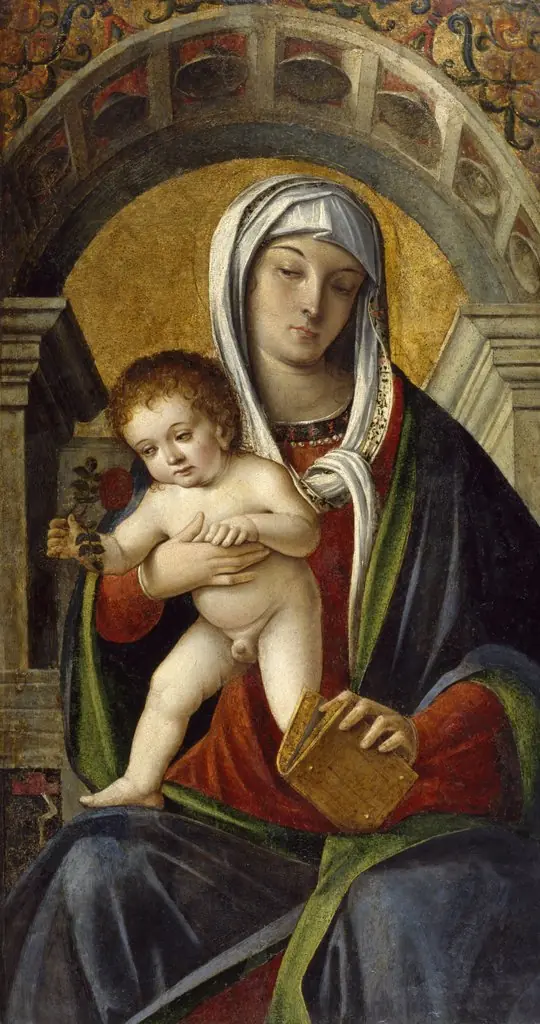 Triptych with Madonna and Child Enthroned Between the Archangel Michael and Saint Peter
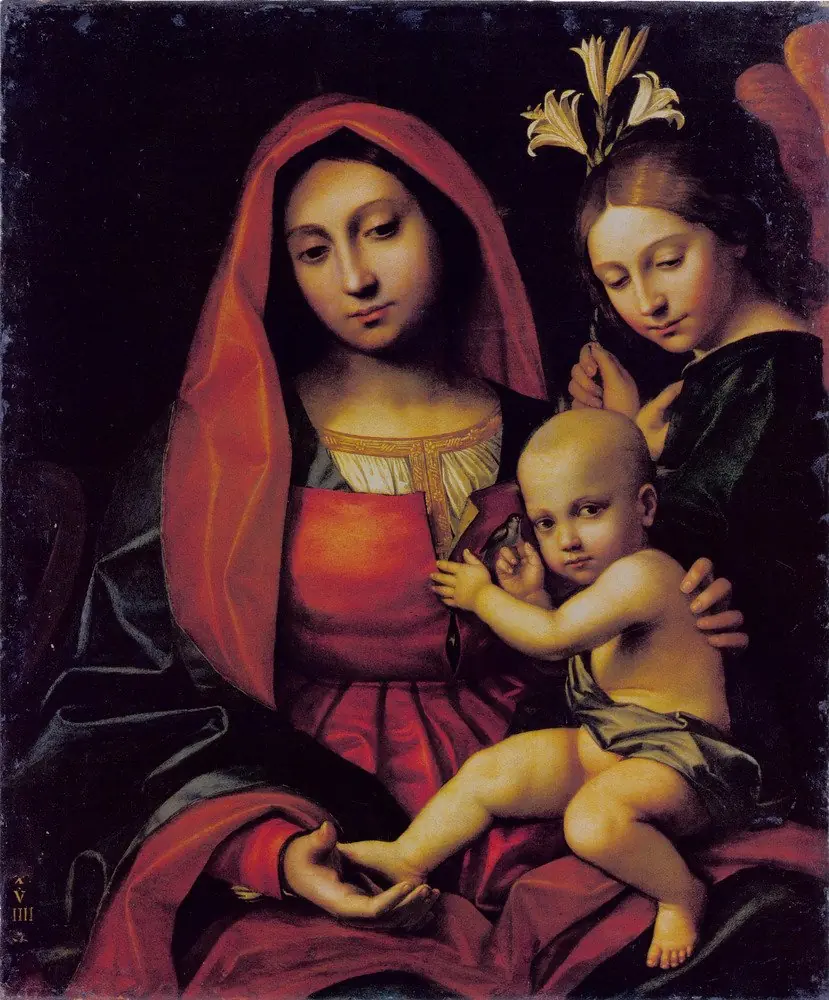 Madonna and Child with an Angel
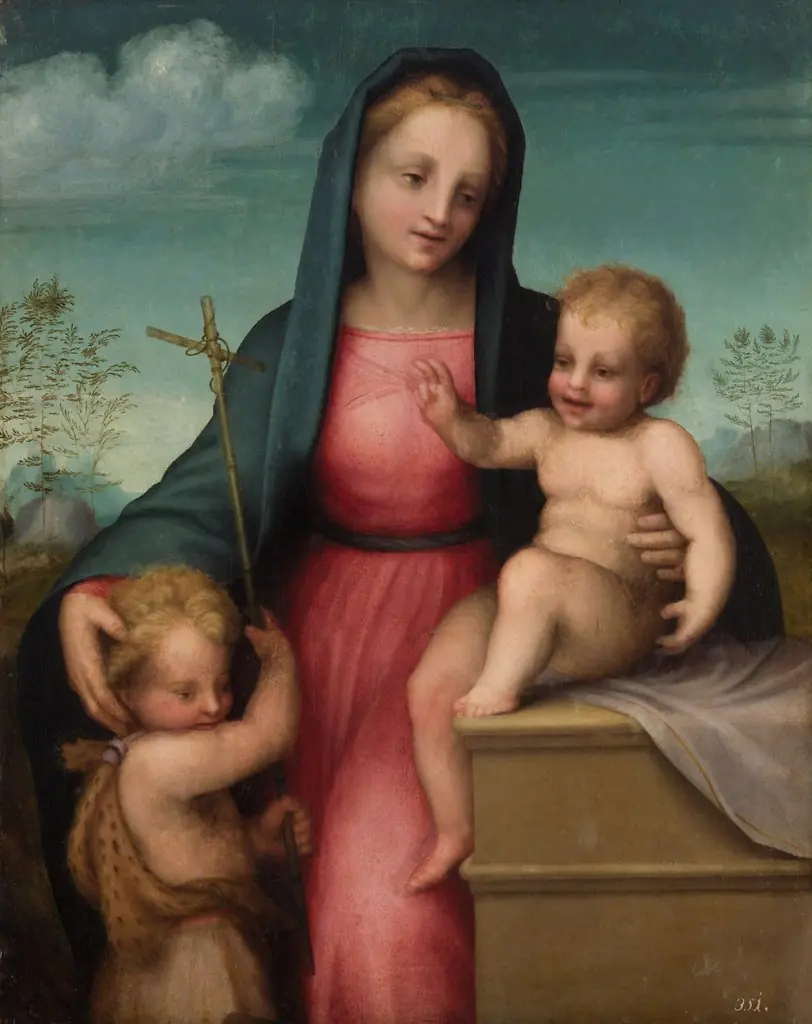 Maria mit Kind und Johannesknaben
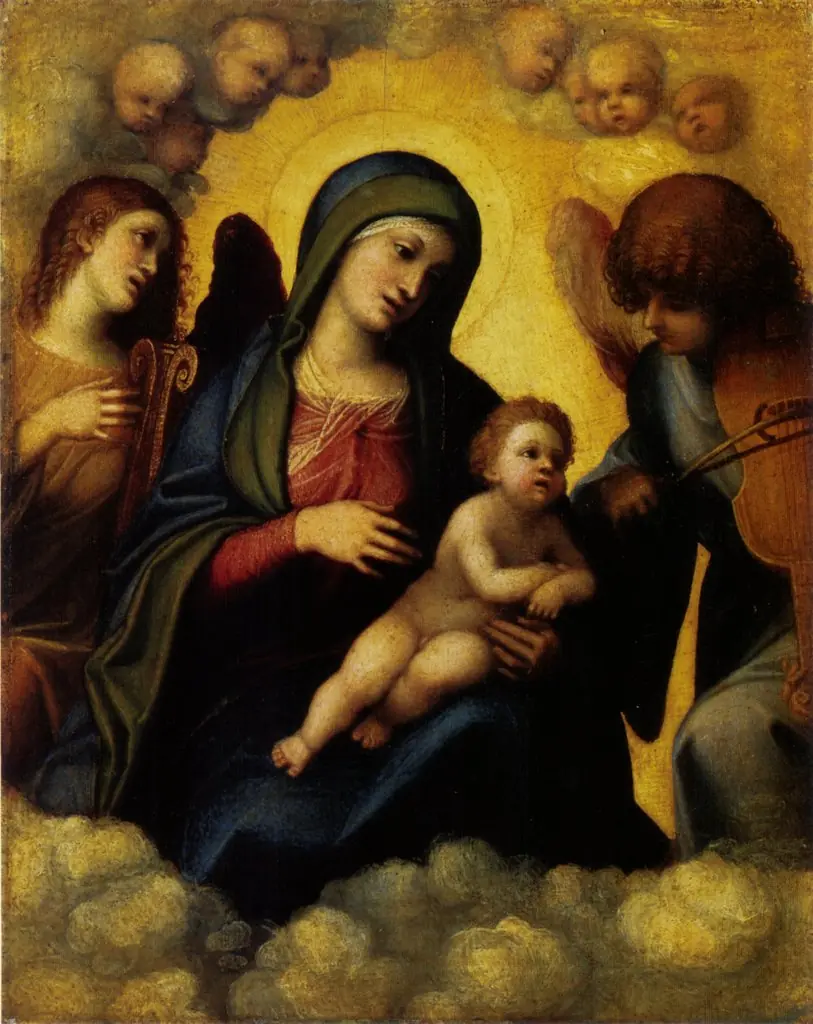 Madonna with child and two angel musicians
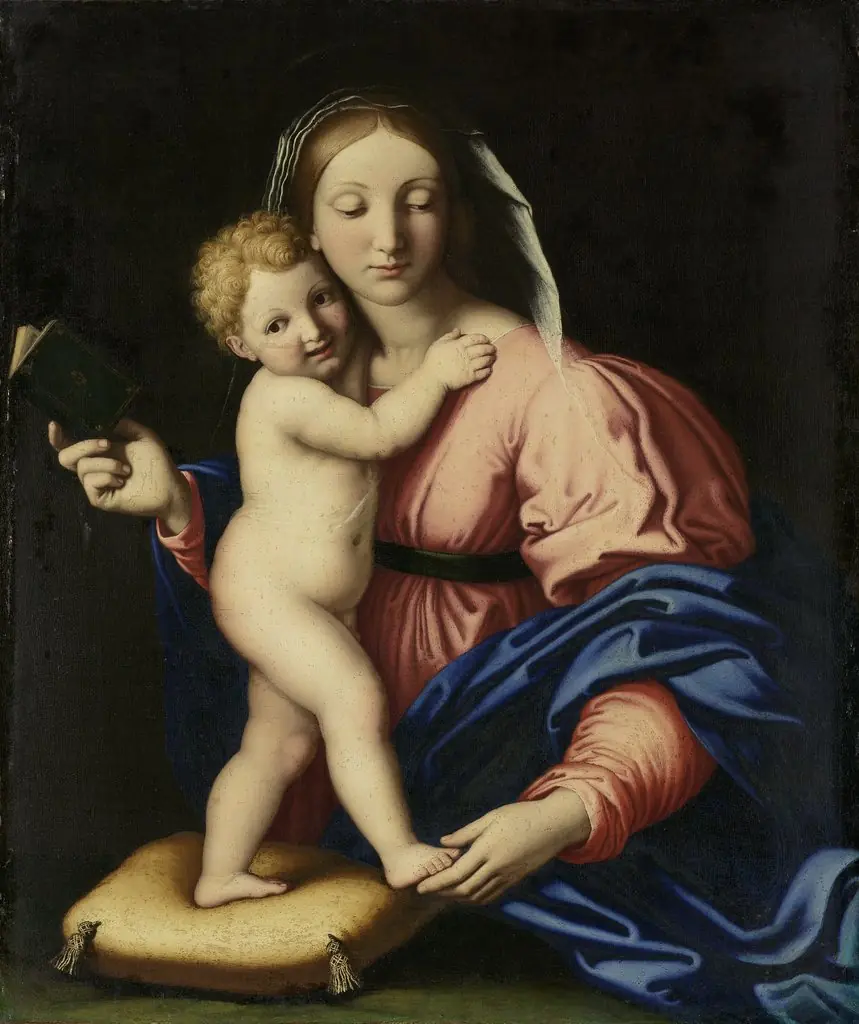 Virgin and Child