Artwork
The Virgin of the Chair
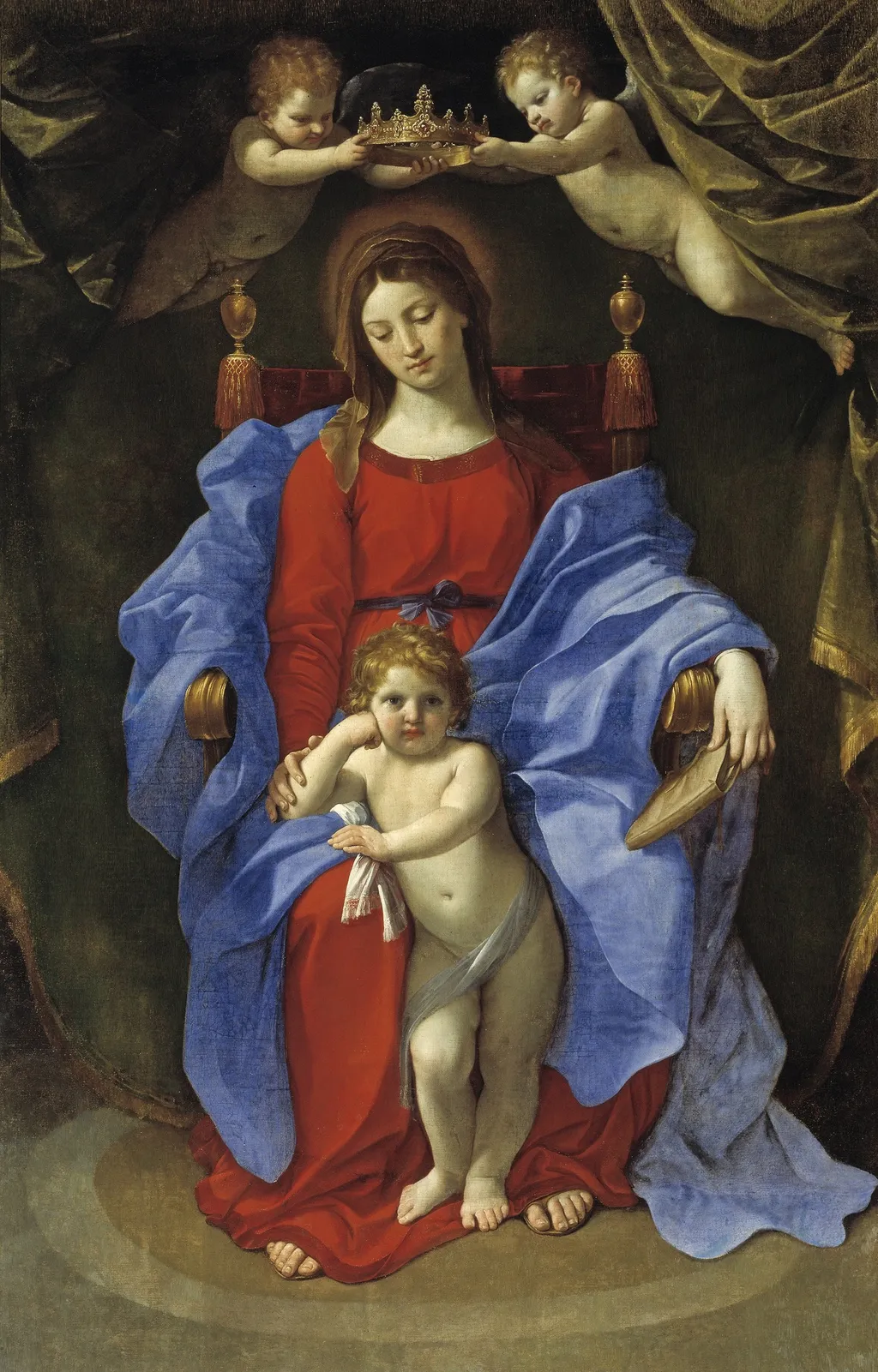
The Virgin of the Chair is an oil painting by the Early Baroque Italian artist Guido Reni. It dates from 1624 and is held in the collection of the Museo del Prado.
About this work
Overview
Guido Reni’s oil painting, The Virgin of the Chair, was executed in 1624 and is now part of the collection at the Museo del Prado. The work presents a seated female figure in a red garment and blue mantle, cradling a barefoot child who gazes upward, while two diminutive winged beings hover nearby, one bearing a golden crown.
Subject & Meaning
The central figures represent the Virgin Mary and the infant Christ, a traditional devotional pairing. The presence of a crown and the throne‑like chair underscores themes of divine authority and maternal protection, suggesting a visual meditation on the incarnation of Christ and Mary’s role as both queen and mother.
Technique & Style
Reni employs a chiaroscuro scheme, using deep shadows against a muted background to model the forms in three dimensions. Soft illumination catches the faces and the edges of the garments, creating a subtle gradation of light that enhances the tactile quality of the fabrics and the intimate gesture between mother and child.
History & Provenance
Completed in the early seventeenth century, the painting entered the Spanish royal collections before being transferred to the Prado Museum. Its provenance reflects the typical movement of Italian Baroque works into northern European courts, where they were prized for their devotional content and refined execution.
Context
Created during the height of the Baroque period, the work aligns with contemporary religious art that emphasized emotional engagement and dramatic lighting. Reni’s composition echoes the Counter‑Reformation’s call for clear, affective imagery, while his graceful figures retain the classical idealism that characterized his broader oeuvre.
Own this work as a print
Artist & collection
Artist
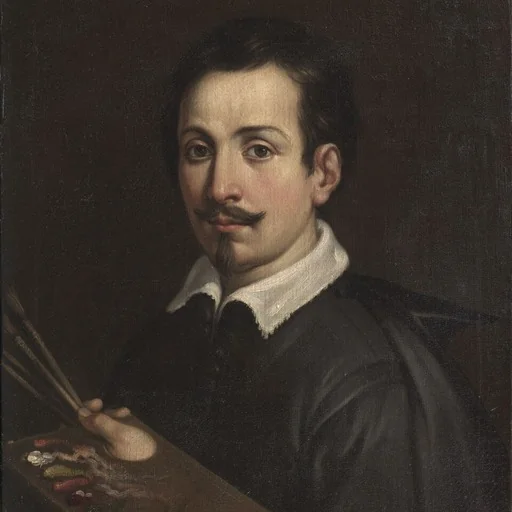
Guido Reni was an Italian Baroque painter, although his works showed a classical manner, similar to Simon Vouet, Nicolas Poussin, and Philippe de Champaigne.