Artwork
A Stand of Cypresses in an Italian Park
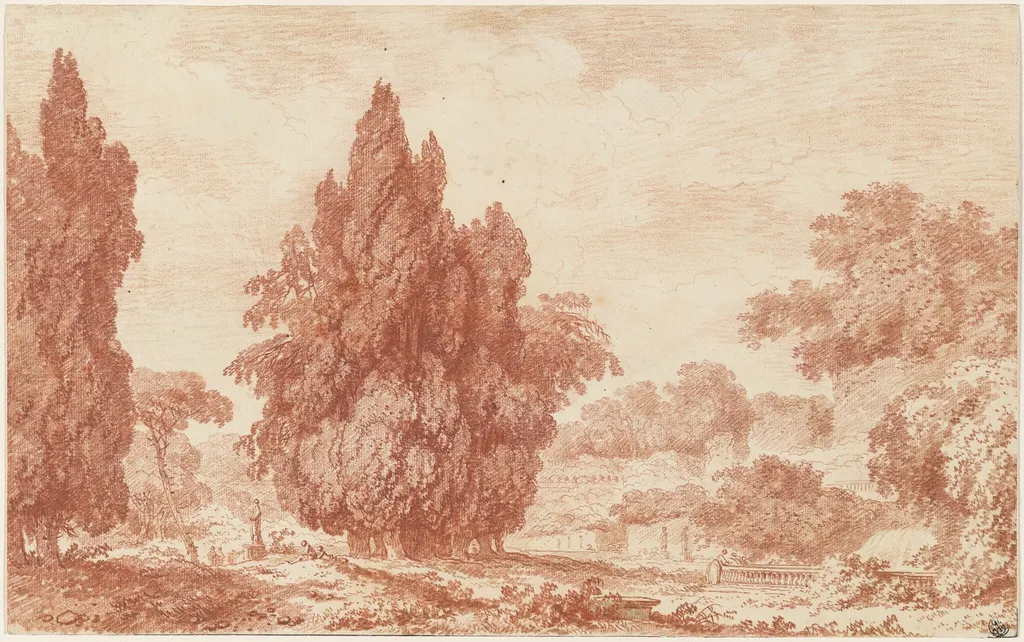
A Stand of Cypresses in an Italian Park is a chalk drawing by the Romanticist artist Jean Honoré Fragonard. It dates from 1760 and is held in the collection of the National Gallery of Art.
About this work
Overview
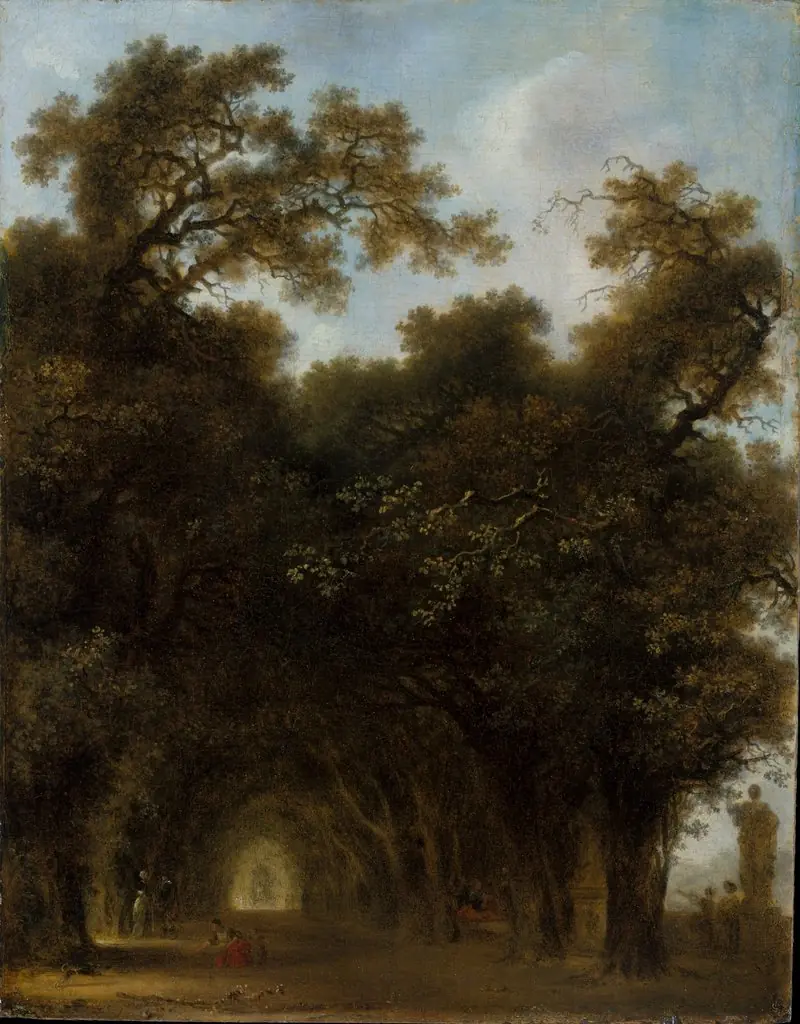
Jean‑Honoré Fragonard produced the drawing A Stand of Cypresses in an Italian Park around 1760. Executed in red chalk on laid paper, the work measures a modest size and captures a tranquil park landscape populated by a cluster of slender cypress trees, distant foliage and faint architectural forms on the horizon.
Subject & Meaning
The composition centers on a group of tall cypresses that rise together, suggesting both order and natural grandeur within an Italian garden setting. The surrounding vegetation and remote buildings provide a contextual backdrop, inviting contemplation of the harmony between cultivated space and the surrounding environment.
Technique & Style
Fragonard employed red chalk, a medium that yields a warm, earthy tonality, to model form and convey atmospheric depth. The laid paper surface enhances the texture of the marks, allowing subtle gradations that delineate the trees’ trunks, foliage, and distant structures, characteristic of the period’s emerging emphasis on emotive landscape rendering.
History & Provenance
Created circa 1760, the drawing belongs to Fragonard’s early output before his later Rococo fame. Its provenance traces back to private collections in France, later entering museum holdings where it is displayed as an example of mid‑eighteenth‑century landscape studies, illustrating the artist’s interest in Italian scenery.
Own this work as a print
Artist & collection

Artist
Jean-Honoré Fragonard was born on 5 April 1732 in Grasse, the son of a glover, and moved with his family to Paris in 1738.




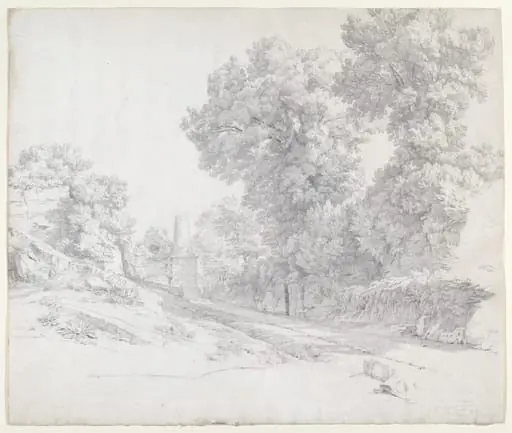 Oaks along the Appian Way near Albano
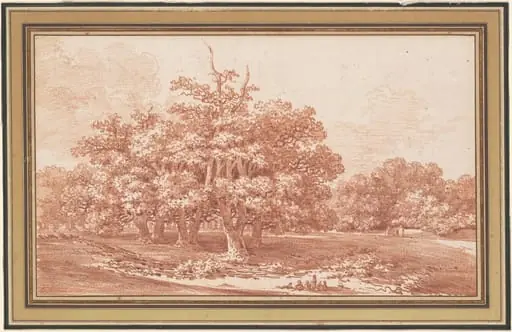 The Carrefour de l'Aiguille in the Forest of Fontainebleau
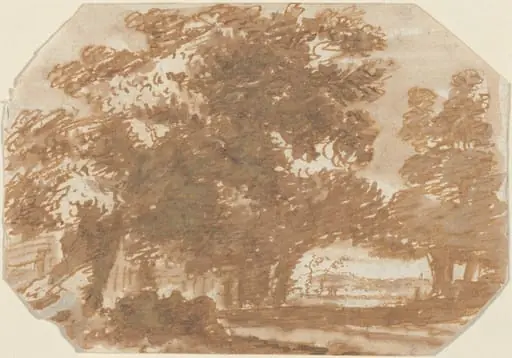 Grove of Trees
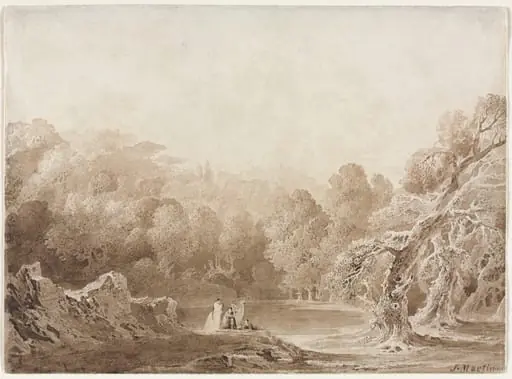 A Man Playing a Harp with other Figures beside a Lake
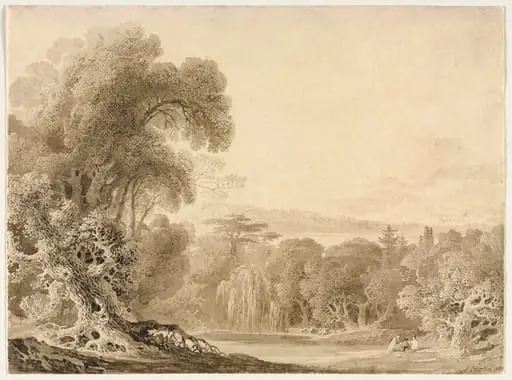 Figures Seated by a Lake in a Wooded Landscape
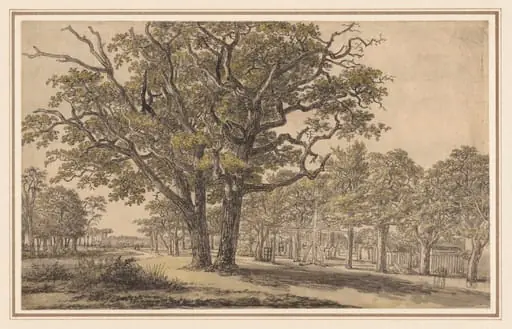 Landscape (recto)
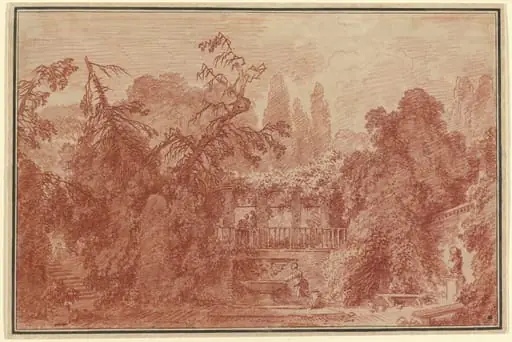 Terrace and Garden of an Italian Villa
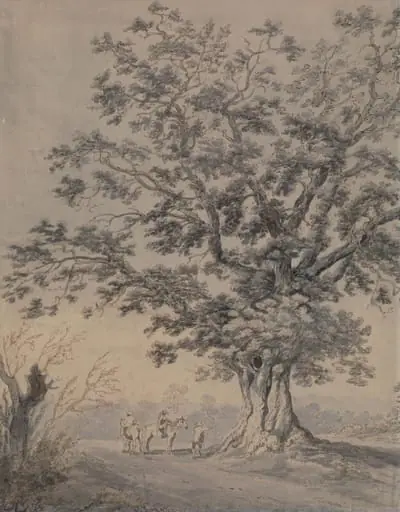 Lady Oak, near Cressidge,
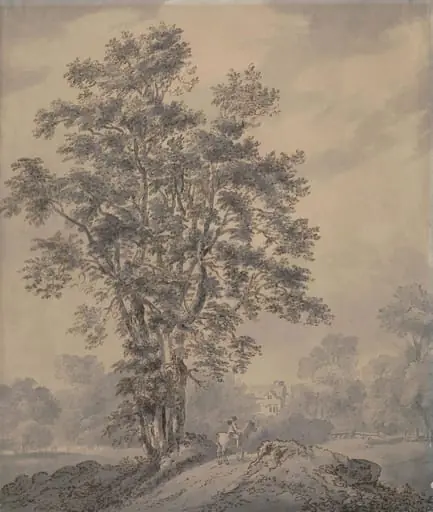 Landscape, with man on horseback
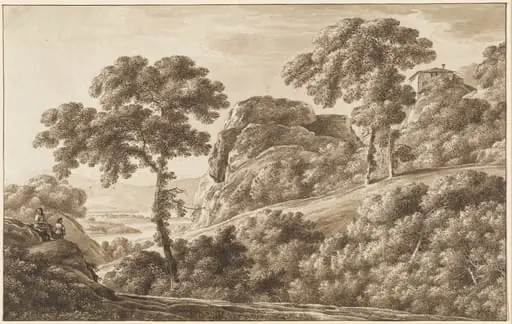 The Isar with Boulders on the Isarhohe
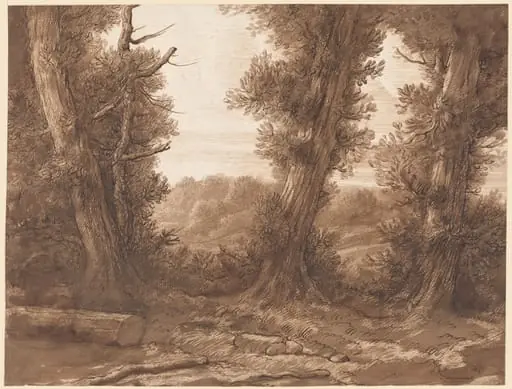 The Big Trees
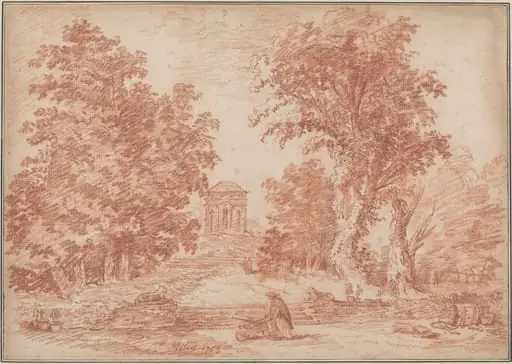 Italian Park with a Tempietto