Artwork
Shepherd with Goats (Les chèvres)
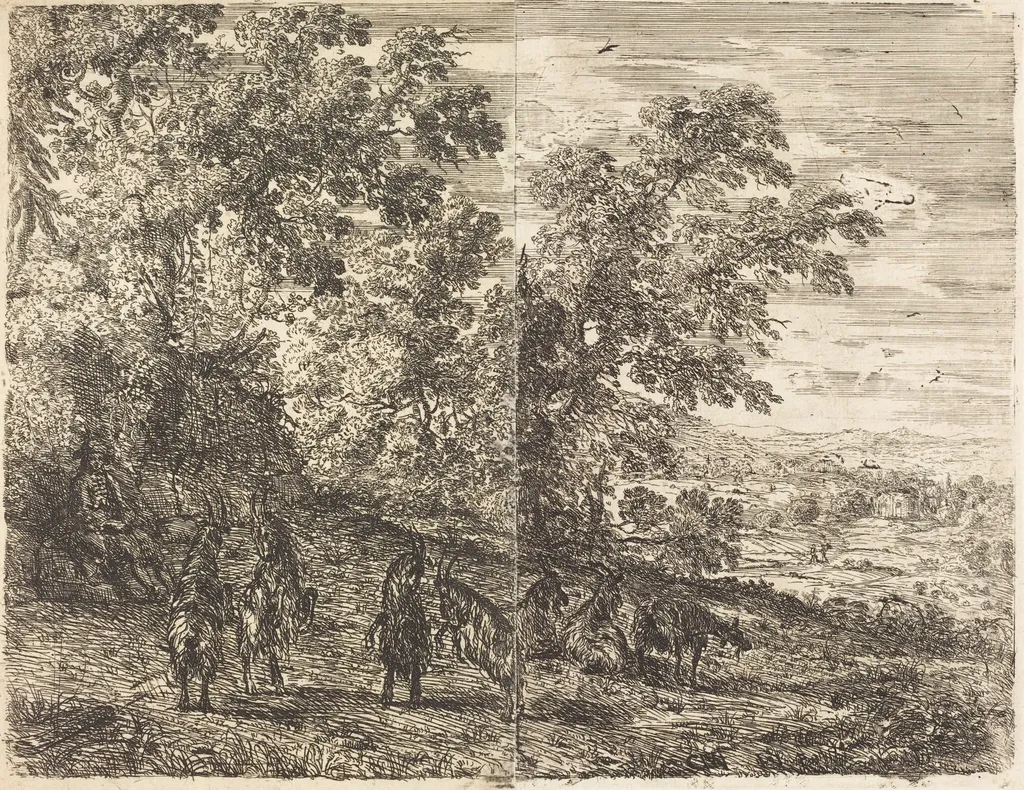
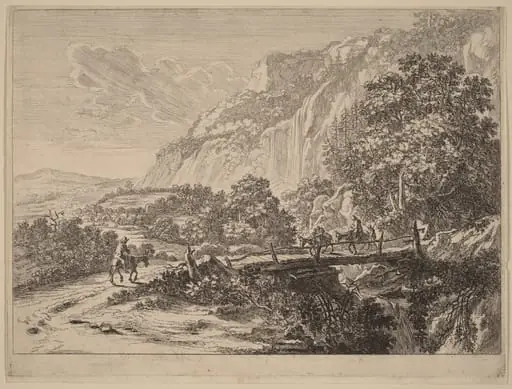
Shepherd with Goats (Les chèvres) is an ink print by the Baroque artist Claude Lorrain. It dates from 1632 and is held in the collection of the National Gallery of Art.
About this work
Overview
This work exemplifies his method of assembling complex scenes through multiple plates, allowing nuanced control over light, distance, and detail.
Created circa 1632, *Shepherd with Goats (Les chèvres)* is an etching by Claude Lorrain, composed from two separate plates printed on two sheets of laid paper and joined together. Though primarily known as a painter, Lorrain produced prints that extended his landscape vision into printmaking. This work exemplifies his method of assembling complex scenes through multiple plates, allowing nuanced control over light, distance, and detail.
Subject & Meaning
The scene presents a quiet pastoral moment: a lone shepherd, hat and staff in hand, stands near a small herd of grazing goats. No dramatic event unfolds—instead, the focus lies in the harmony between human presence and nature. Lorrain avoids narrative spectacle, favoring contemplative stillness. The figures are small within the landscape, reinforcing his belief that nature, not human action, is the true subject of art.
Technique & Style
Lorrain employed fine, controlled lines to render textures—the coarse fur of goats, the dappled foliage, the smooth expanse of water. By using two plates, he separated tonal zones: one for foreground elements, another for atmospheric distance. The etching’s soft gradations of light suggest late afternoon, with shadows lengthening across hills and trees. His technique prioritizes mood over precision, aligning with Baroque sensibilities of naturalism and emotional resonance.
History & Provenance
The print was made during Lorrain’s mature period in Rome, where he had settled after arriving in Italy as a youth. Few impressions survive from this early phase of his printmaking, and those that do are often found in institutional collections. The two-sheet format was uncommon, suggesting limited circulation and likely commissioned or private use rather than mass distribution.
Context
In early 17th-century Italy, landscape was still secondary to religious or mythological subjects in painting. Lorrain challenged this hierarchy by imbuing natural scenes with quiet dignity. His etchings circulated among collectors and artists, influencing how landscape was perceived—not as backdrop, but as a subject worthy of study and reverence. This work reflects a growing appreciation for the Italian countryside as a source of aesthetic and spiritual reflection.
Legacy
*Shepherd with Goats* contributed to Lorrain’s reputation as a pioneer of poetic landscape in print. His method of layering plates to achieve atmospheric depth became a model for later printmakers. Though not widely reproduced in his lifetime, the work’s compositional balance and sensitivity to light informed generations of artists, from 18th-century English landscapists to 19th-century plein air painters seeking naturalism without sentimentality.
Artist & collection
Artist
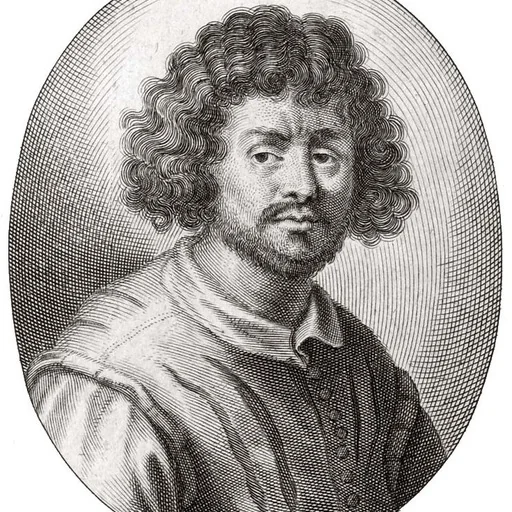
Claude Lorrain (French: ; born Claude Gellée , called le Lorrain in French; traditionally just Claude in English; c.

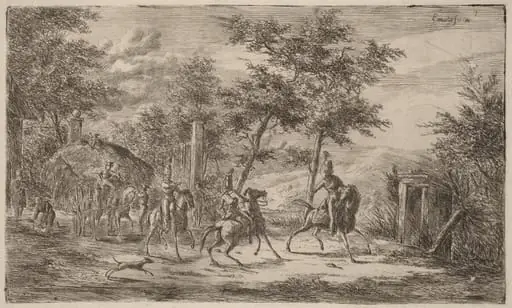 Cavalry and Hay Wagon
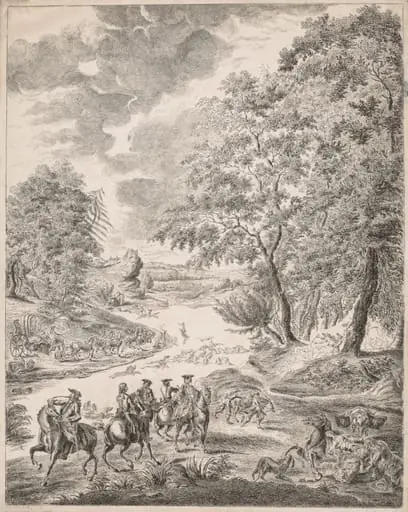 The Deer Hunt
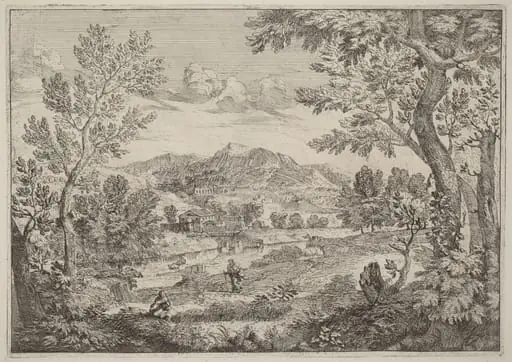 Houses Beside a Mountain
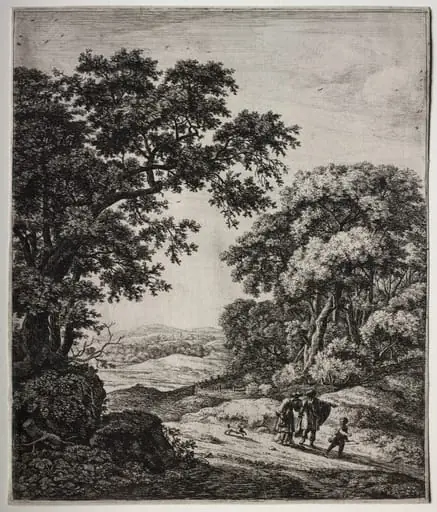 Six large upright landscapes with scenes from the Old Testament
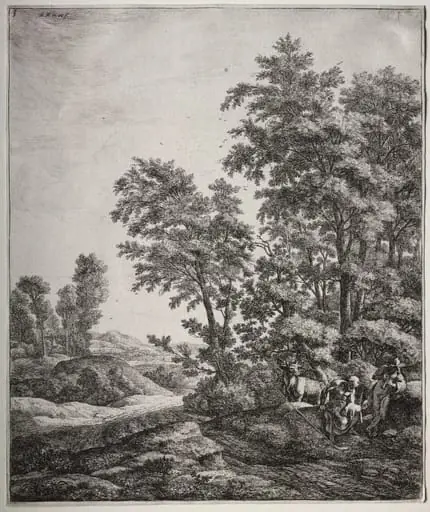 Six large upright landscapes with scenes from Ovid's Metamorphoses: Mercury and Argus
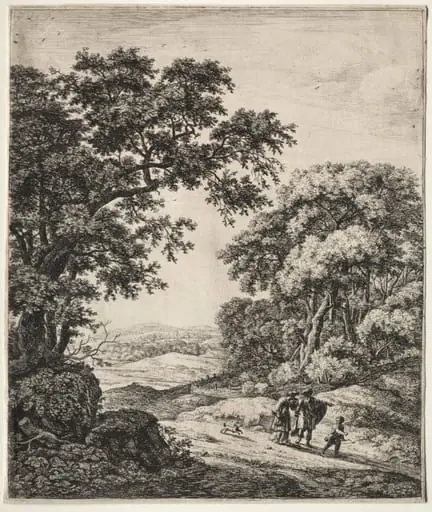 Six large upright landscapes with scenes from the Old Testament: Abraham Dismissing Hagar and Ishmael
 Landscape with a Peasant Carrying Firewood
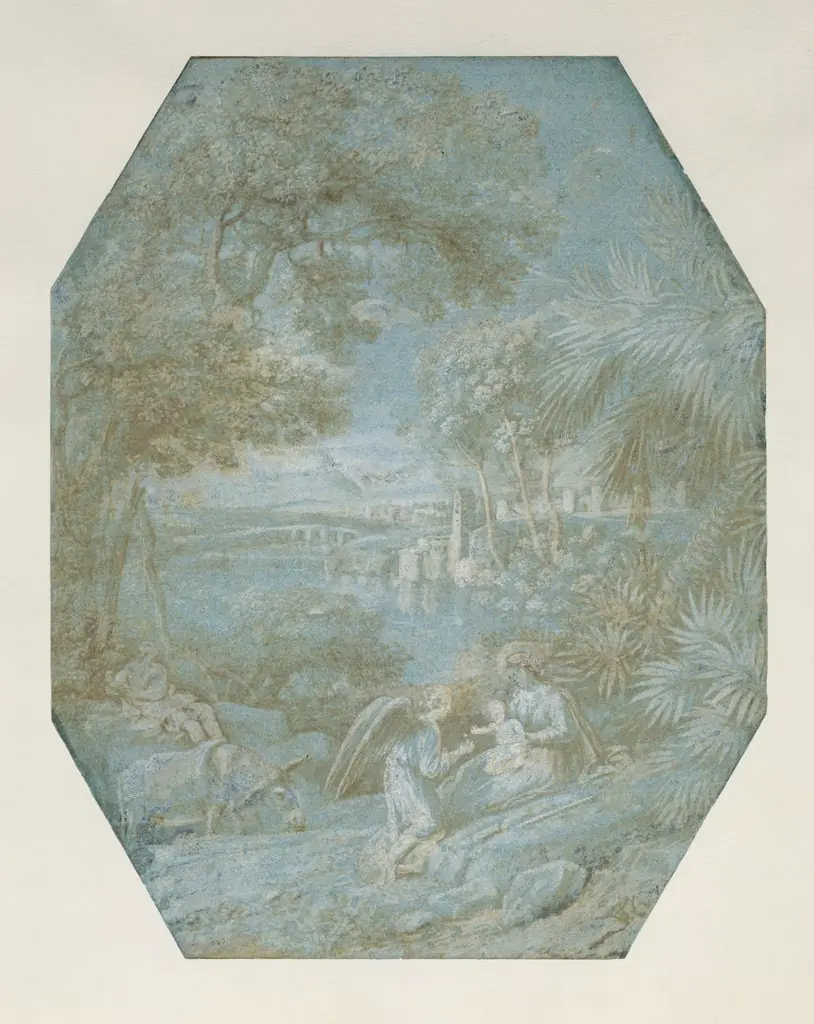
 The Flight into Egypt (La fuite en Egypte)
 Huntsmen Resting
![The Affair near Konigstein (L'Affaire pres de Koenigstein) [recto], by Gerhardus Emaus de Micault](https://artifactworldgallery.com/img/gerhardus-emaus-de-micault--the-affair-near-konigstein-l-affaire-pres-de-koenigstein-rec--a9edc3187b52f5be-w320.webp) The Affair near Konigstein (L'Affaire pres de Koenigstein) [recto]
The Affair near Konigstein (L'Affaire pres de Koenigstein) [recto] Shepherds with Their Herd Fording a Stream
 The Wooden Bridge at Sulmona, near Tivoli