Artwork
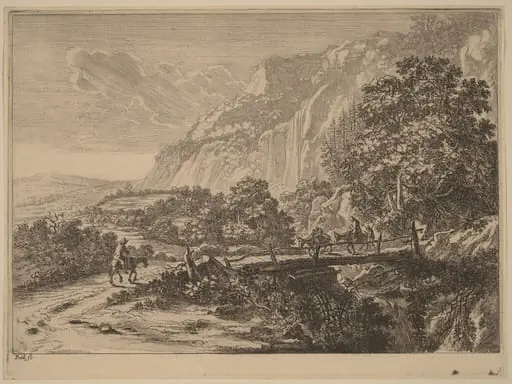
The Wooden Bridge at Sulmona, near Tivoli
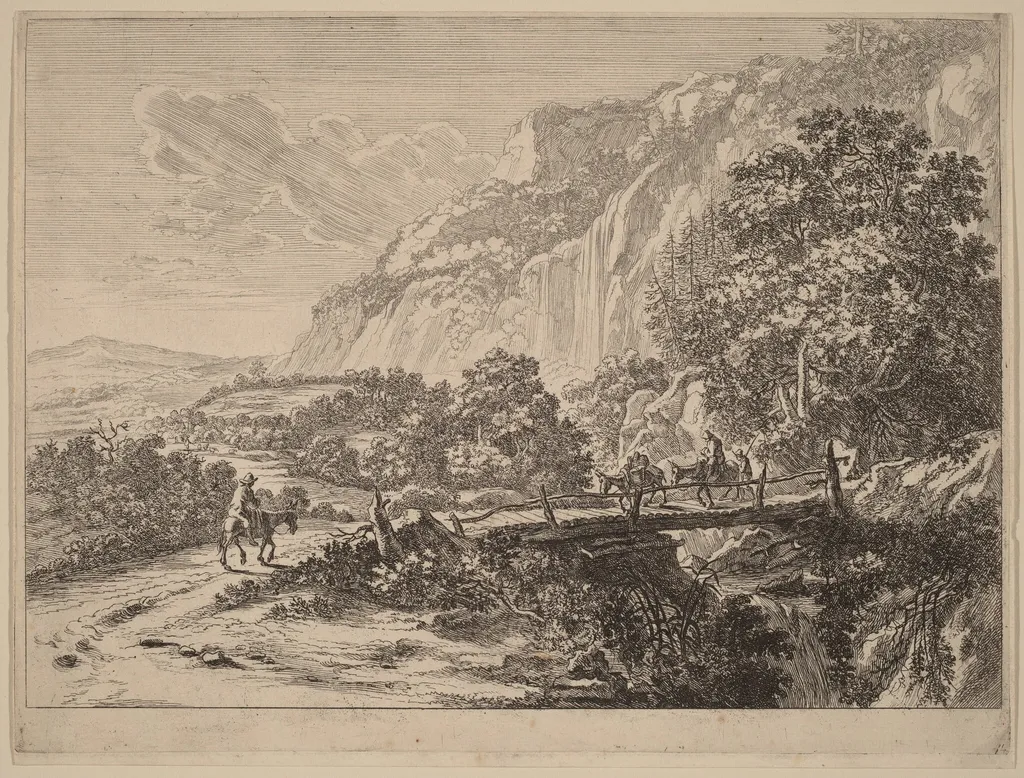
The Wooden Bridge at Sulmona, near Tivoli is an ink print by the Baroque artist Jan Both. It is held in the collection of the National Gallery of Art. Created around 1640 by Jan Dirksz Both, this etching captures a quiet rural scene near Sulmona, close to Tivoli in central Italy.
About this work
Overview
The work is part of a broader tradition of Italianate landscape prints that appealed to Northern collectors fascinated by the South.
Created around 1640 by Jan Dirksz Both, this etching captures a quiet rural scene near Sulmona, close to Tivoli in central Italy. As a Dutch artist who traveled extensively in Italy, Both specialized in landscapes that merged Northern European draftsmanship with the atmospheric qualities of the Italian countryside. The work is part of a broader tradition of Italianate landscape prints that appealed to Northern collectors fascinated by the South.
Subject & Meaning
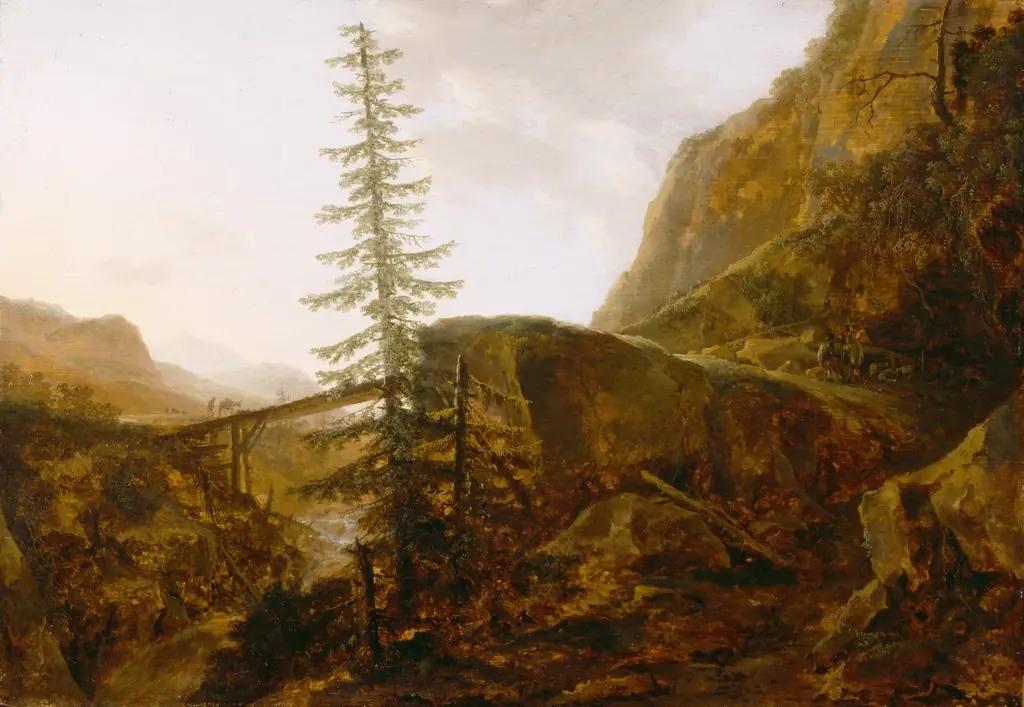
The scene centers on a modest wooden bridge spanning a stream, its structure supported by a fallen tree. A lone equestrian approaches from the left, suggesting transit rather than destination. The surrounding hills, dense foliage, and distant waterfall evoke a sense of solitude and natural order. There is no overt narrative—instead, the image invites contemplation of quiet movement within an enduring landscape, reflecting a preference for serene, unidealized nature.
Technique & Style
Both employed fine, controlled etching lines to render texture in bark, rock, and water, using varying densities of hatching to suggest depth and shadow. The composition balances horizontal elements—the bridge and stream—with vertical accents of trees and cliff. Light falls gently across the scene, enhancing the sense of atmosphere without dramatic contrast. The style is precise yet unforced, aligning with the restrained lyricism of Dutch Italianate printmaking rather than the theatricality of High Baroque painting.
History & Provenance
The print was likely produced during Both’s time in Italy, between 1630 and 1640, when he studied Roman and Tuscan scenery. It circulated among collectors in the Netherlands and Germany, where Italianate landscapes were in demand. While no early ownership records are well-documented, the work appears in several 17th-century print catalogues, confirming its presence in the artistic networks of the time.
Context
Both’s work emerged during a period when Dutch artists increasingly traveled to Italy, returning with sketches and impressions that shaped Northern landscape traditions. His etchings contributed to a genre that reimagined Italian topography through a Northern lens—emphasizing observation over idealization. This print reflects the growing interest in topographical accuracy and the emotional resonance of rural scenes, distinct from mythological or religious subjects dominant in other media.
Legacy
Though less widely known than contemporaries like Rembrandt, Both’s etchings influenced later landscape printmakers through their quiet realism and attention to natural detail. His approach to Italian scenery helped establish a visual vocabulary for the Northern appreciation of the Italian countryside, paving the way for 18th-century topographical prints and the Romantic landscape tradition that followed.
Own this work as a print
Artist & collection

Artist
Jan Dirksz Both was a Dutch painter, draughtsman, and etcher, who made an important contribution to the development of Dutch Italianate landscape painting.

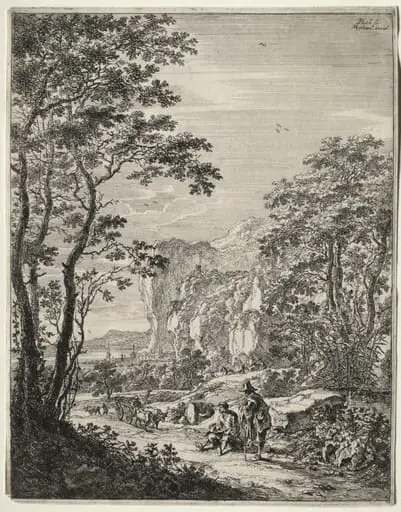 Ox-Cart. View between Ancona and Sinigaglia
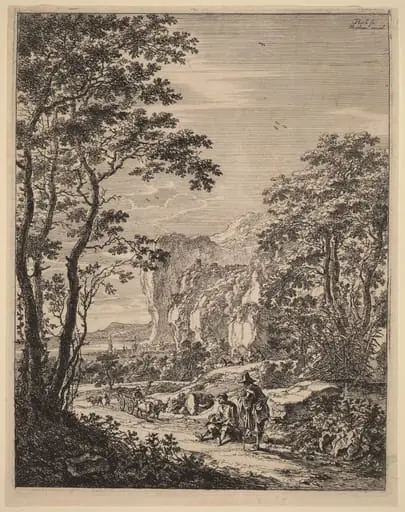 The Ox-Cart: View between Ancona and Sinigaglia
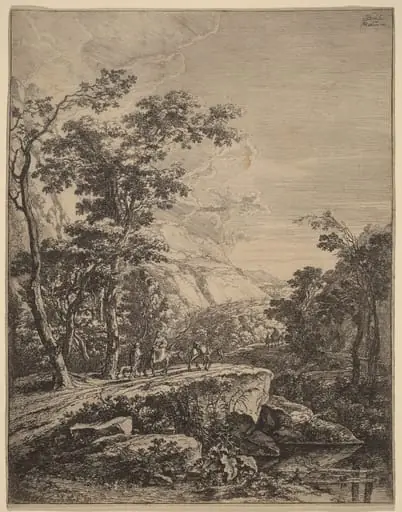 The Woman on the Hinny
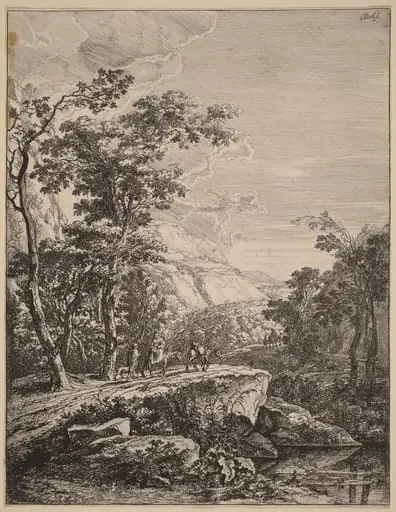 The Woman on the Hinny
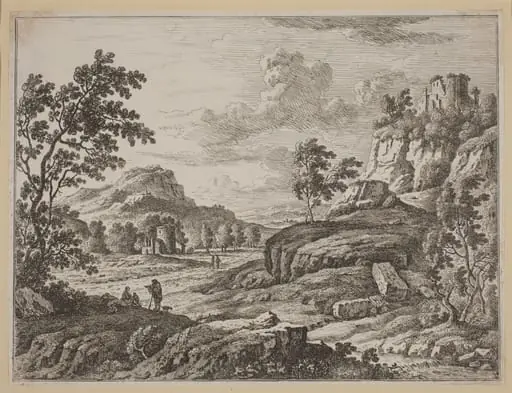 Landscape with Two Ruined Towers
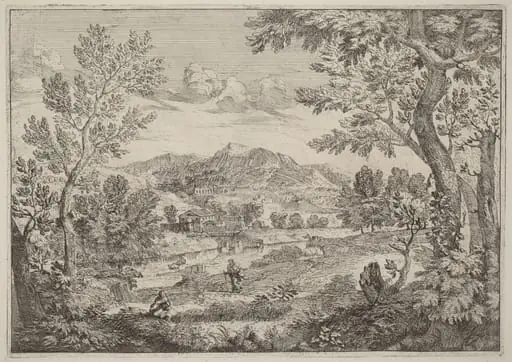 Houses Beside a Mountain
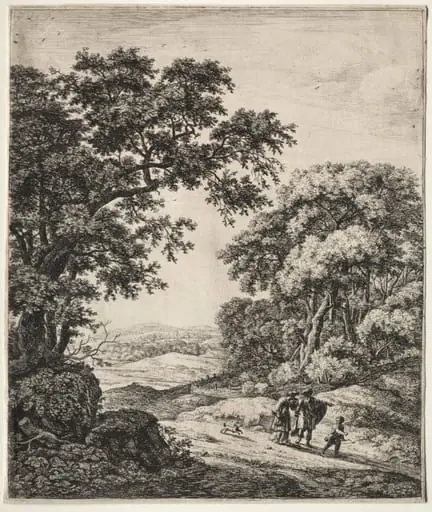 Six large upright landscapes with scenes from the Old Testament: Abraham Dismissing Hagar and Ishmael
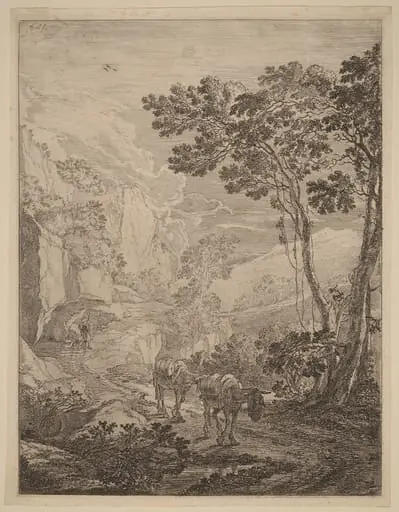 The Two Hinnies
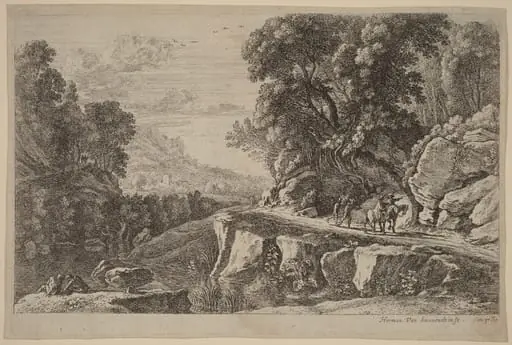 The Two Horsemen
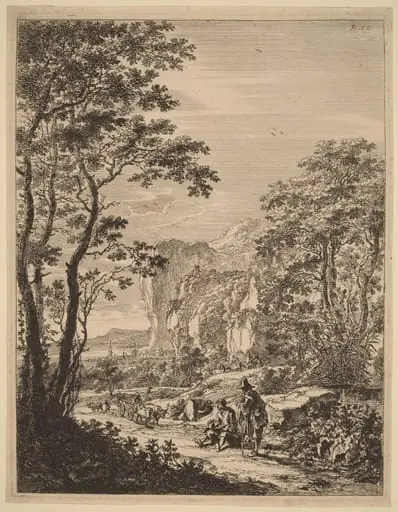 The Ox-Cart: View between Ancona and Sinigaglia
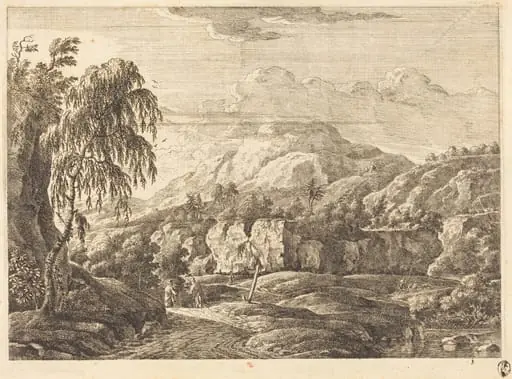 Landscape with Cross and Figures
 The Wooden Bridge at Sulmona near Tivoli