Artwork
Mrs Stanley Baldwin.
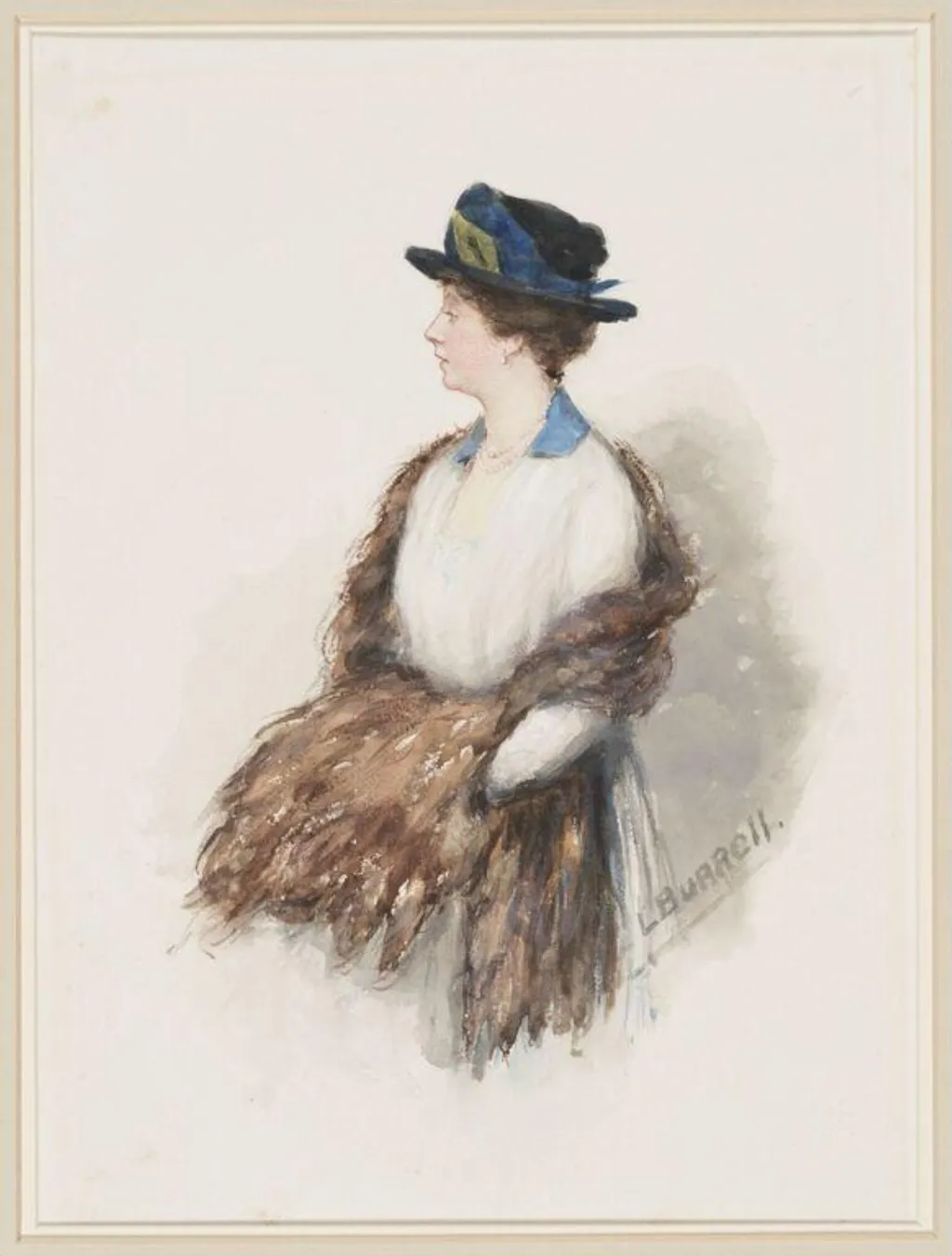
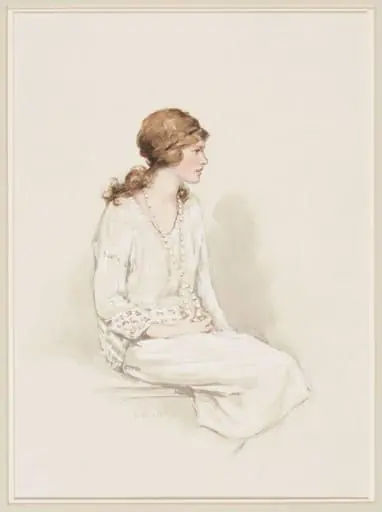
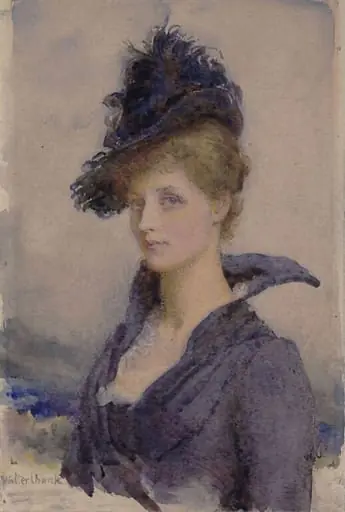
Mrs Stanley Baldwin. is a watercolor work on paper by Louie Burrell. It dates from 1923 and is held in the collection of the Victoria and Albert Museum.
About this work
The woman's attire and hairstyle suggest a formal or elegant setting, possibly from the early 20th century.
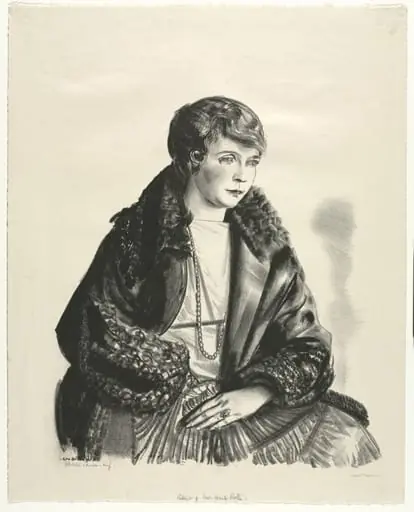
This watercolour painting depicts a woman in profile, facing left. She wears a white dress with a blue collar and a brown shawl draped over her arms. A black hat with a blue band and a yellow accent adorns her head. The background is a plain off-white colour.
The woman's attire and hairstyle suggest a formal or elegant setting, possibly from the early 20th century. The artist's use of watercolour creates a soft, delicate effect.
To learn more about the artist's style and techniques, explore the works of Louie Burrell.
Overview
Louie Burrell painted this 1923 watercolour portrait of Mrs. Stanley Baldwin, wife of the future British Prime Minister. Executed on paper, the work reflects the artist’s skill in capturing subtle tonal shifts through transparent washes. The piece is signed by Burrell and bears an inscription on the reverse with the sitter’s London address, confirming its personal and documented origin.
Subject & Meaning
The portrait depicts Enid Stanley Baldwin, later Countess Baldwin of Bewdley, rendered in a composed profile view. Her attire—white dress, blue collar, and brown shawl—suggests quiet formality, while the black hat with blue and yellow detailing implies refined taste. The absence of overt symbolism or setting directs focus to her presence, emphasizing dignity and understated elegance rather than political association.
Technique & Style
Burrell employed delicate watercolour washes to model the sitter’s features and fabric folds, avoiding heavy outlines. The soft transitions between tones, particularly in the shawl and hat, demonstrate mastery of the medium’s fluidity. The plain off-white background isolates the figure, enhancing the intimacy of the portrayal and allowing the subtle interplay of light and pigment to define form.
History & Provenance
The painting was completed in 1923, during Baldwin’s tenure as Chancellor of the Exchequer. It remained in the family’s possession at their Eaton Square residence until its later acquisition by the current institution. The reverse inscription confirms its direct connection to the sitter’s home, lending it a private, domestic provenance distinct from official state portraiture.
Context
In early 20th-century Britain, watercolour portraiture was often used for intimate, non-official likenesses, particularly among the upper classes. Burrell’s approach aligns with this tradition, contrasting with the more formal oil portraits of political figures. The work reflects a cultural preference for restrained, personal representation during a period of shifting social norms.
Legacy
Though not widely exhibited, the portrait remains a documented example of Burrell’s contribution to British watercolour portraiture. It preserves a quiet moment of a public figure’s spouse, offering insight into the visual culture of political families outside the realm of state imagery. Its survival underscores the value placed on private artistic commissions in interwar Britain.
Artist & collection
Artist
Louisa Harriet "Louie" Burrell was an English-born artist who also lived in Canada and the United States.