Artwork
Anne Ward Morland
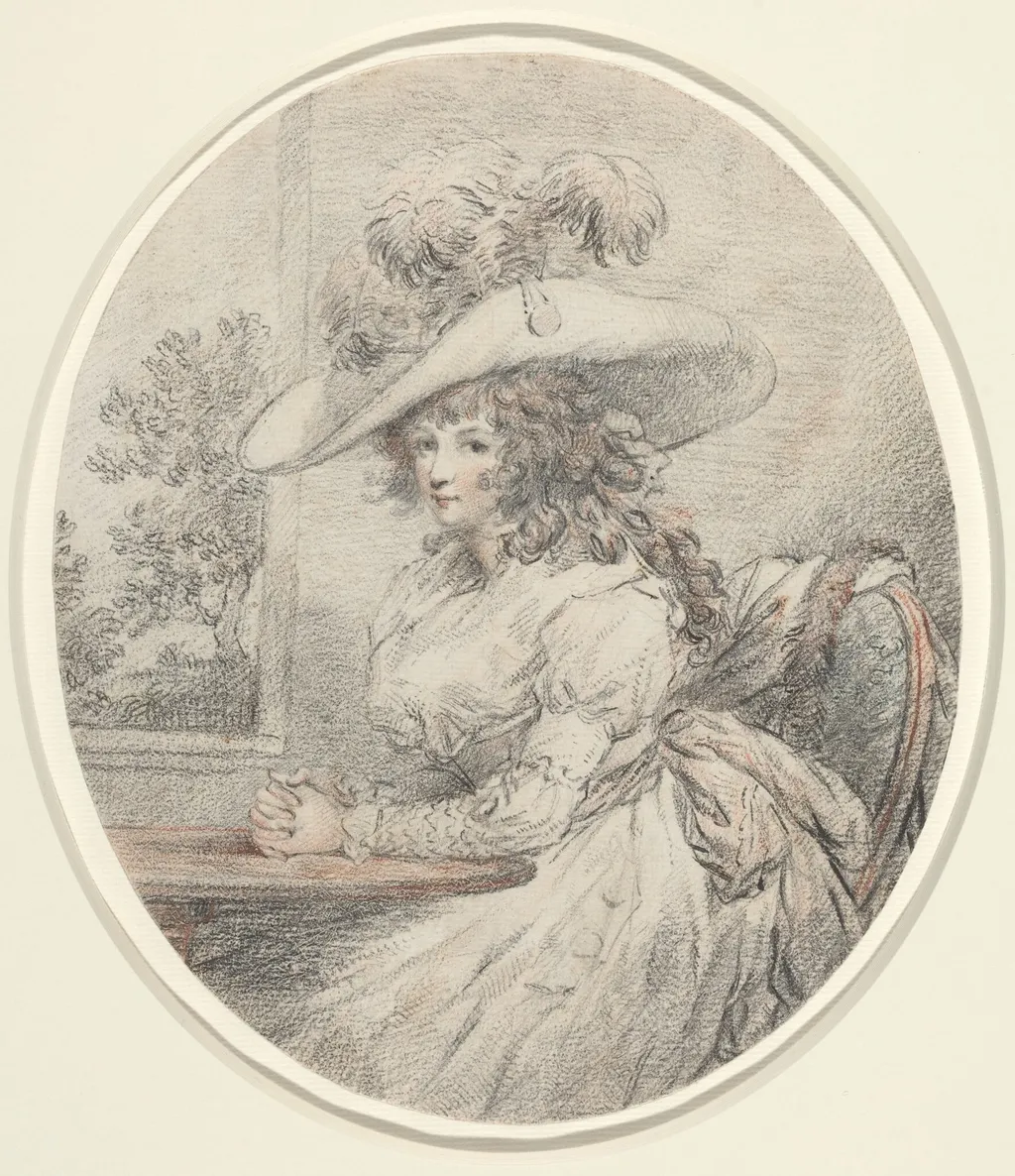
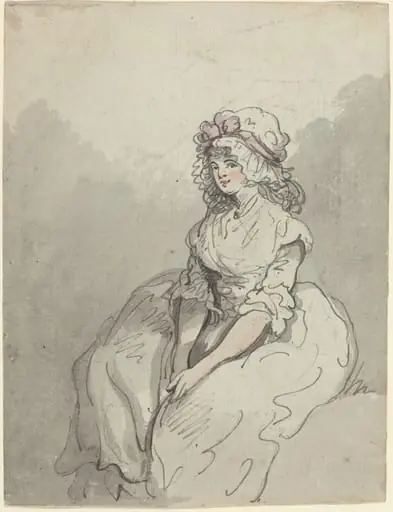
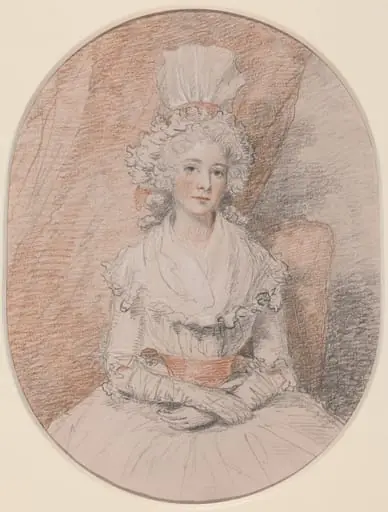
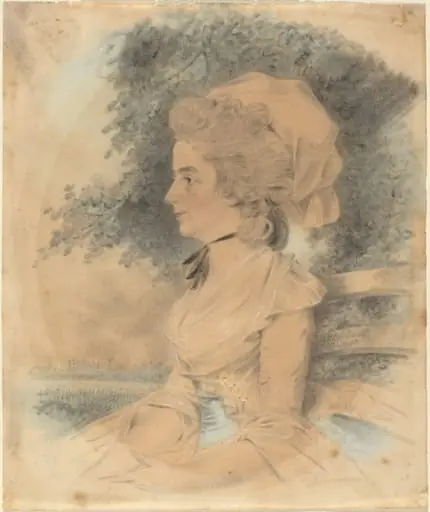
Anne Ward Morland is a graphite drawing by the Romanticist artist George Morland. It dates from 1786 and is held in the collection of the National Gallery of Art.
About this work
Overview
Created circa 1786, this portrait drawing by George Morland depicts a seated woman rendered in graphite with black and red chalk on laid paper. The composition captures a moment of quiet introspection, the figure’s gaze turned to the left and her hand resting on a nearby surface. The work exemplifies Morland’s early drawing practice before his later stylistic developments.
Subject & Meaning
The sitter is presented in a fashionable hat trimmed with feathers, a high‑necked dress with long sleeves, and a shawl draped over her left shoulder. Her posture and thoughtful expression suggest a contemplative mood, inviting viewers to consider the private interiority of the individual rather than a narrative scene.
Technique & Style
Morland employs a combination of graphite and both black and red chalk to achieve a nuanced tonal range. The chalk adds warm highlights, while the graphite provides deeper shadows, creating a sense of volume and depth on the textured laid paper. The handling reflects the artist’s interest in atmospheric effects derived from Dutch landscape traditions, adapted here to portraiture.
History & Provenance
Like many of his works, it was later reproduced in prints, a practice that generated greater profit for publishers than for the artist himself.
The drawing belongs to the period when Morland was still influenced by contemporaries such as Francis Wheatley, prior to the distinctive style he developed in the 1790s. Like many of his works, it was later reproduced in prints, a practice that generated greater profit for publishers than for the artist himself. Details of its ownership chain remain limited, but it is documented as part of Morland’s broader output of drawings.
Context
During the late eighteenth century, Morland was known primarily for rustic scenes and landscapes, yet this portrait demonstrates his versatility in handling figure studies. The work aligns with the period’s growing interest in domestic subjects and the use of chalk media for quick, expressive renderings, situating it within the transitional phase of English art between the late Georgian and early Romantic sensibilities.
Artist & collection
Artist
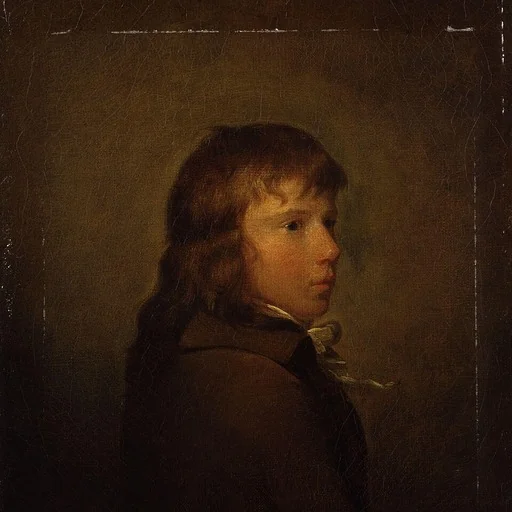
George Morland (26 June 1763 – 29 October 1804) was an English painter. His early work was influenced by Francis Wheatley, but after the 1790s he came into his own style. His best compositions focus on rustic scenes:…