Artwork
On the Way between Old and New Cairo, Citadel Mosque of Mohammed Ali, and Tombs of the Mamelukes
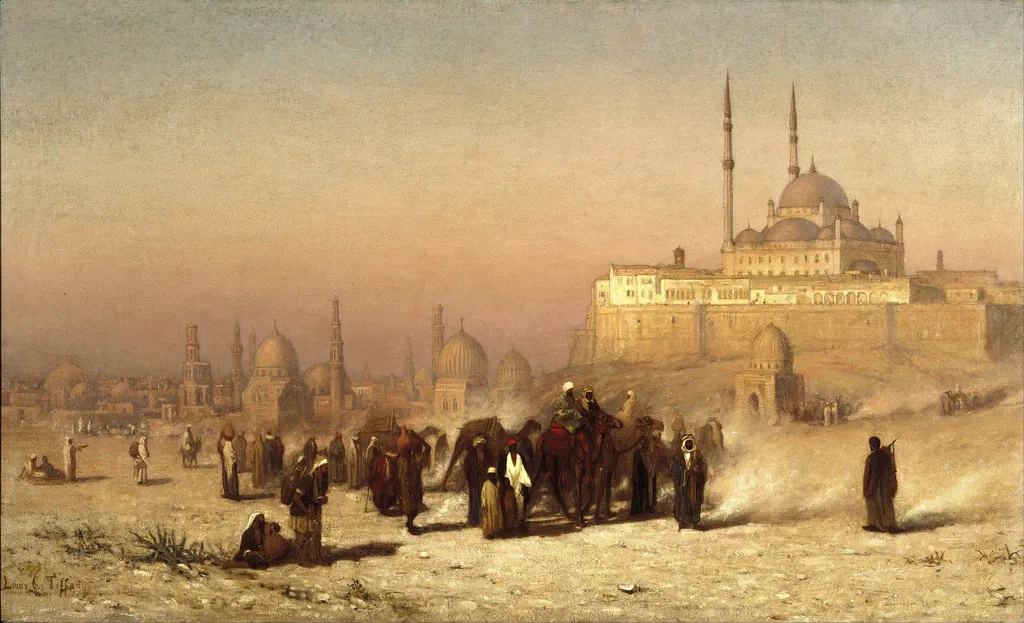
On the Way between Old and New Cairo, Citadel Mosque of Mohammed Ali, and Tombs of the Mamelukes is an oil painting by the American Impressionist artist Louis Comfort Tiffany. It dates from 1872 and is held in the collection of the Brooklyn Museum.
About this work
Overview
It depicts the Citadel Mosque of Mohammed Ali and the adjacent Mamluk tombs rising above the desert, with figures and camels moving through the foreground.
Painted in 1872, this oil work by Louis Comfort Tiffany captures a landscape along the route connecting Old and New Cairo. It depicts the Citadel Mosque of Mohammed Ali and the adjacent Mamluk tombs rising above the desert, with figures and camels moving through the foreground. The painting reflects Tiffany’s early interest in Middle Eastern architecture and atmosphere, predating his later fame in stained glass.
Subject & Meaning
The scene presents a quiet moment of transit between historic and modern Cairo, framing the Citadel’s mosque as a dominant landmark amid older Mamluk funerary structures. The presence of travelers and animals suggests daily movement through a layered urban landscape. The composition avoids narrative drama, instead emphasizing the coexistence of architectural eras and the stillness of the desert air.
Technique & Style
Tiffany employed fine brushwork to render the textures of stone, fabric, and sand, using a muted palette of ochres, pinks, and soft blues to convey atmospheric haze. Light filters diffusely across the scene, unifying the foreground figures with the distant architecture. The oil medium allows subtle gradations in tone, enhancing the sense of heat and distance without sharp contrasts.
History & Provenance
Created during Tiffany’s travels in the Middle East, the painting was later acquired by the Brooklyn Museum, where it remains in the collection. It belongs to a series of works from his 1870s journey, which influenced his later decorative designs. The piece was not widely exhibited in his lifetime but has been studied for its ethnographic and topographical detail.
Context
Tiffany painted this during a period when Western artists increasingly traveled to North Africa and the Levant, drawn by romanticized visions of the Orient. Unlike many contemporaries, he avoided exoticizing the scene, instead recording architectural forms and human activity with observational precision. His approach aligns with emerging trends in plein air and documentary realism.
Legacy
Though Tiffany is better known for his glasswork, this painting reveals his early commitment to capturing place through careful observation. It stands as a rare example of his figurative landscape work and offers insight into his formative years before he turned to decorative arts. The painting contributes to understanding how American artists engaged with non-Western environments in the 19th century.
Own this work as a print
Artist & collection

 Muhammed's carpet moving from Mecca to Cairo
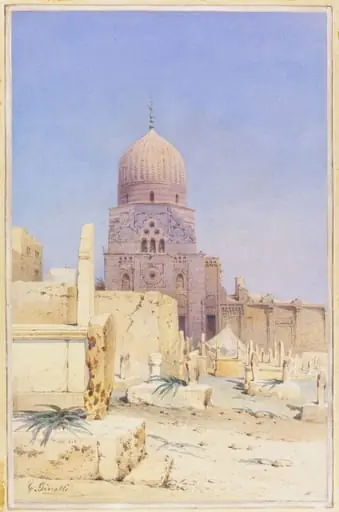 Mosque/Tomb in Cairo
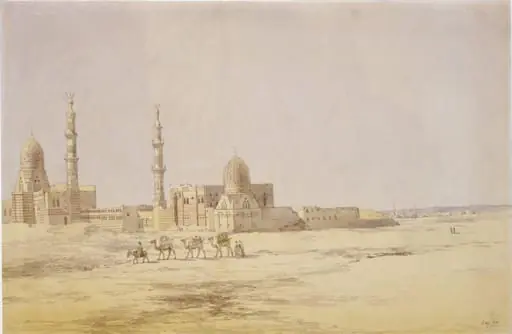 Tombs of the Khalifs, Cairo
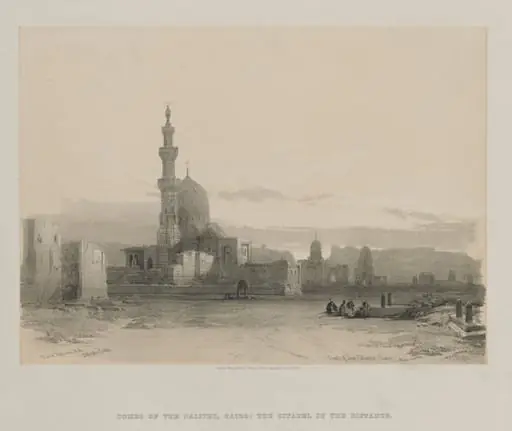 Egypt and Nubia, Volume III: Tombs of the Caliph's, Cairo
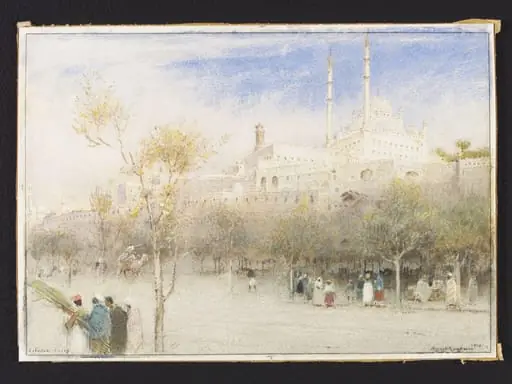 Citadel Cairo
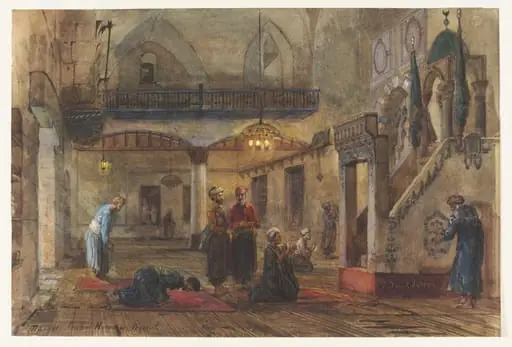 Mosque. Souk el Hommos. Byrout
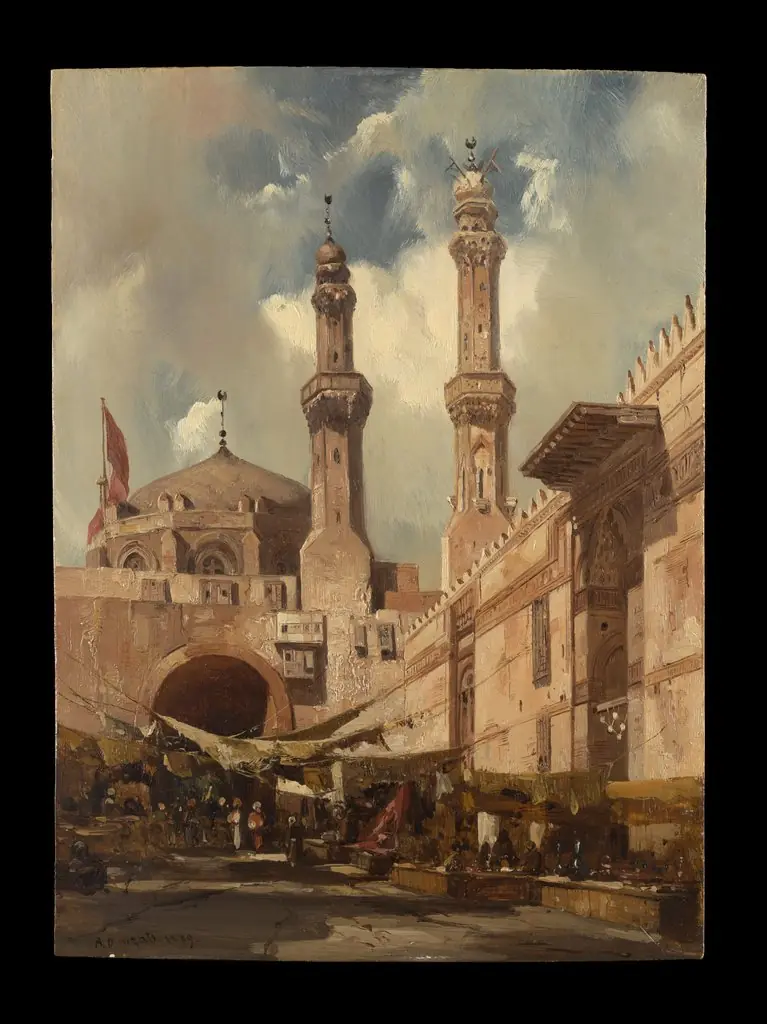 A Cairo Bazaar
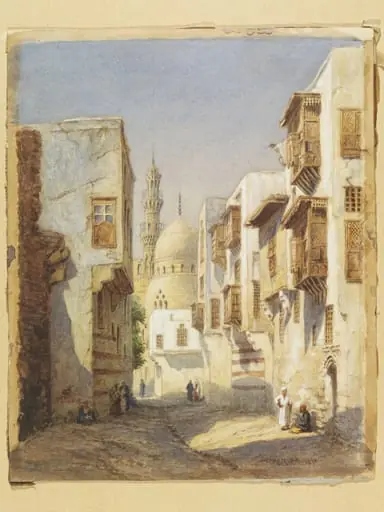 Darb al-Ahmer, Cairo, with the Mosque and Tomb of Amir Khayrbak
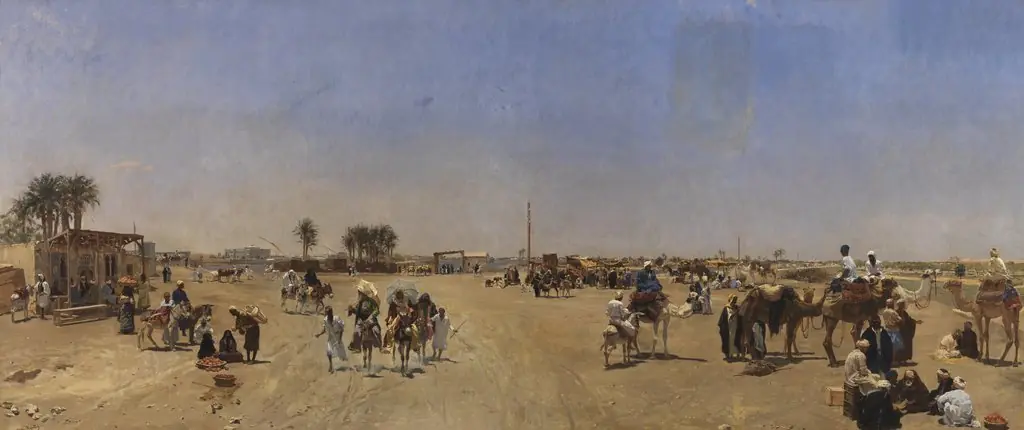 Cairo Seen from the Kasr-el-Nil Bridge