Artwork
Egypt and Nubia, Volume III: Tombs of the Caliph's, Cairo
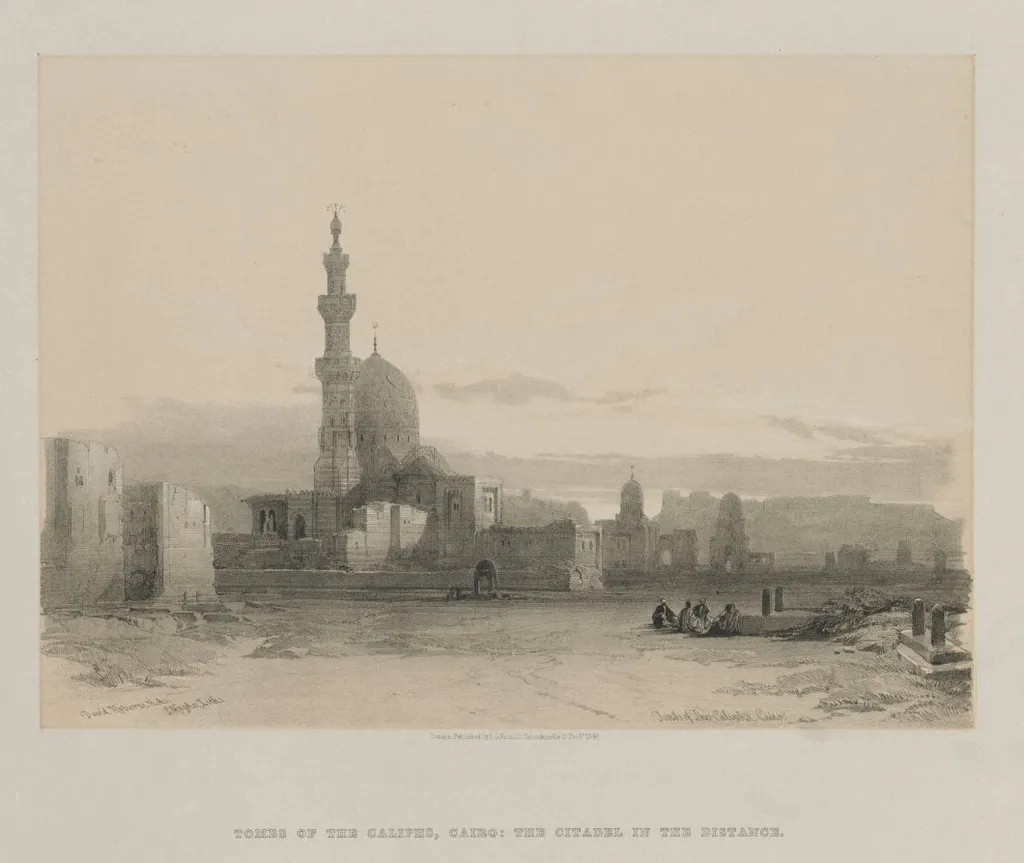
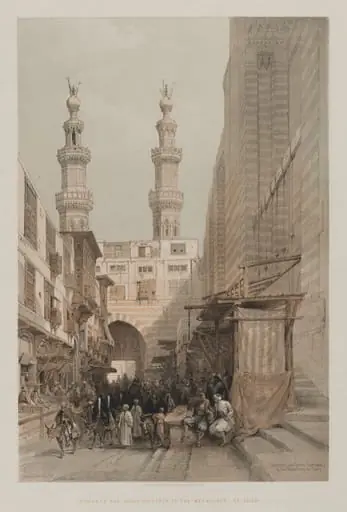
Egypt and Nubia, Volume III: Tombs of the Caliph's, Cairo is a print by the Romanticist artist Louis Haghe. It dates from 1848 and is held in the collection of the Cleveland Museum of Art.
About this work
Overview
Haghe, a Belgian-born British artist trained in watercolor and lithography, collaborated with William Day to establish the influential London firm Day & Haghe.
Created in 1848 by Louis Haghe, this lithograph is the third volume of a series documenting architectural sites in Egypt and Nubia. Haghe, a Belgian-born British artist trained in watercolor and lithography, collaborated with William Day to establish the influential London firm Day & Haghe. The print captures a quiet desert landscape near Cairo, emphasizing solitude and architectural presence over human activity, reflecting the scholarly intent of the broader publication project.
Subject & Meaning
The image depicts the tombs associated with Cairo’s caliphs, situated within the Citadel complex, though the focus is not on grandeur or ritual. Instead, the composition highlights stillness: a lone boat rests on the shore, figures sit quietly in the foreground, and the architecture rises subtly against a pale sky. This suggests a contemplative engagement with history, where the weight of the past is felt through absence and silence rather than spectacle.
Technique & Style
Haghe employed fine, precise lithographic lines to render the intricate stonework of the towers and the granular texture of the desert. The tonal range is restrained, with soft gradients in the sky and subtle contrasts in the sand, enhancing the sense of arid stillness. The composition avoids dramatic lighting or motion, favoring clarity and quiet observation—hallmarks of 19th-century topographical printmaking influenced by Romantic sensibilities.
History & Provenance
Part of a multi-volume archaeological record commissioned during a period of heightened European interest in Egypt’s Islamic heritage, the print was produced after Haghe’s travels in the region. Published by Day & Haghe, it contributed to a growing body of visual documentation used by scholars and the public alike. The work circulated widely in Britain and continental Europe, shaping perceptions of Egypt as a land of ancient, enduring ruins.
Context
In the mid-19th century, European travelers and artists increasingly turned to Egypt’s Islamic monuments, moving beyond classical antiquity to document medieval Islamic architecture. This print reflects that shift, presenting the Citadel’s tombs not as exotic curiosities but as dignified remnants of a civilization. The quiet tone aligns with Romantic-era ideals that valued introspection and the sublime in landscapes marked by time and decay.
Legacy
Haghe’s lithograph remains a key example of Victorian-era archaeological illustration, valued for its accuracy and restrained aesthetic. It contributed to the visual lexicon of Egyptology and influenced later documentary practices in archaeology. While not widely exhibited today, it endures in institutional collections as a quiet testament to the era’s methodical engagement with the past.
Artist & collection
Artist
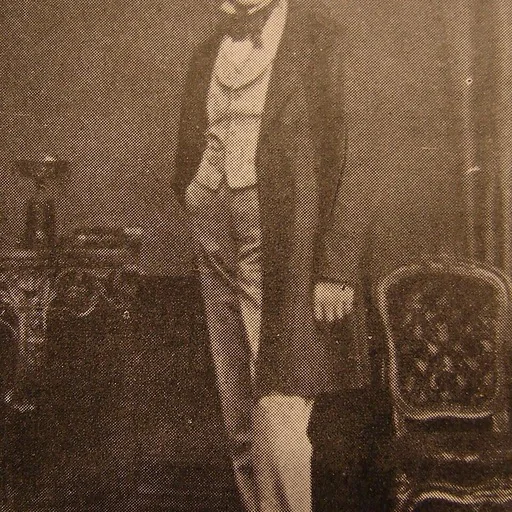
Louis Haghe (17 March 1806 – 9 March 1885) was a lithographer and watercolourist from the Netherlands and then the United Kingdom.

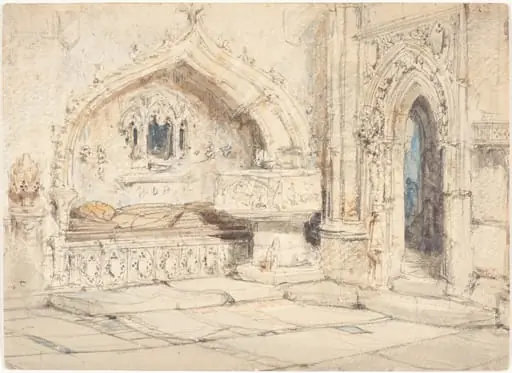 Interior of a Church with a Wall Tomb and Medieval Font
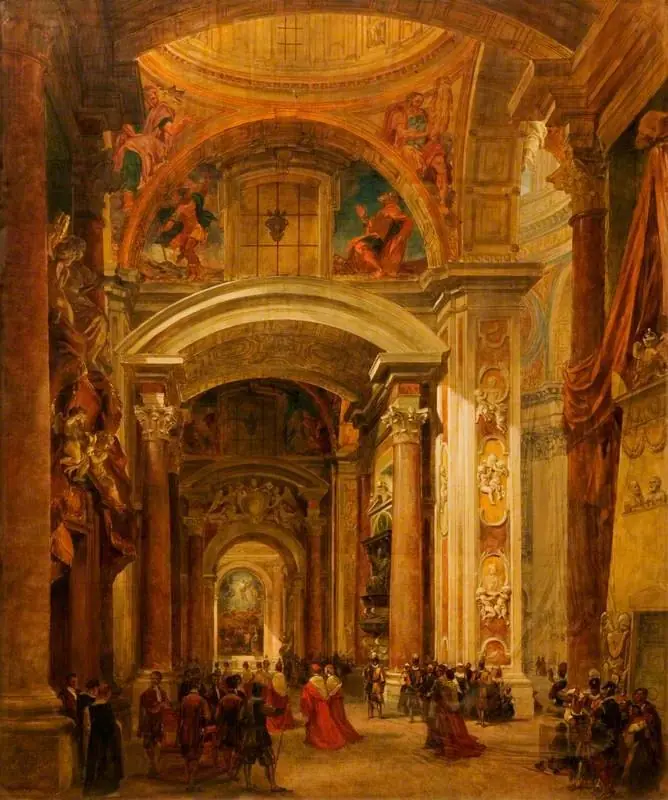 Interior of St Peter's, Rome
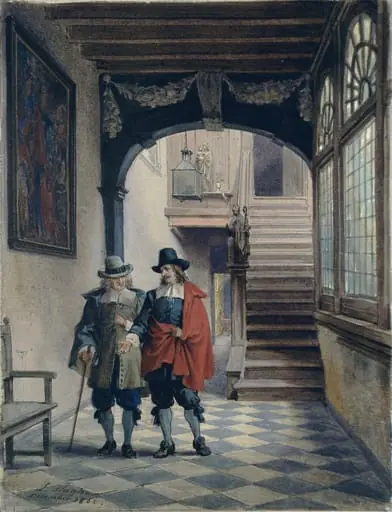 The Corridor, Brewer's Hall, Antwerp
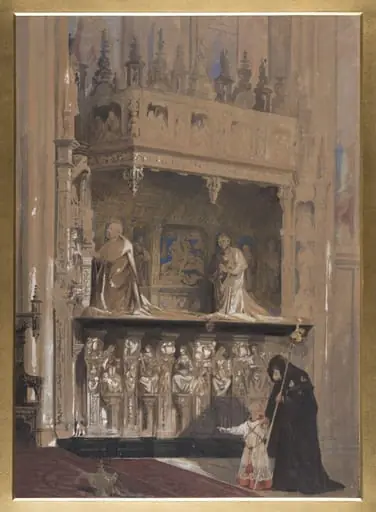 Monument of the Cardinald D'Amboise in Rouen Cathedral
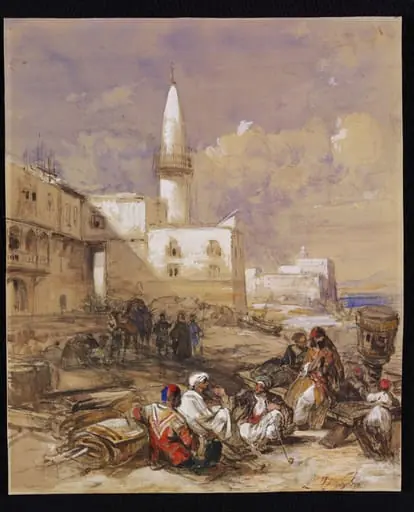 The Quay at Suez
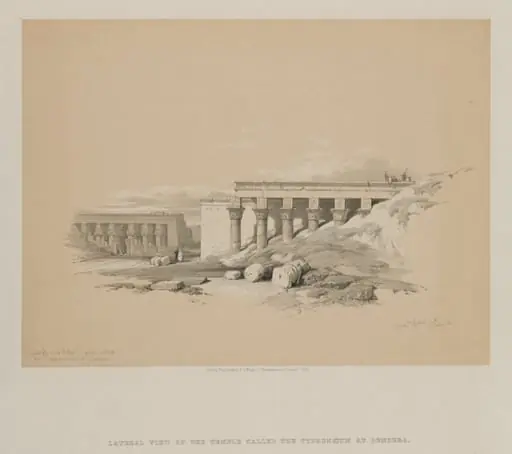 Egypt and Nubia, Volume II: Lateral View of the Temple called The Typhonoeum at Dendera
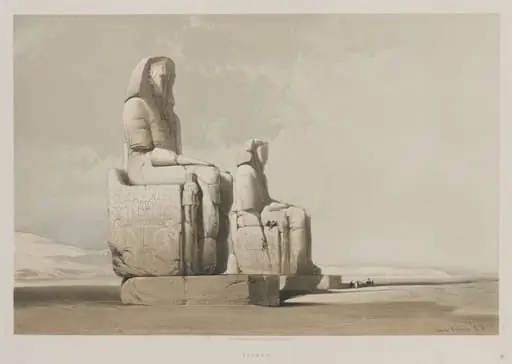 Egypt and Nubia, Volume I: Thebes
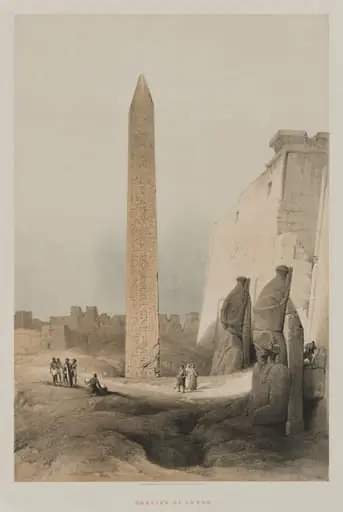 Egypt and Nubia, Volume I: Luxor
![Egypt and Nubia, Volume III: Tombs of the Caliphs-Cairo. Mosque of Ayed Be[y], by Louis Haghe](https://artifactworldgallery.com/img/louis-haghe--egypt-and-nubia-volume-iii-tombs-of-the-caliphs-cairo-mosque--9062e89e981f8684-w320.webp) Egypt and Nubia, Volume III: Tombs of the Caliphs-Cairo. Mosque of Ayed Be[y]
Egypt and Nubia, Volume III: Tombs of the Caliphs-Cairo. Mosque of Ayed Be[y]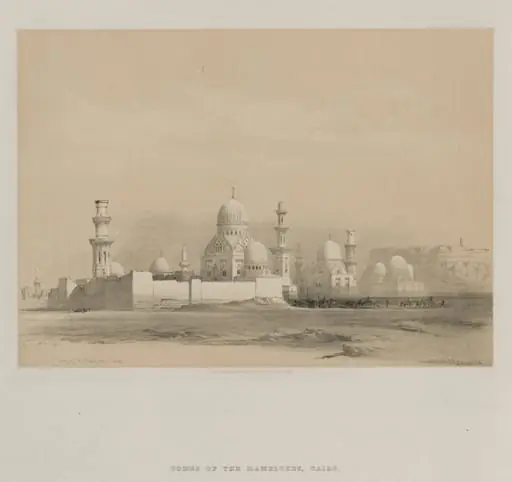 Egypt and Nubia, Volume III: Tombs of the Memlooks, Cairo
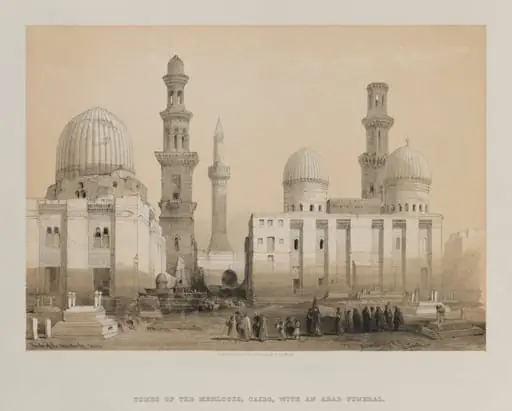 Egypt and Nubia, Volume III: Tomb of the Memlooks, Cairo
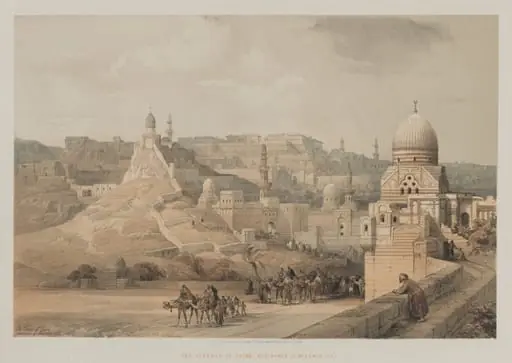 Egypt and Nubia, Volume III: The Citadel of Cairo, Residence of Mehemet Ali
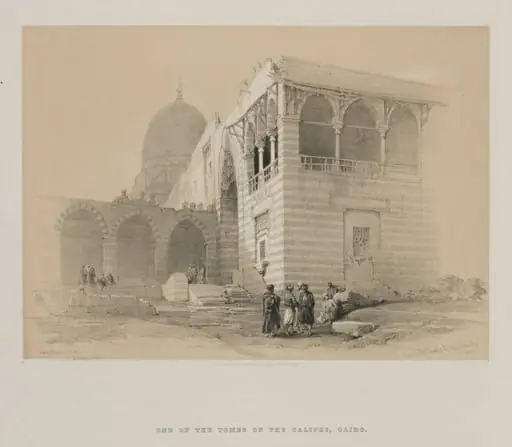 Egypt and Nubia, Volume III: One of the Tombs of the Khalifs, Cairo
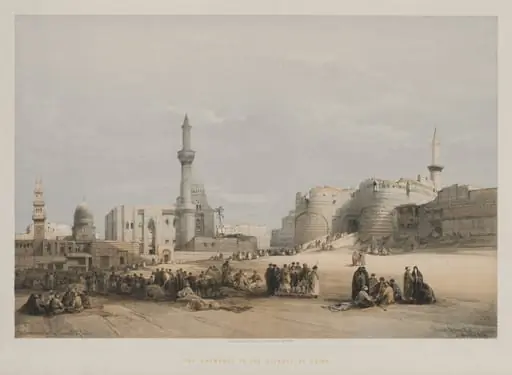 Egypt and Nubia, Volume III: The Entrance to the Citadel of Cairo
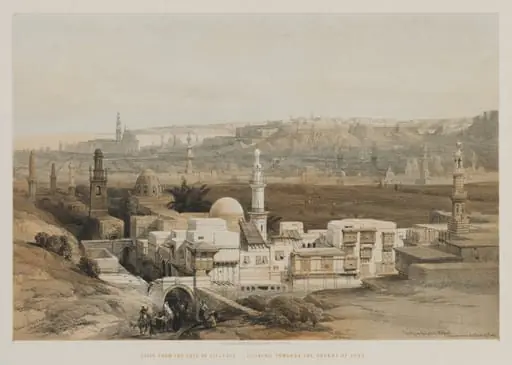 Egypt and Nubia, Volume III: Cairo from the Gate of Citzenib, Looking towards the Desert of Suez
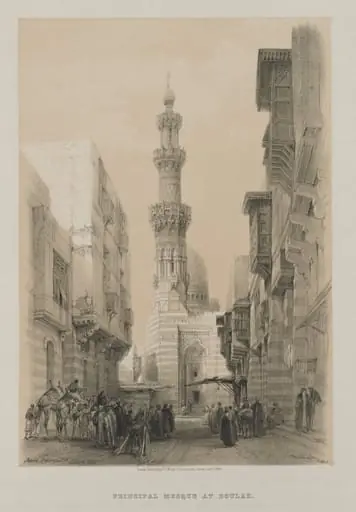 Egypt and Nubia, Volume III: Bullack, Cairo
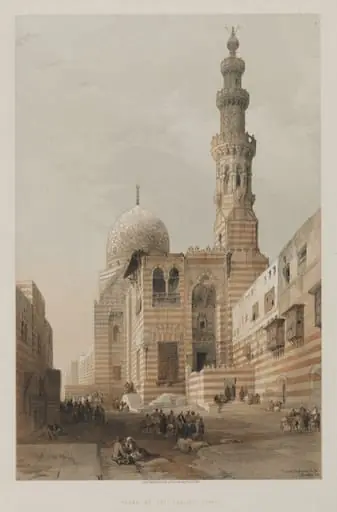 Egypt and Nubia, Volume III: Tombs of the Khalifs, Cairo
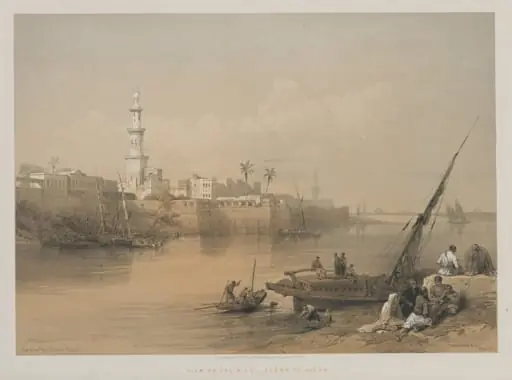 Egypt and Nubia, Volume III: View on the Nile, Ferry to Gizeh
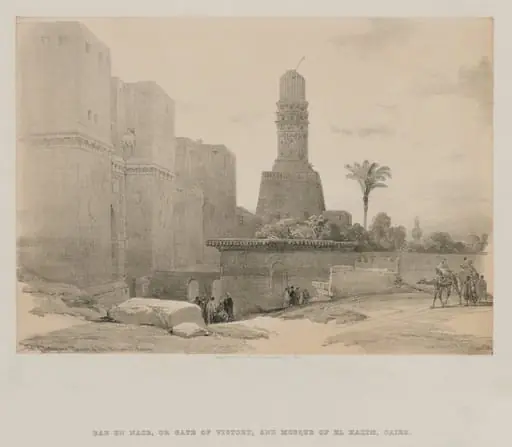 Egypt and Nubia, Volume III: Gate of Victory and Minaret of the Mosque El Hakim
 Egypt and Nubia, Volume III: Minarets, and Grand Entrance of the Metwaleys, at Cairo