Artwork
Girl with a Distaff
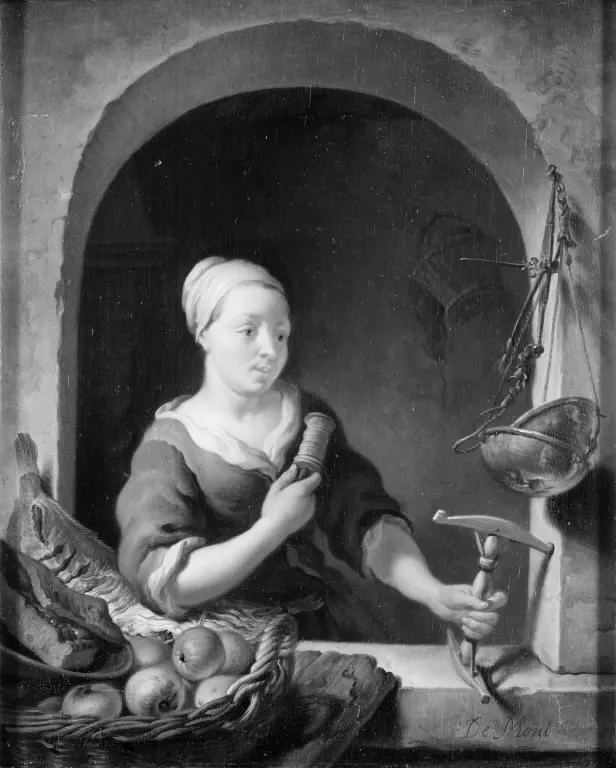
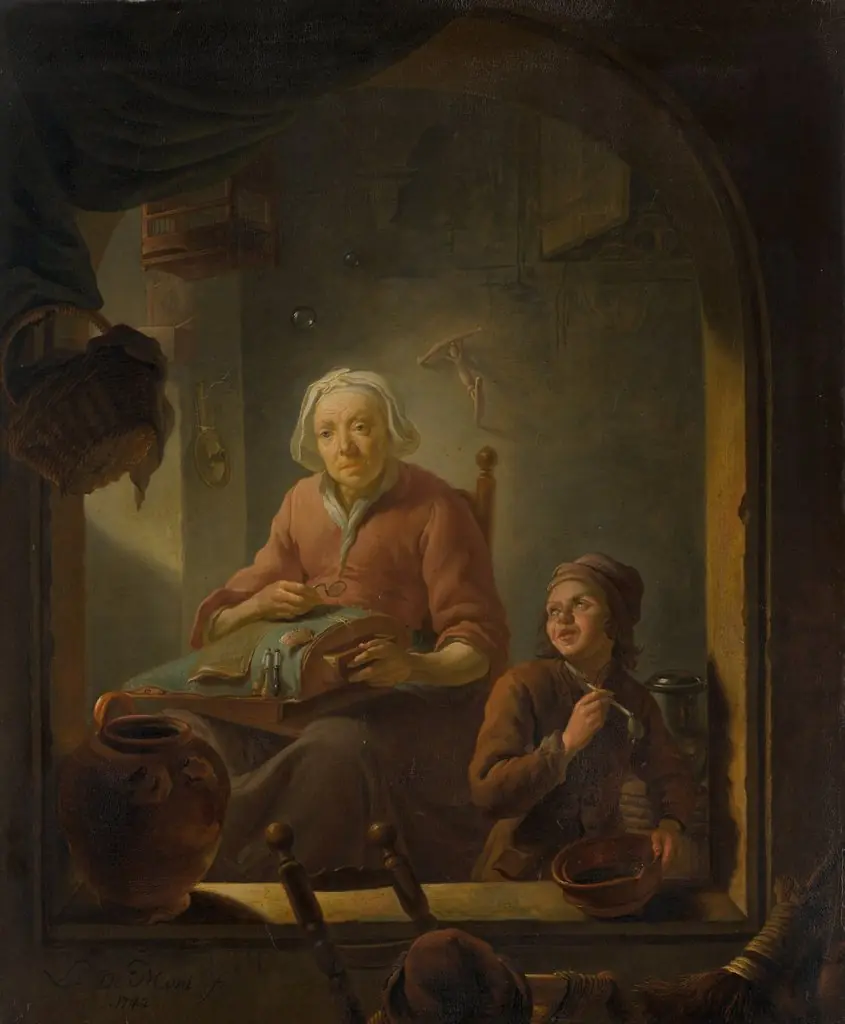
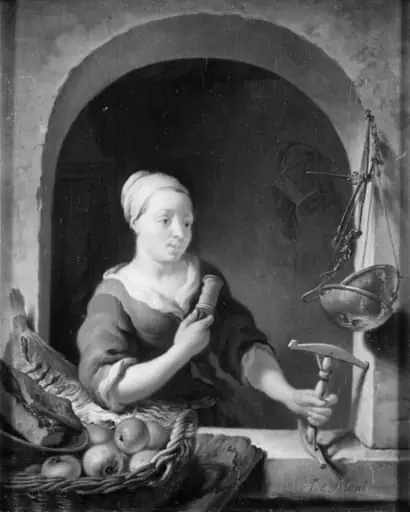
Girl with a Distaff is an unspecified painting by the Rococo painting artist Louis de Moni. It dates from 1742 and is held in the collection of the Statens Museum for Kunst.
About this work
Overview
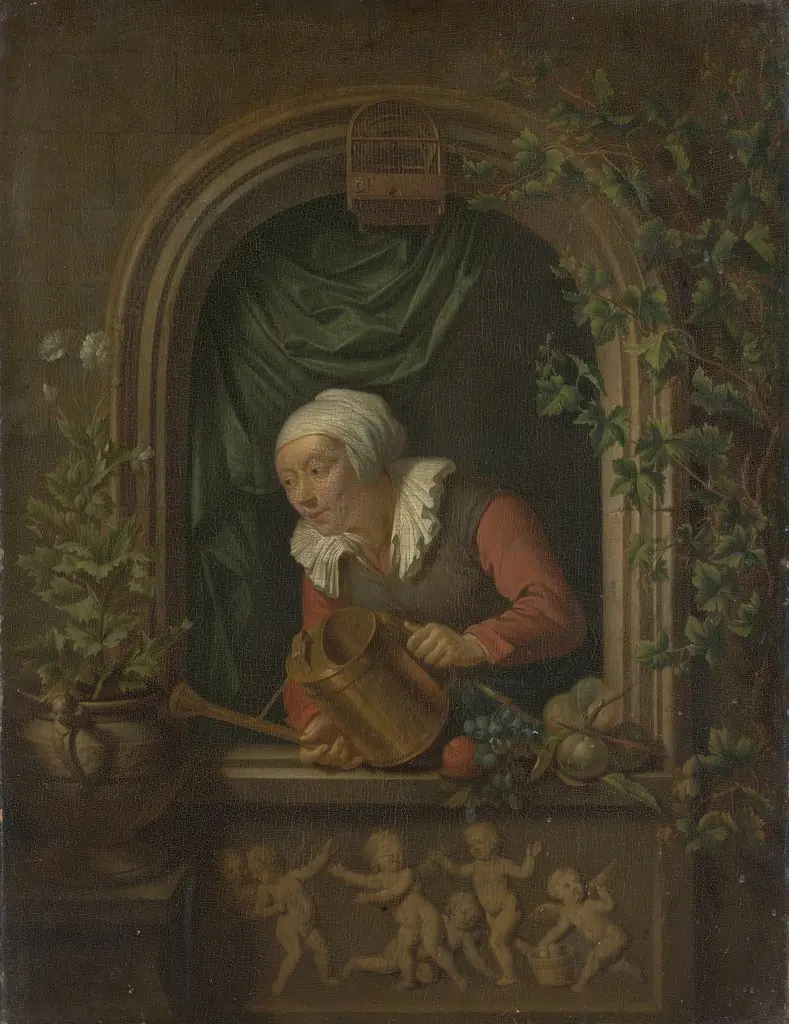
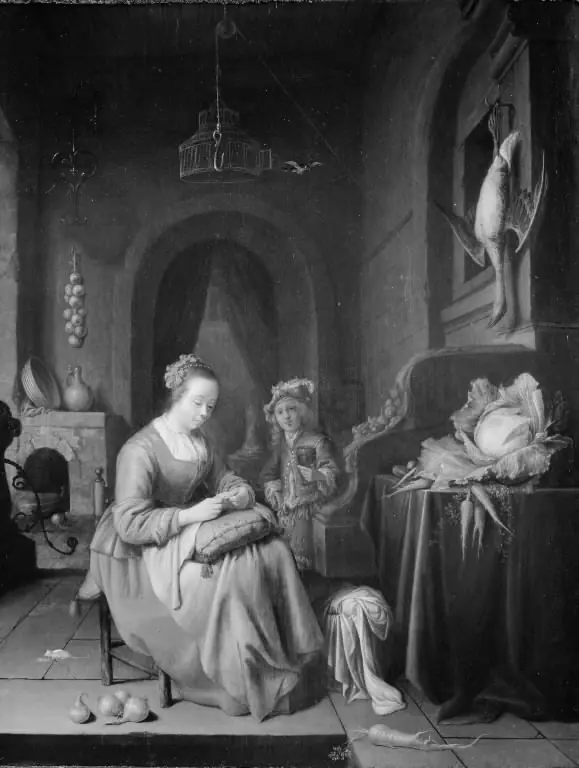
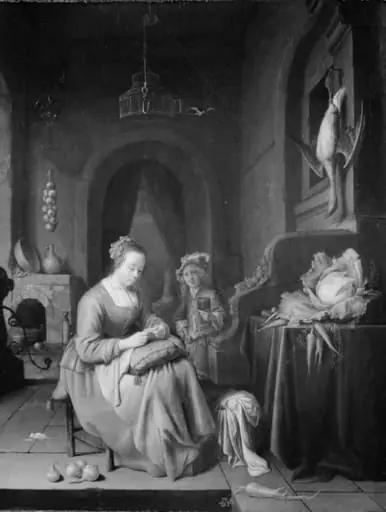
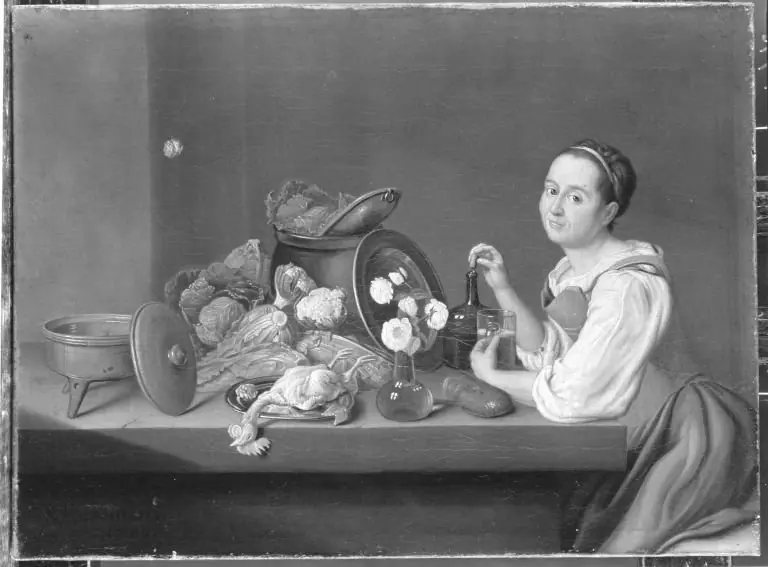
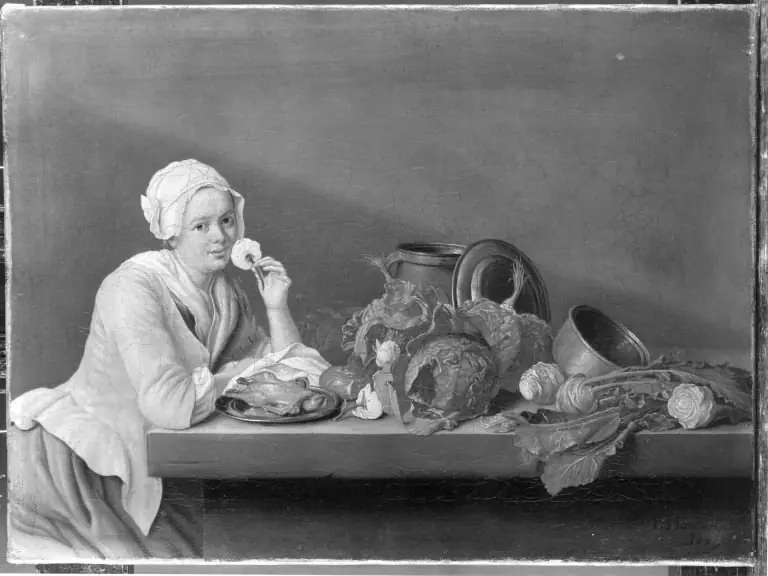
Painted in 1742 by Louis de Moni, this work portrays a woman in a domestic setting, holding a distaff—a tool used in spinning fiber. The scene is composed with quiet stillness, centered on the figure framed by an arched opening. The painting is part of the collection at Statens Museum for Kunst in Copenhagen, where it has been held since its acquisition.
Subject & Meaning
Her gaze, directed outward, invites contemplation without narrative clarity.
The woman’s posture and the presence of the distaff suggest a moment of quiet labor, likely referencing textile production, a common domestic task in the 18th century. The basket of fruit and hanging scale imply a connection to household economy, possibly symbolizing measurement, balance, or the intersection of labor and sustenance. Her gaze, directed outward, invites contemplation without narrative clarity.
Technique & Style
De Moni employs chiaroscuro to model the figure with soft contrasts of light and shadow, emphasizing the texture of fabric and the contours of the face and hands. The background remains muted, allowing the subject to emerge with quiet presence. The brushwork is restrained, avoiding theatricality; details like the headscarf and collar are rendered with subtle precision, enhancing the sense of intimacy.
History & Provenance
The painting was completed in 1742 and entered the collection of Statens Museum for Kunst in Denmark at an early date, though its exact acquisition path remains undocumented. It has remained in public ownership since, with no record of significant ownership changes or exhibitions outside Denmark prior to the 20th century.
Context
In mid-18th-century Dutch and Danish painting, depictions of women engaged in domestic tasks were common, often blending realism with moral or symbolic undertones. De Moni, trained in the Dutch tradition, adapted this genre with a subdued tone, reflecting regional tastes that favored quiet dignity over overt narrative. The inclusion of household objects aligns with broader Northern European conventions of genre painting.
Legacy
While not widely reproduced or studied outside Scandinavian art circles, the painting exemplifies the quiet realism favored in Danish and Dutch genre works of the period. Its preservation in a national collection underscores its value as a representative example of 18th-century domestic portraiture, offering insight into everyday life without idealization.
Artist & collection