Artwork
A Lacemaker, with a Boy Blowing Bubbles
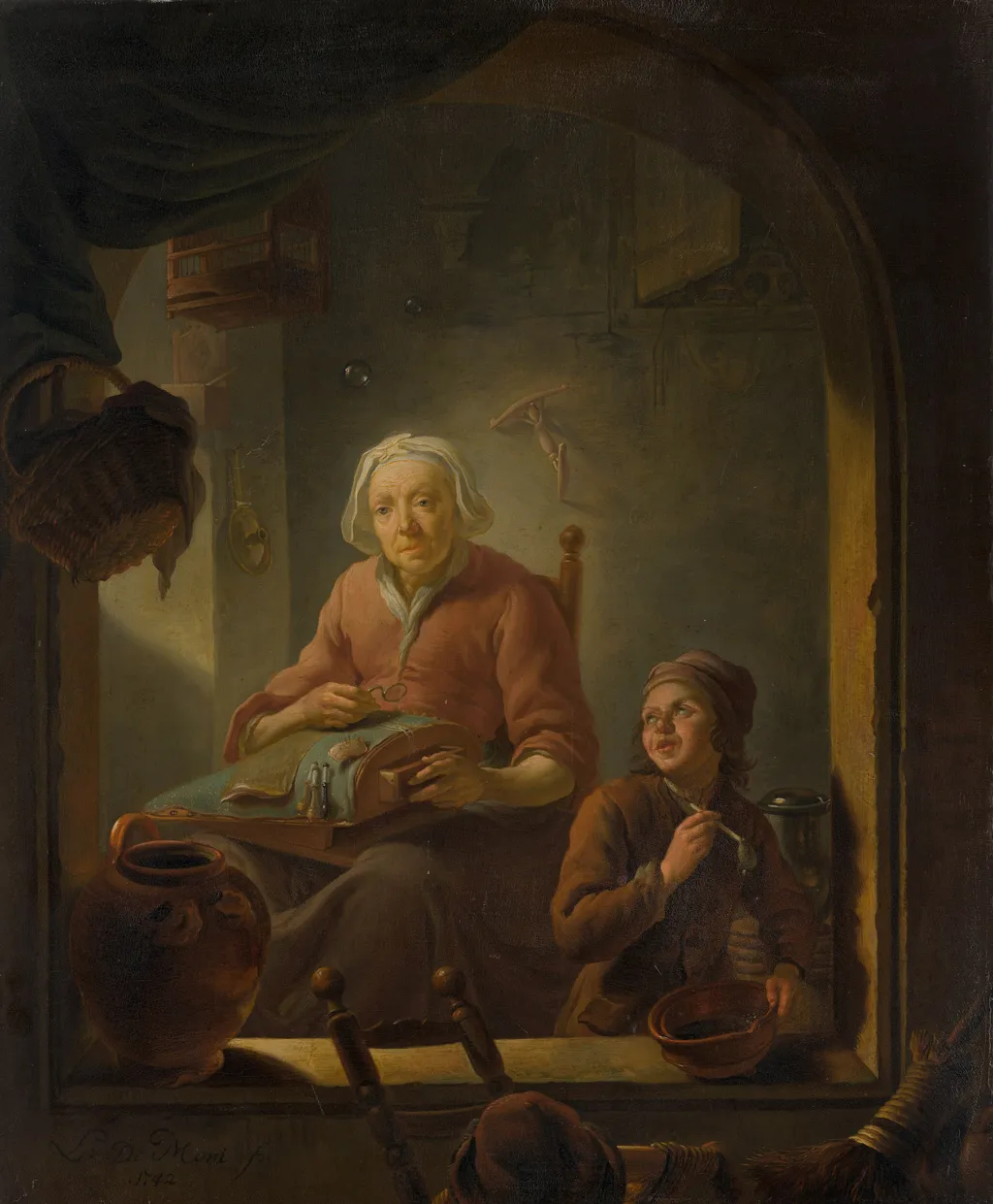
A Lacemaker, with a Boy Blowing Bubbles is an oil painting by the Rococo painting artist Louis de Moni. It dates from 1742 and is held in the collection of the Mauritshuis.
About this work
Overview
Louis de Moni’s 1742 oil painting, A Lacemaker, with a Boy Blowing Bubbles, presents a quiet domestic interior. An older woman in a red dress works at a lace pillow while a young boy, dressed in brown, stands nearby, blowing a single bubble. The composition is confined to a modestly lit room, its furnishings limited to a clay pot, a wooden chair, and a small table.
Subject & Meaning
The work captures a moment of everyday life, juxtaposing the meticulous craft of lace‑making with the fleeting, playful act of bubble‑blowing. The woman’s focused hands suggest patience and skill, while the boy’s activity introduces a sense of lightness, perhaps alluding to the contrast between labor and leisure in 18th‑century household routines.
Technique & Style
Executed in oil, de Moni employs a subtle chiaroscuro that models forms through the interplay of light and shadow, giving the scene depth despite its limited space. The muted palette and careful rendering of textures—fabric, wood, and the translucent bubble—enhance the realism typical of Dutch genre painting.
History & Provenance
Since its creation in 1742, the painting has become part of the collection of the Mauritshuis in The Hague. The museum acquired the work as part of its holdings of Dutch 18th‑century art, where it remains on display as an example of domestic genre scenes from the period.
Context
De Moni worked within the Dutch tradition of genre painting that flourished in the 17th and 18th centuries, focusing on everyday activities and interior settings. The inclusion of lace‑making reflects a common theme of women’s work, while the boy’s bubble‑blowing adds a narrative element that invites viewers to consider the social dynamics of the household.
Artist & collection

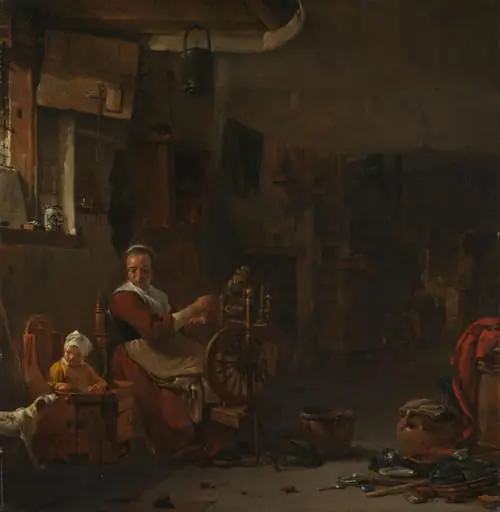 Peasant Woman Spinning
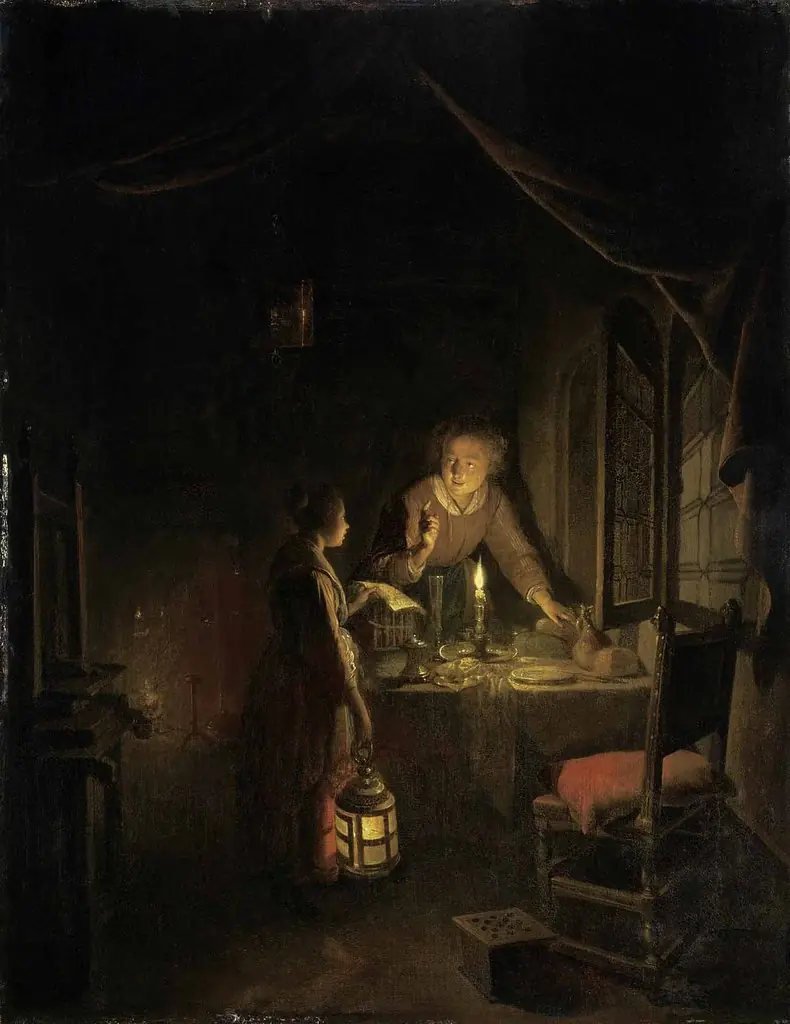 A Young Woman engaged at the Supper-table
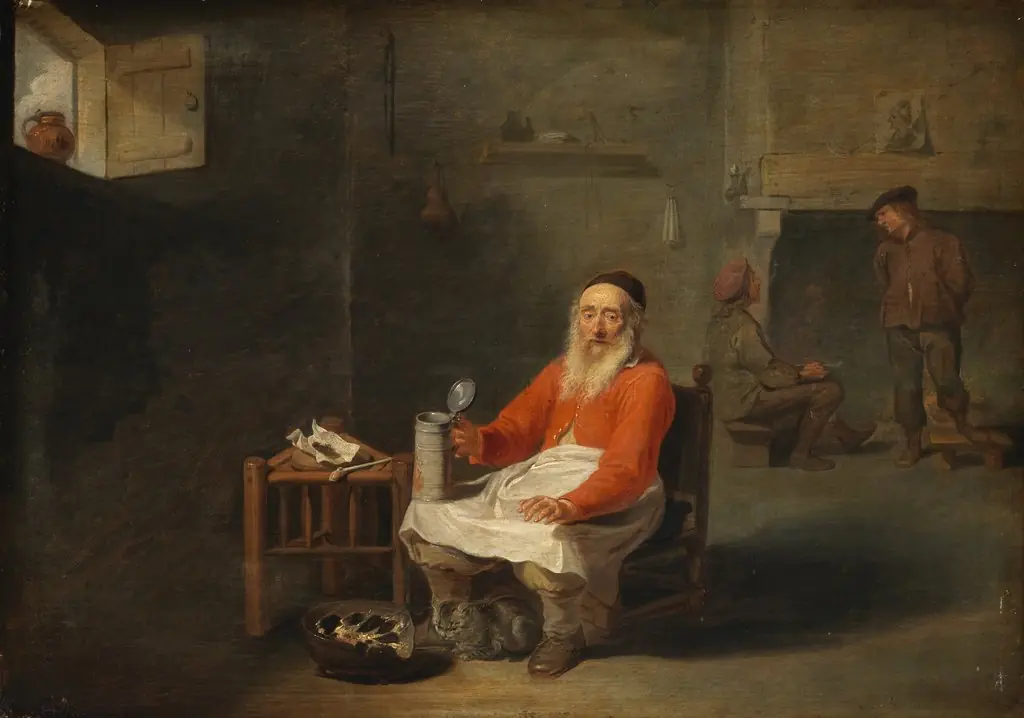 An Elderly Man with a Beer Mug
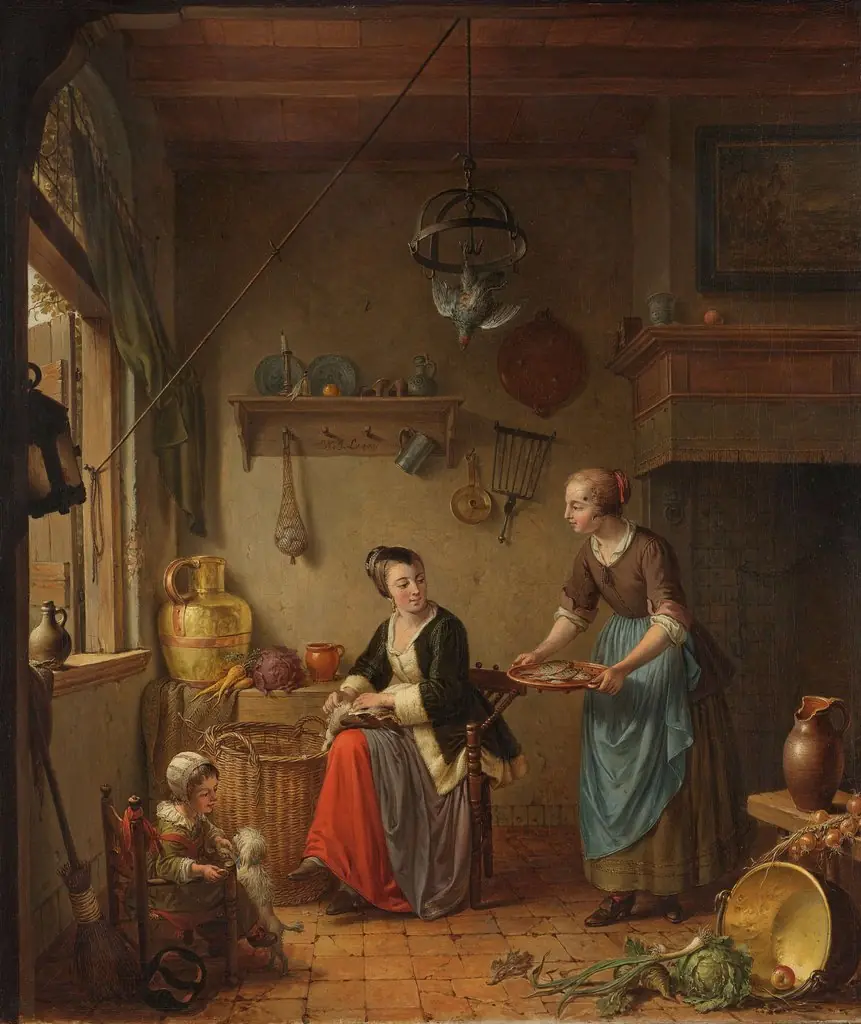 Kitchen Scene
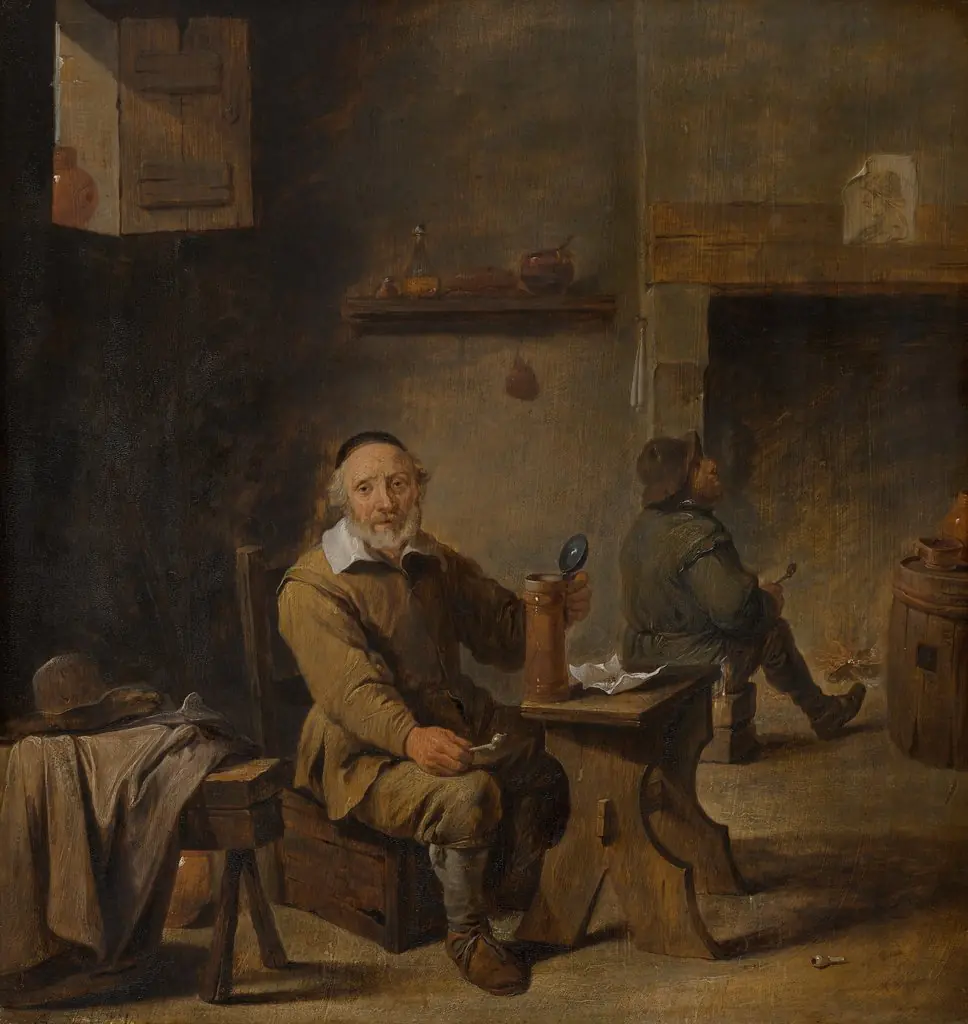 Country Inn
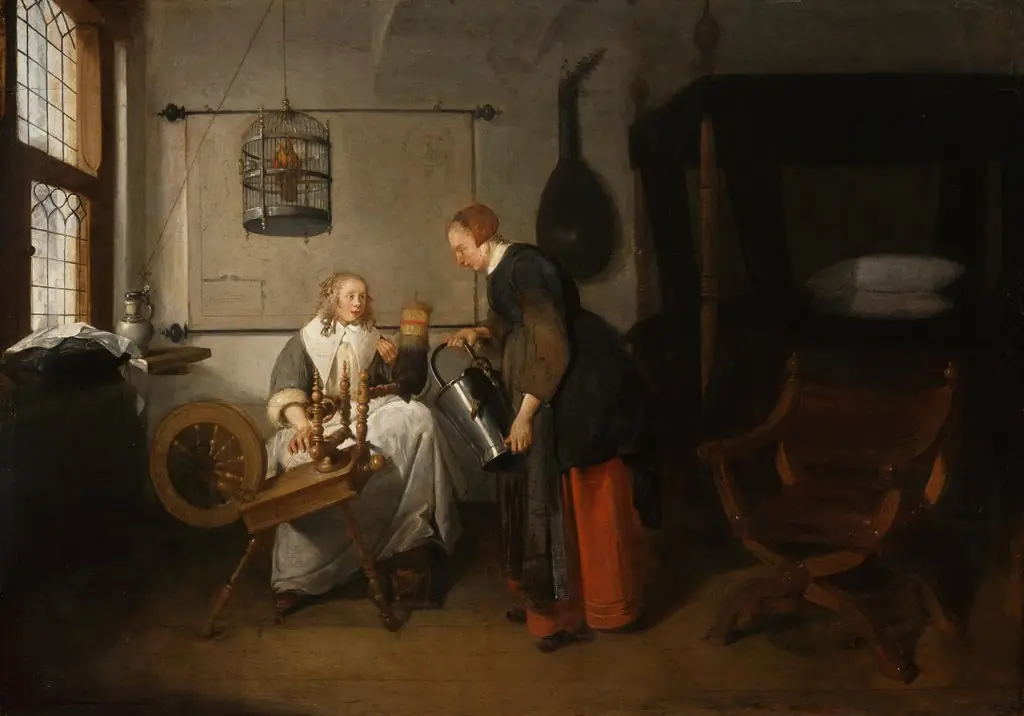 Young Woman at the Spinning Wheel
 De haringkoopvrouw
 Elderly Man Seated in a Tavern
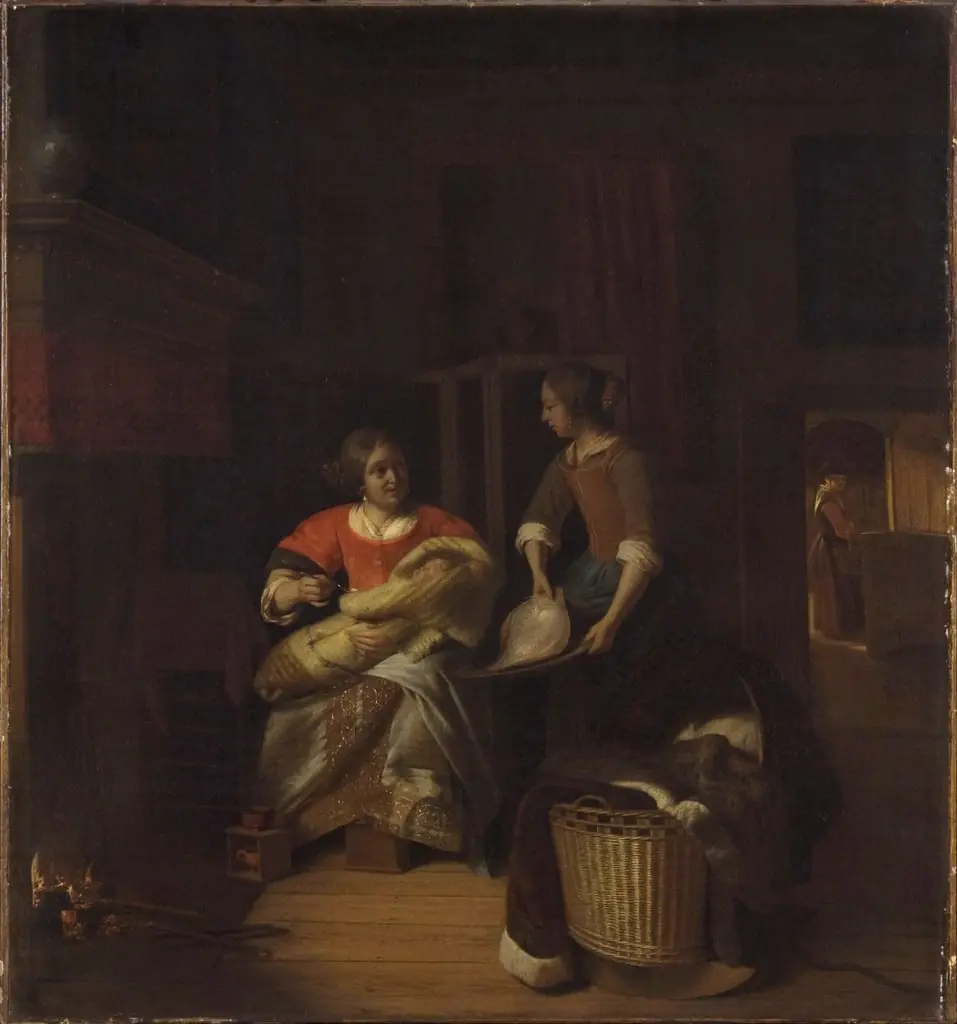 A Lady and a Child with a Serving Maid
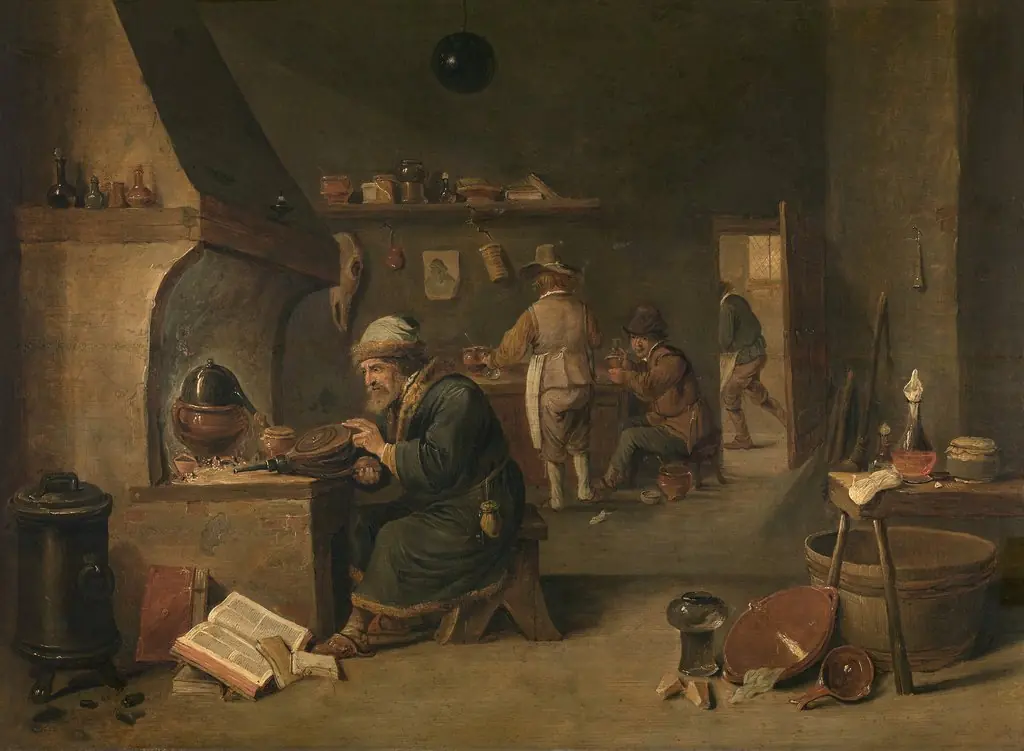 The Alchemist
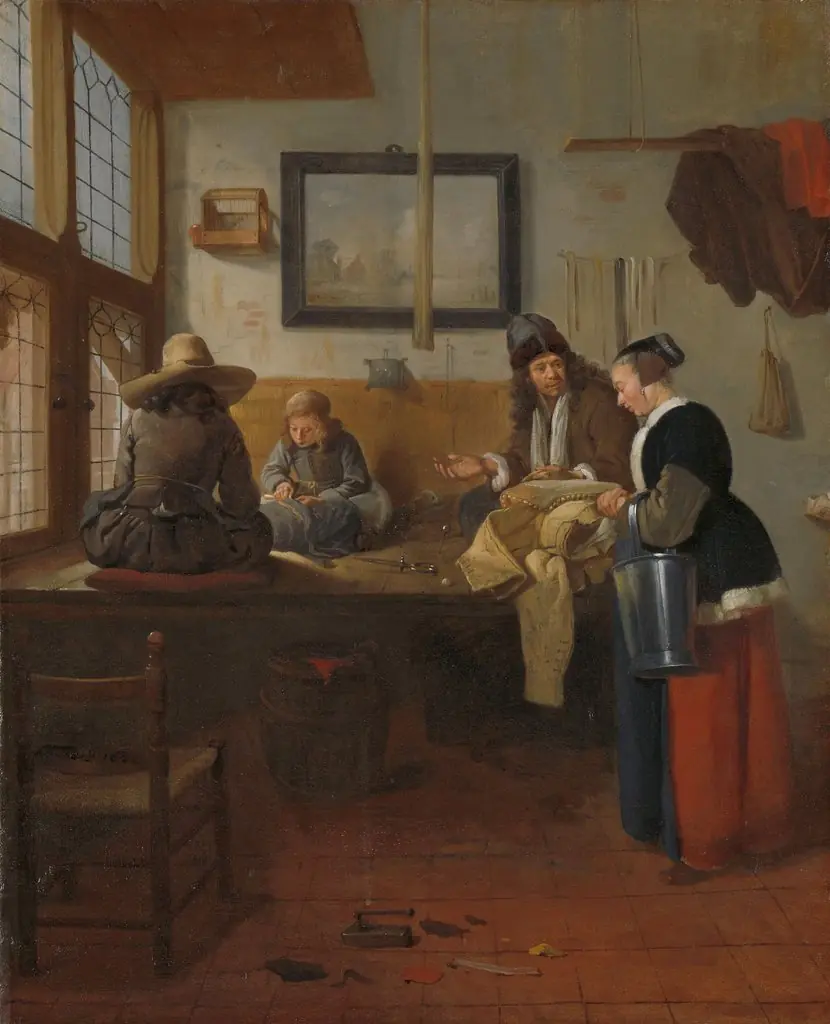 The Tailor’s Workshop
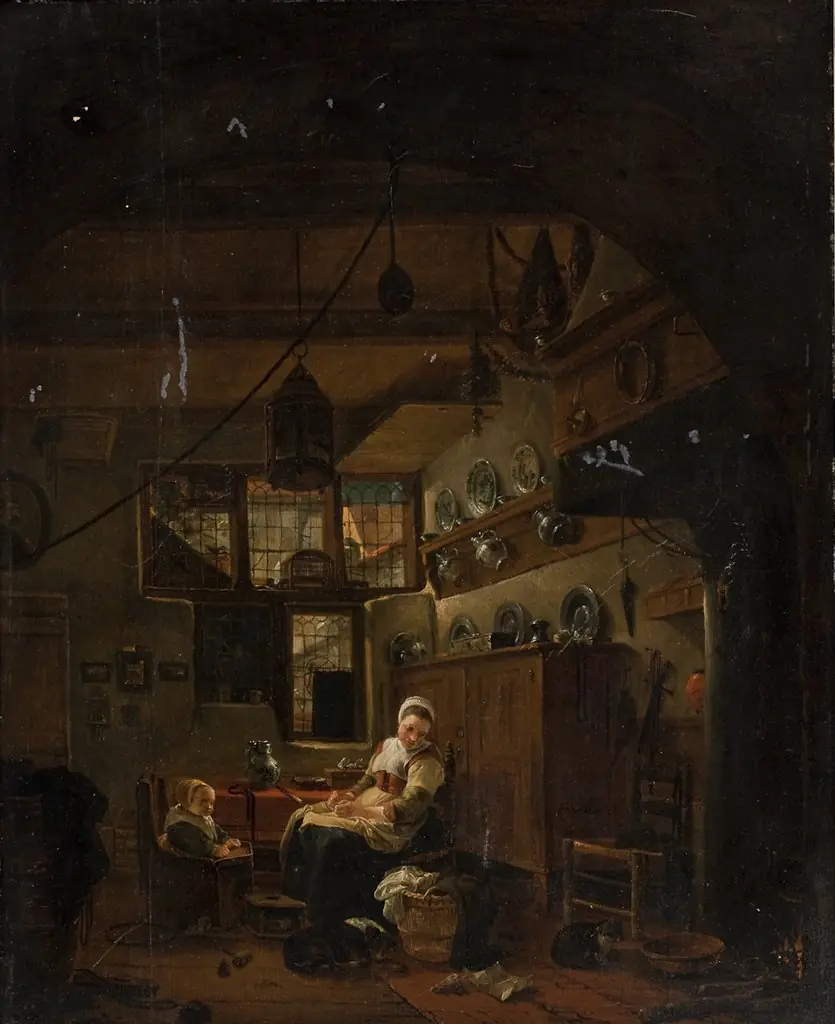 Interior of a Dutch Farm Cottage