Artwork
Egypt and Nubia, Volume I: Entrance to the Caves of Beni-Hasan
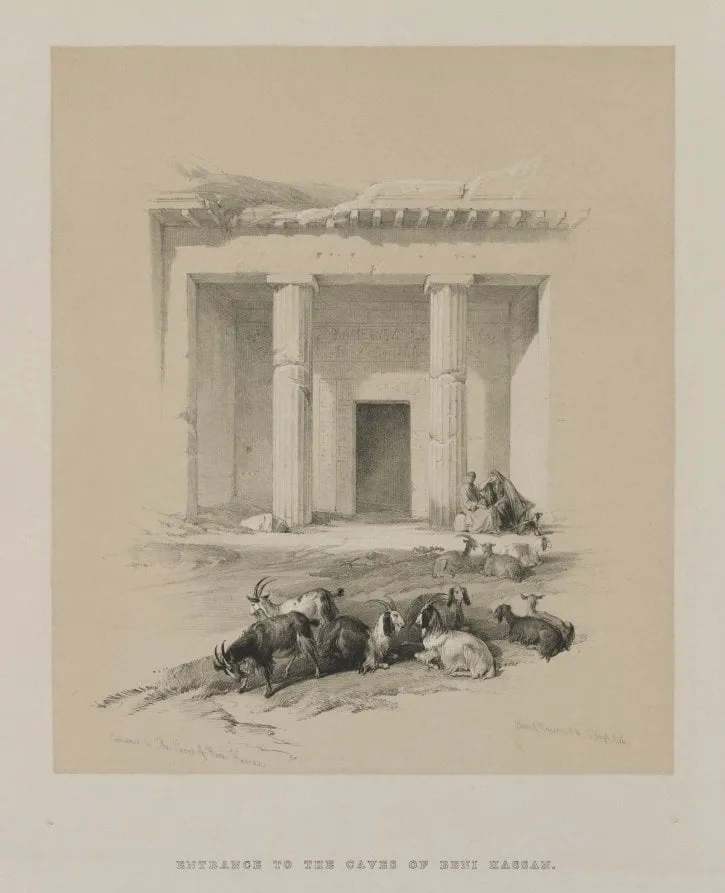
Egypt and Nubia, Volume I: Entrance to the Caves of Beni-Hasan is a print by the Romanticist artist Louis Haghe. It dates from 1847 and is held in the collection of the Cleveland Museum of Art.
About this work
Check out Romanticism to see how artists like this one used travel and history in their work.
This sketch shows an old stone doorway with two tall columns and a flat roof. In front of it, a flock of goats and sheep lie resting in the dirt. To the right, a few people sit near the animals, maybe tending to them.
The title says this is the "Entrance to the Caves of Beni-Hasan," a place in Egypt. The artist drew it in 1847, focusing on everyday life near ancient ruins.
Check out Romanticism to see how artists like this one used travel and history in their work.
Overview
Created in 1847 by Louis Haghe, this lithograph is part of a multi-volume travel publication documenting archaeological sites in Egypt and Nubia. Haghe, a British artist of Belgian origin, specialized in lithographic reproduction and co-founded the influential London firm Day & Haghe. The print captures the entrance to the rock-cut tombs at Beni Hasan, rendered with attention to architectural detail and the surrounding landscape, reflecting the period’s interest in systematic visual documentation of ancient sites.
Subject & Meaning
The scene centers on the monumental stone entrance of ancient tombs, framed by two tall columns and a flat lintel. In the foreground, a group of grazing goats and sheep, accompanied by local figures, grounds the image in contemporary life. This juxtaposition of enduring architecture and transient human activity suggests a quiet continuity between past and present, emphasizing the site not as a relic isolated from the world, but as a living part of the regional environment.
Technique & Style
Haghe employed lithography to achieve fine tonal gradations and precise linear detail, characteristic of high-quality 19th-century reproductive prints. The composition balances architectural solidity with the soft, organic forms of animals and figures, using subtle shading to suggest texture and depth. The style reflects the influence of topographical drawing, prioritizing accuracy over dramatic embellishment, aligning with the scientific aims of the publication it served.
History & Provenance
The print was produced as part of a larger illustrated work commissioned to record Egypt’s monuments for European audiences. Haghe’s involvement stemmed from his reputation in lithographic reproduction, particularly after co-founding Day & Haghe in 1830. The volume was likely distributed to libraries, institutions, and collectors interested in Egyptology, contributing to the growing body of visual records that shaped Western understanding of ancient Nubian and Egyptian heritage.
Context
Produced during the height of European interest in Egypt following Napoleon’s campaign and the decipherment of the Rosetta Stone, the image reflects a broader trend of documenting antiquities with empirical rigor. While Romanticism often idealized ruins, Haghe’s approach leans toward observational clarity, aligning with the era’s scholarly efforts to catalog and preserve visual evidence of ancient civilizations for academic study.
Legacy
Haghe’s lithograph remains a valuable historical record of Beni Hasan’s condition in the mid-19th century, before extensive excavation and tourism altered the site. Its inclusion in published volumes helped disseminate visual knowledge of Egypt beyond elite travelers, influencing both scholarly and public perceptions. The work exemplifies how lithography served as a bridge between exploration and education in the pre-photographic age.
Artist & collection
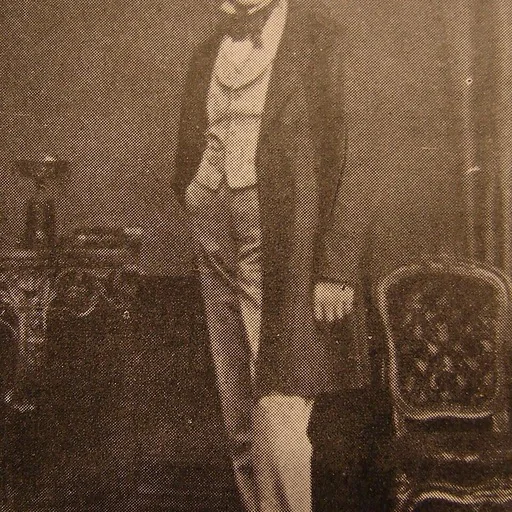
Artist
Louis Haghe (17 March 1806 – 9 March 1885) was a lithographer and watercolourist from the Netherlands and then the United Kingdom.

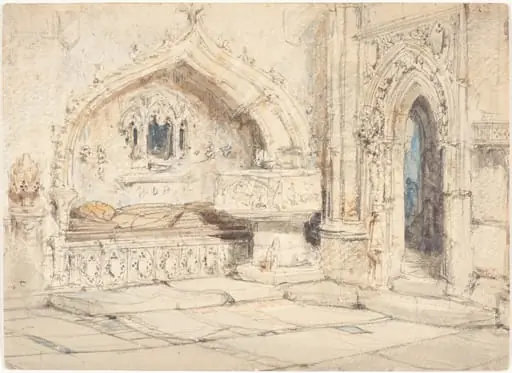 Interior of a Church with a Wall Tomb and Medieval Font
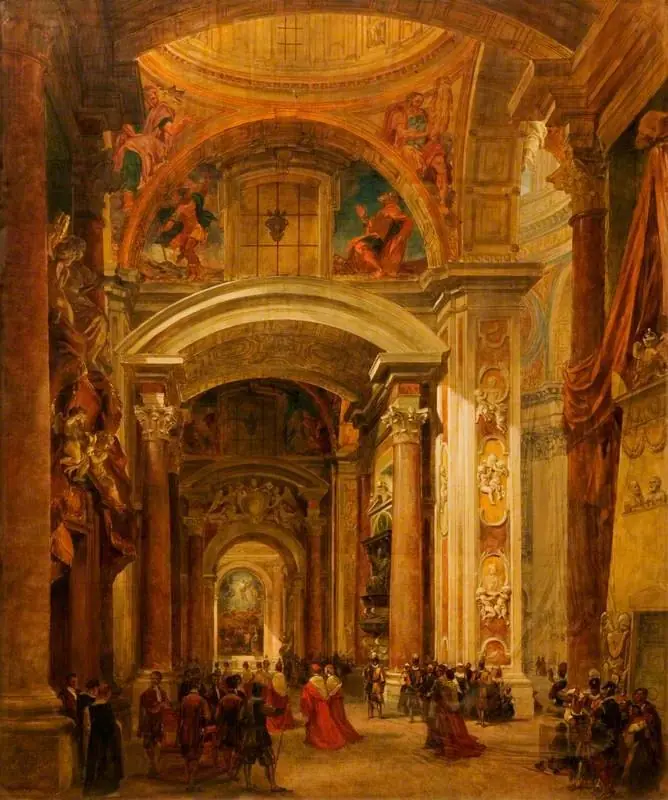 Interior of St Peter's, Rome
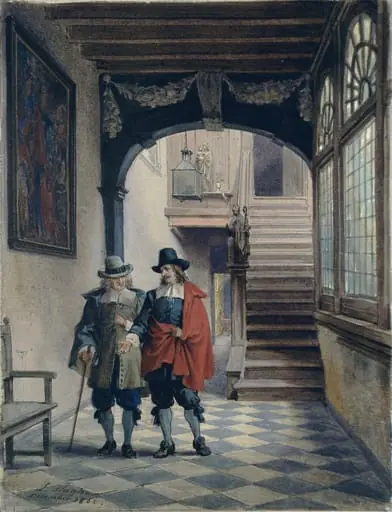 The Corridor, Brewer's Hall, Antwerp
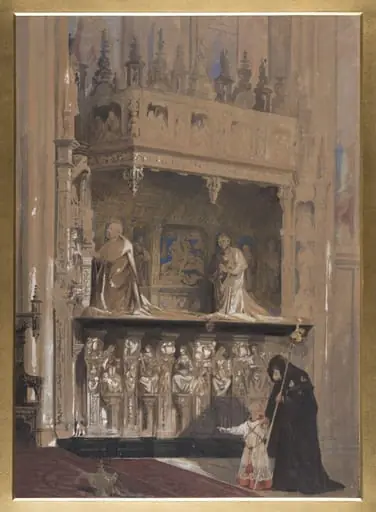 Monument of the Cardinald D'Amboise in Rouen Cathedral
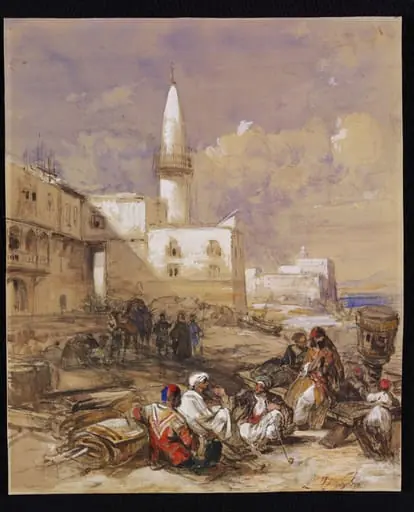 The Quay at Suez
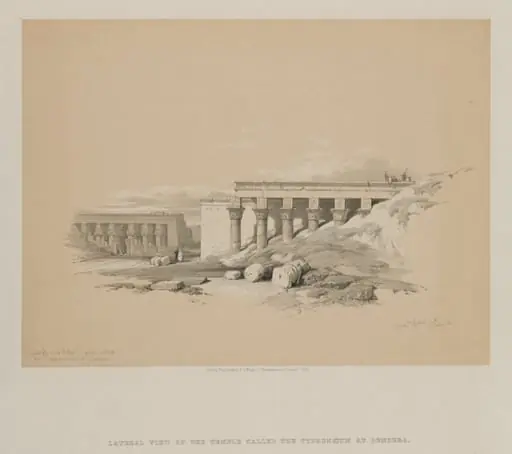 Egypt and Nubia, Volume II: Lateral View of the Temple called The Typhonoeum at Dendera
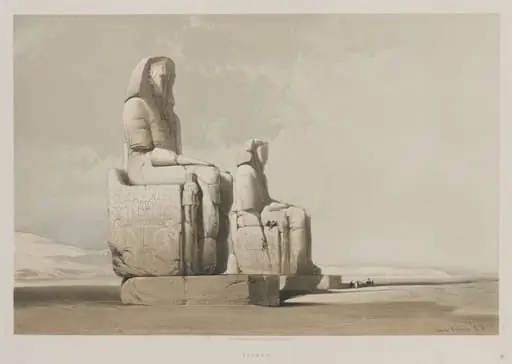 Egypt and Nubia, Volume I: Thebes
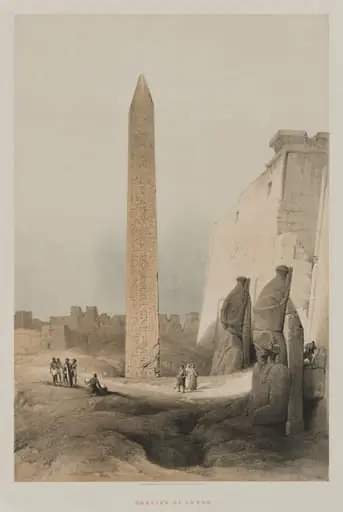 Egypt and Nubia, Volume I: Luxor
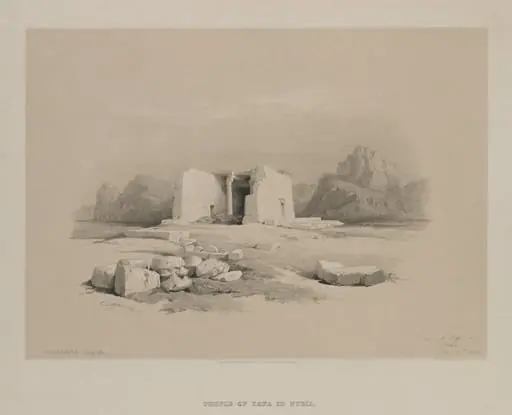 Egypt and Nubia, Volume I: Temple at Tafa in Nubia
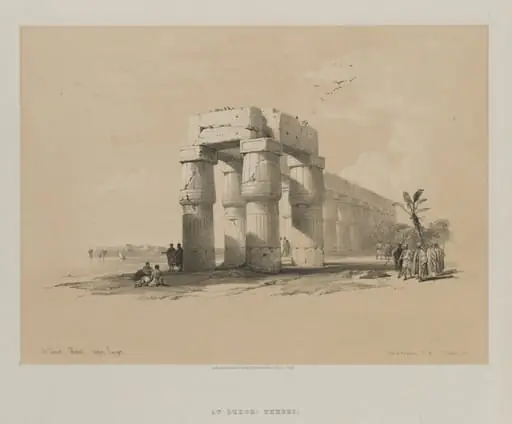 Egypt and Nubia, Volume I: At Luxor, Thebes, Upper Egypt
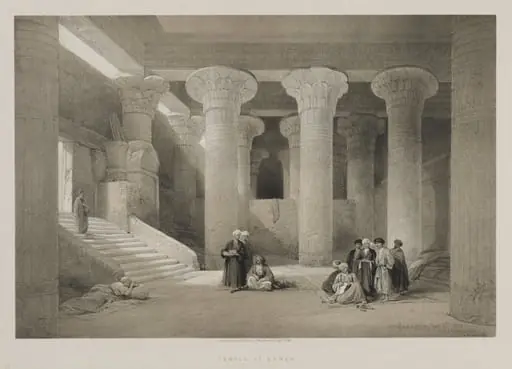 Egypt and Nubia, Volume I: Temple at Esneh
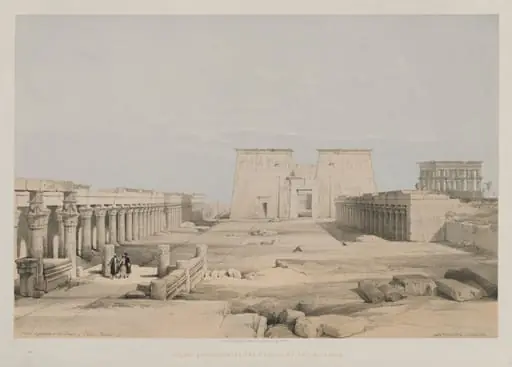 Egypt and Nubia, Volume I: Grand Approach to the Temple of Philae, Nubia
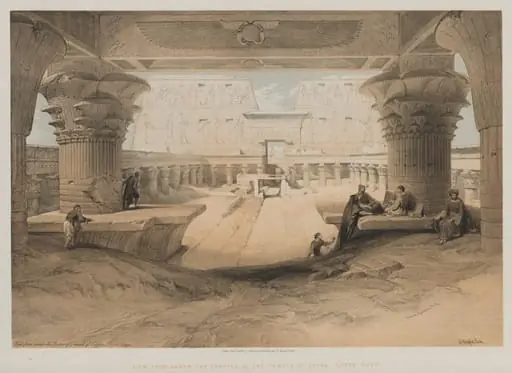 Egypt and Nubia, Volume I: View from Under the Portico of the Temple of Edfou, Upper Egypt
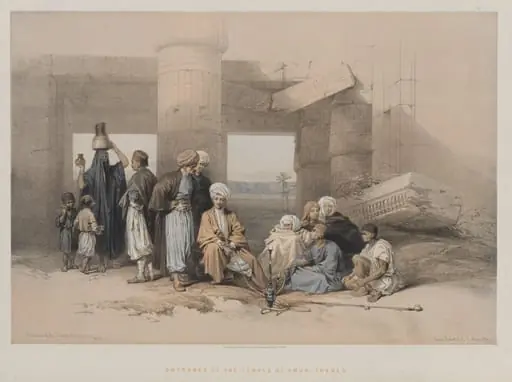 Egypt and Nubia, Volume II: Entrance of the Temple of Amun, Thebes