Artwork
Egypt and Nubia, Volume II: Entrance of the Temple of Amun, Thebes
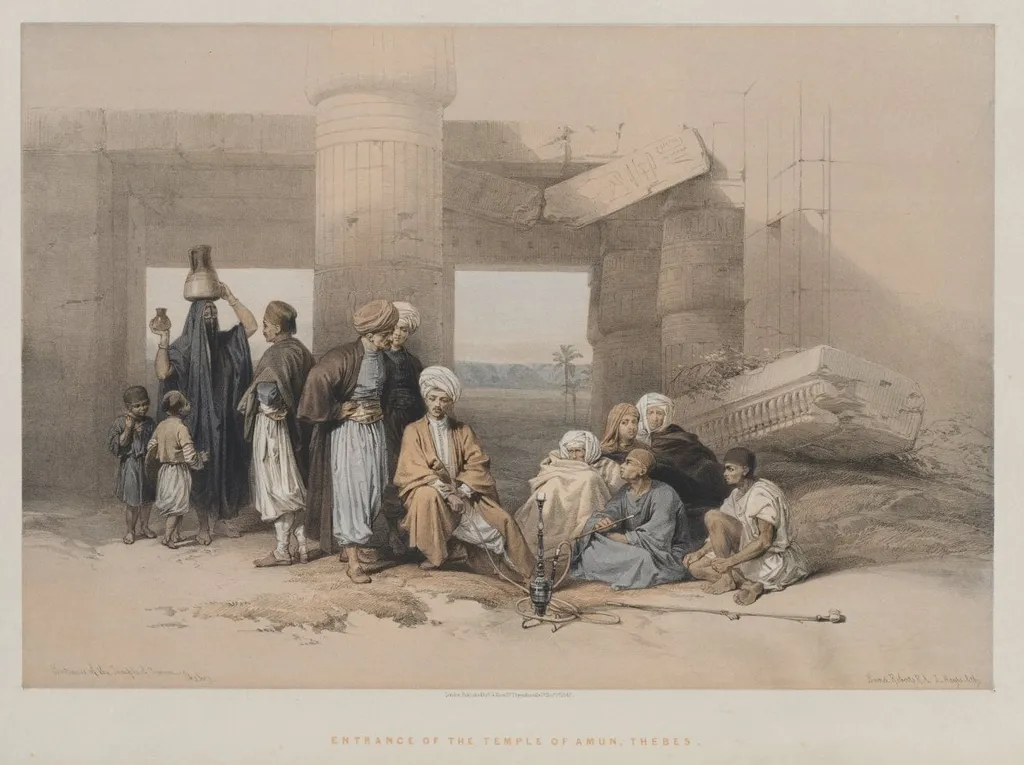
Egypt and Nubia, Volume II: Entrance of the Temple of Amun, Thebes is a print by the Romanticist artist Louis Haghe. It dates from 1847 and is held in the collection of the Cleveland Museum of Art.
About this work
Behind them, broken columns and carved blocks lie scattered, with a tall pillar still standing.
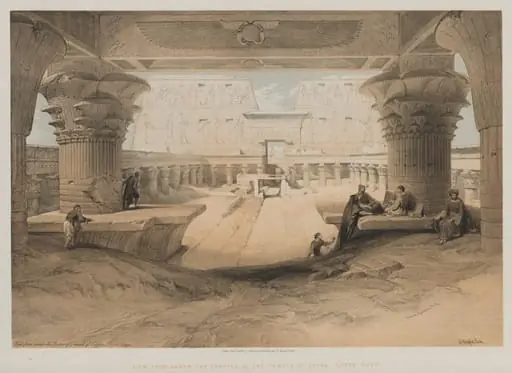
This drawing shows a group of people near crumbling stone ruins. Some stand while others sit on the ground, dressed in loose robes and head coverings. A man in the center holds a long pipe, and a woman next to him cradles a baby. Behind them, broken columns and carved blocks lie scattered, with a tall pillar still standing. The scene looks like a mix of daily life and ancient ruins, all in muted tones.
The title tells us this is the entrance of a temple in Thebes, Egypt. The artist sketched it in 1847, capturing how people lived near old ruins. The way light and shadow play on the figures and stones makes the scene feel real.
Look up Romanticism to see how this style often mixed adventure with everyday life.
Overview
Louis Haghe’s 1847 lithograph, part of the second volume of *Egypt and Nubia*, portrays the entrance to the Temple of Amun at Thebes. Executed in muted tones, the image juxtaposes contemporary figures in loose robes with the fragmented stone architecture of the ancient sanctuary, emphasizing the coexistence of present life and historic ruin.
Subject & Meaning
The composition gathers a small group of locals—men, women, and a child—around the crumbling portal. Their everyday activities, such as holding a pipe or cradling an infant, are set against broken columns and a solitary standing pillar, suggesting a lived relationship between the community and the remnants of a once‑great religious complex.
Technique & Style
Created through lithography, the work reflects the detailed line work and tonal gradations typical of mid‑nineteenth‑century British printmaking. Haghe’s handling of light and shadow renders the stone textures and fabric folds with a subtle realism that aligns with the Romantic interest in exotic locales and the passage of time.
History & Provenance
Born in Tournai in 1806, Haghe trained as a watercolourist before co‑founding the London lithographic firm Day & Haghe around 1830. The *Egypt and Nubia* series was produced for a European audience eager for visual accounts of ancient sites, and this particular plate was issued as part of the second volume in 1847.
Context
The image belongs to a broader wave of Romantic-era travel literature that combined scientific observation with a sense of adventure. By documenting Thebes’s temple entrance, Haghe contributed to the period’s growing fascination with Egypt’s archaeological heritage and its integration into Western cultural imagination.
Artist & collection
Artist
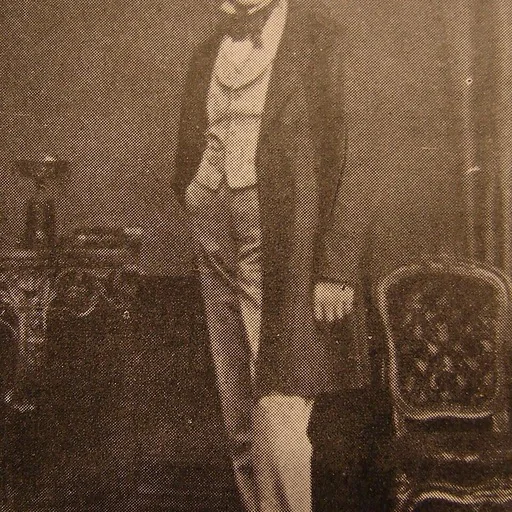
Louis Haghe (17 March 1806 – 9 March 1885) was a lithographer and watercolourist from the Netherlands and then the United Kingdom.

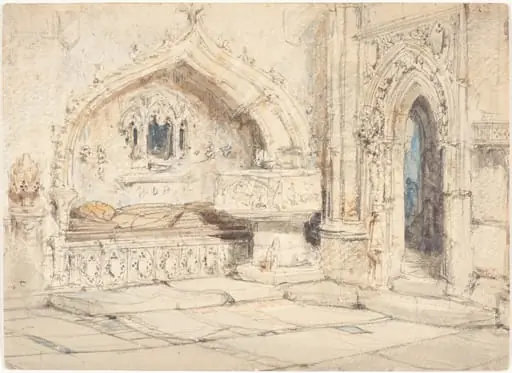 Interior of a Church with a Wall Tomb and Medieval Font
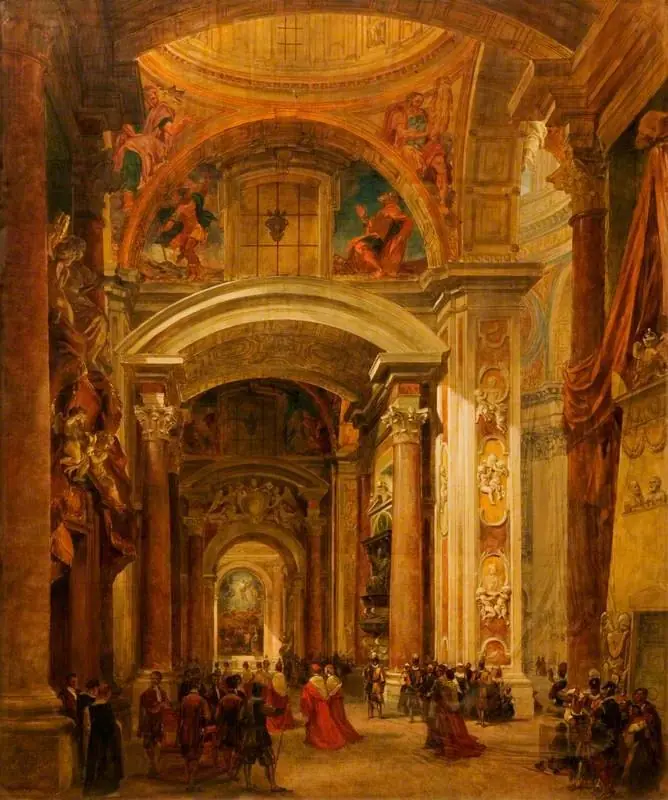 Interior of St Peter's, Rome
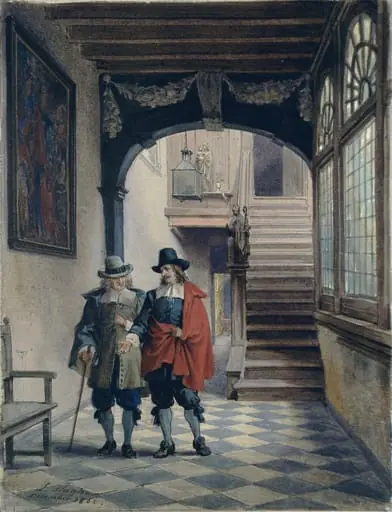 The Corridor, Brewer's Hall, Antwerp
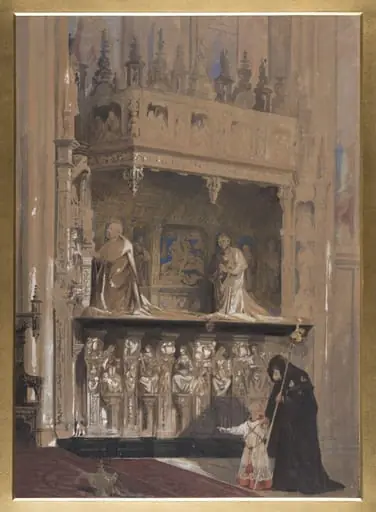 Monument of the Cardinald D'Amboise in Rouen Cathedral
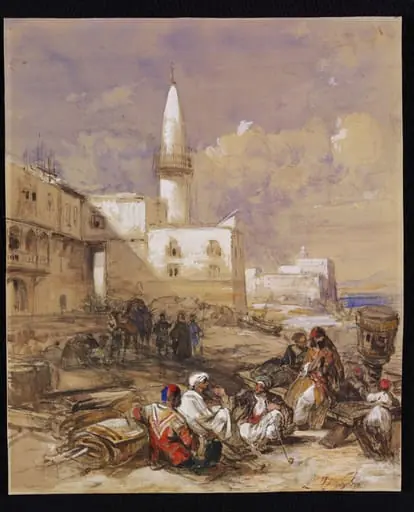 The Quay at Suez
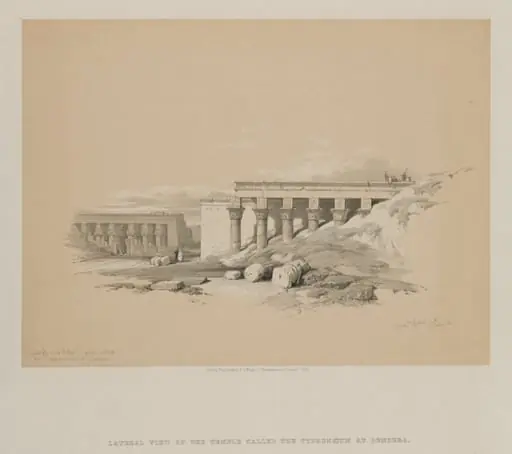 Egypt and Nubia, Volume II: Lateral View of the Temple called The Typhonoeum at Dendera
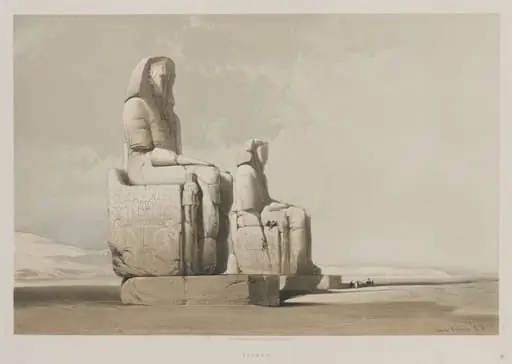 Egypt and Nubia, Volume I: Thebes
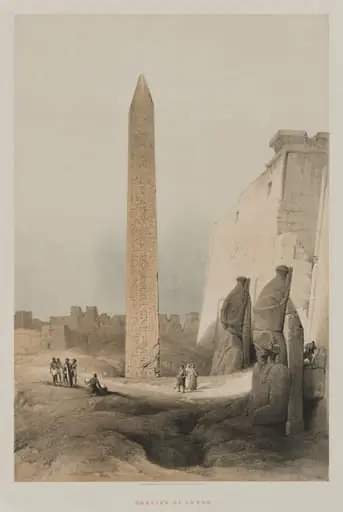 Egypt and Nubia, Volume I: Luxor
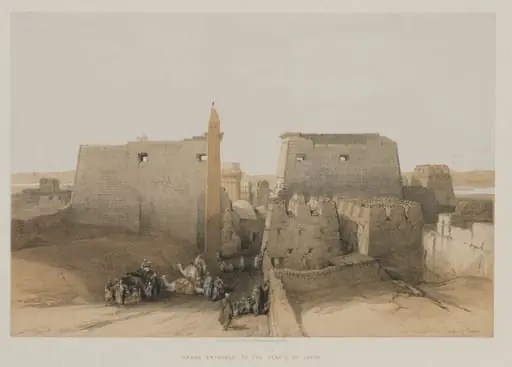 Egypt and Nubia, Volume II: Grand Entrance to the Temple of Luxor
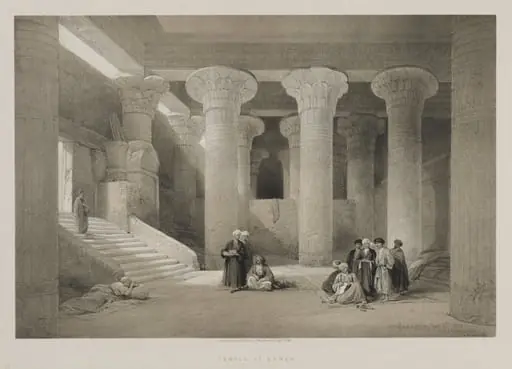 Egypt and Nubia, Volume I: Temple at Esneh
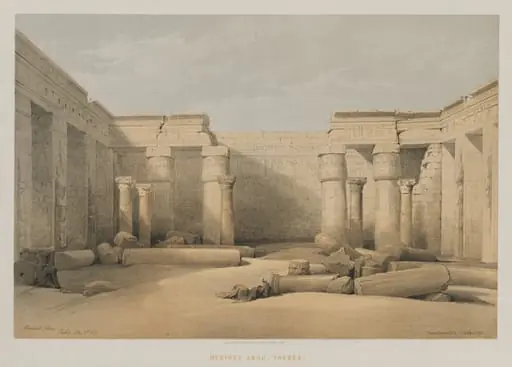 Egypt and Nubia, Volume II: Medinet Abou, Thebes
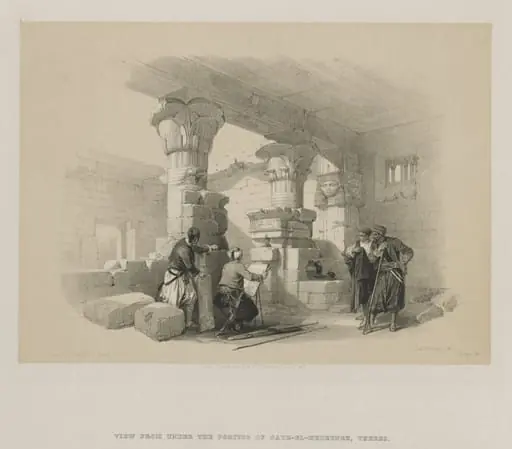 Egypt and Nubia, Volume II: Dayr-El-Medeeneh, Thebes
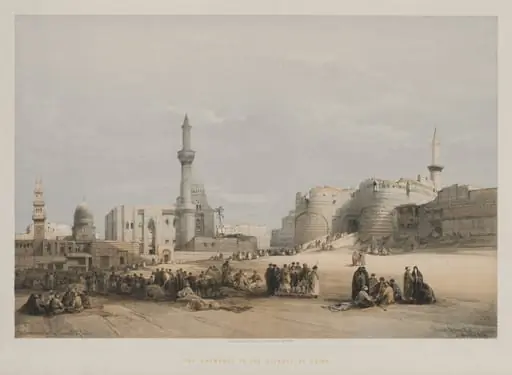 Egypt and Nubia, Volume III: The Entrance to the Citadel of Cairo
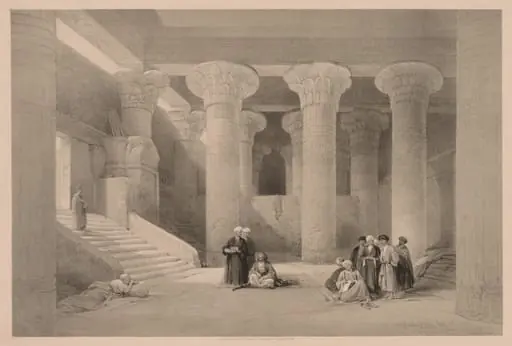 Egypt and Nubia: Volume I - No. 24, Temple at Esneh
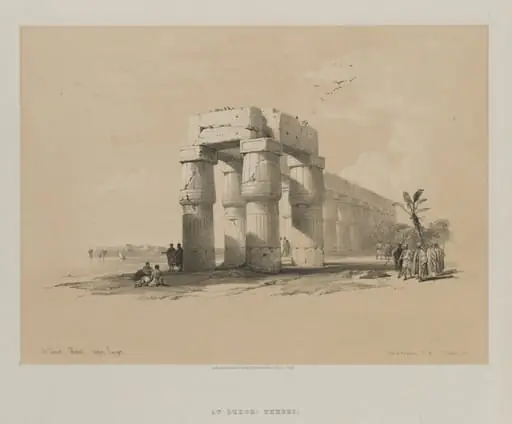 Egypt and Nubia, Volume I: At Luxor, Thebes, Upper Egypt
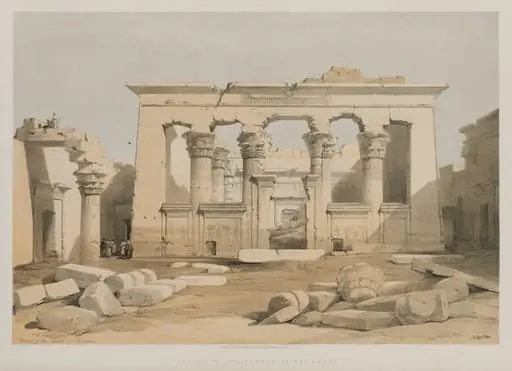 Egypt and Nubia, Volume I: Portico of the Temple of Kalabshe
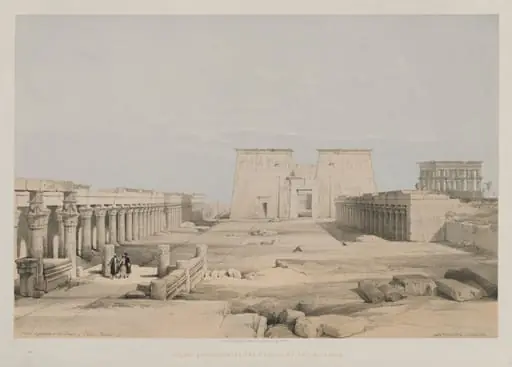 Egypt and Nubia, Volume I: Grand Approach to the Temple of Philae, Nubia
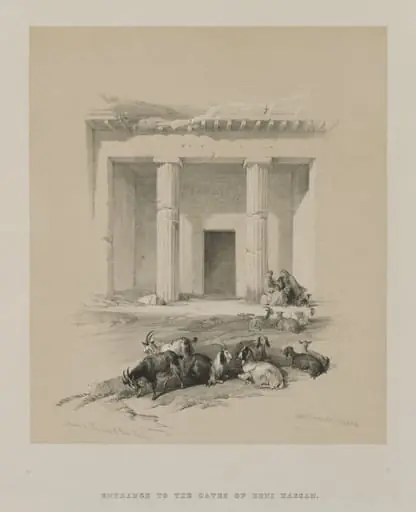 Egypt and Nubia, Volume I: Entrance to the Caves of Beni-Hasan
 Egypt and Nubia, Volume I: View from Under the Portico of the Temple of Edfou, Upper Egypt