Artwork
Egypt and Nubia: Volume II - No. 34, Entrance to the Tombs of the Kings of Thebes, Biban-el-molook
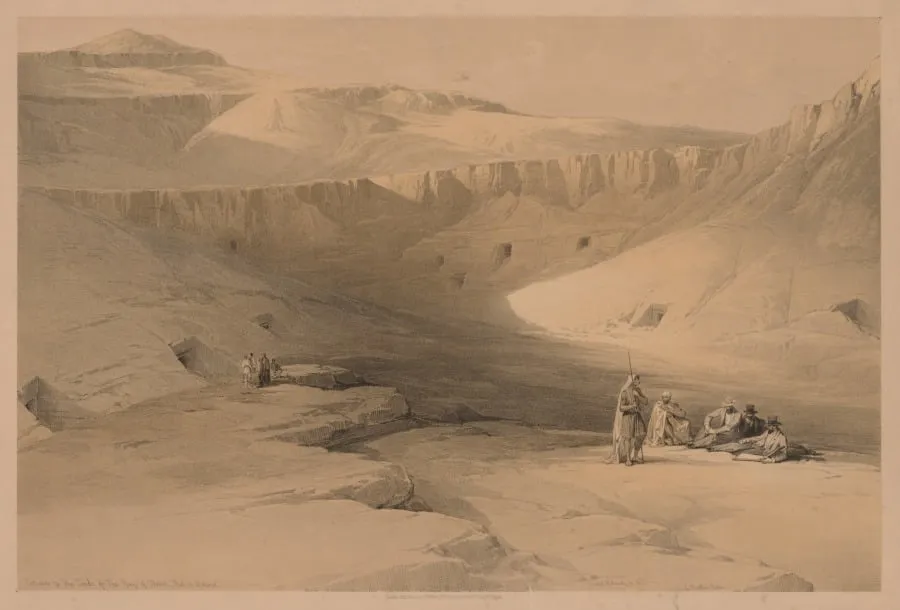
Egypt and Nubia: Volume II - No. 34, Entrance to the Tombs of the Kings of Thebes, Biban-el-molook is a print by the Romanticist artist Louis Haghe. It dates from 1838 and is held in the collection of the Cleveland Museum of Art.
About this work
This painting shows a dark tunnel leading into Egyptian tombs. The light hits the stone walls just enough to show carved hieroglyphs. A lone figure stands in the middle.
Haghe never visited Egypt. He used drawings and prints to make this scene. The tomb walls look real, but they’re based on secondhand details.
It’s like seeing through someone else’s eyes. Look up Louis Haghe (British, 1806–1885).
Overview
Though Haghe never traveled to Egypt, he relied on field sketches and published engravings to reconstruct the entrance to the royal tombs in Biban-el-Molook.
Created in 1838 by Louis Haghe, this lithograph is part of a two-volume illustrated series documenting ancient Egyptian and Nubian monuments. Though Haghe never traveled to Egypt, he relied on field sketches and published engravings to reconstruct the entrance to the royal tombs in Biban-el-Molook. The work reflects the 19th-century European effort to visually catalog Egypt’s archaeological heritage through printed media, combining accuracy with artistic interpretation.
Subject & Meaning
The image captures the dark, narrow entrance to a tomb in the Valley of the Kings, emphasizing the threshold between the known world and the sacred burial space. A solitary figure stands at the opening, suggesting human scale and the act of discovery. The carved hieroglyphs along the walls hint at the religious and funerary significance of the site, while the dim lighting evokes mystery and reverence for the buried pharaohs.
Technique & Style
Haghe employed lithography to achieve fine tonal gradations and detailed textures, mimicking the roughness of limestone and the precision of ancient carvings. His background in watercolor informed the subtle play of light and shadow, particularly the way faint illumination reveals inscriptions on the tunnel walls. The composition is carefully staged to guide the viewer’s eye inward, enhancing the sense of depth and enclosure despite the absence of firsthand observation.
History & Provenance
Produced by Haghe’s London firm Day & Haghe, the print was issued as Plate 34 in Volume II of the series Egypt and Nubia, commissioned to accompany scholarly accounts of the region. The publication catered to a growing European audience fascinated by Egyptology after Napoleon’s campaigns. As a commercial reproduction, it circulated widely among collectors and institutions, helping to shape public perception of Egypt’s ancient sites before widespread tourism.
Context
In the 1830s, European interest in Egypt surged due to archaeological expeditions and the decipherment of hieroglyphs. Artists like Haghe operated at the intersection of science and spectacle, translating field observations into accessible images for audiences who could not travel. His reliance on secondhand sources was common; accuracy was often secondary to visual authority and aesthetic appeal in publications aimed at the educated middle class.
Legacy
Haghe’s lithograph contributed to the visual lexicon of Egyptology in the 19th century, influencing how generations perceived the Valley of the Kings. Though later scholars noted its inaccuracies, the work remains a valuable record of contemporary interpretation and the techniques used to reconstruct distant cultures. It exemplifies how print media mediated archaeological knowledge before photography became widespread.
Artist & collection
Artist
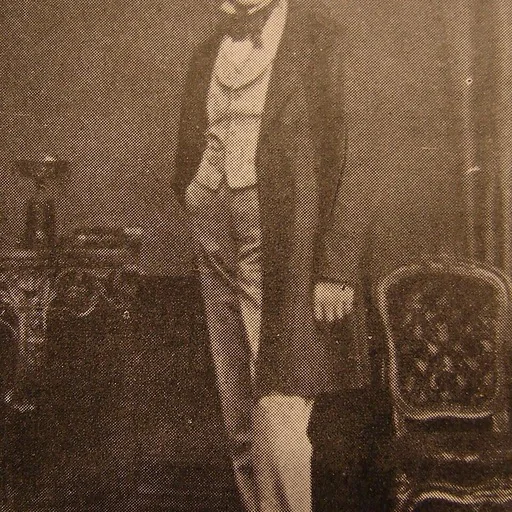
Louis Haghe (17 March 1806 – 9 March 1885) was a lithographer and watercolourist from the Netherlands and then the United Kingdom.

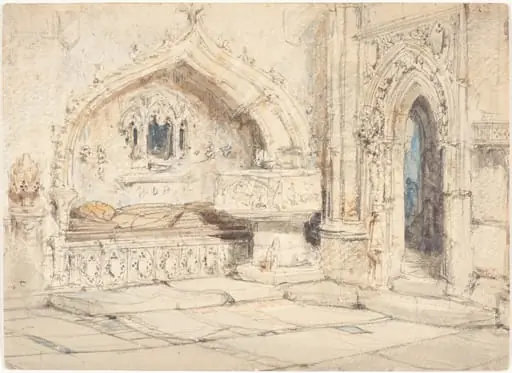 Interior of a Church with a Wall Tomb and Medieval Font
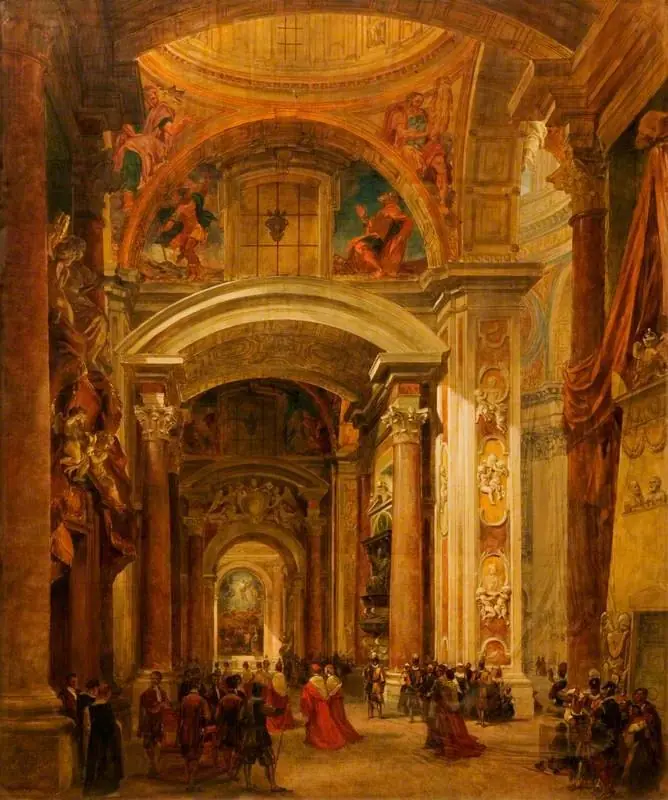 Interior of St Peter's, Rome
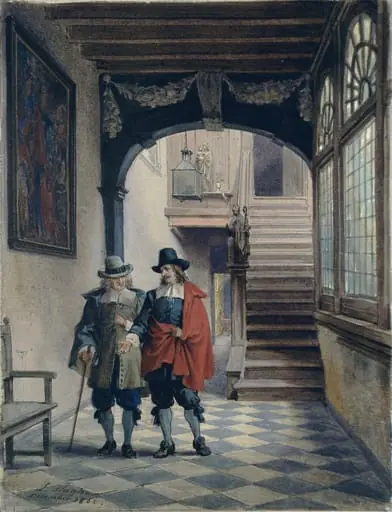 The Corridor, Brewer's Hall, Antwerp
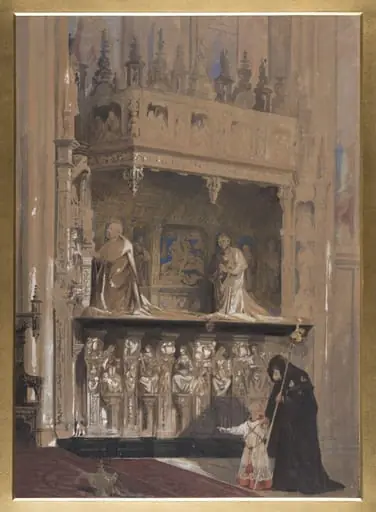 Monument of the Cardinald D'Amboise in Rouen Cathedral
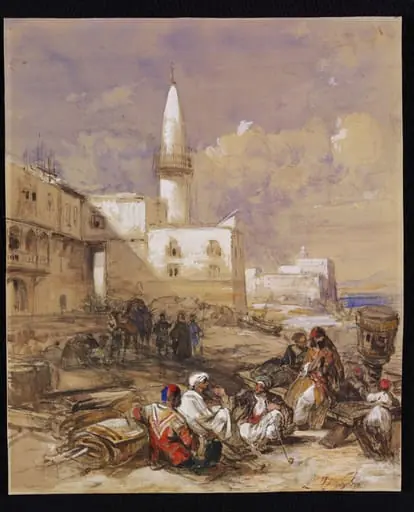 The Quay at Suez
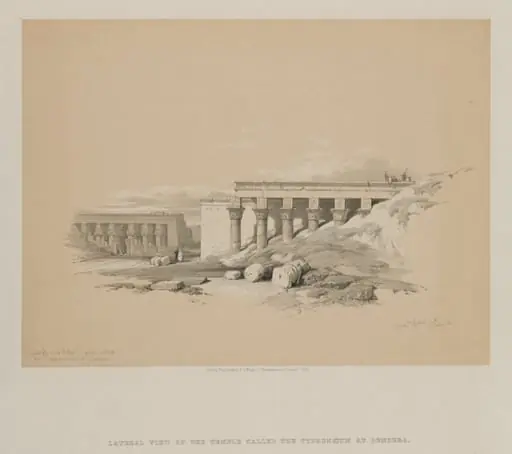 Egypt and Nubia, Volume II: Lateral View of the Temple called The Typhonoeum at Dendera
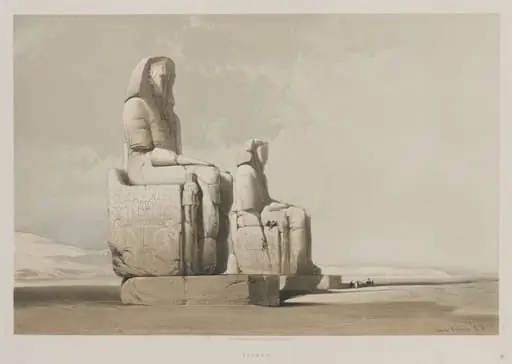 Egypt and Nubia, Volume I: Thebes
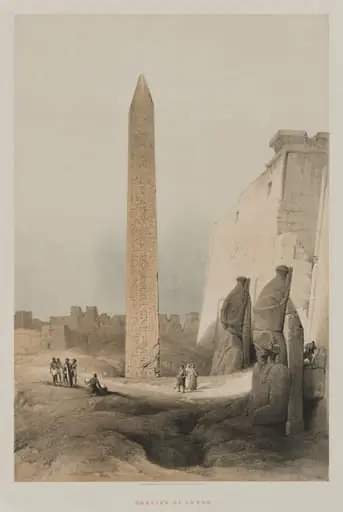 Egypt and Nubia, Volume I: Luxor
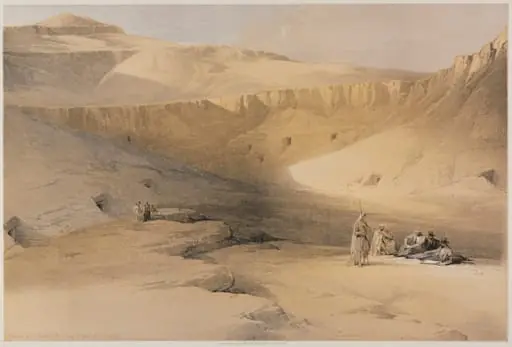 Egypt and Nubia, Volume II: Entrance to the Tombs of the Kings of Thebes, Bab-El-Malouk
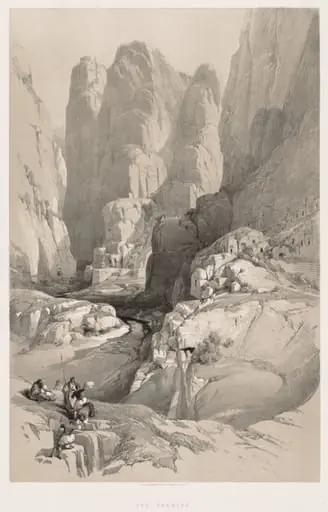 The Holy Land, Syria, Idumea, Arabia, Egypt & Nubia (Vol. III): Entrance to Petra
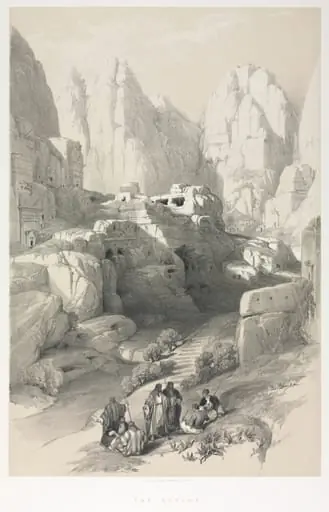 The Holy Land, Syria, Idumea, Arabia, Egypt & Nubia: Petra
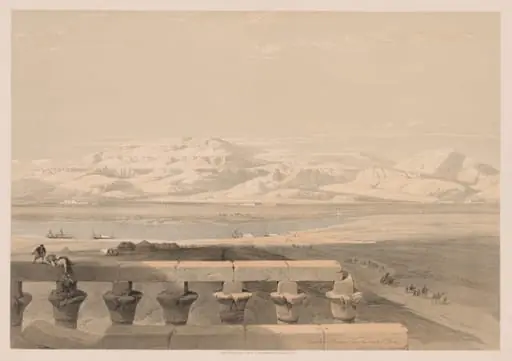 Egypt and Nubia: Volume I - No. 30, Lybian Chain of Mountains from the Temple of Luxor
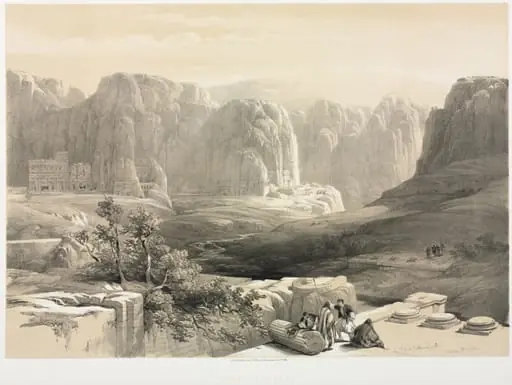 The Holy Land, Syria, Idumea, Arabia, Egypt & Nubia (Vol. III): Petra, Looking South
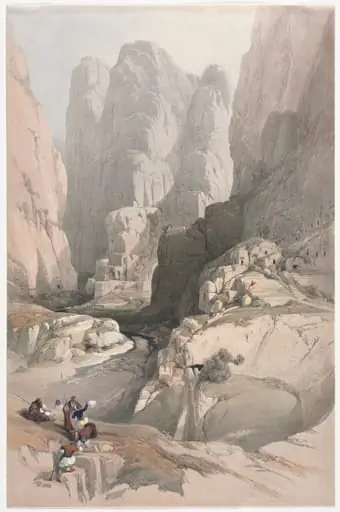 Entrance to Petra, the Theatre
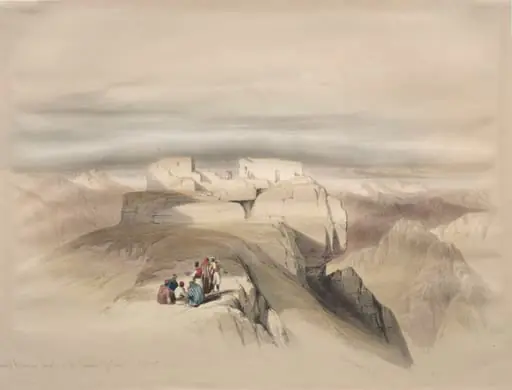 Christian and Mahomedan Chapels on the Summit of Sinai
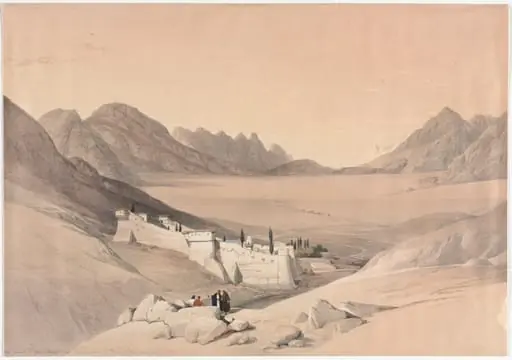 The Convent of St. Catherine, Mount Sinai, Looking towards the Plain of the Encampment
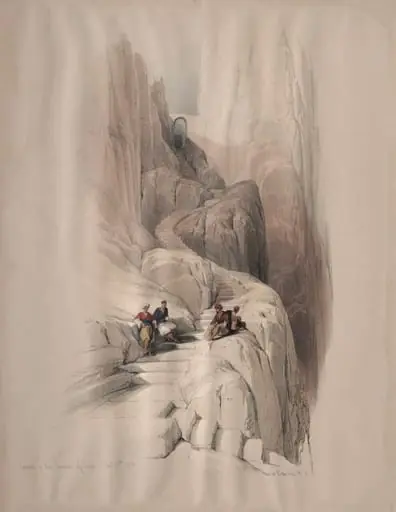 Ascent to the Summit of Sinai