Artwork
Egypt and Nubia, Volume III: Mosque of Sultan Hassan, from the Great Square of the Rameyleh
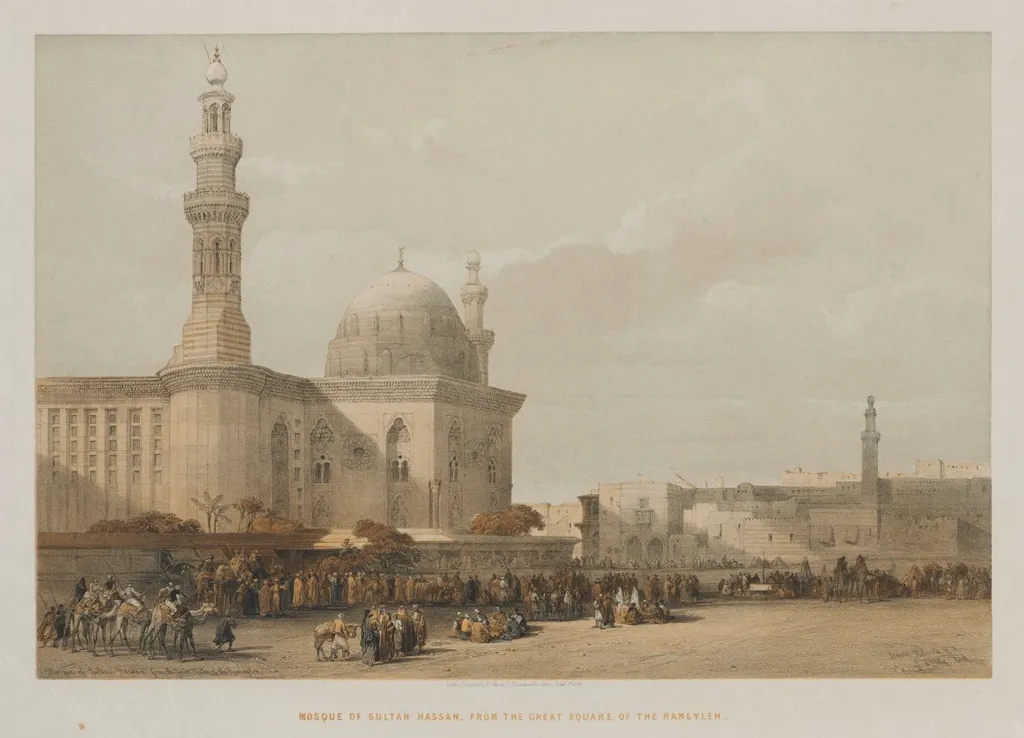
Egypt and Nubia, Volume III: Mosque of Sultan Hassan, from the Great Square of the Rameyleh is a print by the Romanticist artist Louis Haghe. It dates from 1849 and is held in the collection of the Cleveland Museum of Art. This print is part of a multi-volume series documenting Egypt and Nubia, produced in the mid-19th century using color lithography.
About this work
You see a tall mosque rising behind a dusty square, its towering arches and minarets drawn with sharp, colorful lines.
You see a tall mosque rising behind a dusty square, its towering arches and minarets drawn with sharp, colorful lines.
This print copies a watercolor by David Roberts, who traveled Egypt in 1838. Haghe turned Roberts’ sketches into bright lithographs—prints made by drawing on stone. The colors are crisp, almost like a postcard, showing how far printing had come by the 1800s.
If you like this, look up the technique: color lithography.
Overview
This print is part of a multi-volume series documenting Egypt and Nubia, produced in the mid-19th century using color lithography. It reproduces a watercolor by David Roberts, who traveled through Egypt in 1838. The final image was translated into print by Scottish artist Louis Haghe, whose technical skill elevated the work into a detailed architectural record. The series represents one of the earliest systematic visual surveys of the region’s monuments.
Subject & Meaning
The print depicts the Mosque of Sultan Hassan, situated in Cairo’s Rameyleh Square. Its monumental form dominates the scene, framed by the arid landscape and sparse urban activity. The composition emphasizes architectural grandeur over human presence, reflecting a 19th-century European fascination with ancient Islamic structures as symbols of a distant, enduring civilization. The image serves as both documentation and cultural artifact.
Technique & Style
Created through color lithography, the image was produced by drawing on limestone plates, each assigned a specific hue. Haghe meticulously translated Roberts’ watercolors into layered prints, achieving vivid, stable tones uncommon in earlier methods. The lines are precise, the colors sharp and flat, resembling a commercial postcard. This technique allowed for consistent reproduction across hundreds of copies, marking a milestone in printed visual documentation.
History & Provenance
David Roberts made his sketches during a year-long journey through Egypt and the Levant in 1838–39, later commissioning Louis Haghe to produce lithographs. The resulting series, published between 1842 and 1849, was distributed across Europe and North America. The prints were sold by subscription, catering to an audience eager for firsthand visual accounts of the Near East, then largely inaccessible to most Western travelers.
Context
The print emerged amid growing European interest in Egyptology following Napoleon’s campaign and the decipherment of hieroglyphs. While archaeological study advanced, visual records remained scarce. Roberts’ images filled this gap, offering detailed, seemingly objective views that shaped Western perceptions of Islamic architecture. The work coincided with colonial-era curiosity, blending scholarly intent with aesthetic fascination.
Legacy
The series established a visual template for how Egypt’s monuments were represented in the West for decades. Color lithography’s success here influenced later illustrated travel publications and museum displays. Though later scholars critiqued its romanticized perspective, the prints remain valuable as historical documents—evidence of how technology, art, and imperial curiosity converged to shape global understanding of the region.
Artist & collection
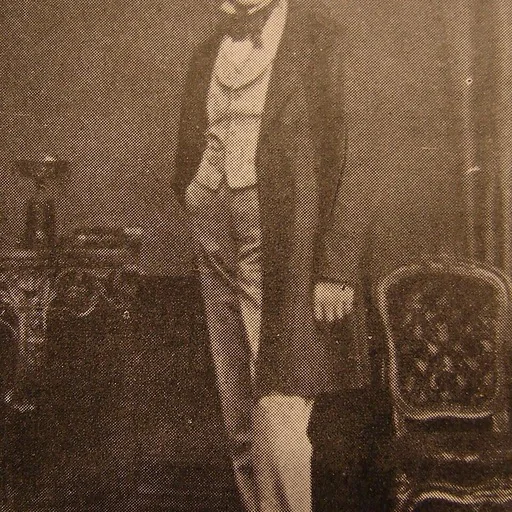
Artist
Louis Haghe (17 March 1806 – 9 March 1885) was a lithographer and watercolourist from the Netherlands and then the United Kingdom.

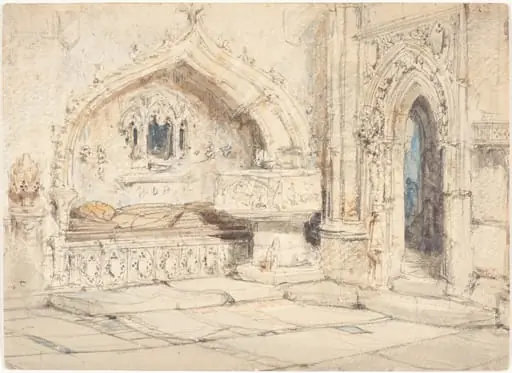 Interior of a Church with a Wall Tomb and Medieval Font
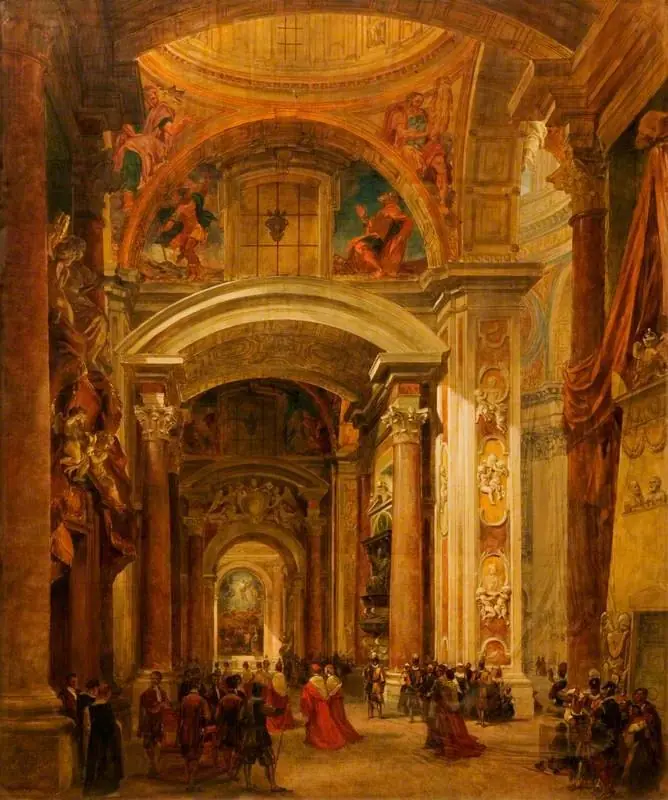 Interior of St Peter's, Rome
 The Corridor, Brewer's Hall, Antwerp
 Monument of the Cardinald D'Amboise in Rouen Cathedral
 The Quay at Suez
 Egypt and Nubia, Volume II: Lateral View of the Temple called The Typhonoeum at Dendera
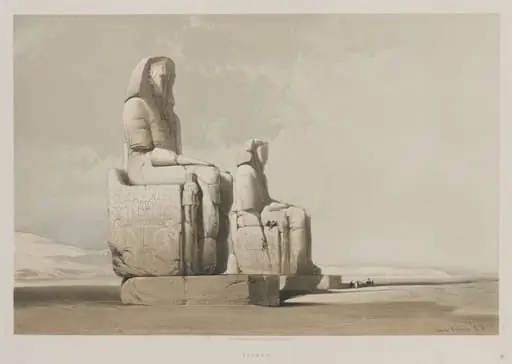 Egypt and Nubia, Volume I: Thebes
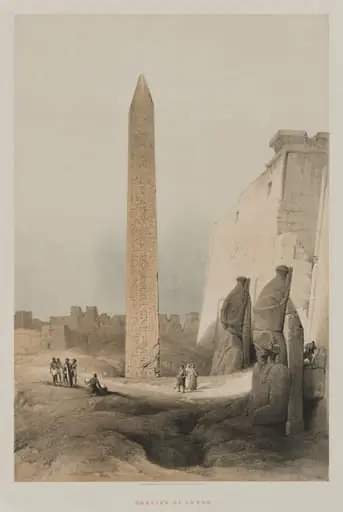 Egypt and Nubia, Volume I: Luxor
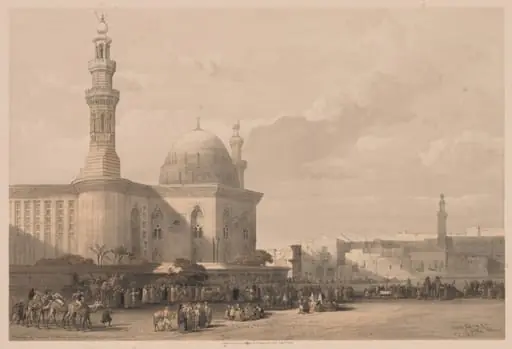 Egypt and Nubia: Volume III–No. 38, Mosque of Sultan Hassan from the Great Square of the Rameyleh
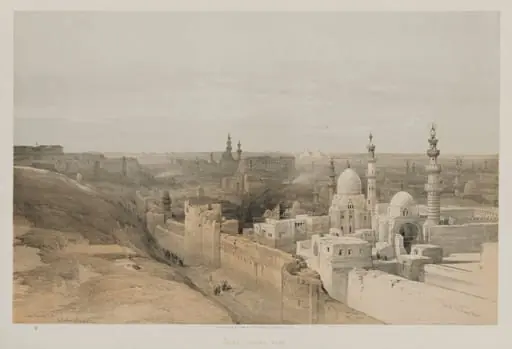 Egypt and Nubia, Volume III, No. 26, Cairo, Looking West
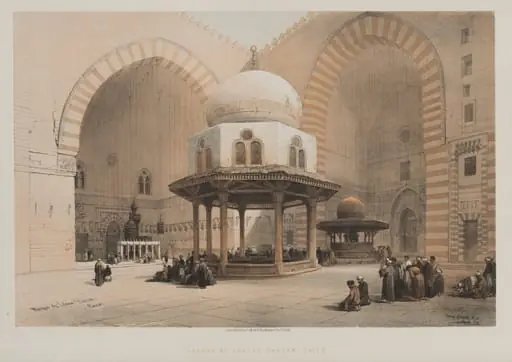 Egypt & Nubia, Volume III, No. 8: Mosque of Sultan Hassan, Cairo
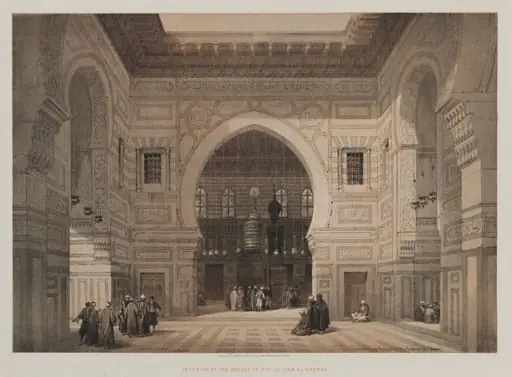 Egypt and Nubia, Volume III: Interior of the Mosque of the Sultan El Ghoree
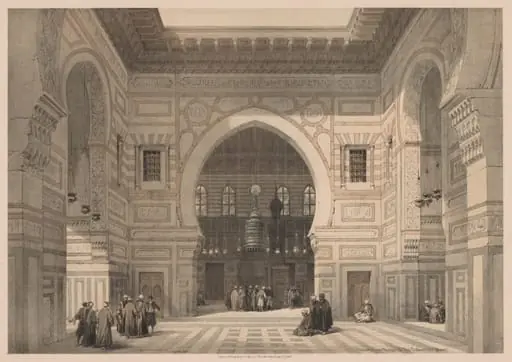 Egypt and Nubia: Volume III - No. 36, Interior of the Mosque of the Sultan El Ghoree
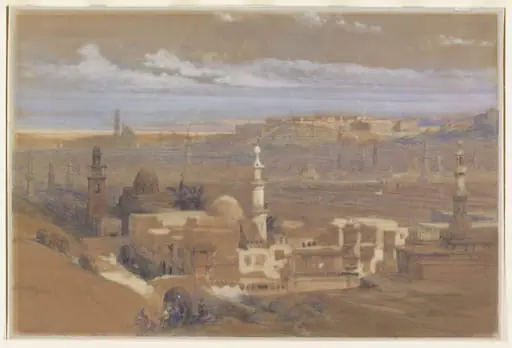 Grand Cairo