Artwork
Pygmalion and Galatea
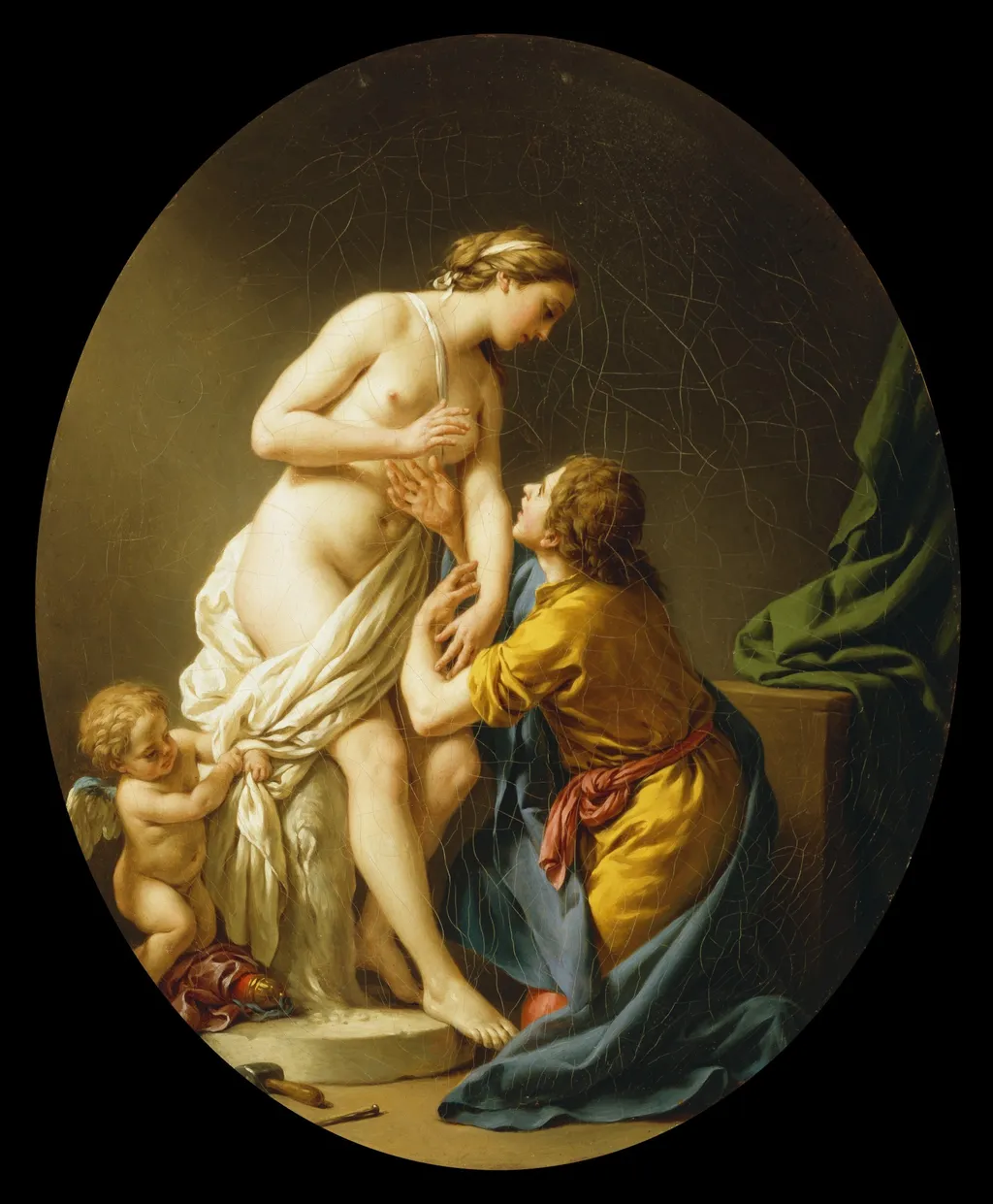
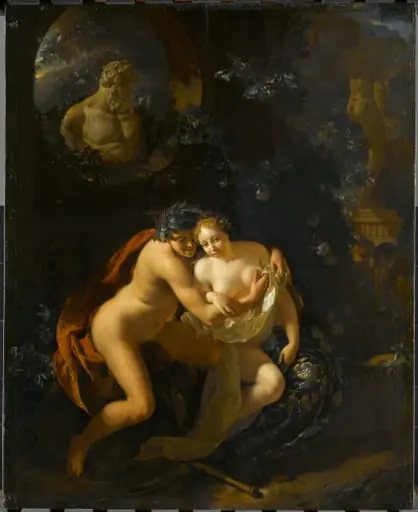
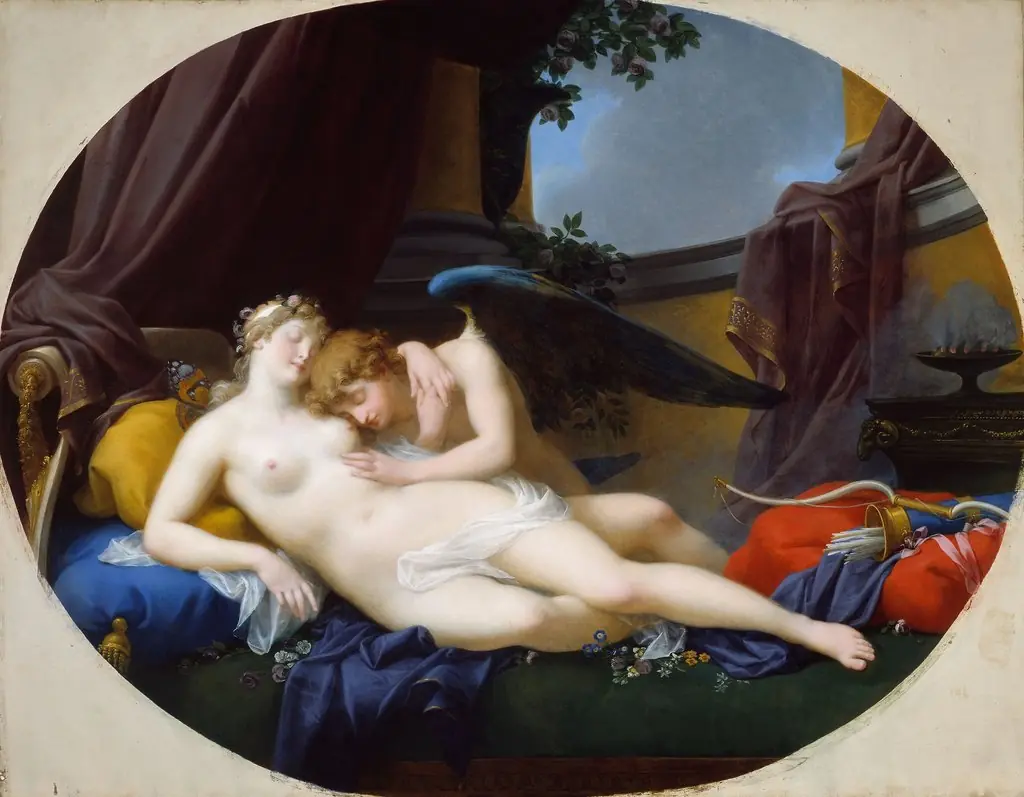
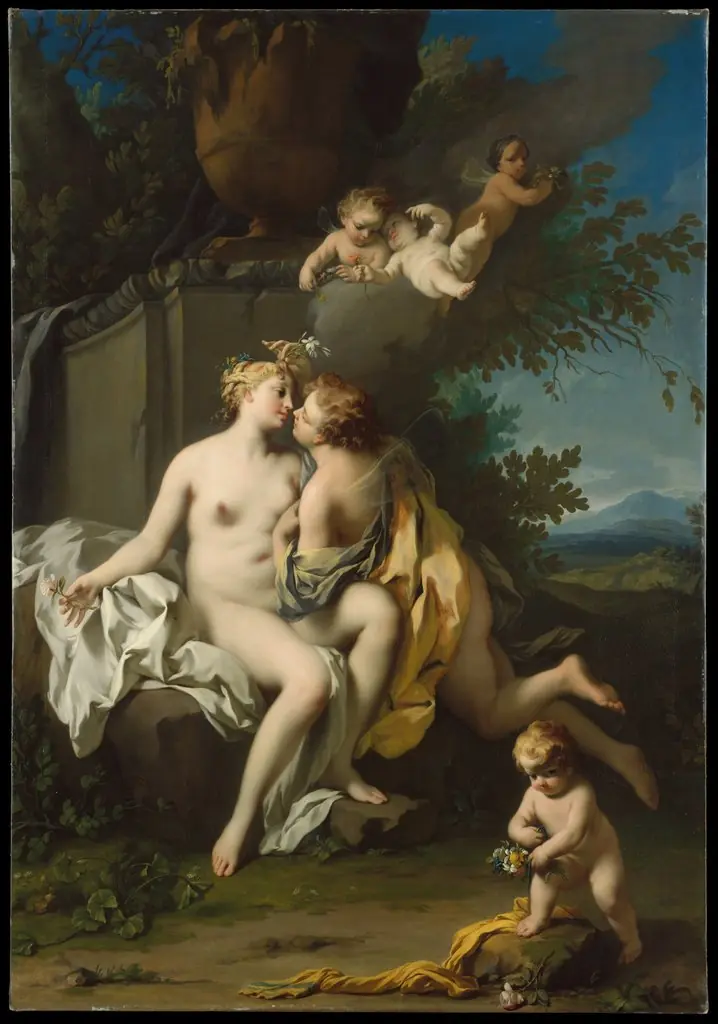
Pygmalion and Galatea is an oil painting by the Rococo painting artist Louis-Jean-François Lagrenée. It dates from 1791 and is held in the collection of the Detroit Institute of Arts.
About this work
Overview
Lagrenée, a respected academic painter who won the Grand Prix de Rome in 1749, rendered the myth of Pygmalion and Galatea with refined technique.
Painted in 1791 by Louis-Jean-François Lagrenée the Elder, this oil on canvas work illustrates a moment from Ovid’s Metamorphoses. Lagrenée, a respected academic painter who won the Grand Prix de Rome in 1749, rendered the myth of Pygmalion and Galatea with refined technique. The painting resides in the Detroit Institute of Arts, reflecting late 18th-century French neoclassical interests in classical narrative, even as rococo sensibilities linger in its delicate handling.
Subject & Meaning
The scene captures the instant Galatea, a statue carved by the sculptor Pygmalion, is animated by divine intervention. A child kneels to touch her foot, signaling the transition from inert form to living being. A winged figure, likely Cupid, holds a cloth nearby, suggesting the role of love in her awakening. The composition emphasizes wonder and fragility, underscoring the myth’s theme of artistic creation transcending material limits through emotional devotion.
Technique & Style
Lagrenée employed subtle chiaroscuro to model Galatea’s form, giving her skin a luminous, almost ethereal quality that distinguishes her from the darker, more solid background. The drapery is rendered with soft folds, enhancing the sense of movement and transition. The child’s yellow robe and red sash provide restrained color contrast, while the muted green and shadowed curtain deepen spatial depth without distracting from the central figures.
History & Provenance
Created near the end of Lagrenée’s career, the painting reflects his lifelong engagement with academic traditions and mythological subjects. He was admitted to the Académie royale in 1755 and maintained a consistent style through decades of changing artistic trends. The work entered the Detroit Institute of Arts’ collection in the 20th century, where it remains as a representative example of French academic painting from the late Enlightenment period.
Context
While neoclassicism was rising in France, emphasizing clarity and moral themes, Lagrenée retained elements of rococo grace in his treatment of myth. This painting bridges the two styles: its subject aligns with Enlightenment fascination with classical antiquity, yet its tender lighting and intimate scale echo earlier decorative traditions. The work reflects an artist navigating artistic shifts without fully abandoning his training or aesthetic preferences.
Legacy
Though not widely exhibited outside institutional collections, the painting exemplifies how French academic painters interpreted classical myths with technical precision and emotional nuance. Lagrenée’s approach influenced later generations of students at the Académie, preserving a mode of narrative painting that valued craftsmanship and mythological symbolism over overt drama or political allegory.
Artist & collection
Artist
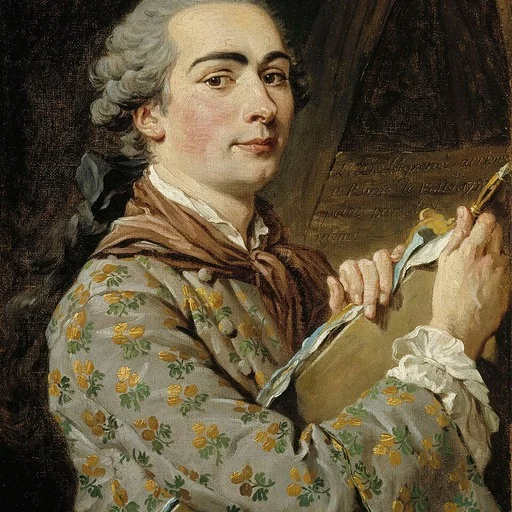
Louis-Jean-François Lagrenée (called Lagrenée l'aîné, Lagrenée the elder) (30 December 1724 – 19 June 1805) was a French rococo painter and student of Carle van Loo.