Artwork
Two Standing Figures (Study for A Game of Billiards)
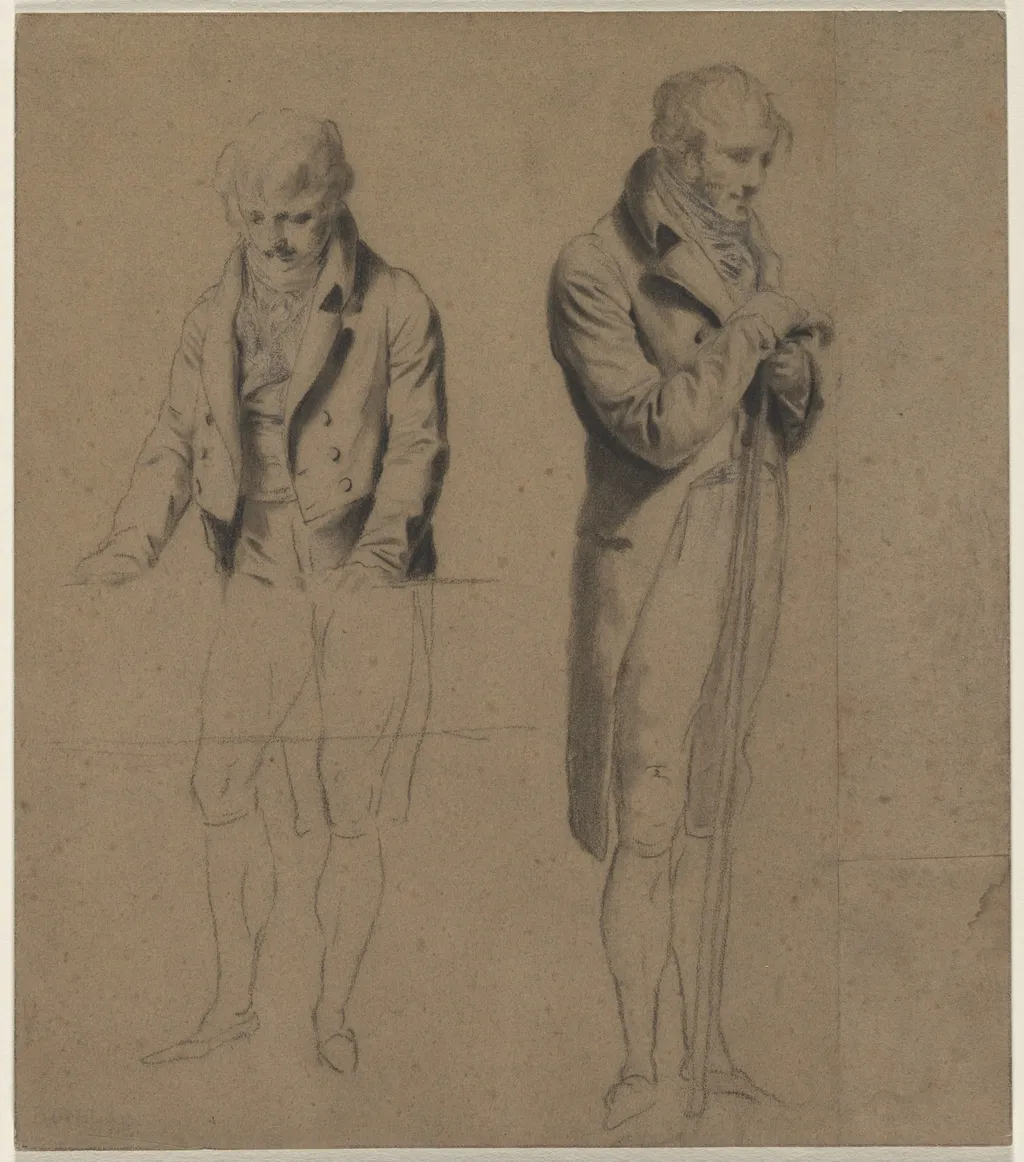
Two Standing Figures (Study for A Game of Billiards) is a drawing by the Romanticist artist Louis-Léopold Boilly. It dates from 1807 and is held in the collection of the Cleveland Museum of Art.
About this work
Look up Louis Léopold Boilly (French, 1761–1845) if you want to see how he turned these sketches into full paintings.
This painting shows two men standing side by side, dressed in early 1800s clothes. Their poses look casual but focused. One rests a hand on a surface. The other holds something small in his hand.
Boilly often sketched figures first like this before putting them in bigger scenes. He paid close attention to how people stood and held things. These studies helped him build lively crowd scenes later.
Look up Louis Léopold Boilly (French, 1761–1845) if you want to see how he turned these sketches into full paintings.
Overview
This drawing by Louis-Léopold Boilly is a preparatory study for his painting A Game of Billiards. It isolates two male figures later placed at opposite ends of the billiard table in the finished work. Boilly used such sketches to refine posture and spatial relationships before composing larger scenes, reflecting his methodical approach to capturing everyday Parisian life in the early 19th century.
Subject & Meaning
The two figures represent ordinary men engaged in a quiet, momentary pause—perhaps before or after a turn in a game of billiards. One rests a hand on a surface, the other holds a small object, suggesting attentiveness without theatricality. Their stillness contrasts with the animated crowd in the final painting, emphasizing Boilly’s interest in individual presence within social settings.
Technique & Style
Boilly employed light, rapid pencil strokes to define the figures’ upper bodies and clothing, while legs and the table are suggested with minimal lines. He focused intently on the play of light across fabric textures, particularly the sheen of wool suits, revealing his sensitivity to surface and form. The drawing’s economy of line underscores its function as a tool for observation rather than a finished work.
History & Provenance
Created around the turn of the 19th century, this study belongs to a series Boilly produced to support his genre paintings during the Revolutionary and Restoration eras. Though the drawing’s exact provenance is not fully documented, it aligns with his known practice of preserving preparatory sketches, many of which were retained in private collections and later entered public holdings.
Context
Boilly worked in a Paris increasingly defined by middle-class leisure and social observation. His genre scenes, including A Game of Billiards, responded to a growing public appetite for depictions of daily life. These studies reflect a shift from historical or mythological subjects toward intimate, contemporary moments, positioning Boilly as a key recorder of urban routines during a period of political and cultural transition.
Legacy
Boilly’s figure studies remain significant for their insight into his compositional process. They illustrate how he built complex scenes from careful observation of individual gestures and postures. Though less known than his finished paintings, these drawings reveal the disciplined, methodical approach that underpinned his enduring record of early 19th-century Parisian society.
Artist & collection
Artist
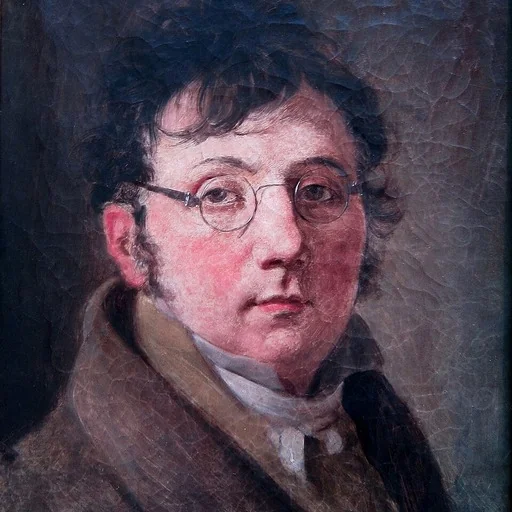
Louis-Léopold Boilly was a French painter and draftsman. A creator of popular portrait paintings, he also produced a vast number of genre paintings documenting French middle-class social life. His life and work spanned…

 Man in Cap and Coat
 A Gentleman
 Untitled
 Portrait of James Fraser
 A Gentleman Standing with His Arms Crossed
 Mr. Apperley ("Nimrod")
![Shepard Alonzo Mount, Age Twenty-Three [recto], by William Sidney Mount](https://artifactworldgallery.com/img/william-sidney-mount--shepard-alonzo-mount-age-twenty-three-recto--adf0b3e0763f0137-w320.webp) Shepard Alonzo Mount, Age Twenty-Three [recto]
Shepard Alonzo Mount, Age Twenty-Three [recto]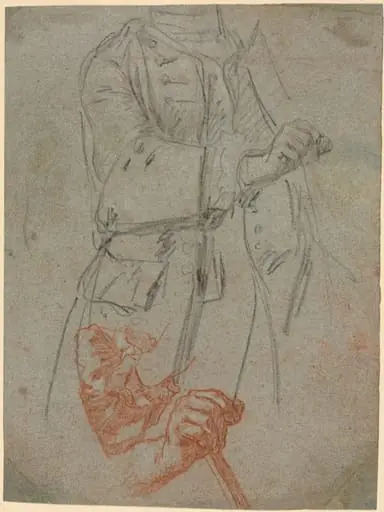 Studies of a Costume, Sleeve, and Hand
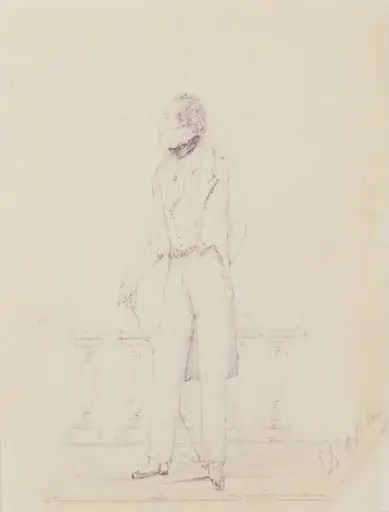 Lord Byron (1788-1824)
![Man with a Walking Stick, Seen in Profile [recto], by Hubert Robert](https://artifactworldgallery.com/img/hubert-robert--man-with-a-walking-stick-seen-in-profile-recto--9a2de0af8c4d35fd-w320.webp) Man with a Walking Stick, Seen in Profile [recto]
Man with a Walking Stick, Seen in Profile [recto]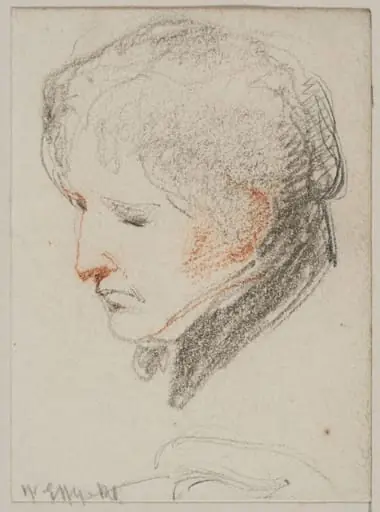 Portrait of William Etty
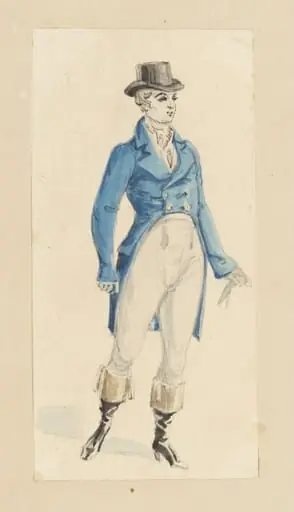 Untitled