Artwork
Portrait of James Fraser
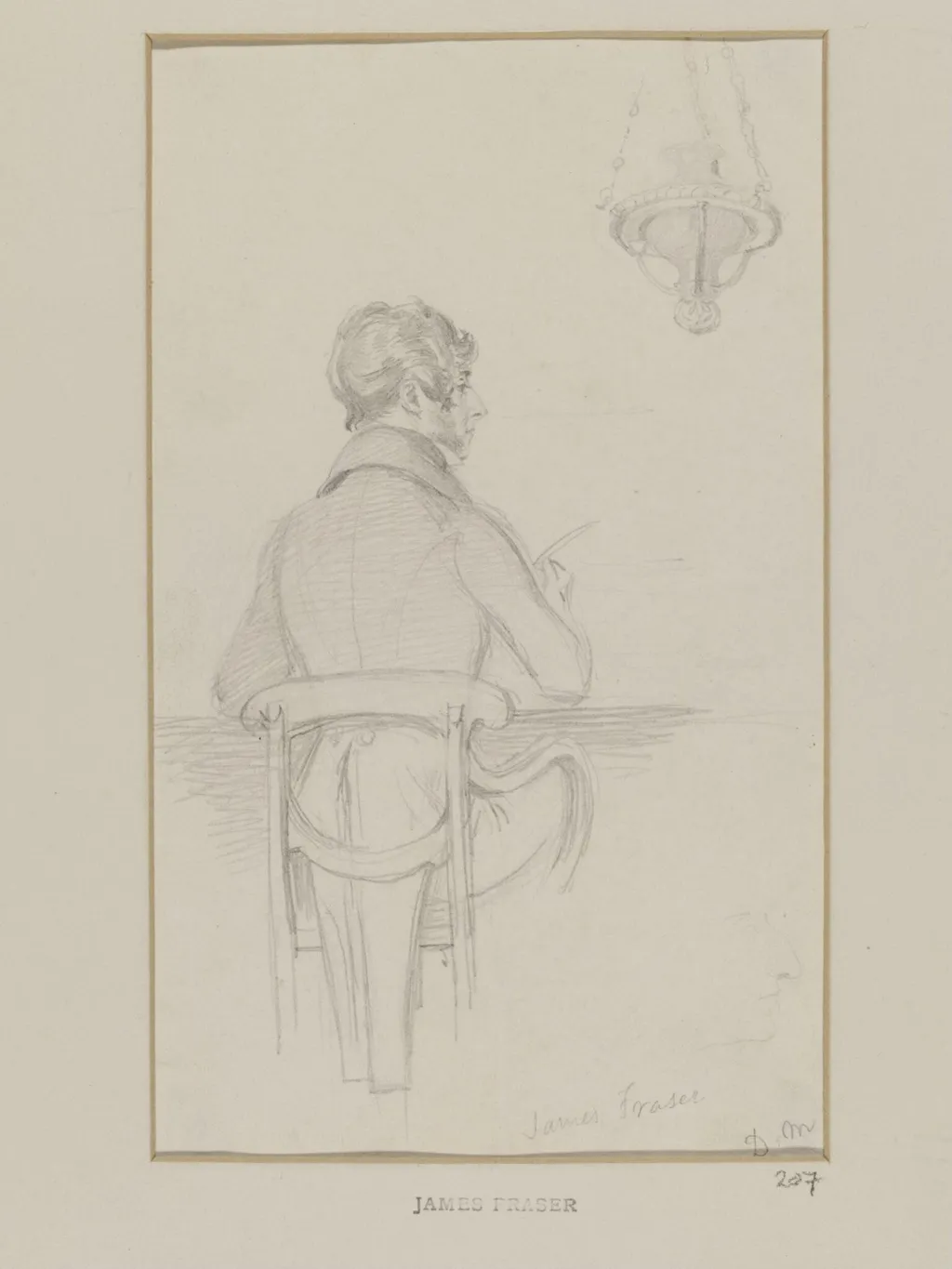
Portrait of James Fraser is a drawing by the Romanticist artist Daniel Maclise. It dates from 1825 and is held in the collection of the Victoria and Albert Museum.
About this work
Overview
The drawing is part of a curated collection of 390 works by Maclise and seven other artists, displayed in a structured arrangement of thirty framed pieces.
This pencil sketch by Daniel Maclise captures James Fraser in a moment of quiet concentration, seated at a desk with his back to the viewer. The drawing is part of a curated collection of 390 works by Maclise and seven other artists, displayed in a structured arrangement of thirty framed pieces. Fraser’s name and the artist’s initials are inscribed directly on the mount, confirming authorship and subject. The sketch’s informal quality suggests it was made as a preparatory study rather than a formal portrait.
Subject & Meaning
James Fraser was a publisher who supported Daniel Maclise during the 1830s by printing his drawings. This portrait does not aim to glorify but to record a moment of professional engagement—Fraser is shown engaged with paper and tool, suggesting his role as an editor or printer. The inclusion of his name on the mount reinforces his identity as both subject and patron. The sketch’s intimacy reflects a working relationship rather than public acclaim.
Technique & Style
Maclise employed light, fluid pencil strokes to suggest form without heavy shading. The coat is rendered with loose, rapid lines, and the chair is simplified into sturdy contours. A faint, almost incidental sketch of a chandelier in the upper corner hints at the room’s interior without detail. The overall approach is observational and economical, prioritizing gesture over finish, characteristic of preparatory studies in 19th-century British drawing practice.
History & Provenance
The drawing belongs to a larger group of 390 sketches assembled by Maclise and contemporaries, likely compiled for archival or exhibition purposes. It was displayed in a pillar-mounted frame system, indicating a deliberate curatorial intent. The collection featured portraits of prominent Victorian figures, positioning Fraser among intellectual and cultural elites. Its survival within this group suggests it was valued as part of a documented network of artistic and publishing relationships.
Context
In the 1830s, British artists increasingly relied on publishers to disseminate their work, creating symbiotic relationships between creators and printers. Fraser’s role as a publisher placed him at the intersection of art and print culture. Maclise’s sketches of contemporaries like Disraeli and Faraday reflect a broader effort to visually map the intellectual circles of the time, with Fraser included as a key enabler of that cultural output.
Legacy
Though not a finished portrait, this sketch endures as evidence of the collaborative nature of Victorian art production. It illustrates how artists documented their professional networks through informal drawings, preserving relationships that sustained their careers. The work contributes to a broader understanding of how artistic identity was shaped not only by public recognition but by behind-the-scenes patronage and print culture.
Artist & collection
Artist
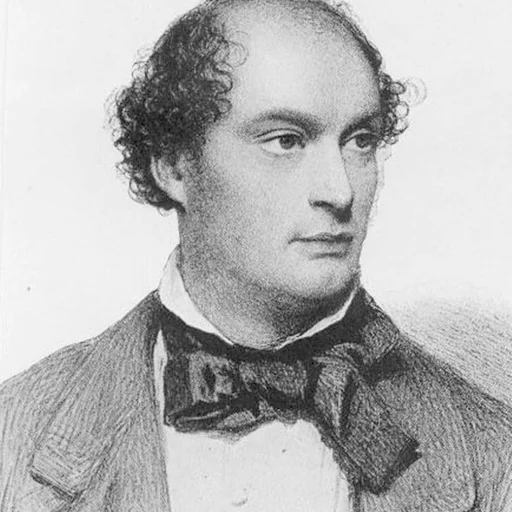
Daniel Maclise (25 January 1806 – 25 April 1870) was an Irish history painter, literary and portrait painter, and illustrator, who worked for most of his life in London, England.



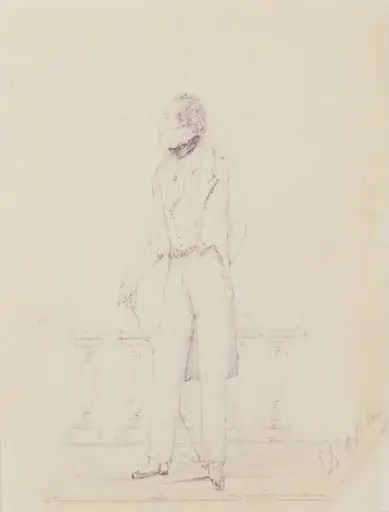 Lord Byron (1788-1824)
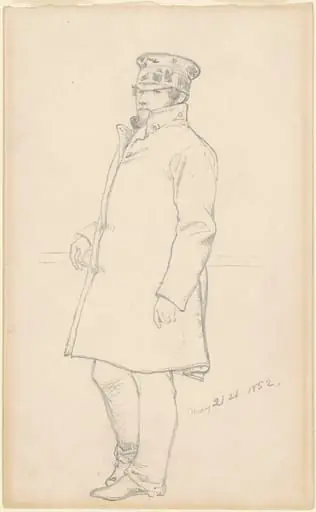 Man in Cap and Coat
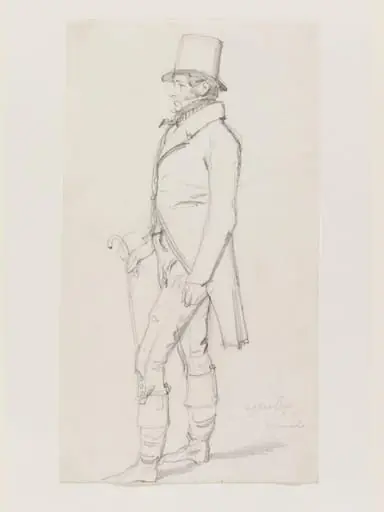 Mr. Apperley ("Nimrod")
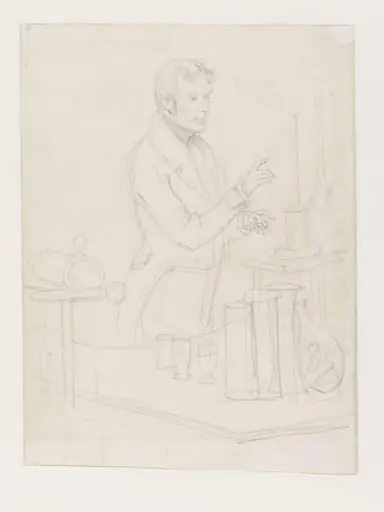 Michael Faraday
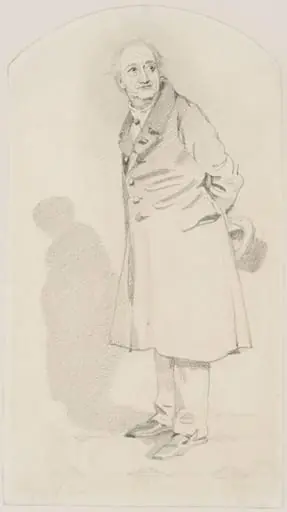 Johann Wolfgang von Goethe
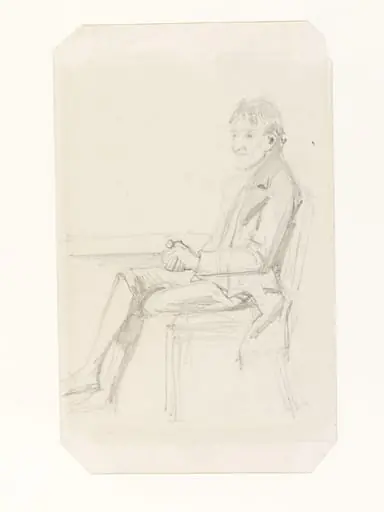 Portrait of John Soane
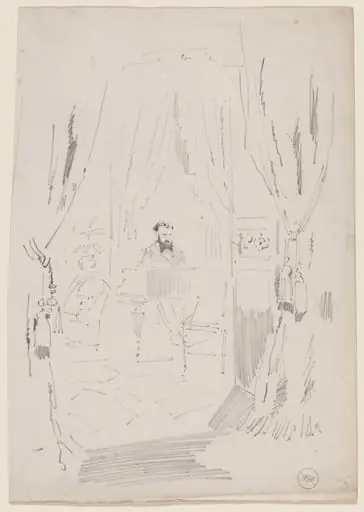 The Salon
![Shepard Alonzo Mount, Age Twenty-Three [recto], by William Sidney Mount](https://artifactworldgallery.com/img/william-sidney-mount--shepard-alonzo-mount-age-twenty-three-recto--adf0b3e0763f0137-w320.webp) Shepard Alonzo Mount, Age Twenty-Three [recto]
Shepard Alonzo Mount, Age Twenty-Three [recto]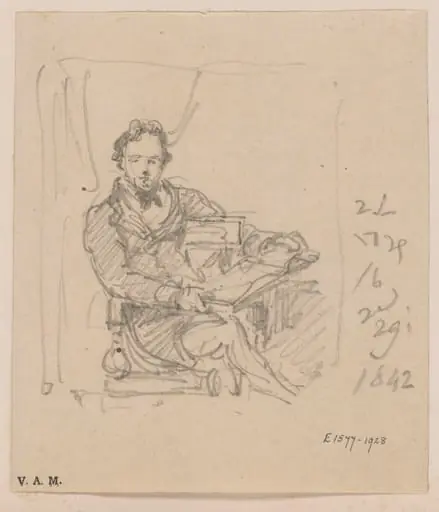 A portrait of John Dent
 Man Smoking a Pipe
 Adolphe or the Sad Young Man (Adolphe ou le jeune homme triste)
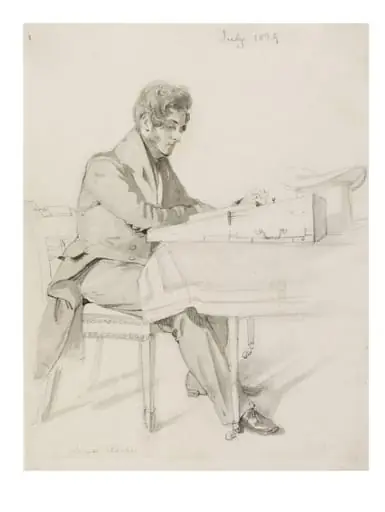 Portrait of James Roche