Artwork
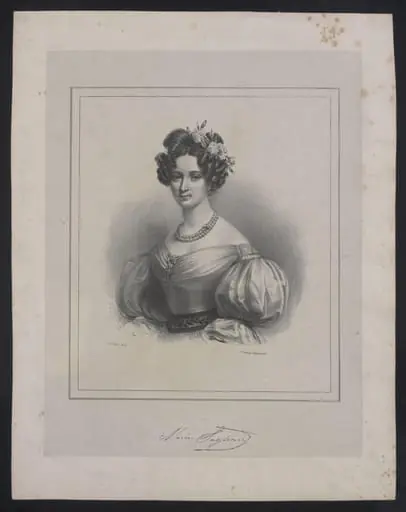
Portrait of Mademoiselle Sontag
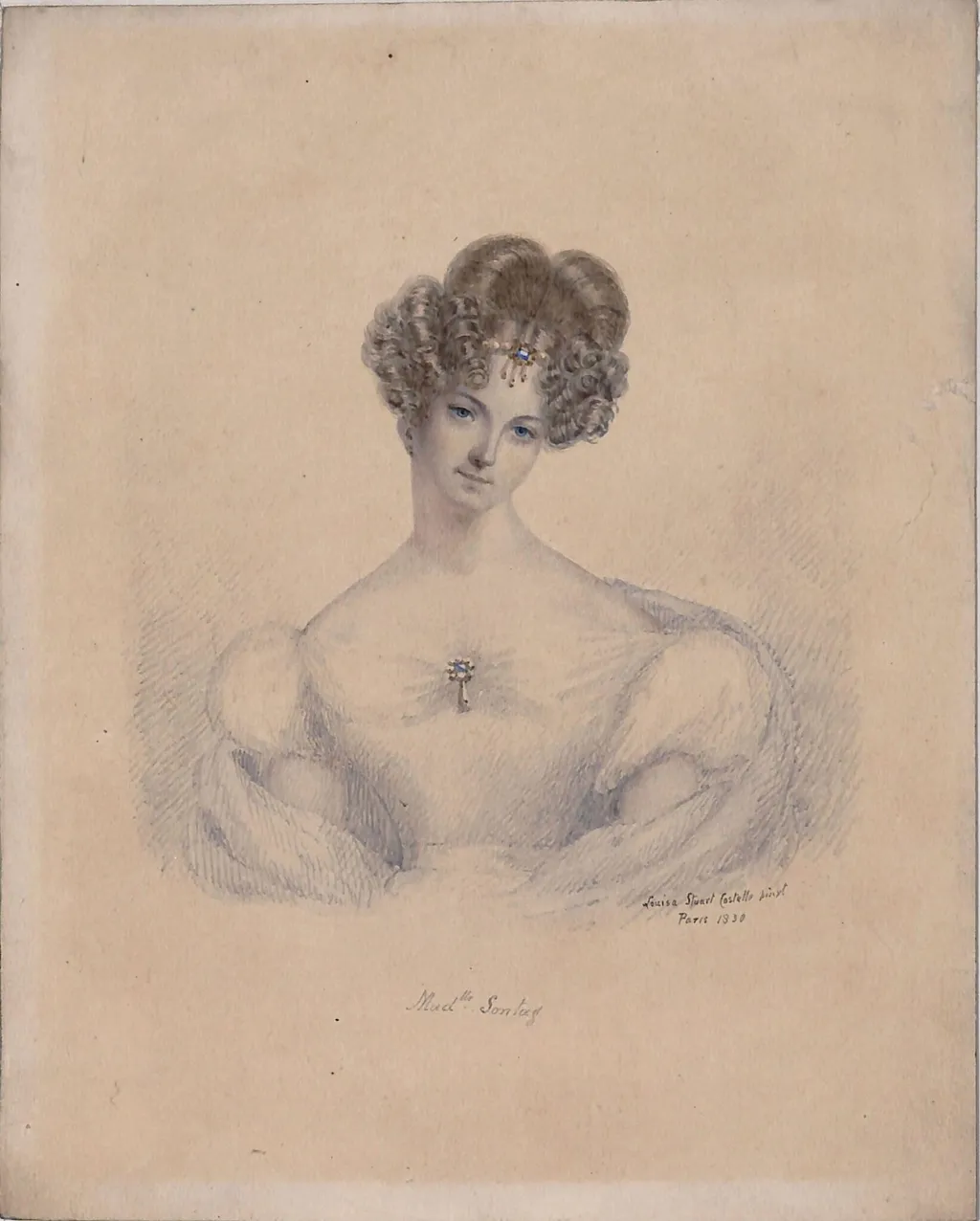
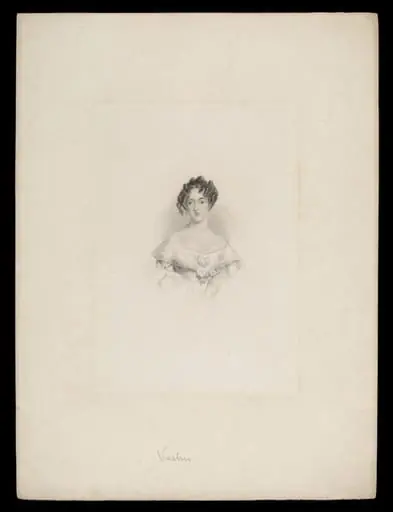
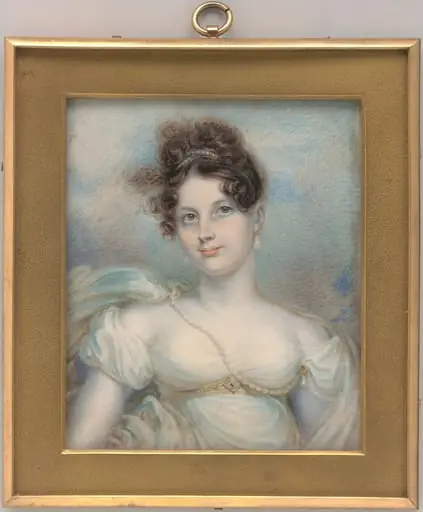
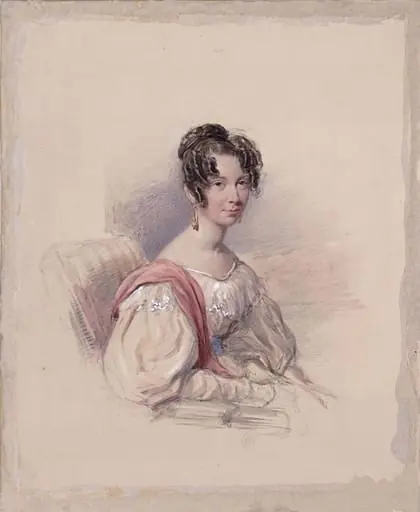
Portrait of Mademoiselle Sontag is a watercolor work on paper by the British Romanticist artist Louisa Stuart Costello. It dates from 1830 and is held in the collection of the Victoria and Albert Museum.
About this work
Overview
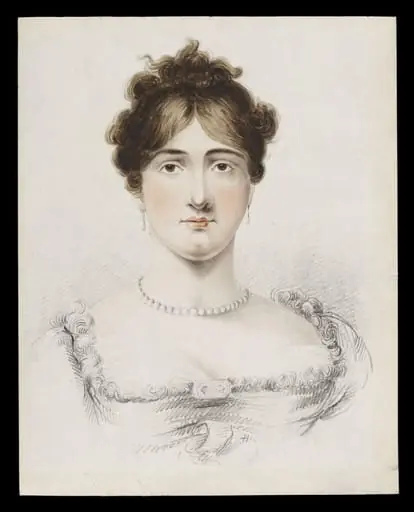
This 1830 watercolour portrait depicts Mademoiselle Sontag, a noted singer of the era, rendered in delicate washes and fine pencil lines by Louisa Stuart Costello. The work is signed and dated by the artist, with the sitter’s name inscribed. Executed on paper, it captures the subject from the chest upward, framed by a softly blended background that enhances the subtlety of the medium.
Subject & Meaning
Mademoiselle Sontag, a celebrated soprano of French origin active in London, is portrayed with quiet composure, her gaze direct but unemotional.
Mademoiselle Sontag, a celebrated soprano of French origin active in London, is portrayed with quiet composure, her gaze direct but unemotional. Her restrained expression and refined attire suggest a public persona shaped by performance and decorum. The modest adornment in her hair and the single brooch at her neckline convey elegance without ostentation, reflecting the cultivated image expected of female artists and performers of the time.
Technique & Style
Costello employed watercolour with precision, layering translucent washes to model the sitter’s features and fabric textures. Pencil underdrawing defines contours with clarity, while the background is softly graded to avoid distraction. The absence of strong chiaroscuro results in a gentle, diffused light, characteristic of intimate portrait studies in watercolour, emphasizing delicacy over dramatic contrast.
History & Provenance
The portrait was completed in 1830 during Costello’s period of active portraiture in England. It remained in private hands for much of the 19th and 20th centuries, with documented ownership tracing to British collectors of 19th-century watercolours. Its survival with the artist’s signature and inscription suggests it was valued as a personal record rather than a commercial commission.
Context
In the 1830s, watercolour portraiture was a respected medium among amateur and professional women artists, offering a refined alternative to oil. Sontag’s prominence as a stage performer made her a desirable subject for artists documenting cultural figures. Costello, herself a writer and artist, belonged to a network of women who used art to engage with public life while navigating societal constraints.
Legacy
The portrait endures as a quiet testament to the role of women in shaping cultural representation during the early Victorian era. Though not widely exhibited, it contributes to the growing recognition of Costello’s skill and the significance of watercolour as a vehicle for personal and professional portraiture among female artists of the period.
Artist & collection
Artist