Artwork
Untitled
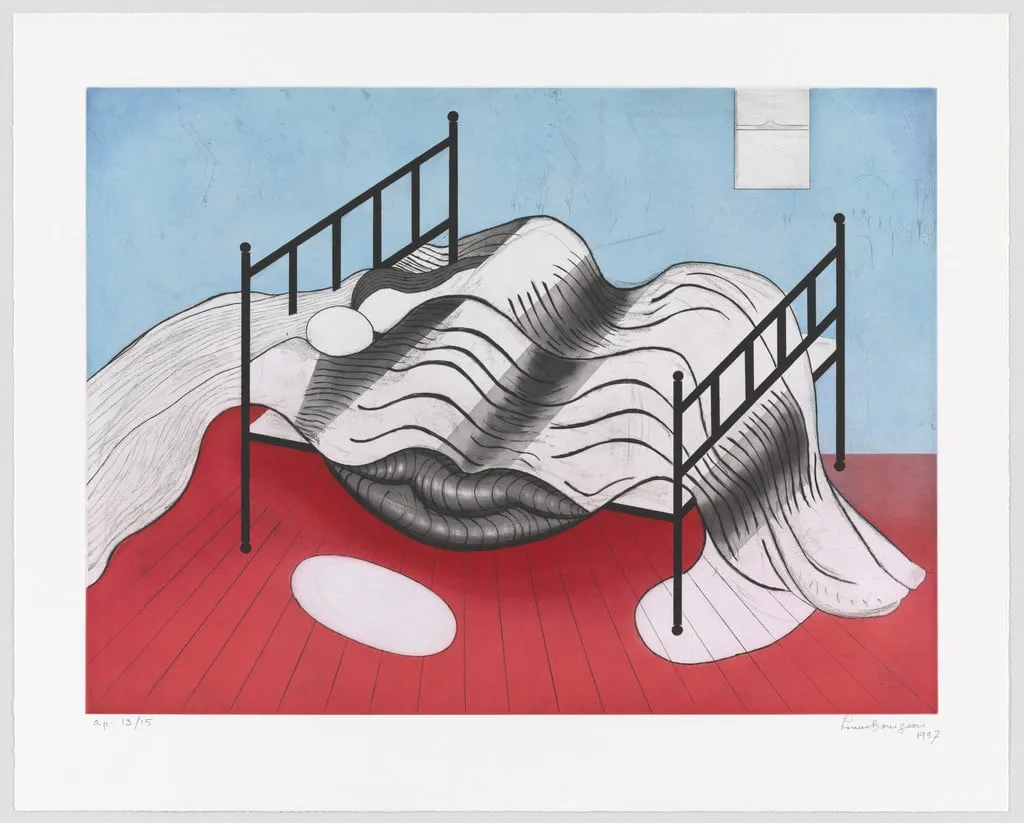
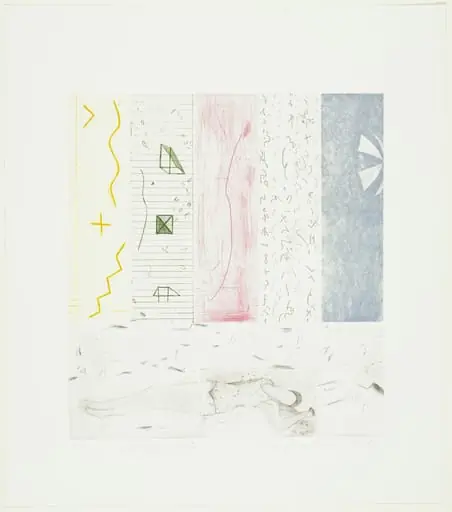
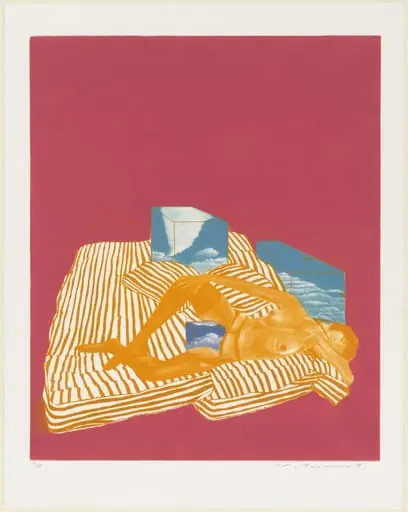
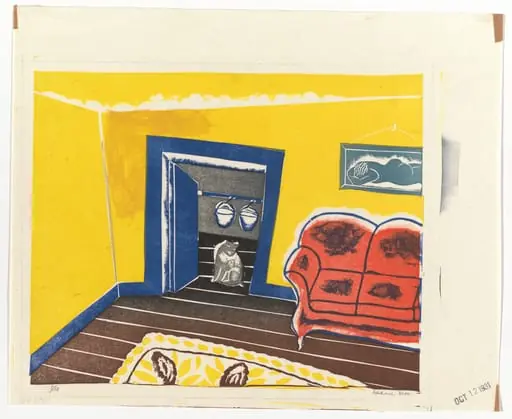
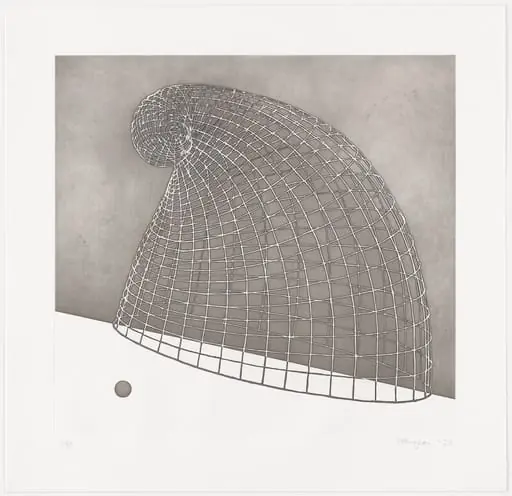
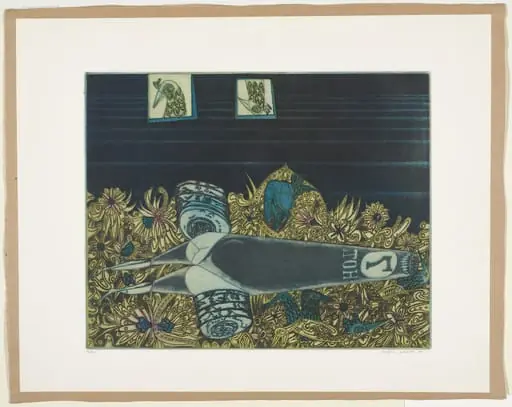
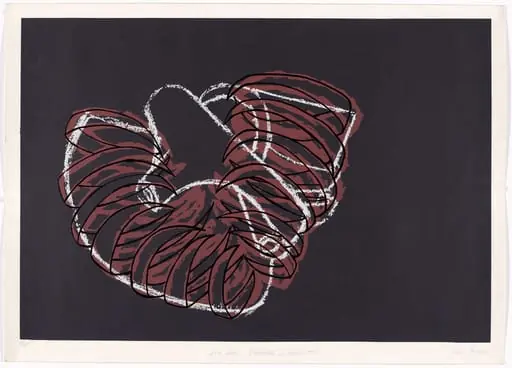
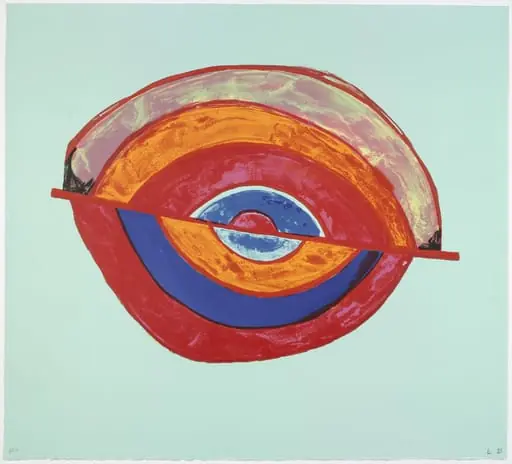
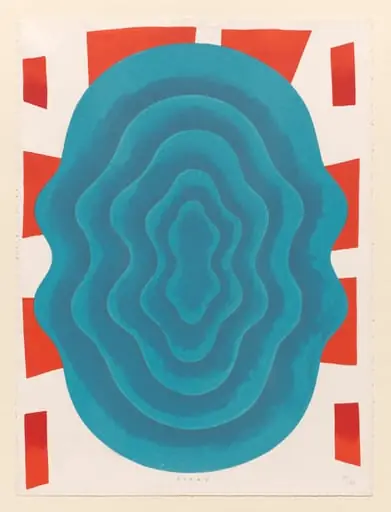
Untitled is an ink print by Louise Bourgeois. It dates from 1997 and is held in the collection of the Museum of Modern Art.
About this work
If you like this, look up the technique of etching, drypoint, aquatint to see how ink and metal plates create these smudgy, intimate lines.
You see two soft, pink lips floating on a pale background. They’re slightly parted, as if about to speak or kiss.
Bourgeois made this in 1997, late in her life, when she often used body parts to talk about memory and desire. The title, *Le Lit Gros Édredon*, means "the big quilt bed"—a cozy, private space. The lips feel both tender and unsettling, like a dream you can’t quite remember.
If you like this, look up the technique of etching, drypoint, aquatint to see how ink and metal plates create these smudgy, intimate lines.
Overview
Created in 1997, this untitled print by Louise Bourgeois combines etching, aquatint, drypoint, engraving, and roulette to produce a delicate yet psychologically charged image. It resides in The Museum of Modern Art’s collection and reflects the artist’s late-career focus on intimate bodily forms. The layered techniques allow for subtle tonal variations, enhancing the work’s emotional ambiguity and tactile presence.
Subject & Meaning
Two softly rendered pink lips float against a pale ground, slightly parted as if on the verge of speech or contact. The title, *Le Lit Gros Édredon*—'the big quilt bed'—evokes a private, domestic space associated with rest and vulnerability. The lips suggest desire, memory, or unspoken words, embodying Bourgeois’s recurring engagement with the body as a vessel for unconscious emotion and childhood residue.
Technique & Style
Bourgeois employed multiple intaglio methods to achieve a range of textures: etching for fine lines, aquatint for soft gradients, drypoint for rich, fuzzy marks, and roulette for stippled detail. These techniques produce a surface that feels both intimate and unstable, mirroring the psychological tension in the imagery. The absence of sharp contours enhances the dreamlike, ephemeral quality of the form.
History & Provenance
This work was made during the final decades of Bourgeois’s career, a period marked by prolific printmaking alongside her sculptural practice. It entered The Museum of Modern Art’s collection shortly after its creation, reflecting institutional recognition of her contributions to postwar printmaking. The piece aligns with her broader exploration of personal history as artistic material, rooted in her French-American identity and lifelong psychological inquiry.
Context
Bourgeois’s work from this era often revisited childhood memories, particularly those tied to family, gender, and emotional neglect. While associated with abstract expressionism through thematic intensity and emotional rawness, her prints diverge in their figurative focus. The use of domestic motifs and bodily fragments situates her within a broader feminist and psychoanalytic discourse in late 20th-century art.
Legacy
This print exemplifies Bourgeois’s ability to transform simple forms into complex emotional symbols. Her late prints, including this one, influenced subsequent generations of artists working with personal narrative and bodily imagery. The integration of traditional print techniques with deeply subjective content expanded the expressive potential of the medium beyond formalist conventions.
Artist & collection
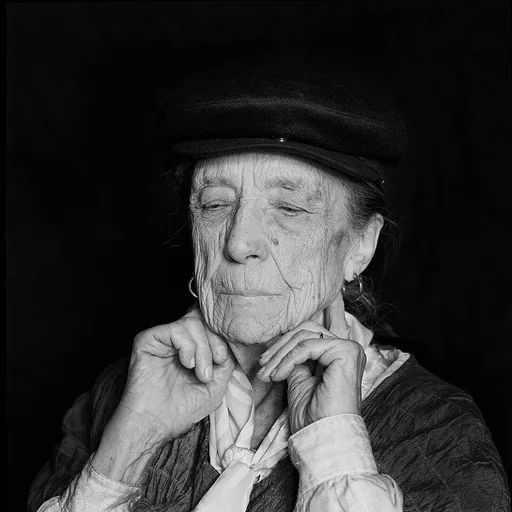
Artist
Louise Joséphine Bourgeois (French: ; 25 December 1911 – 31 May 2010) was a French-American artist.