Artwork
H Beard Print Collection
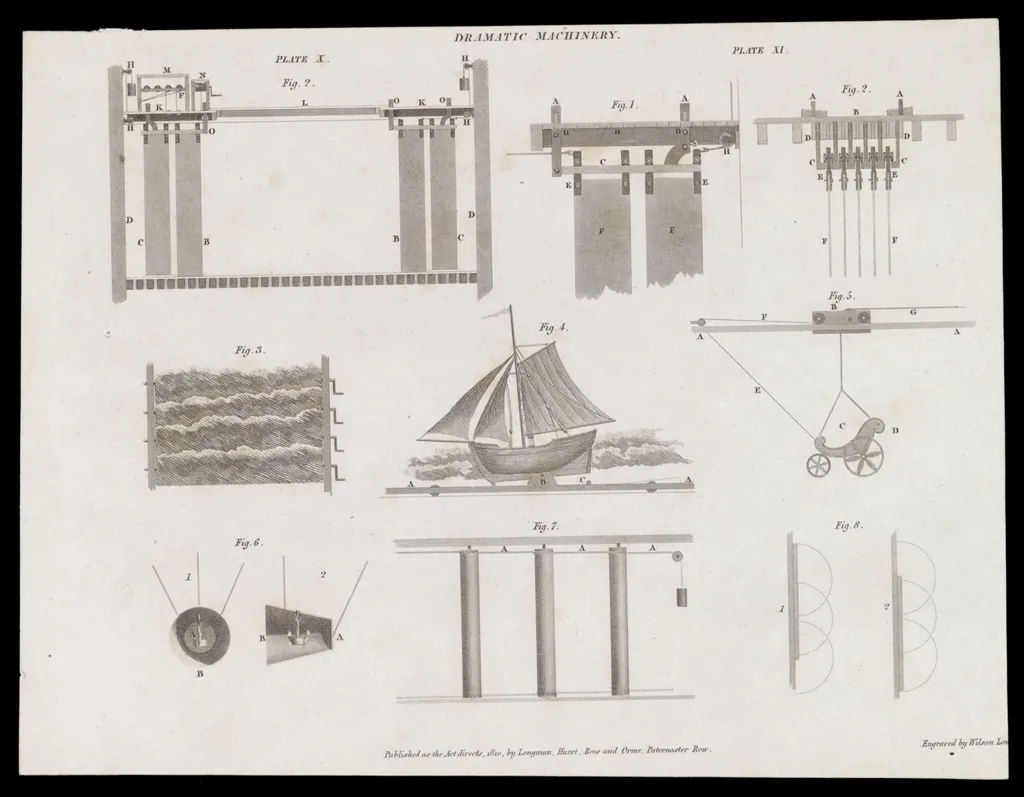
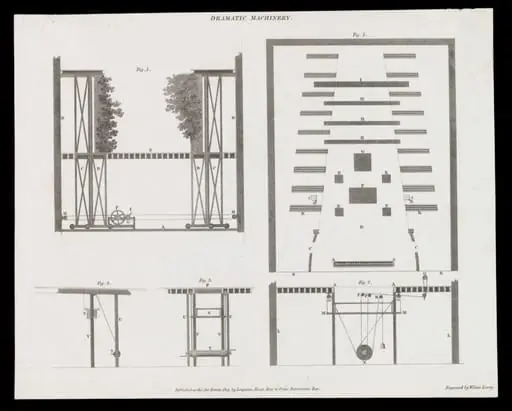
H Beard Print Collection is a print by the Romanticist artist Wilson Lowry. It dates from 1810 and is held in the collection of the Victoria and Albert Museum. This print, published in 1810 by Longman, Hurst, Rees & Orme, illustrates the mechanical systems used in 19th-century theater.
About this work
Overview
This print, published in 1810 by Longman, Hurst, Rees & Orme, illustrates the mechanical systems used in 19th-century theater.
This print, published in 1810 by Longman, Hurst, Rees & Orme, illustrates the mechanical systems used in 19th-century theater. It presents a detailed view of stage equipment such as pulleys, traps, and flying rigs, offering a technical record of how theatrical effects were achieved before modern automation. The image serves as both documentation and a glimpse into the hidden infrastructure of performance.
Subject & Meaning
The print focuses on the apparatus behind stage illusions—elevators, counterweights, and rigging—that enabled dramatic transformations in live performance. Rather than depicting actors or scenes, it highlights the labor and engineering underpinning theatrical spectacle. This shift in focus underscores the growing recognition of stagecraft as a specialized discipline, separate from performance itself.
Technique & Style
Rendered in fine line engraving, the image employs precise, measured lines to convey the complexity of mechanical components. Shading is minimal, prioritizing clarity over atmosphere. The composition is diagrammatic, arranging elements with functional order rather than artistic flourish, reflecting its purpose as an instructional or reference illustration rather than a decorative piece.
History & Provenance
Produced by the London publishing firm Longman, Hurst, Rees & Orme, the print was likely distributed to theater professionals, architects, or enthusiasts interested in stage design. Its survival in the H. Beard Print Collection suggests it was preserved as part of a broader archive documenting theatrical history, possibly used for study or reference by later generations.
Context
In the early 1800s, British theater experienced rapid innovation in stage technology, driven by public demand for more elaborate spectacles. This print emerged during a period when mechanization was transforming performance, allowing for flying characters, sudden scene changes, and realistic effects. Such illustrations helped standardize and disseminate best practices across regional theaters.
Legacy
The print remains a valuable record of pre-industrial stage engineering, offering insight into the physical conditions of 19th-century performance. It contributes to scholarly understanding of how technical knowledge was communicated before photographic documentation. Today, it aids historians in reconstructing lost theatrical practices and appreciating the ingenuity of pre-modern stagecraft.
Artist & collection
Artist
Wilson Lowry carved his living right out of London’s streets. He rented a tiny attic above a hat shop and turned it into a print factory, cranking out book illustrations from dawn till dark. If you’ve ever opened an old…

 Gravure en Taille Douce: suite de la pl. I
 Imprimerie en Taille Douce, Devéloppement de la Presse: pl. II
 Gravure en Bois, Outils: pl. II
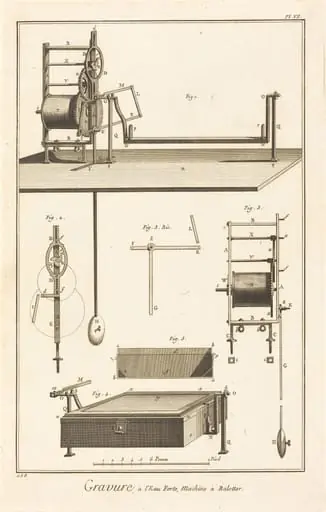 Gravure à l'Eau Forte, Machine à Balotter: pl. VI
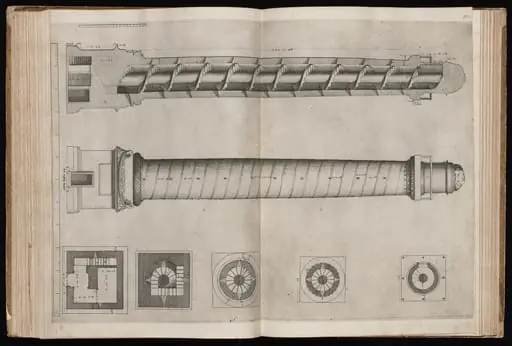 Section and Elevation of Trajan's Column
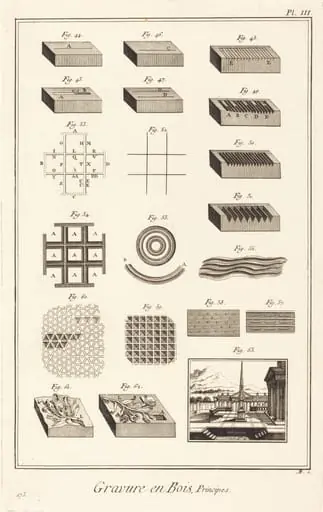 Gravure en Bois, Principes: pl. III
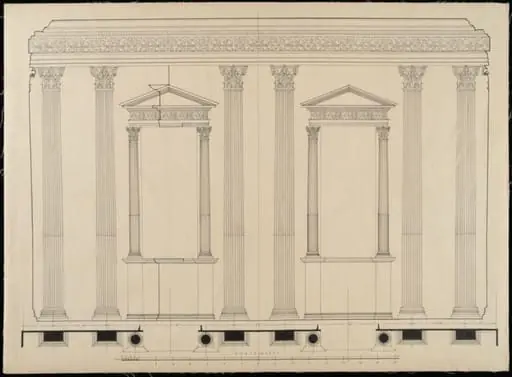 Elevation of wall showing windows.
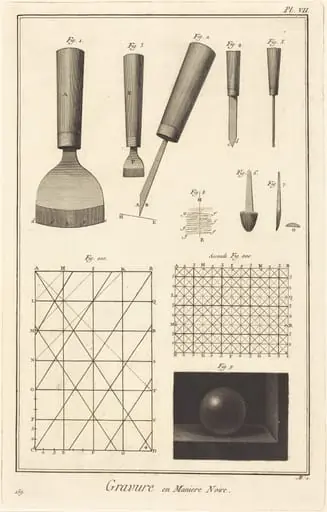 Gravure en Maniere Noire: pl. VII
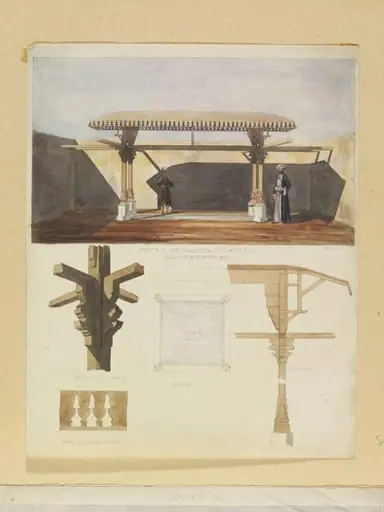 Fountain for Ablution in Cortile of Mosque of Mourad Bey
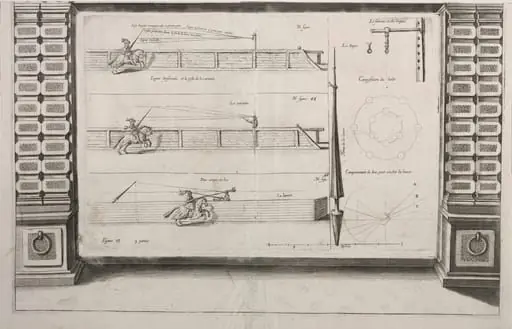 Diagram for Lance Practice
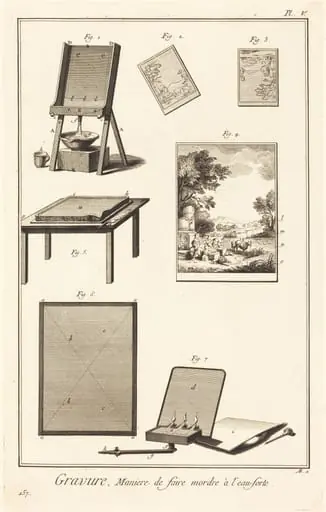 Gravure, Maniere de faire mordre à l'eau-forte: pl. V
 H Beard Print Collection