Artwork
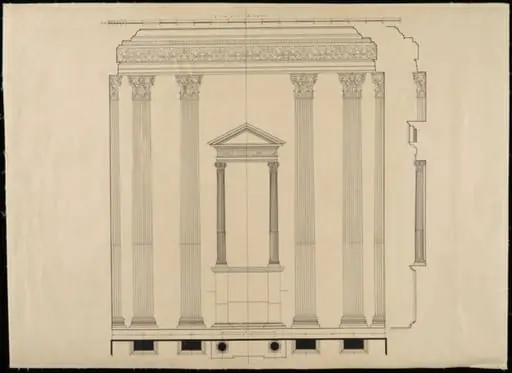
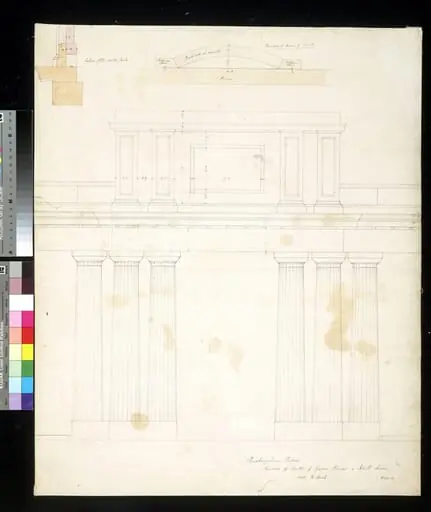
Elevation of wall showing windows.
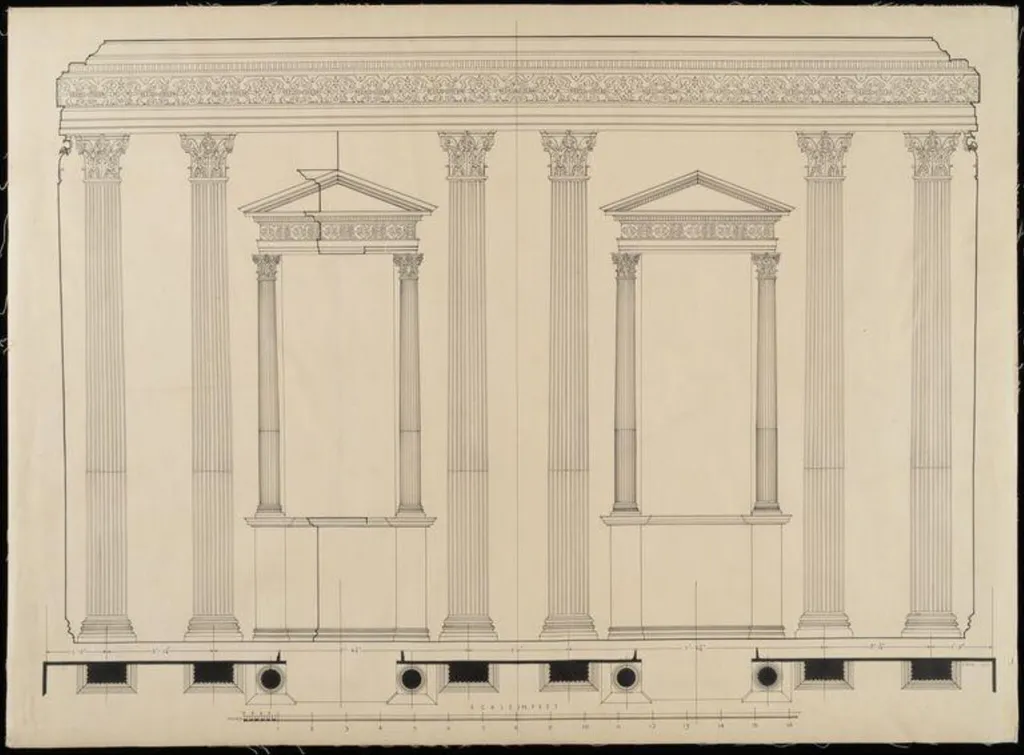
Elevation of wall showing windows. is a drawing by Joseph Jago. It dates from 1932 and is held in the collection of the Victoria and Albert Museum.
About this work
Overview
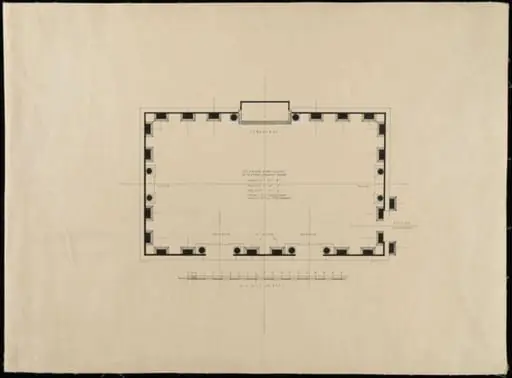
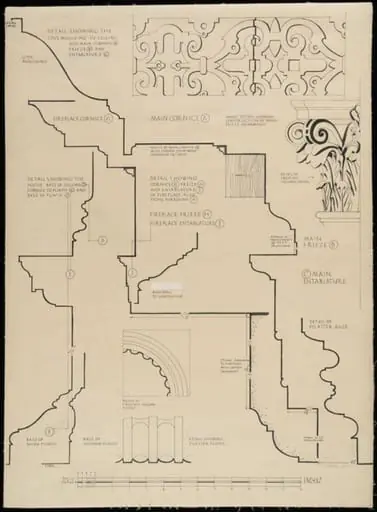
This 1932 architectural drawing by Joseph Jago depicts a measured elevation of a wall from the Haynes Grange Room at the Victoria and Albert Museum.
This 1932 architectural drawing by Joseph Jago depicts a measured elevation of a wall from the Haynes Grange Room at the Victoria and Albert Museum. Rendered in precise black-and-white lines, it functions as a technical record rather than an expressive work. The composition emphasizes structural alignment, with columns, lintels, and window openings arranged with geometric clarity, suggesting its use in documentation or restoration planning.
Subject & Meaning
The drawing captures a specific architectural feature within the museum’s historic interior: a wall divided by paired columns supporting flat horizontal elements, each flanked by windows featuring circular motifs at their centers. Its purpose is not decorative but informational—intended to convey exact spatial relationships and design details for preservation or study, reflecting the museum’s commitment to recording its own collections.
Technique & Style
Executed with sharp, uniform lines and no shading, the drawing employs a drafting style typical of architectural blueprints. Proportions are carefully scaled, and elements are aligned with mathematical precision. The absence of texture or ornamentation directs focus to structural composition, underscoring its role as a functional record rather than an artistic interpretation.
History & Provenance
Created in 1932, the drawing likely served as part of the Victoria and Albert Museum’s internal documentation efforts during a period of active collection curation and architectural assessment. It remains in the museum’s archives, preserved as evidence of its ongoing engagement with the physical fabric of its historic spaces and the professional practices of its staff at the time.
Context
In the early 1930s, institutions like the V&A increasingly relied on detailed architectural drawings to catalog and maintain their buildings. Jago’s work reflects this institutional shift toward systematic recording, aligning with broader trends in heritage conservation where accuracy and reproducibility took precedence over stylistic flourish.
Legacy
Though not publicly exhibited, the drawing contributes to the museum’s archival record of its own architecture. It stands as an example of the quiet, essential work behind heritage preservation—technical drawings that ensure historical spaces are understood and maintained with fidelity across generations.
Artist & collection
Artist
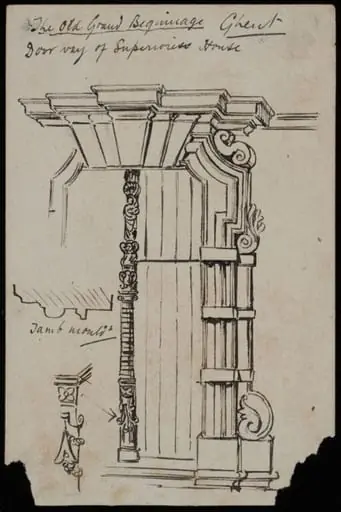
Joseph Jago spent years locked in a single house, sketching every inch of it—walls, windows, moldings—like a detective tracing invisible lines.

![The Erectheum, West Elevation [left half], by John Russell Pope](https://artifactworldgallery.com/img/john-russell-pope--the-erectheum-west-elevation-left-half--10b9b48e87f30a0f-w320.webp)