Artwork
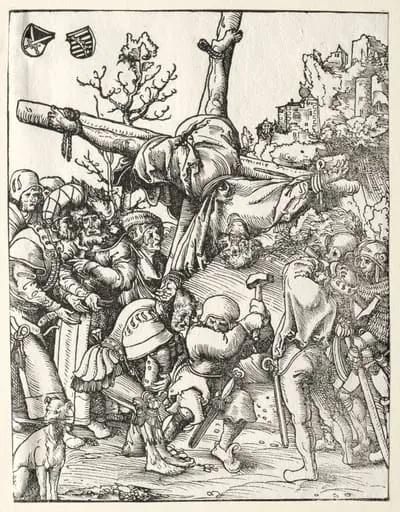
Martyrdom of St. Bartholomew
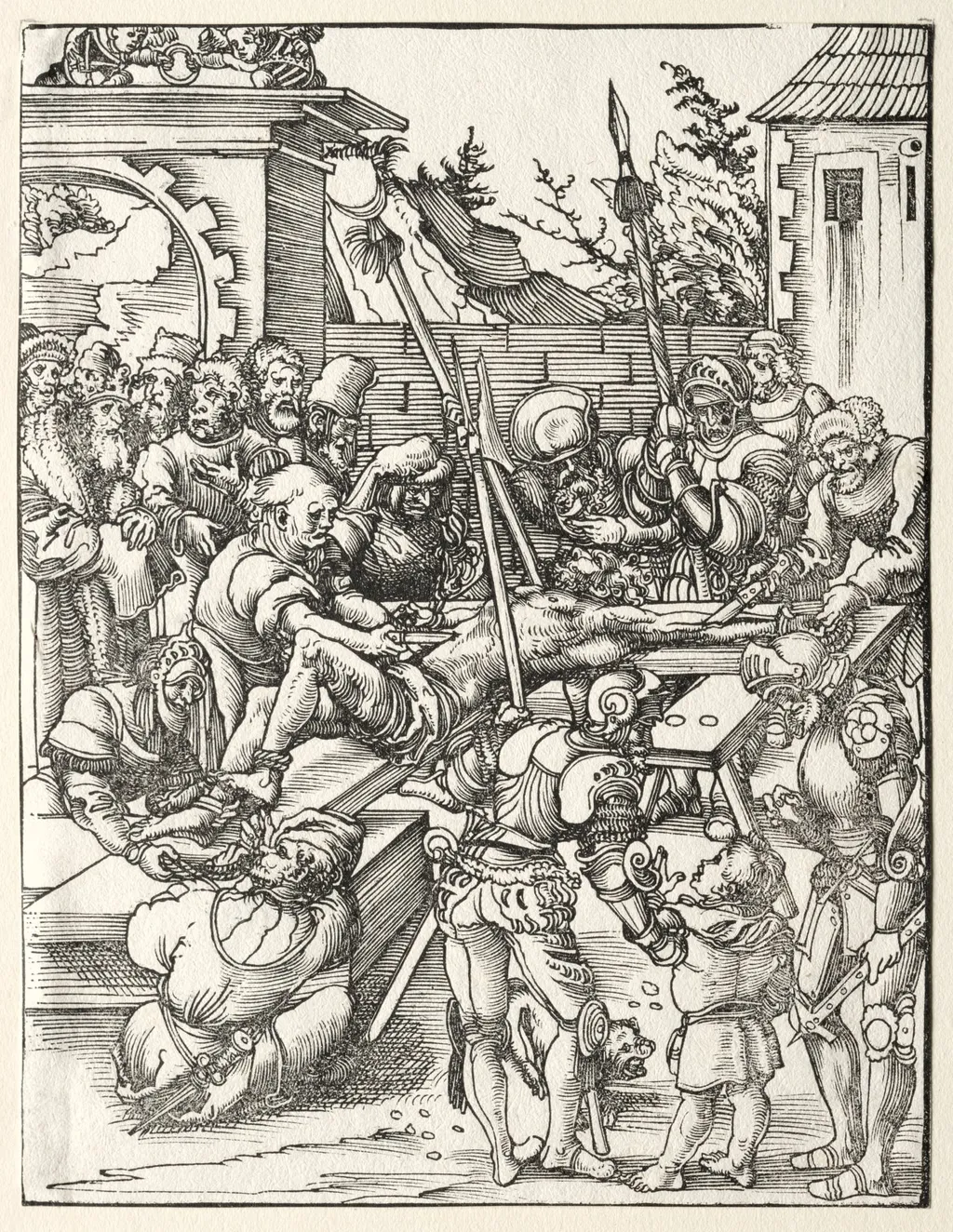
Martyrdom of St. Bartholomew is a print by Lucas Cranach the Elder. It dates from 1522 and is held in the collection of the Cleveland Museum of Art.
About this work
Overview
His work during this period often translated theological debates into visual form, blending traditional iconography with emerging Protestant sensibilities.
Created around 1522, this print by Lucas Cranach the Elder illustrates the execution of Saint Bartholomew, one of Christ’s apostles. As court painter to the Saxon electors, Cranach was deeply embedded in the political and religious currents of early Reformation Germany. His work during this period often translated theological debates into visual form, blending traditional iconography with emerging Protestant sensibilities.
Subject & Meaning
The scene portrays Saint Bartholomew’s martyrdom by flaying, a punishment rooted in medieval hagiography. Rather than emphasizing spectacle, Cranach presents the moment with restrained gravity, focusing on the saint’s composure amid violence. This treatment aligns with Reformation ideals that favored sober, morally instructive imagery over ornate Catholic devotion, redirecting focus from miraculous intervention to steadfast faith.
Technique & Style
Cranach employed sharp linear clarity and flattened spatial depth, characteristic of his graphic style. Figures are rendered with angular contours and minimal modeling, enhancing the print’s immediacy. The composition avoids dramatic chiaroscuro, instead relying on precise outlines and rhythmic repetition of forms to guide the viewer’s eye—an approach suited to woodcut reproduction and Protestant emphasis on legibility.
History & Provenance
The print emerged during a period when Cranach’s workshop produced numerous religious images for widespread distribution. Likely made for private or devotional use, it circulated among Protestant communities in Saxony and beyond. Its survival in multiple impressions suggests it was part of a broader effort to visually reinforce Reformation teachings through accessible media.
Context
In the early 1520s, the Protestant Reformation challenged the Catholic Church’s use of saints and relics. Cranach’s depiction of Bartholomew’s death, while retaining the saint’s identity, strips away traditional glorification. The image reflects a shift toward biblical narrative over intercessory veneration, aligning with Luther’s call to center faith on scripture rather than saintly miracles.
Legacy
Cranach’s treatment of martyrdom influenced later Protestant visual culture by demonstrating how sacred stories could be rendered without excess. His restrained style became a model for religious prints across northern Europe, helping to define a new aesthetic where clarity and moral weight replaced ornamental piety. The work remains a testament to art’s role in shaping doctrinal identity during a time of religious upheaval.
Artist & collection
Artist
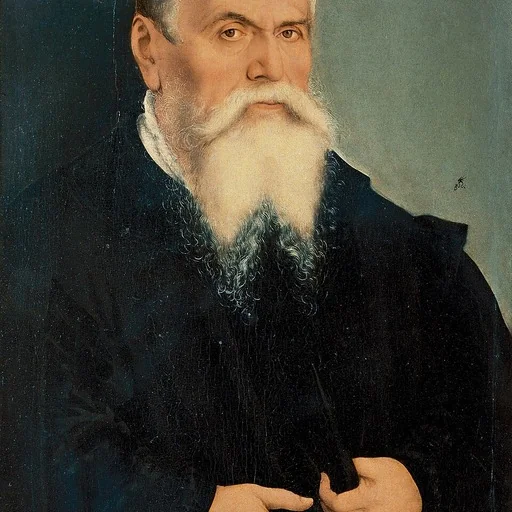
Lucas Cranach the Elder was a German Renaissance painter and printmaker in woodcut and engraving.