Artwork
Adam
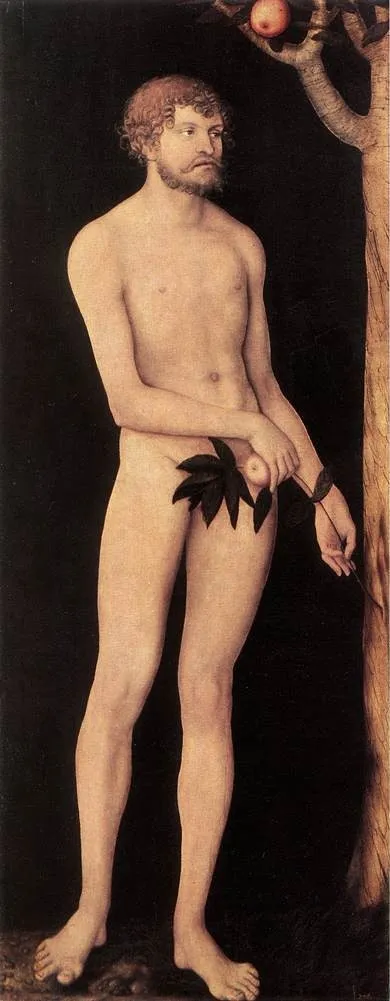
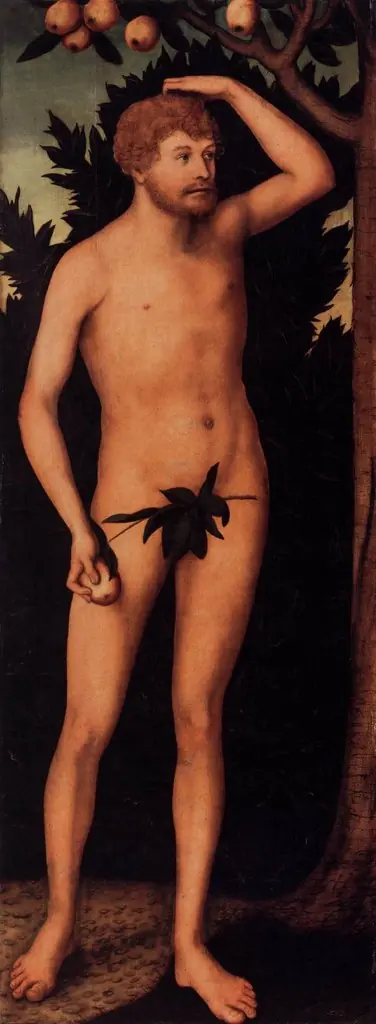
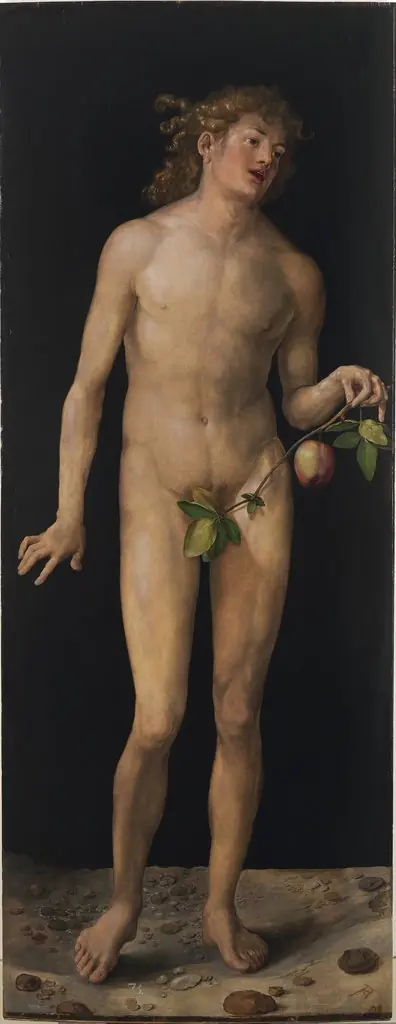
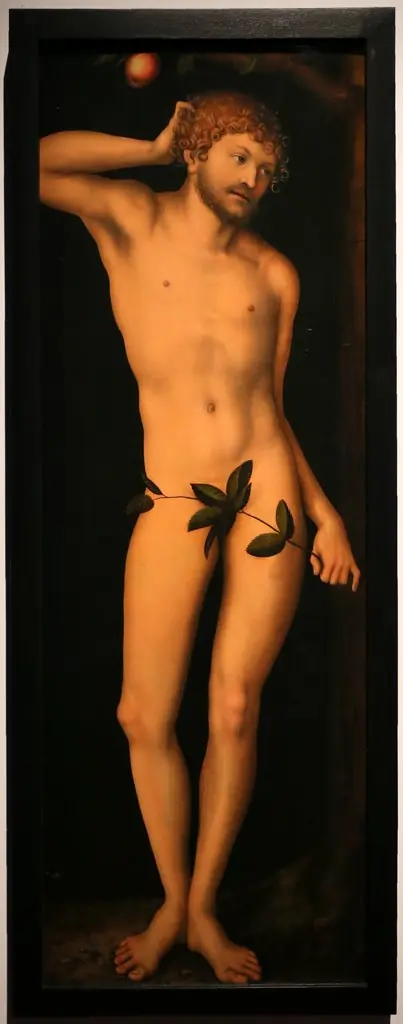
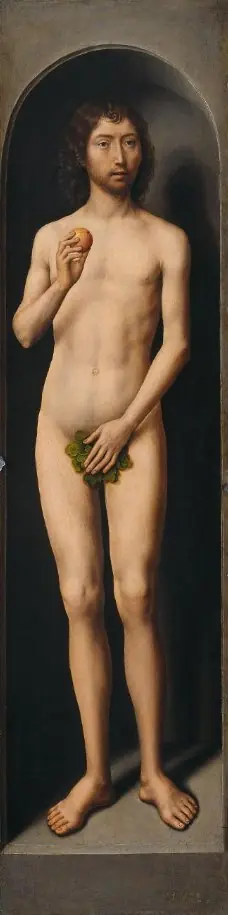
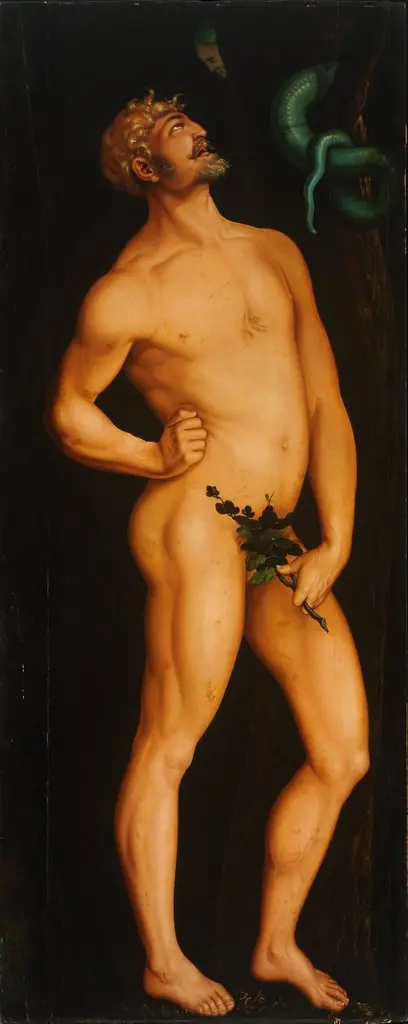
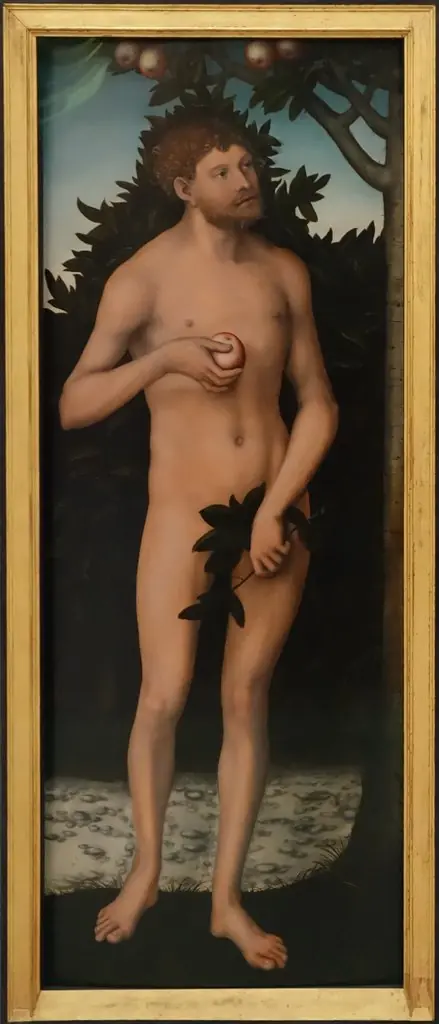
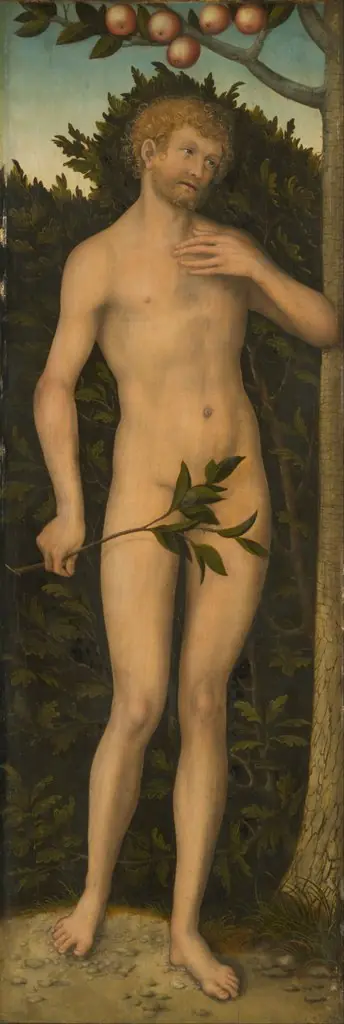
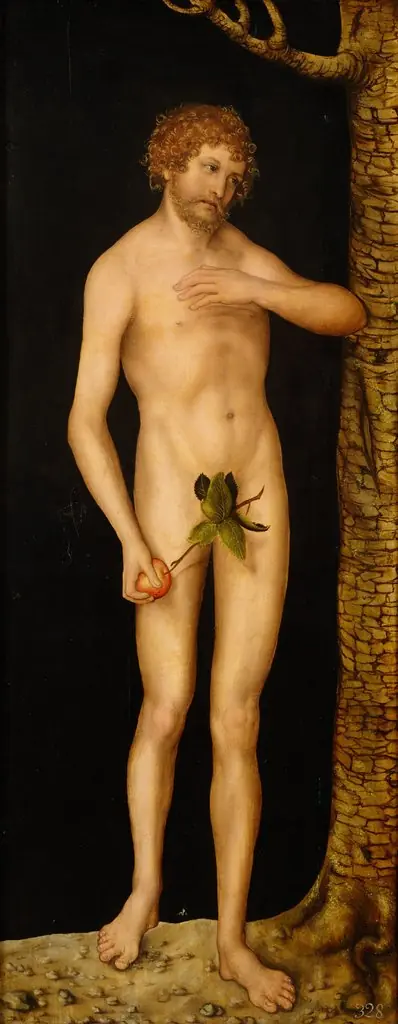
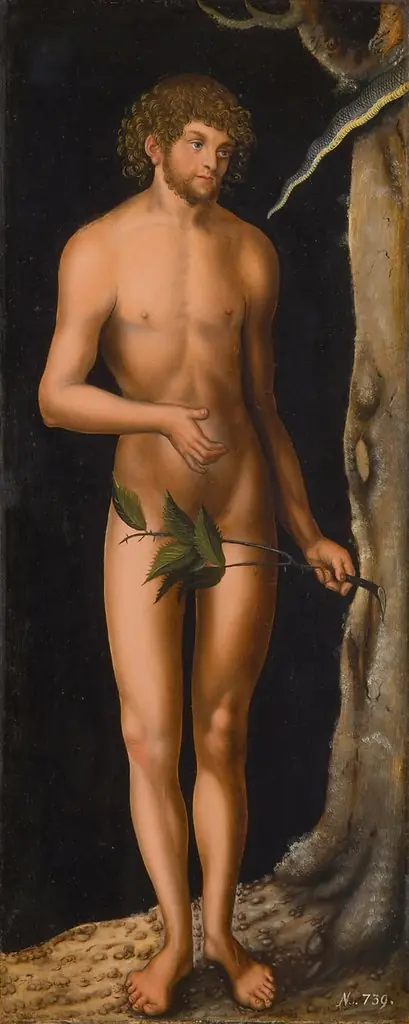
Adam is an oil painting by the Northern Renaissance artist Lucas Cranach the Elder. It dates from 1531 and is held in the collection of the Staatliche Kunstsammlungen Dresden.
About this work
Overview
Painted in 1531 by Lucas Cranach the Elder, this oil-on-panel work portrays the biblical figure Adam in a solitary, contemplative pose. The painting is part of the collection at the Gemäldegalerie Alte Meister in Dresden. Its compact scale and intense focus on a single figure reflect Cranach’s interest in conveying theological narratives through intimate, psychologically grounded imagery.
Subject & Meaning
Adam is depicted immediately after the Fall, holding the forbidden fruit in his right hand while his left wrist is bound to a tree by a vine.
Adam is depicted immediately after the Fall, holding the forbidden fruit in his right hand while his left wrist is bound to a tree by a vine. His nudity, partially concealed by sparse leaves, signals his newfound awareness of shame. The binding vine suggests entanglement in sin, while the dark void behind him evokes spiritual isolation. The scene captures a moment of transition—from innocence to knowledge, and from grace to consequence.
Technique & Style
Cranach employs a restrained palette dominated by earth tones and subtle gradations of light to model Adam’s form. The dark, unmodulated background isolates the figure, enhancing its sculptural presence. Delicate brushwork defines the texture of skin and foliage, while the vine binding Adam’s wrist is rendered with precise, linear clarity. The composition avoids narrative clutter, emphasizing psychological stillness over dramatic action.
History & Provenance
The painting entered the collection of the Gemäldegalerie Alte Meister in the 19th century, having likely been acquired through Saxon royal holdings. It was documented in early inventories of Cranach’s workshop output, consistent with his production of single-figure biblical subjects for private devotion. Its survival in good condition reflects careful preservation within German ecclesiastical and aristocratic collections.
Context
Created during the early Reformation, the painting aligns with Lutheran theological emphasis on human sinfulness and the consequences of disobedience. Cranach, a close associate of Martin Luther, frequently illustrated biblical themes to support reformist teachings. This work reflects a shift away from ornate Catholic iconography toward direct, morally charged imagery suited to Protestant sensibilities.
Legacy
The painting exemplifies Cranach’s distinctive approach to religious subjects: stripped of grandeur, focused on psychological realism, and anchored in moral clarity. It influenced later Northern artists who favored intimate biblical scenes over theatrical compositions. Though not widely reproduced, it remains a key example of how Reformation-era art reimagined traditional narratives through quiet, personal expression.
Artist & collection
Artist
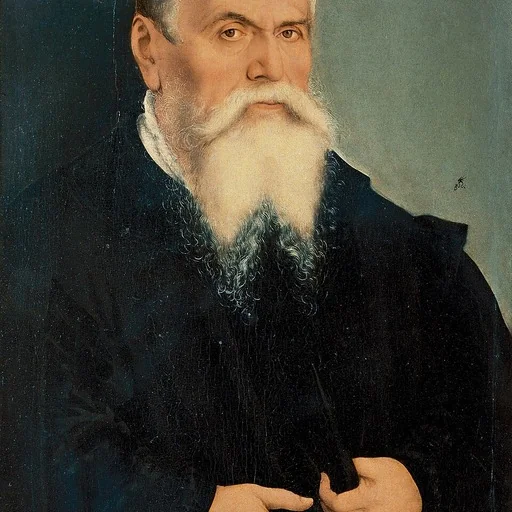
Lucas Cranach the Elder was a German Renaissance painter and printmaker in woodcut and engraving.