Artwork
Lucretia
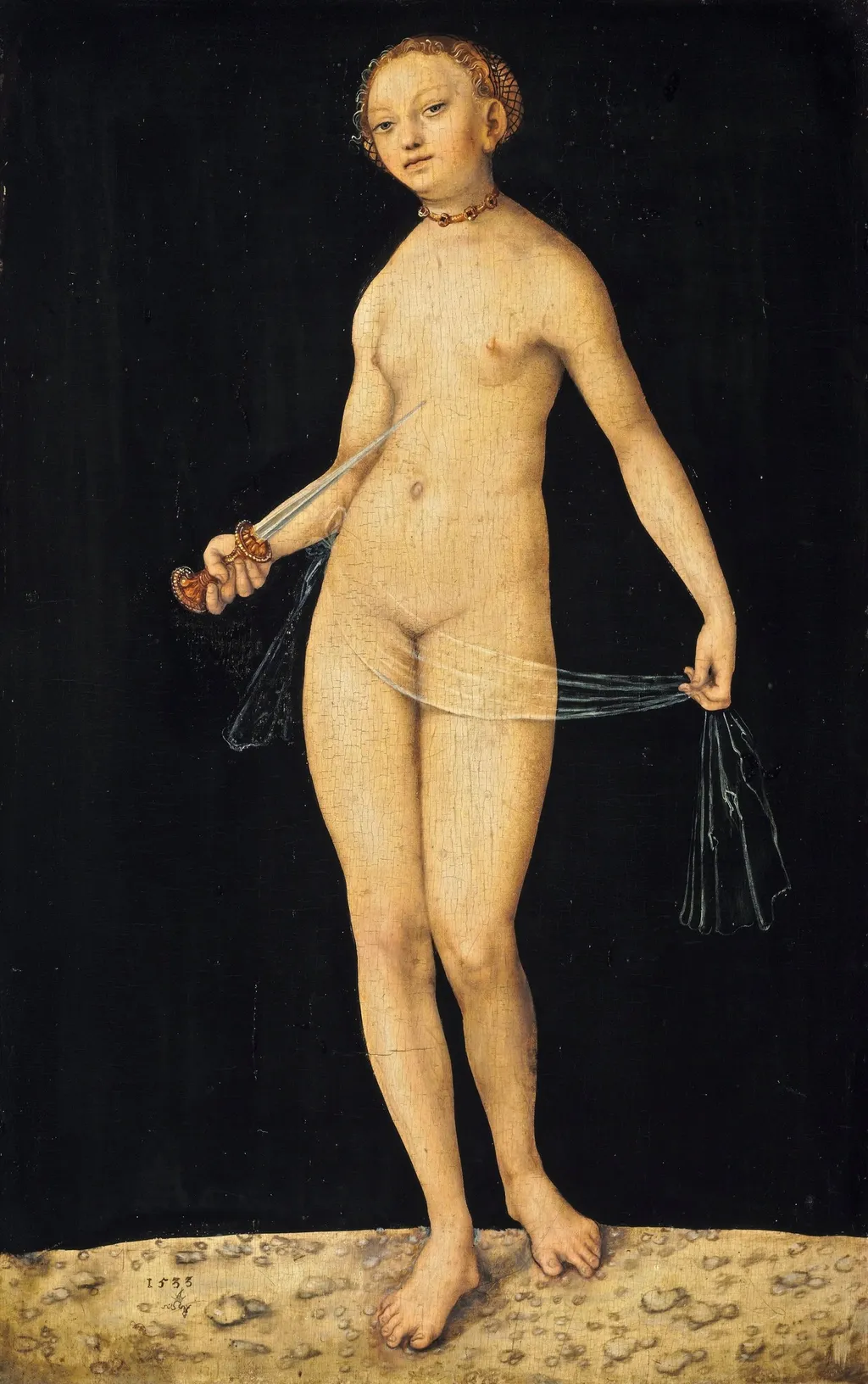
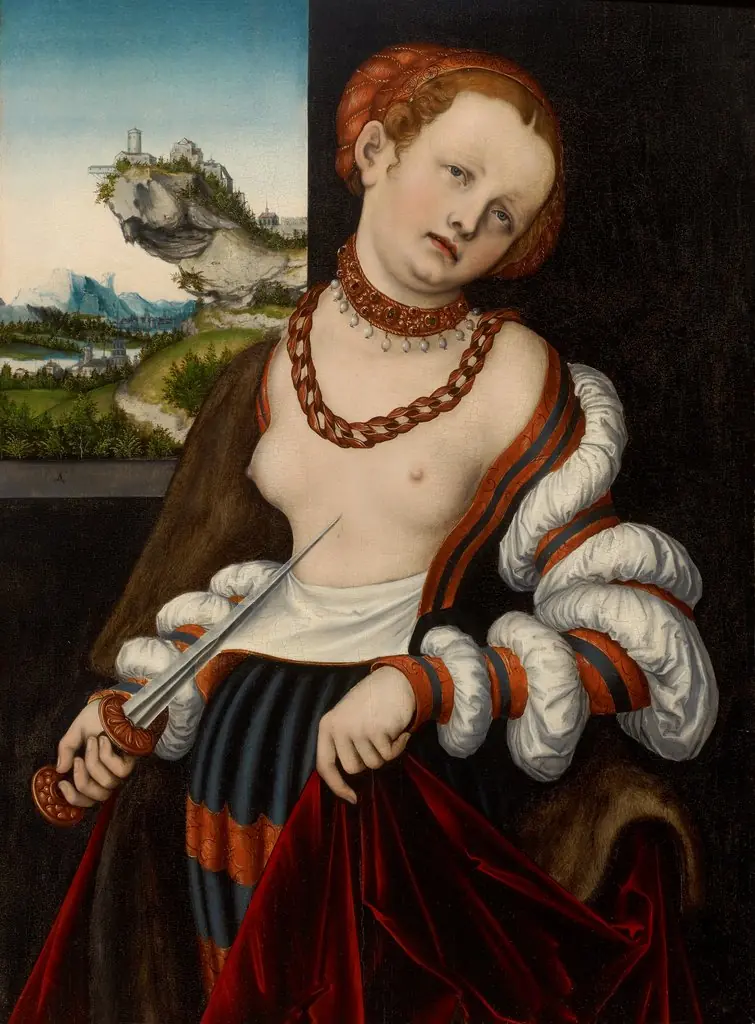
Lucretia is an oil painting by the Northern Renaissance artist Lucas Cranach the Elder. It dates from 1533 and is held in the collection of the Gemäldegalerie Berlin.
About this work
Overview
This 1533 version reflects Cranach's mature period, where he synthesized classical themes with contemporary courtly aesthetics.
Lucas Cranach the Elder's 'Lucretia' (1533) depicts the Roman noblewoman at the precise moment before her suicide, a subject the artist returned to frequently throughout his career. The composition isolates the figure against a stark, dark background, focusing attention on her pale, idealized skin and the dramatic gesture of her right hand holding a dagger against her chest. She wears a distinctive, low-cut gown typical of Cranach's fashion plates, featuring a sheer, patterned overdress and a jeweled bodice that contrasts with the tragic gravity of the narrative. Her left hand clutches a white cloth, often interpreted as a symbol of her purity or a final act of modesty. Painted in oil, the work exemplifies the German Renaissance style, combining Northern European attention to detail in the textures of fabric and jewelry with a refined, almost mannered elegance in the figure's pose. This 1533 version reflects Cranach's mature period, where he synthesized classical themes with contemporary courtly aesthetics. The painting serves not only as a moralizing history piece regarding chastity and honor but also as a demonstration of the artist's ability to render the female form with a specific, stylized beauty that defined his workshop's output for decades.
Subject & Meaning
The composition centers on Lucretia, the legendary figure whose suicide after a violation became a symbol of virtue and civic duty. Here she is shown holding a dagger, the instrument of her self‑inflicted death, while a modest cloth rests in her other hand, suggesting both resignation and resolve.
Technique & Style
Cranach employs a restrained chiaroscuro, allowing a soft illumination to model the figure against a dark, undefined background. The delicate rendering of skin tones and the modest drapery contrast with the starkness of the knife, creating a quiet tension that emphasizes the psychological moment rather than overt drama.
History & Provenance
Created in the artist’s workshop in Wittenberg, the painting entered the German national collection in the early twentieth century and has remained in the Gemäldegalerie, Berlin, where it is displayed among other works of the Northern Renaissance.
Own this work as a print
Artist & collection
Artist
Lucas Cranach the Elder was a German Renaissance painter and printmaker in woodcut and engraving.