Artwork
The Carrying of the Cross
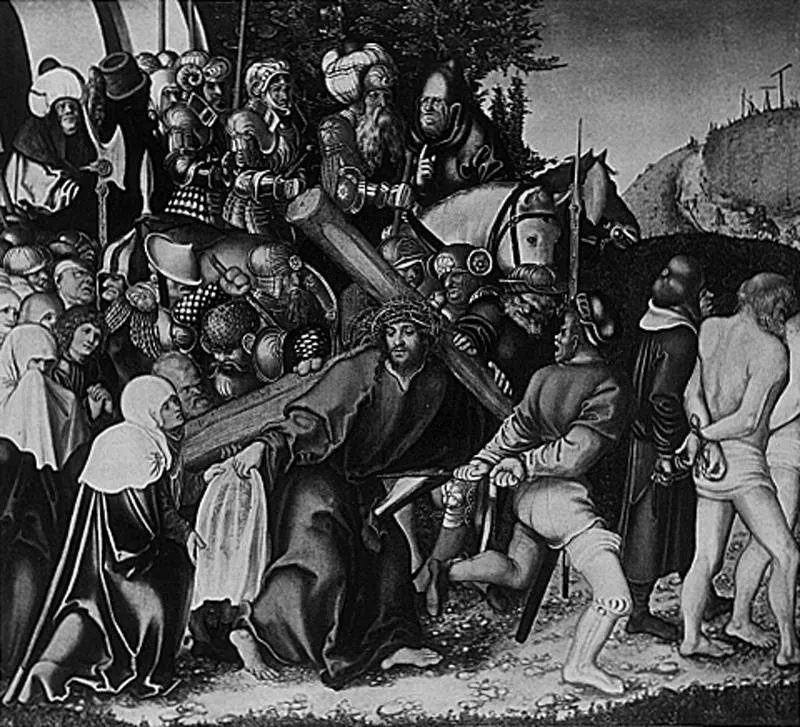
The Carrying of the Cross is an unspecified painting by the Northern Renaissance artist Lucas Cranach the Elder. It dates from 1517 and is held in the collection of the Gemäldegalerie Alte Meister.
About this work
Overview
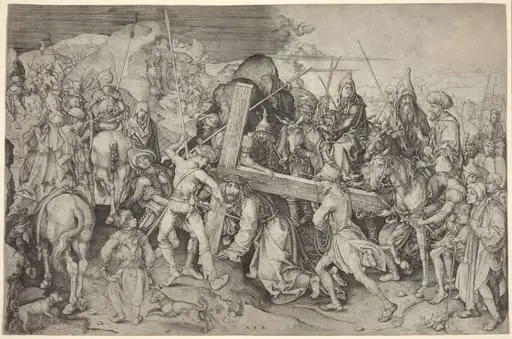
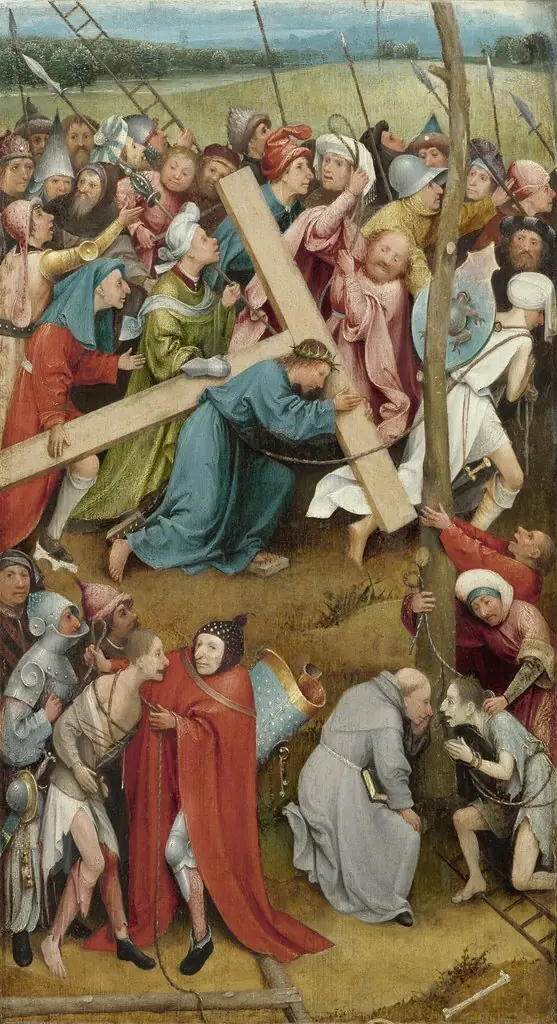
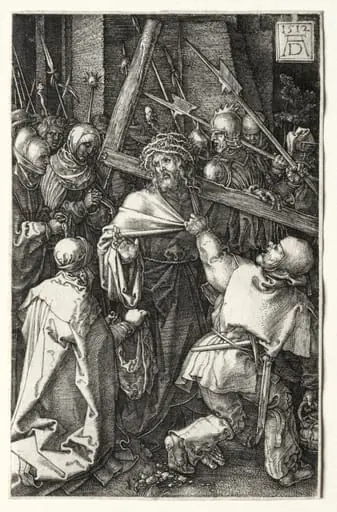
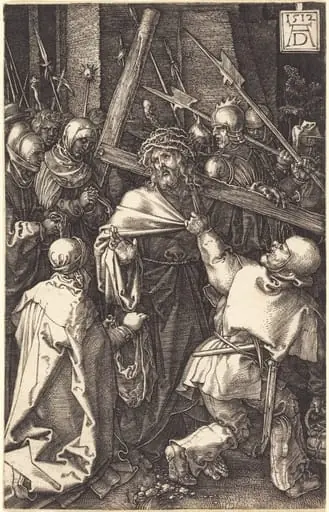
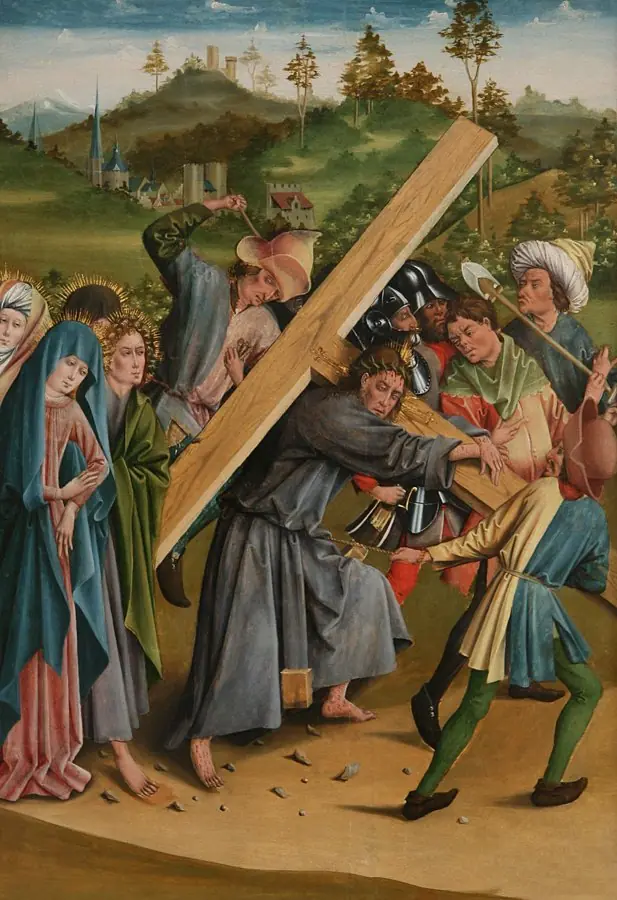
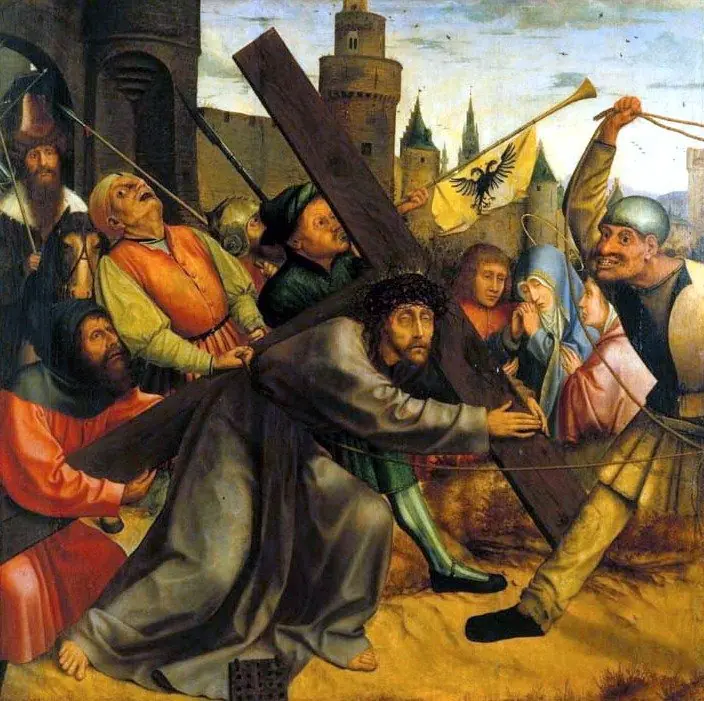
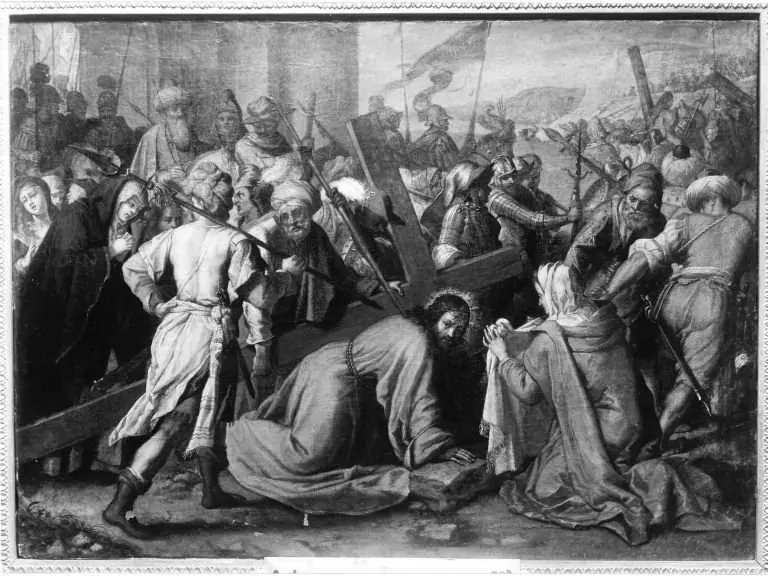
Painted in 1517 by Lucas Cranach the Elder, this work portrays the moment Christ bears the cross toward Golgotha. Executed in oil on panel, it belongs to the collection of the Gemäldegalerie Alte Meister in Dresden. The composition centers on Christ’s burdened figure, surrounded by a solemn procession of onlookers and soldiers, rendered with precise detail and restrained color.
Subject & Meaning
The scene captures Christ’s physical and spiritual suffering as he carries the cross, flanked by mourners and indifferent figures. The crown of thorns, the heavy timber, and the weary postures emphasize human vulnerability and divine sacrifice. Cranach avoids theatricality, instead focusing on quiet gravity to underscore the weight of the moment without overt symbolism.
Technique & Style
Cranach employs fine brushwork to render fabric folds, skin tones, and natural textures with quiet realism. The figures are arranged in a shallow, stage-like space against a muted landscape of rolling hills and sparse trees. Facial expressions are subtly modeled, conveying sorrow without melodrama, reflecting Northern Renaissance attention to individual psychology and material detail.
History & Provenance
The painting entered the Dresden collection in the early 18th century, likely through the Saxon court’s acquisitions of German Renaissance works. It has remained in the Gemäldegalerie Alte Meister since, with no documented restorations or significant alterations. Its attribution to Cranach has been consistently supported by stylistic analysis and archival records.
Context
Created during the early years of the Protestant Reformation, the painting reflects Cranach’s role as a court artist in Wittenberg, where he worked alongside Martin Luther. While religious in subject, its focus on human emotion and physical reality aligns with emerging reformist values that favored direct, unembellished depictions of biblical narratives over ornate Catholic iconography.
Legacy
The work stands as a representative example of Cranach’s early religious output, bridging devotional tradition and emerging Reformation sensibilities.
The work stands as a representative example of Cranach’s early religious output, bridging devotional tradition and emerging Reformation sensibilities. Though less widely known than his portraits or mythological scenes, it illustrates his capacity for restrained narrative power. It remains a key reference for understanding how German artists adapted sacred themes in a period of profound theological change.
Artist & collection
Artist
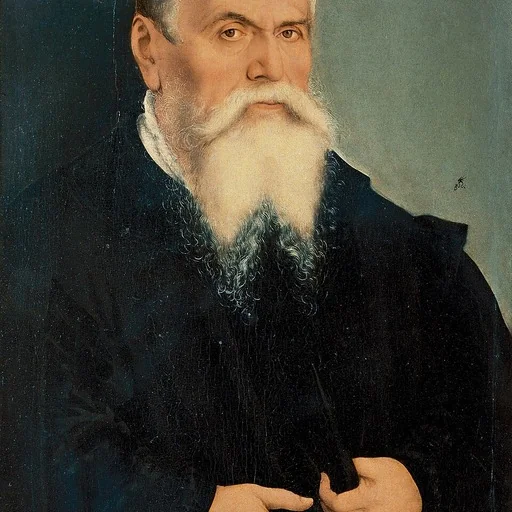
Lucas Cranach the Elder was a German Renaissance painter and printmaker in woodcut and engraving.