Artwork
Crucifixion of Christ
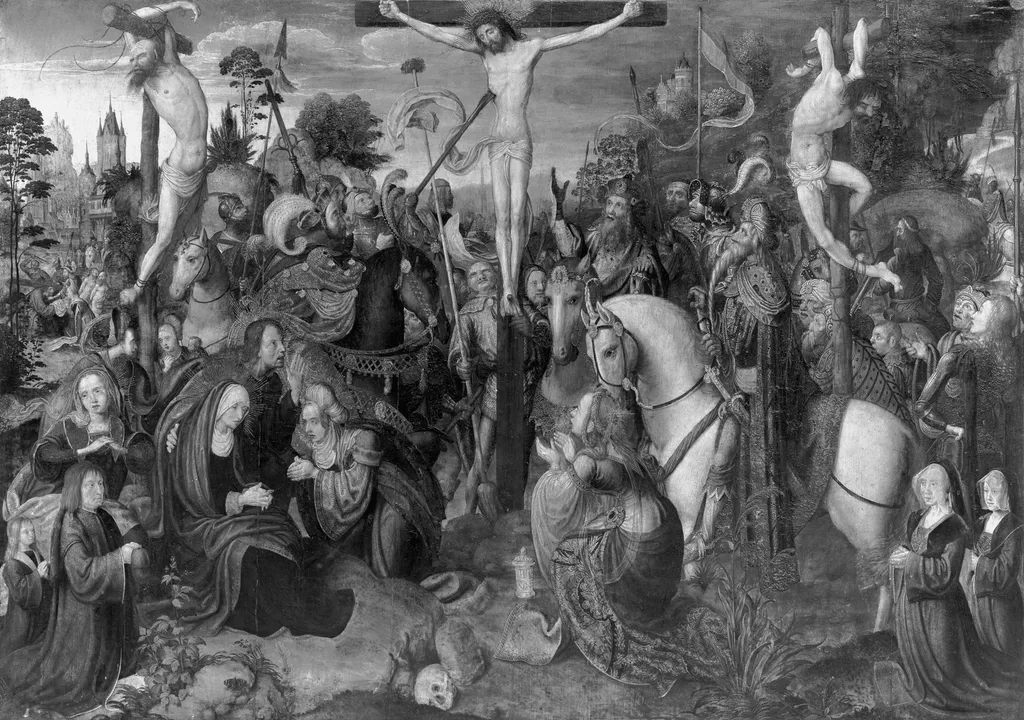
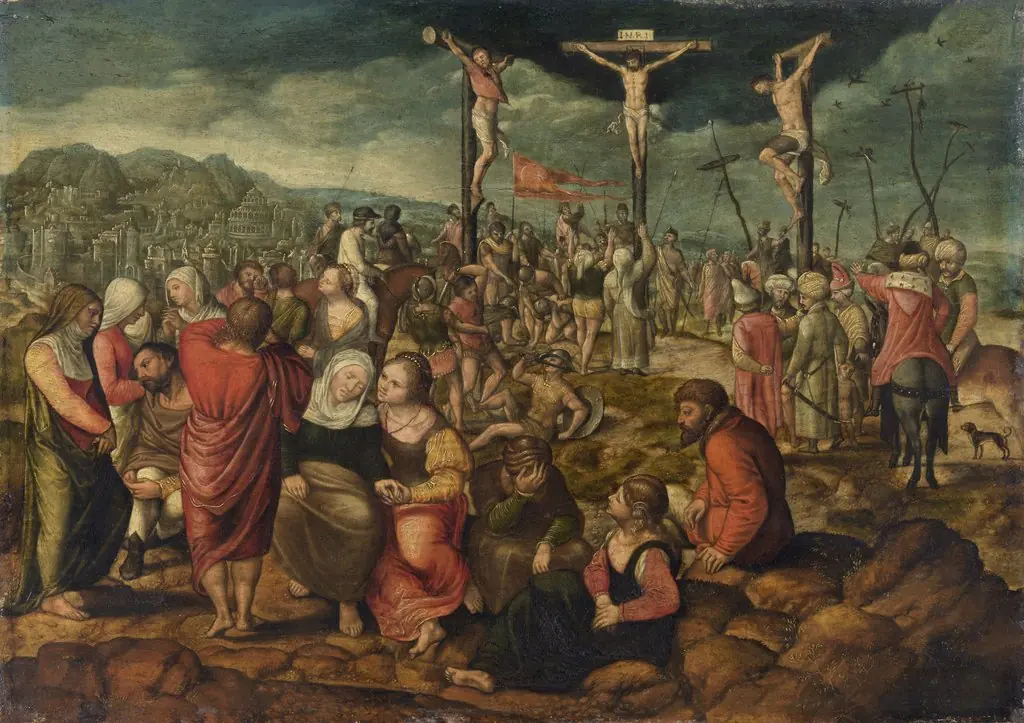
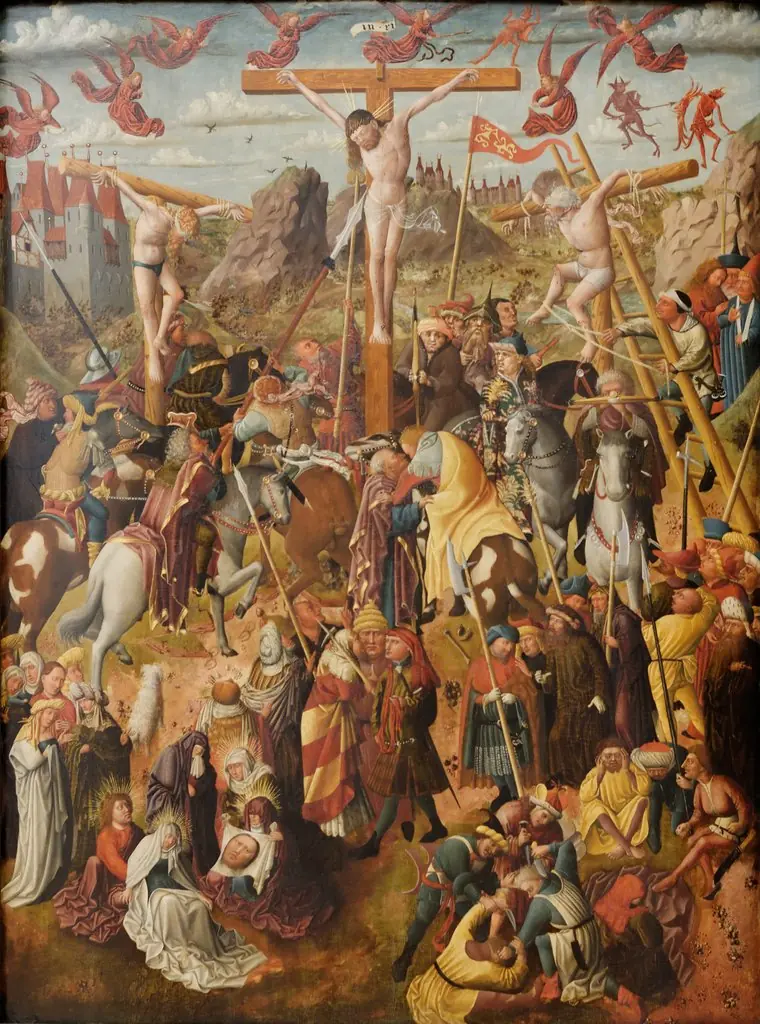
Crucifixion of Christ is a paint painting by Master of Saint Severin. It dates from 1550 and is held in the collection of the Gemäldegalerie Berlin.
About this work
Overview
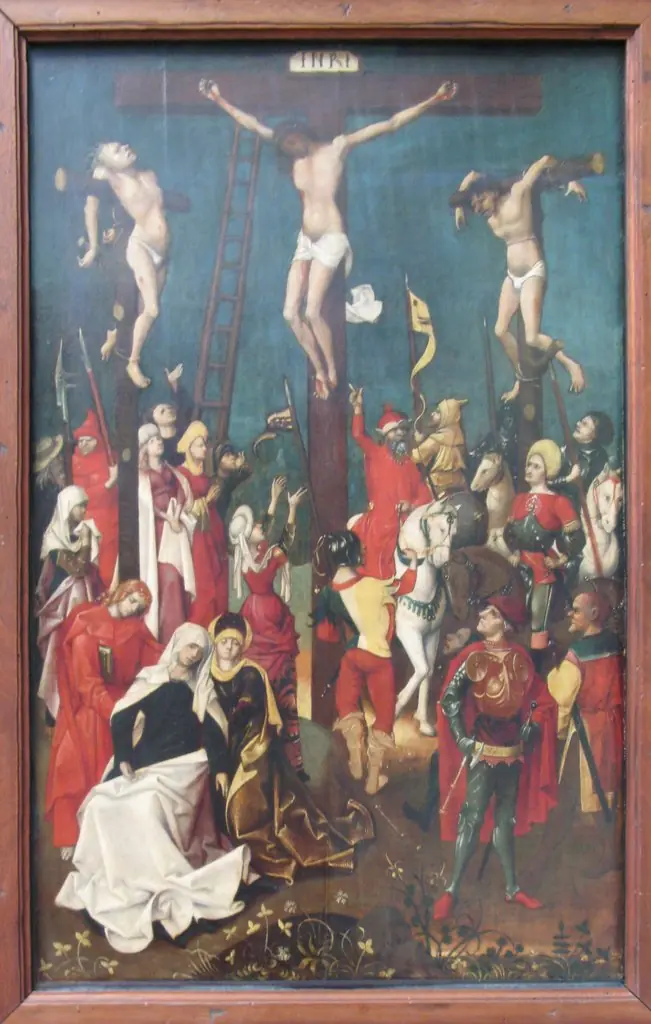
Created around 1550, the Crucifixion of Christ is an oil painting attributed to the anonymous Master of Saint Severin. Executed in a densely populated composition, the work presents the moment of Jesus on the cross amid a multitude of onlookers, soldiers, and animals. The canvas is now part of the collection of the Gemäldegalerie in Berlin.
Subject & Meaning
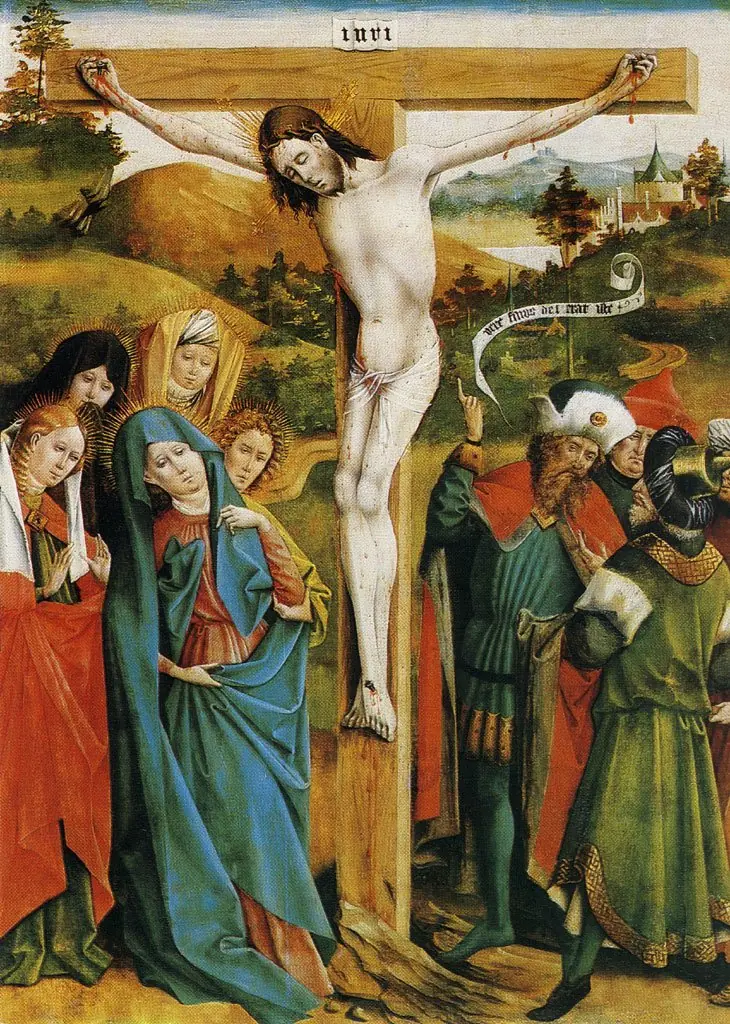
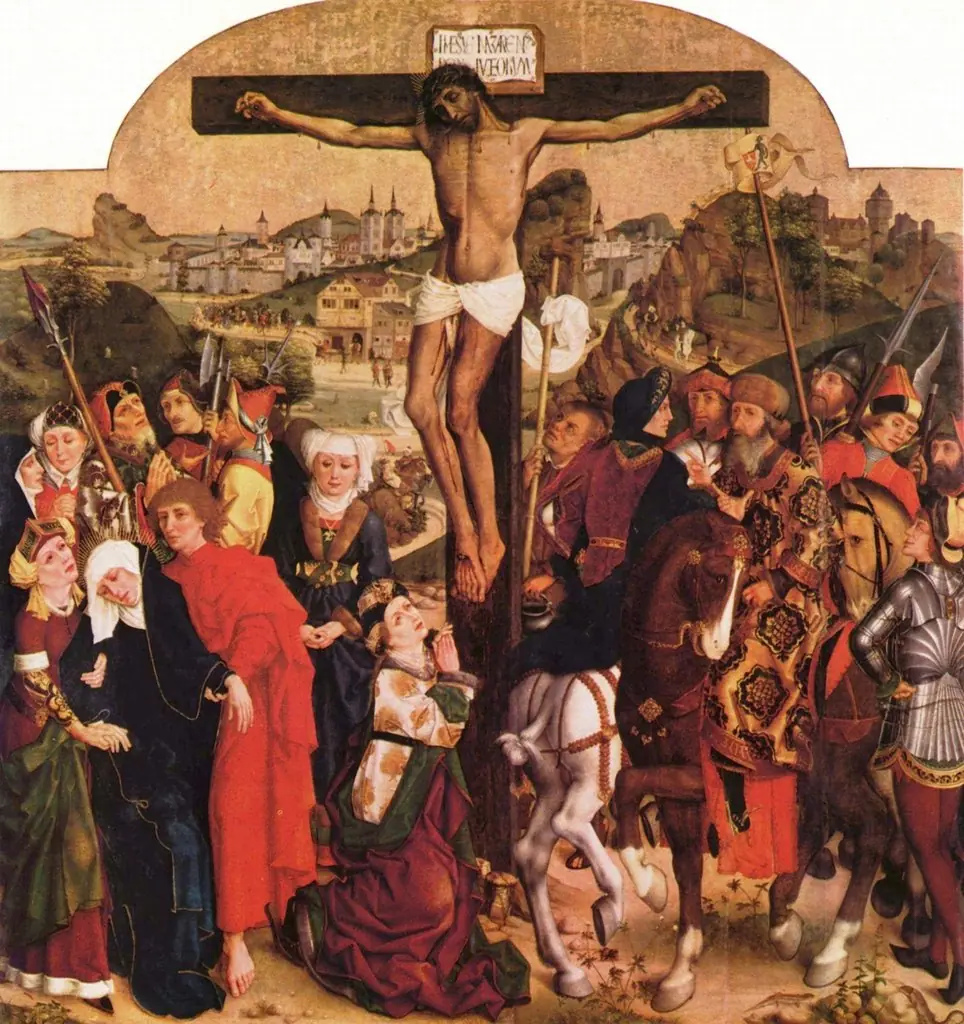
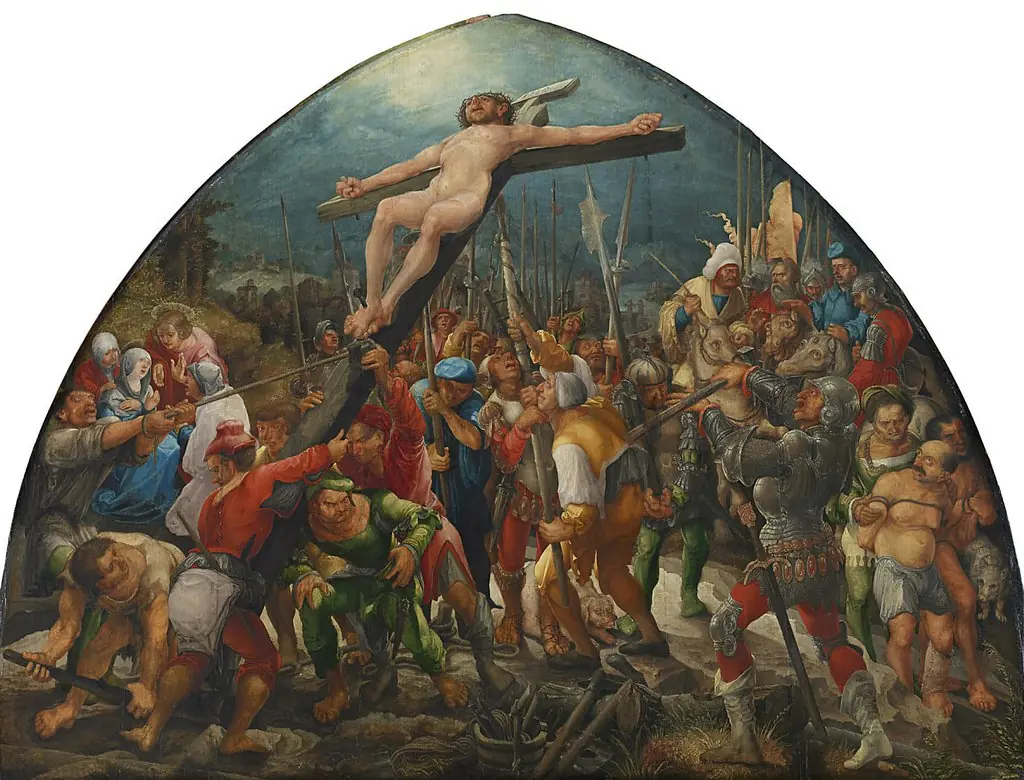
The central figure of Christ nailed to the cross is surrounded by a varied crowd that includes grieving mourners, Roman soldiers, and mounted riders. Their gestures—ranging from sorrowful gazes to aggressive pointing—convey the emotional turbulence of the Passion narrative, emphasizing both the divine sacrifice and the human response to it.
Technique & Style
The artist employs a pronounced chiaroscuro, using stark light and deep shadow to model faces and objects, which heightens the drama of the scene. The composition is tightly packed, with figures layered in the foreground and background, while distant architecture and a brooding sky frame the event, creating a sense of depth and tension.
History & Provenance
Attributed to the workshop of the Master of Saint Severin, the painting likely originated in a Central European context during the mid‑16th century. It entered the Gemäldegalerie Berlin’s holdings in the early 20th century, where it has remained on public display, providing insight into the period’s devotional art.
Context
The work reflects the Counter‑Reformation’s emphasis on vivid, emotionally charged religious imagery intended to inspire piety. Its crowded composition and dramatic lighting align with contemporary Northern Renaissance trends, where artists sought to combine narrative clarity with visual intensity to engage viewers in the biblical story.
Own this work as a print
Artist & collection